A LETTER FROM THE WESTERN FRONT – Ryan Shore
 Original Review by Jonathan Broxton
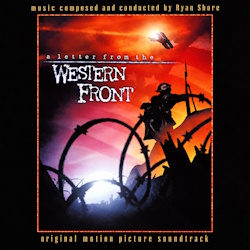
A short review for a short score, but one which marks the emergence of a composer who could one day be very popular. Ryan Shore is Howard Shore’s nephew, and has already undertaken orchestrating duties for his uncle on a number of scores, notably the recent Dogma and Existenz. His debut score as a solo composer is for the highly regarded World War I animated drama A Letter from the Western Front, directed by NYU student filmmaker Daniel M. Kanemoto and which won several respected student film and animation awards in 1998, including the coveted Gold Medal at the Student Academy Awards. Read more…
THE GENERAL’S DAUGHTER – Carter Burwell
 Original Review by Jonathan Broxton
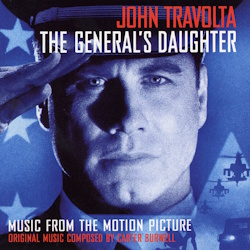
Director Simon West burst onto the cinema screens in 1997 with his big, brash, in-your-face debut Con Air, a film which effectively ushered in a whole new era of films with a cumulative effect akin to drinking seventeen cups of espresso coffee – you leave the cinema with eyes like saucers, stunned into submission at the sheer spectacle of what you have just witnessed. Thankfully, Jerry Bruckheimer is not involved at all in The General’s Daughter, West’s follow up, and therefore it does not bear any of his overbearing influence, although the slick, polished cinematic style associated with his work remains firmly in place. Read more…
INSTINCT – Danny Elfman
 Original Review by Jonathan Broxton
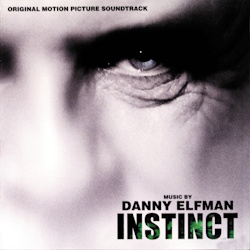
Here’s a statement that’ll make your toes curl: Instinct is Danny Elfman’s best score in six years. Whoa! Hold on a minute! We didn’t see that one coming! What about his Oscar nominations, Good Will Hunting and Men In Black? What about Black Beauty and Dolores Claiborne? What about Mission Impossible, widely regarded as one of the best action thriller scores in years? What about A Civil Action and A Simple Plan, two of his recent complex dramas? Well, in the opinion of this reviewer, Instinct blows each and every one of those worthy scores out of the water with its combination of soaring strings, passionate brasses, African percussion and that heavenly, heavenly female choir which hasn’t been used to this extent since Edward Scissorhands almost a decade ago. Read more…
STAR WARS: THE PHANTOM MENACE – John Williams
 Original Review by Jonathan Broxton
At long, long last, the waiting is over. I don’t think I can ever remember a soundtrack being as highly anticipated as The Phantom Menace was – not even Titanic. Ever since George Lucas announced his intentions to make a second Star Wars trilogy, score fans the world over literally started drooling as they pondered the possibilities. Of course, John Williams would write the music, but what would he do? Would any of the familiar themes make an appearance? Would the full score be released? Would it be a 2-CD release? What would be the cue titles? Such has been the speculation and avid discussion, especially on the Internet, that with only a few weeks to go until its premiere, it has almost become a frenzy. As such, reviewing a score like this impartially and without bias is now virtually impossible – even I have been caught up in Phantom Menace fever, especially with the tantalizing glimpses of the trailer in my local multiplex. Read more…
L’ASSEDIO/BESIEGED – Alessio Vlad
 Original Review by Jonathan Broxton
The curse of Bernardo Bertolucci strikes again. Bernardo – or, as one British film critic recently called him Bore-nardo Bertolucci – has never recreated the masterful triumphs of Last Tango in Paris or The Last Emperor, despite having an excellent eye for detail and a sumptuous cinematic style. Besieged (also known as L’Assedio), his latest offering, is the story of a love triangle between an English composer and pianist (David Thewlis), his black African housekeeper (Thandie Newton), and her unseen political prisoner husband. The crux of the film is to do with love, and how it is expressed in different ways by different people. It’s all very stately and very “arthouse”, and has been dismissed by many as being nothing more than a dry and dusty character study. Read more…
Remembering Johnny Green, 1908-1989
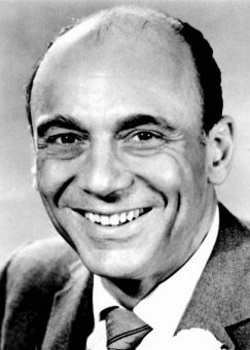 Composer, arranger, conductor and songwriter Johnny Green died ten years ago today, on May 15, 1989, at his home in Beverly Hills, at the age of 80. Green, who had suffered a stroke two years earlier, died from pulmonary edema.
One of the dominant musical figures of Hollywood’s golden age, he served for a decade as music director at MGM, received numerous Academy Award nominations and won five Oscars, four for his work on major film musicals and another as producer of a musical short.
John Waldo Green was born in New York City on October 10, 1908. A musical prodigy, he entered Harvard at 15 and graduated with a degree in economics, briefly working on Wall Street before abandoning finance for music. During the late 1920s and 1930s he became a successful songwriter, arranger, pianist and bandleader. His greatest song, “Body and Soul,” written in 1930, became one of the most enduring standards in jazz, while other successes included “Out of Nowhere” and “I Cover the Waterfront.”
Green’s involvement with films began at Paramount’s Astoria studios in New York, but his Hollywood career took off after he joined MGM during the 1940s. He worked as conductor, arranger and composer before becoming the studio’s music director in 1949, a position he held through the 1950s. In that capacity Green supervised and conducted the music for many of MGM’s most lavish productions, working closely with orchestrators such as Conrad Salinger and helping establish the exceptionally rich orchestral sound associated with the studio’s post-war musicals. Read more…
A MIDSUMMER NIGHT’S DREAM – Simon Boswell
 Original Review by Jonathan Broxton
A film score that opens with the entire 11-minute Overture from Mendelssohn’s A Midsummer Night’s Dream can’t be all bad, and in fact this album from Decca is one of the finest examples I have heard with regards to combining true classical music with modern film music into a satisfying, enjoyable whole. Director Michael Hoffman restaged Shakespeare’s A Midsummer Night’s Dream in renaissance-era Tuscany, allowing him to shroud his film in the sights and sounds of one of the history’s most romantic periods. As a result, the images on screen glow with vivid shades of green and gold, reveling in the opulence of luxurious production design, glittering costumes and natural, healthy beauty. For those who don’t know the play, A Midsummer Night’s Dream follows the fortunes of four bickering lovers: Helena (Calista Flockhart), who loves Demetrius (Christian Bale), who loves Hermia (Anna Friel), who loves Lysander (Dominic West). One midsummer’s night, the four venture into the woods near their home and become embroiled in the war of words between Oberon (Rupert Everett), the king of the fairies, and his bride Titania (Michelle Pfeiffer). Receiving instructions from Oberon, the mischievous sprite Puck (Stanley Tucci), casts a spell which causes the four to fall regularly in and out of love with each other, turns an innocent weaver named Bottom (Kevin Kline), who is rehearsing a play in the same woods, into an ass, and causes Titania to fall in love with him. Read more…
THE CASTLE – Edmund Choi
 Original Review by Jonathan Broxton
Initially, the music for the quirky Australian comedy The Castle consisted of a few original cues by composer Craig Harnath and a multitude of “library cues” picked arbitrarily to fill the gaps in the dialogue. It was released across most of the world in this original format but when the might Miramax corporation bought the film for distribution in the USA, the head honchos decided that a new musical approach was needed. Enter Edmund Choi, a young, talented 28 year old, whose remit was to take the orchestration of the original score, but write his own new themes to fit the bill. Choi, whose only previous scoring work was for Sixth Sense director M. Night Shyamalan’s earlier features Praying With Anger and Wide Awake, responded with a lovely, lush orchestral work which pegs him as a talent to watch. Read more…
THE MUMMY – Jerry Goldsmith
 Original Review by Jonathan Broxton
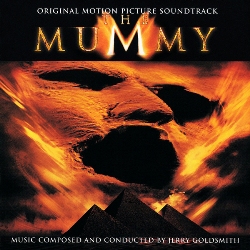
Jerry Goldsmith’s first effort of 1999 is a barnstorming action score of epic proportions. The density of the orchestrations and the complexity of the melodic lines put you in mind of vibrant works such as First Knight, Deep Rising, and especially The Wind and the Lion with its intoxicating ethnic percussion and pervading sense of Arabic mystique. A loose remake of Boris Karloff’s 1932 horror classic, The Mummy is an old-fashioned, tongue-in-cheek Saturday matinee flick with more than a few passing resemblances to Raiders of the Lost Ark, and Universal Pictures and director Stephen Sommers hope it will be the first big action movie to smash the box office in a summer market already dominated by the imminent release of The Phantom Menace. It stars Brendan Fraser as a treasure-seeker who travels to 1930s Egypt searching for lost artefacts. What he finds, though, is far worse – the mummified body of the ancient Egyptian priest Imhotep, who was buried alive in disgrace by the then Pharaoh, and who unleashes a terrible vengeful power on those who disturbed him from his slumber. Read more…
NOAH’S ARK – Paul Grabowsky
 Original Review by Jonathan Broxton
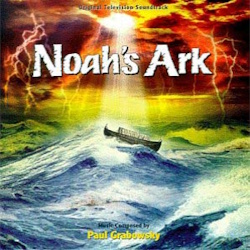
The Hallmark Entertainment series on American TV is slowly developing into a rich musical well, out of which has sprung several splendid scores, including last year’s critically acclaimed Merlin (by Trevor Jones) and Moby Dick (by Christopher Gordon). It is to Varèse Sarabande’s credit that they are continuing to support the series by releasing extended CDs of music, for not only does it give the eager listener a chance to experience music which would not normally be heard outside the medium, but it also gives many lesser-known composers some much needed publicity. Read more…
ENTRAPMENT – Christopher Young
 Original Review by Jonathan Broxton
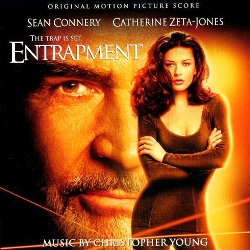
Entrapment is Chris Young’s second big-budget action score in as many years and is an ideal comparison to the work he undertook for Hard Rain because, if nothing else, it effectively demonstrates Young’s ability to tackle similarly-themed movies in vastly different ways. Whereas Hard Rain was firmly rooted firmly in the musical traditions of the American midwest, Entrapment is a fluid, hi-tec action score which combines efficient, modern orchestral grooves with the some unexpected textures and styles. The film itself is a flawed, but audience-friendly thriller about a beautiful insurance investigator who teams up with an aging breaking-and-entering expert with the express intent of fingering him for the high-profile robbery she thinks he has committed. Things become a little more complicated, though, when he persuades her to join him in undertaking a final, ambitious break-in, and then get even worse when she inexplicably finds herself falling for him in a big way. Disregarding the unlikely love interest between sixty-something Sean Connery and twenty-something Catherine Zeta-Jones, Entrapment works well as an “event picture”, providing the right combination of thrills, spills and technobabble to keep increasingly touchy viewers happy. Most of all, though, it is highly satisfying to finally see Young getting a much-deserved and long overdue shot at the Hollywood big time. Read more…
DURANGO – Mark McKenzie
 Original Review by Jonathan Broxton
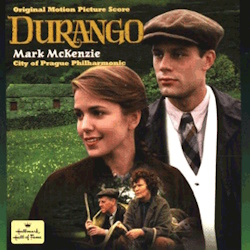
Some composers need to get more work, and to be given better projects. Mark McKenzie is one of a small band of excellent writers who, through no fault of their own, are overlooked by Hollywood and spend most of their time toiling away on small-scale features that do not deserve to have their considerable talents wasted on them. After a career that has seen him rise from orchestrating scores for Danny Elfman, Bruce Broughton and others, to writing great music for terrible films such as Warlock: The Armageddon and Dr. Jekyll and Ms. Hyde, McKenzie seems finally to be heading down the right path with Durango, the latest TV movie in the Hallmark Hall of Fame series that, over the last year or so, has included Merlin, Moby Dick, Alice in Wonderland and Cleopatra. Read more…
EXISTENZ – Howard Shore
 Original Review by Jonathan Broxton
David Cronenberg inspires Howard Shore to compose some of his best and most memorable movie music. Through such notable works as The Brood, Scanners, Videodrome, The Fly, Dead Ringers, Naked Lunch, M. Butterfly and Crash, Cronenberg had always allowed Shore plenty of room to manoeuvre and stretch his musical muscles. eXistenZ is probably the most approachable and, from a soundtrack fan’s perspective, enjoyable work that has resulted from their collaboration to date. An original science fiction tale, eXistenZ is a film which again merges humanity and technology and blurs the lines between reality and fantasy. It stars Jennifer Jason Leigh as the designer of a virtual reality video game played through a genetically modified organism known as a “Game Pod”, which inserts an umbilical cord into a special socket inserted into the base of the player’s spinal column and taps into the player’s mind. When the game’s first demonstration goes wrong, Leigh and her bodyguard Jude Law are forced to run for their from various violent factions, all of whom want to stop eXistenZ from becoming a reality. Read more…
THE RED VIOLIN – John Corigliano
 Original Review by Jonathan Broxton
It is very rare for a soundtrack to be embraced wholeheartedly and celebrated loudly by aficionados of both classical music and film music, but this is what has happened to John Corigliano’s The Red Violin. Despite being arguably one of the most brilliant and talented American composers of his generation, this is only John Corigliano’s third film score – his others being the wildly impressionistic, abstract, Oscar-nominated Altered States (1980) and the largely unknown Revolution (1985). Instead, Corigliano became an established member of the New York musical circle, writing original pieces, ballets, operas and suchlike, and it has taken fourteen years to tempt Corigliano back to the podium. It has been worth the wait for, as well as his own musical genius, he has brought with him some of the best and brightest talents of the classical world, including the brilliant Finnish conductor Esa-Pekka Salonen and the incredibly talented virtuoso violinist Joshua Bell. Read more…
ALICE IN WONDERLAND – Richard Hartley
 Original Review by Jonathan Broxton
Lewis Carroll’s classic story of Alice in Wonderland has been told and re-told so many times that one would think there were no new ways of putting the cautionary children’s tale of substance abuse-induced hallucinations across. There was the Disney animated film in 1951, which everyone looks back on fondly, and no less than three big-screen versions in 1933, 1950 and 1972, none of which were enthusiastically received by the public. So, in an attempt to breathe new life into the proceedings, the producers of this re-telling, which is part of the Hallmark Entertainment series on American TV, decided to up the star factor and put dozens of Hollywood star names in the famous roles. Read more…

Shop at the Movie Music UK Store

Member of the


