Archive
Remembering Angelo Francesco Lavagnino, 1909-1987
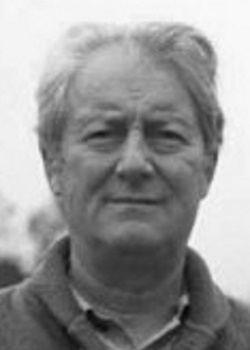 Composer Angelo Francesco Lavagnino died ten years ago today in Gavi, Italy, on August 21, 1987, at the age of 78.
One of the most prolific and versatile figures in post-war Italian film music, Lavagnino wrote scores for more than 200 films across almost every conceivable genre, from documentaries and comedies to historical epics, westerns and science fiction. Internationally he was best known for his work on Orson Welles’s Othello and Chimes at Midnight, as well as Legend of the Lost, The Naked Maja, Gorgo and Conspiracy of Hearts.
Lavagnino was born in Genoa on February 22, 1909. He studied violin at the Giuseppe Verdi Conservatory in Milan, where he subsequently pursued composition under teachers including Renzo Bossi and Vito Frazzi. Before entering cinema he wrote extensively for the concert hall, including chamber and symphonic music, sacred works and the opera Malafonte. From 1948 until 1963 he also taught film music at the prestigious Accademia Musicale Chigiana in Siena.
His first important film assignment came through Orson Welles, composing music with Alberto Barberis for Othello, filmed over several years and released internationally in the early 1950s. Lavagnino’s dark, archaic-sounding music immediately demonstrated his ability to evoke historical atmosphere without relying simply on conventional orchestral romanticism. More than a decade later Welles invited him back for Chimes at Midnight (1965), for which Lavagnino adapted and recreated early musical forms to accompany Welles’s celebrated portrait of Falstaff. Read more…
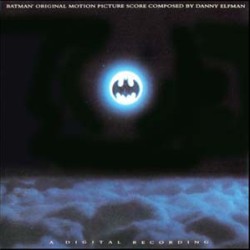
BATMAN – Danny Elfman
 MOVIE MUSIC UK CLASSICS
Original Review by Jonathan Broxton
In 1989 Danny Elfman was a 36-year old newcomer to the world of film music, still better known for his days as the lead singer of the alternative rock band Oingo Boingo than his scoring exploits, which by then had included titles such as hit films like Back to School, Beetlejuice, Pee-Wee’s Big Adventure and Scrooged, but gave no indication of the composer he would become. Then came Batman, director Tim Burton’s gothic re-imagining of the old camp Batman story that, prior to this movie, was something of a joke, known for Adam West and his day-glo costume and Neal Hefti’s kitsch theme music. To say that Burton took the Batman story in a different direction was an understatement in the extreme: instead of being a wisecracking comic figure with a Bat-gadget for every occasion, he became a tortured, tragic anti-hero clad in black leather, struggling with his own inner demons while simultaneously dealing with master criminals in a dirty, dangerous Gotham City. Read more…

Shop at the Movie Music UK Store

Member of the


