Archive
GHOSTS OF MARS – John Carpenter
 Original Review by Jonathan Broxton
When is a soundtrack not a soundtrack? When it’s a rock album. Or when it’s called John Carpenter’s Ghosts of Mars. In my opinion, the sole purpose of a film soundtrack is to elicit an emotional response from the audience watching the film it accompanies. All other considerations about whether it is considered “good music” are secondary to the fact that its creation is to support a visual image. By saying this, I am almost making myself redundant as a reviewer of soundtrack albums as opposed to scores as heard in the film, but the point I am trying to make is that a good soundtrack album doesn’t necessarily mean that it contains a good score, and vice versa. This album is a case in point. Read more…
CAPTAIN CORELLI’S MANDOLIN – Stephen Warbeck
 Original Review by Jonathan Broxton
Stephen Warbeck just gets better and better. I have to admit that, when he won the Oscar for Shakespeare in Love back in 1998, I dismissed his victory as nothing but sheer luck – a middling composer being fortuitously attached to the right movie at the right time. As time has passed, however, my opinion has changed. Fanny and Elvis and Mystery Men were OK. Billy Elliott was good. Quills was excellent. And now, with Captain Corelli’s Mandolin, Warbeck has finally emerged as a bonafide competitor to John Barry, George Fenton and Rachel Portman as the British composer of choice for romantic dramas. Read more…
Remembering Bruno Nicolai, 1926-1991
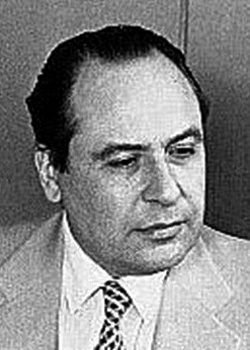 Composer, conductor, and pianist Bruno Nicolai died ten years ago today in Rome on August 16, 1991, at the age of 65.
One of the most accomplished figures in Italian film music during the 1960s and 1970s, Nicolai wrote scores for more than 100 films and television productions while also enjoying an important career as a conductor, publisher and advocate for contemporary classical music. His own work was particularly associated with spaghetti westerns, gialli and European horror cinema.
Nicolai was born in Rome on May 26, 1926. He studied piano with Aldo Mantia and composition with Goffredo Petrassi and Antonio Ferdinandi at the Santa Cecilia Conservatory, as well as organ at the Pontifical Institute of Sacred Music. From 1950 to 1964 he performed as pianist, organist and harpsichordist with the Santa Cecilia and RAI orchestras, while also writing extensively for theatre and television.
At Santa Cecilia Nicolai became friends with fellow student Ennio Morricone, beginning one of the most important—and sometimes misunderstood—professional relationships in Italian film music. Nicolai became Morricone’s preferred conductor and conducted many of his most famous scores, including For a Few Dollars More and The Good, the Bad and the Ugly. He also collaborated with Morricone as composer and conductor on several projects before their partnership ended during the 1970s. Nicolai’s extensive contribution to Morricone’s recordings sometimes led to confusion over authorship, but both men maintained substantial composing careers of their own. Read more…
AN AMERICAN RHAPSODY – Cliff Eidelman
 Original Review by Jonathan Broxton
I’ve waited three long years to type this sentence. Cliff Eidelman is back. The TV movie Witness Protection notwithstanding, it’s been a lean three years away from the scoring circuit for this extremely talented 34-year-old composer, whose career seemed to have completely stopped in its tracks. After bursting onto the scene in 1991 with his score for Star Trek VI, and enjoying six or seven years of comparative success, Eidelman suddenly stopped getting hired, despite him applying to score dozens for movies and narrowly failing to make the cut at the final hurdle. His last album of music was from the family drama One True Thing, in 1998 – until now. Read more…

Shop at the Movie Music UK Store

Member of the

 MOVIE MUSIC UK