AN AFFAIR TO REMEMBER – Hugo Friedhofer
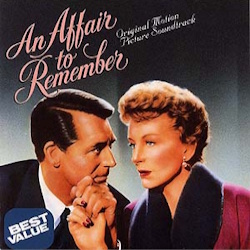 GREATEST SCORES OF THE TWENTIETH CENTURY
Original Review by Craig Lysy
In 1952, 20th Century Fox studio executives decided that they wanted to remake one of the most popular romantic films of all time – 1939’s “Love Affair,” which starred Irene Dunne and Charles Boyer. Fernando Lamas and Arlene Dahl were initially assigned to star in the remake, but the project stalled and did not regain traction until 1956, when Leo McCarey and Jerry Wald took over production with a $2.1 million budget. They chose to use the same screenplay as the 1939 film by Delmer Daves and Donald Ogden Stewart. McCarey would also direct the film and brought in a splendid cast, including Cary Grant as Nicolo Ferrante, Deborah Kerr as Terry McKay, and Richard Denning as Kenneth Bradley.
The story is set aboard the transatlantic ocean liner SS Constitution. By chance, Terry and Nickie, a painter, become acquainted and gradually develop a romantic attraction to one another; however, there exists a significant impediment—both are already in relationships. They agree to meet on the observation deck of the Empire State Building in six months if they have succeeded in ending their relationships and beginning new careers. On the fateful day, Terry is struck by a car and gravely injured, leading Nickie to conclude that she has chosen to continue with her former life. Six months later, they meet at the ballet, he attending with his former fiancée and she with her former boyfriend. They are cordial, but Nickie does not realize that Terry is unable to walk, as she remains seated. They eventually reunite, and he discovers her condition, as well as a painting he had gifted to a woman who had no money, now hanging in her bedroom. They realize they remain in love, and the film closes with Terry declaring, “If you can paint, I can walk. Anything can happen, don’t you think?” The film was a huge commercial success, earning a worldwide profit of $7 million. Critical reception was mixed, with criticism directed at the latter half of the film, which stretched credulity. Nevertheless, it secured four Academy Award nominations for Best Cinematography, Best Costume Design, Best Original Song, and Best Film Score.
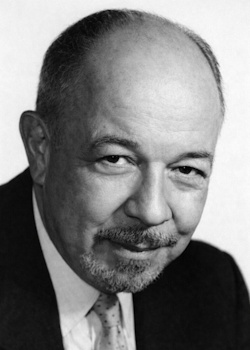 Hugo Friedhofer was assigned the project by Alfred Newman, Director of Music at 20th Century Fox Studios. It would be the only film on which he collaborated with director Leo McCarey. McCarey wanted a title song that would serve as the score’s defining theme, and Harry Warren was tasked with writing the music, with Harold Adamson and McCarey providing the lyrics. Writing the song proved torturous for Warren, who composed twenty-five melodies before arriving at a version that satisfied McCarey. Friedhofer was then instructed to provide a musical score that would incorporate the song’s melody. Upon viewing the film, one can surmise that Friedhofer recognized its core as a romance between two people dissatisfied with the trajectory of their lives, who meet by chance, fall in love, and must overcome forces beyond their control that impede their path to happiness. When all is said and done, Friedhofer succeeded in composing one of his finest and most romantic scores, earning him a well-deserved Academy Award nomination.
There are five songs, with music by Harry Warren and lyrics by Harold Adamson and Leo McCarey, integrated into the fabric of the score: “An Affair to Remember (Our Love Affair),” sung by Vic Damone; “Continué,” sung by Marni Nixon; “The Tiny Scout (He Knows You Inside Out),” sung by Marni Nixon; “Tomorrow Land,” sung by Marni Nixon; and “You Make It Easy to Be True.” There is also one French love song, “Plaisir d’Amour” (1784) by Jean-Paul-Égide Martini, sung by Marni Nixon.
For thematic material, Friedhofer provides four primary themes, including the Main Theme, which is, in reality, the Love Theme (“Our Love Affair”), serving as an idée fixe and the beating heart of the score. Musically, it unfolds as a sophisticated jazz piece with a sweeping romantic arc. Particularly masterful is how Friedhofer weaves this melody throughout the film to mirror Nickie’s and Terry’s emotional journey, transforming its early shipboard lighthearted, flirtatious, and playful tone into a sweeping, more poignant, melancholic, and tragic orchestral expression as the characters confront forces beyond their control. He also fragments this core melody into shorter, more subtle statements to represent the pair’s growing intimacy without reprising the full Love Theme in its entirety. For romantic ambiance, Friedhofer composed delicate woodwind passages, supported by refulgent high-register strings and shimmering piano solos, to reflect the intimacy of Nickie and Terry’s relationship.
The melody from the song “Tomorrow Land” serves as the second theme, offering a brighter and more hopeful contrast to the score’s more dramatic elements. This tender, aspirational melody provides a dreamlike escape into a perfect future where worries vanish and love thrives. The third theme derives from “Continué,” functioning as an ambiance theme that appears early in the film to establish the sophisticated, European atmosphere of the cruise ship. It is expressed as a soft jazz instrumental rendering of the melody and often serves as a prelude to the Love Theme. “Plaisir d’Amour” offers a tender, piano-borne romantic ballad. The lyrics translate to: “The pleasure of love lasts only a moment; the grief of love lasts a lifetime.” As such, the song serves as a poignant musical metaphor for the characters’ journey, emphasizing that the intense yet fleeting pleasure of their initial love affair is overshadowed by the potential for either lifelong sorrow or enduring love. Lastly, Deborah Kerr’s character Terry is a singer, and so her performances, including the title song, were dubbed by soprano Marni Nixon. As is customary in musicals, these vocal vignettes are seamlessly supported by Friedhofer’s orchestral arrangements, thereby maintaining a consistent emotional tone and a unified musical narrative.
(*) “Logo” offers Alfred Newman’s iconic extended 20th Century Fox – CinemaScope fanfare. “Main Title – An Affair To Remember” offers a score highlight, which establishes the film’s romantic tale expressing the Love Theme, “Our Love Affair” in song form. We open with trumpets dramatico declarations as the opening credits unfold in lavender script against a snowy New York Central Park backdrop. It usher in the titular song sung with the mellow and silky baritone vocal of Vic Damone, who is supported instrumentally, and by an angelic woman’s chorus.
In an unscored montage, reporters from New York, Rome and London all announce the upcoming marriage of multi-millionairess Lois Clarke and playboy Nickie Ferrante, who is sailing to New York from Europe on the U.S.S. Constitution. (*) “Signor Ferrante” reveals the Constitution sailing the ocean, with the camera taking us to the main deck where a porter with a telegram repeated calls out for Signor Ferrante. A light and care free instrumental rendering of the Main Theme rendered as source music supports. He takes a phone call from a vengeful Gabriella a former paramour who threatens a knife stab in the back for betraying their love. He feigns being disconnected, and hangs up. “In Continue”, as he walks, he sees a woman carrying his cigarette case and asks for it back. She comes to him and confesses that she is a jewel thief. They engage in playful banter and we discern a nascent attraction. He decides to go after her, and in the corridor asks that given her honest face, could he confide in her. She agrees, and he invites her to his room, but she insists, and so they enter her room. Friedhofer supports by setting a beautiful, elegant and romantic ship board ambiance, using a soft jazz instrumental rendering of the song melody. Music departs once inside the cabin as the engage in some repartee before he encounters a brick wall – a photo of her and her fiancé. As he probes, she relates her faithfulness for five years, and so offers something benign like shuffleboard. She declines, but does accept his dinner invitation.
(*) “Dinner” reveals the two entering the restaurant for dinner. An upbeat and playful rendering of the Main Theme supports. Later, over coffee and cordials, the music shifts to a more light-hearted, romantic iteration of the Main Theme. Yet it resumes a playful bearing when he becomes chagrined as she exposes, with the deftness of a surgeon, his womanizing. They agree to spend time together tomorrow, and the song transforms into a waltz iteration, which dissipates as we see him on the sun deck. As they chit chat, a porter brings telegrams for both of them, which causes them to suspend the conversation as they read. They both relate it is from their respective fiancés and she proceeds to reveal her life, including that she is a professional singer. Things go south after a photographer takes their picture, as she does not want a scandal of her appearing in newspapers with him. And so, she bids him farewell despite his pleading that he would find the voyage monotonous without her. A coda of a dreamy Main Theme closes the scene.
Later that night in “Pink Champagne”, we see Nickie inquiring about pink champagne at the bar, which he orders. Terry arrives, orders pink champagne, and is surprised when the bartender pours two glasses. When Nickie joins, she smiles and they discuss how each will be dining alone tonight. When two women arrive and sit next to them, he agrees to her request for a discreet exit. In the restaurant Terry takes a table not knowing that Nickie is sitting behind her back on the other side of a separating panel. The restaurant patrons begin laughing at this circumstance, which results in their self-discovery. She is embarrassed and departs leaving him alone to suffer the room’s amusement. The comedic scene is supported with music by Warren and orchestration by Lionel Newman, which offers a light and bubbly romance piece, a musical metaphor for the light-hearted and flirtatious romance between Nickie and Terry. The next day a sumptuous string borne Continué theme establishes an elegant ambiance as we open with a shot of the Constitution, and then shift to Terry in a bathing suit at the pool. She dives in, Nickie arrives and dives in and they bump heads. The ship horn signals its arrival at the port of Villefranche-sur-Mer and he says he has someone to meet. When she says a girl in every port? He says, yes, and in this case, his grandmother. He then entraps her into joining for the visit.
“Villefranche” offers a romantic score highlight, where Friedhofer bathes us with a sunny, charming, and romanticism of the French Riviera, which reflects the blossoming romance between Nickie and Terry. We are bathed by sumptuous strings, woodwinds gentile with strummed harp adornment. We see people boarding tender boats to take them to shore with a horse drawn carriage taking Nickie and Terry through the winding streets of the town. At 1:13 we segue into “The Chapel”, a stirring score highlight, atop church bells. The music pauses as they arrive at a hilltop estate with gardens, which Terry finds beautiful. He calls out Janou and no one answers. A dog laying outside the chapel informs him that she in in the chapel. She emerges and hugs him with great maternal love. Terry visits the chapel, and Nickie joins as mama goes to make tea. Music resumes at 1:15 as Nickie finds her praying reverently to the virgin Mary. He kneels beside her and they share a profound moment together. Friedhofer fully embraces a stirring religiosity by transitioning to a more reverent, solemn, and emotional melody, empowered by choir, and strings teneri. Later in an unscored scene Janou and Nickie engage in a tête-à-tête during which Terry discovers Nickie’s artistic talent as a painter and pianist, with Janou relating that she is the only woman she has seen that makes Nickie, comfortable. Nickie joins and presents Mama with a gift – a portrait of Grandpa, which deeply moves her. They then toast with a cordial, but Mama rejects Terry’s suggestion of “To a happy marriage”, instead offering, “May your voyage home be a happy one.”
(*) “Plaisir d’Amour” offers a romantic score highlight. It opens with the ship’s horn blowing, signaling that they must return to ship. Nickie insists that Grandma play a tune on the piano before they leave. She accommodates, and Friedhofer graces us with an exquisite rendering of the traditional French romantic song by piano romantico. Midway, Terry joins with humming, and then sings the song in French. Here the repeating blasts of the ship’s horn causes them to stop the performance. They bid farewell, and it is clear Janou favors this union as she promises to bequeath her white lace shawl to her. Terry is overcome, and runs back to give her a warm hug goodbye. We flow into “Revelation” a gorgeous romantic score highlight. This scene marks the demarcation point of the film where the reality of Nickie and Terry’s affair reaches a fateful fork in the road. Friedhofer responds by shifting the expression of his soundscape from a light, fanciful, and airy romantic comedy style to a now heavy, and dramatic tone using minor keys and slower tempos. We open with a shot of the Constitution, which draws in to a contemplative Terry standing alone on the observation deck. Friedhofer opens with a foreboding descent by a dark pall adorned by a misterioso of harp glissandi, from which arises a plaintive, aching Love Theme full of yearning as Nickie joins her. As the Love Theme unfolds, shifting eloquently at 0:51 to a solo violin romantico, he states that she has been crying. She says beauty does that to her, and then thanks him for the loveliest and most memorable day in her life. He moves towards her, and she says, let’s walk supported at 0:59 by a reprise of the Love Theme led by a solo oboe triste, which expands on sumptuous strings romantico. At 1:20 their descent down the stairwell stops, Nickie ascends to her and the theme blossoms with exquisite romanticism as they join in a kissing embrace. They resume their descent, and he says, no more tears, to which she replies; “We’re heading into rough seas Nickie.” He replies; “I know, we changed our course today.” We close with her declining his offer to see her to her cabin. At 2:49 the aching romanza ends and we reprise the scene opening with a shot of the ship, now in a rainstorm, draped with a foreboding dark pall adorned by a misterioso of harp glissandi. We close with the Love Theme fading on a diminuendo of uncertainty as Terry ponders her future in her cabin.
A knock on the door ends her reflection, and she opens to find Nickie. He tries to come in, but she stops him, saying we must avoid a scandal. She then sends him off saying they both need to reflect in the privacy of their rooms and meet tomorrow. He tenderly kisses her hand, and departs. The next day they meet with her on the pool deck stairs, and he on the sun deck below. She will not allow him to join, instead asking him to circle as they discuss their circumstances and feelings. He wants to dine together, but she is afraid of further gossip. Later that night Nickie shows up to dine with Terry, but the matre’d informs her that she has finished. As she departs past him, she flippantly recommends the Bouillabaisse. Days later in “The Photos” We open pensively with a shot of the Constitution and then join Terry in her cabin. Mr. Hathaway joins, inquires about Mr. Ferrante, and she asserts she has not seen him in days. At that moment, Nickie arrives and gifts her a book, saying he has not seen her in days. Hathaway then drops a bombshell, saying that since you are both here, could you sign these photos. They look and are shocked to see three photos of them together in intimate shots. They ask where did he get them, and are stunned when he says from the ship’s photographer who is selling them on the Promenade deck to the passengers. Nickie shows Hathaway out, and frets that this is dreadful. With the cat now out of the bag, they agree there is no reason to continue the charade, and so agree to resume activities and make the most of it given that this is their last night.
(*) “The Dance” reveals Nickie and Terry dancing to “You Make It Easy To Be True”, rendered as a danza felice. Hathaway tries to cut in, Nickie is dismissive, and they continue to dance. The song is now sung by a men’s quartet, with Nickie and Terry chiming in. They move outside to the promenade deck and dance cheek to cheek. (*) “The Dream is Shattered” reveal her asking; “Why can’t we go on doing this forever?” as they continue to dance intimately, a world unto themselves. The moment is however shattered, as reality resumes in the form of the song “Auld Lang Syne”, which wafts out from the dance floor. They stop dancing, and she turns, and walks away without a word. He follows, and as they stand by the railing, he says, “Tomorrow, New York”. He then asks if he will be waiting? She pulls out a telegram to show him, but it is lost to the breeze. She asks; “Will she?” and he fumbles, is unable to find her telegram, and says, yes. He asks if she is still in love with him, and she replies; “I am not now”. She relates that you do not work, that life would be very different, and could he switch from pink champagne to beer? We flow into “Proposal”, a gorgeous romantic score highlight, with an exquisite exposition of the Love Theme. Friedhofer supports with an aching romanticism and a sense of profound longing and tenderness as they ponder; it is now, or never. At 0:27 the Love Theme joins on strings romantico as he declares that we would be fools if we let this pass by. He proposes that if he works hard for six months, where would she be? When she asks what does he mean? He answers that he wants to be worthy of asking her to marry him. She is very moved and this is reflected in their Love Theme. She says that she is turning in, will reflect on this, and discuss with you in the morning. As she departs, she turns and says marriage is a big decision for a girl like her. He acknowledges this, and she asks, if he likes children? To which he replies, yes. A she departs, a solo violin romantico draped with harp tresses supports.
(*) “Arrival in New York” reveals a shot of the ship sailing to a gentle rendering of the Love Theme. As they sail in the harbor, Terry joins Nickie on the promenade deck. They both relate of not being able to sleep and agree to a pact; to meet in six months on July 1, 5:00 pm at the top of the Empire State building. This would allow time to sort out their current relationships, and affirm their decision to begin a new life together. They kiss goodbye, and we shift to Terry and Nickie watching the ship dock, as each watch the other waving to their fiancés. Celebrity photographers take awkward pictures of Nickie and Lois, with Terry stuck behind center view. She pushes through and is hugged by her fiancé Ken. We shift to Nickie arriving at Lois’ estate and finds a camera crew ready to film and interview the couple about the heralded romance, which has captured the imagination of the whole world. Shifting to Ken and Terry, he notices her kisses have changed, and that she seems, off. He inquires if she met Ferrante, and she says yes. When he asks if he charming, she says yes. He withdraws his question if she found him irresistible and accommodates her request to watch the Ferrante interview, which reveals him as remote, and providing stiff, one-word answers. Nickie shocks Lois when he says he will support her by painting, and then when asked when they will be married, he answers, in six months.
(*) “Can’t You See I am in Love?” Ken senses that something is off, and so repeats his question; “Did you find him irresistible?” Her silence affirms his suspicions. He turns away, turns off the TV, and says this just doesn’t make sense. She cries and said you never plan things like this. They just happen. He tries to dissuade her by speaking of his reputation and that he lacks means to support her. He grabs her an says; “Can’t you see I am in love?” She answers; mm, hmm. So am I” and an anguished Love Theme, draped with a shimmering misterioso punctuates his departure, as the glass on the open patio door reflects an image of the Empire State building. A woodwind and horn bridge take us to a New York Street art fair, fading on a diminuendo as we journey up to Nickie’s studio where Courbet, an art gallery owner friend, evaluates one of his paintings. The critic says he could sell all his paintings if he would only sign them Ferrante, but Nickie is adamant, saying he will sign Rossi, as the old Ferrante is dead. Nickie says he will just have to get a job, as he needs to make a lot of money soon. Courbet smiles, says he will treat him for lunch and be paid back when he becomes a successful business man.
“Tomorrowland” reveals that Terry has returned to Boston and her singing career as a Night Club bill board display proudly presents, Terry McKay. We hear her singing this tender, aspirational song, which offers a dreamlike escape into a perfect future where worries vanish and love thrives Back in New York, Courbet calls up from the sidewalk to Nickie, who is reduced to setting up advertisement billboards. He relates that he sold a painting for $200, which make him very happy. “Night Club Affair” reveals Terry announcing her final performance in which she selects a song, which is very dear to my heart. She offers a heartfelt performance of the titular song, full of yearning, and hope. (*) “Return to New York” reveals Terry the next day on an airplane flying to New York, supported by shimmering tremolo strings and a fragment of the Love Theme. She returns to her favorite dress shop and asks for a very special dress, one that is inexpensive, irresistible, and pink. In the back room, the owner talks to Ken, who directs her to give her anything she wants. As she is leaving, Ken arrives and they reacquaint, but it is 4:55 pm and she says she is in a frightful hurray to get married. He wishes her well and adds if she ever needs anything, to call him.
In “Empire State Montage” Terry gets out of the cab, and rushes across the street and we hear tires screeching, and a scream, punctuated by a grave quote of the Love Theme borne ever upwards as the camera slowly pans up the Empire State building. On the 102nd floor Nickie paces nervously, which is reflected in the Love Theme, which slowly loses its vibrancy. With each opening of the elevator doors, he, and the music become more anxious. At 1:04 tolling bells join and the music descends into despair as he begins to contemplate the worst. At 1:23 we switch to a hospital room where Ken and the doctor watch a hysterical Terry, who cries out incoherently for Nickie to please turn the boat around and help her. Friedhoffer offers a dissociated Love Theme barely noticeable within the eerie and unsettling textural music. At 2:02 we return to Nickie, who is alone in the dark with Friedhofer supporting with ominous tolling bells. A now dire musical narrative unfolds as a plodding maricia della morte as a devastated Nickie gives up. We close with an anguished Love Theme as he boards the elevator and departs. Back at the hospital the doctor advises Ken that it is hard to say if she will ever walk again, and we will not know for quite some time. Father McGrath exits the room and tells Ken, that she wants to see him. He enters and she informs him that she told father about us, and that he agreed to try to find her a job when she recovers.
“Return To Villefranche” reveal a return to the Constitution where we see a despondent Nickie looking out over the moonlit waters. The Love Theme reprises, and reflects this despondency. He arrives at the port of Villefranche and returns to his ancestral home, which now seems empty with the passing of Janou. Friedhoffer offers a musical narrative within which is woven a wistful Love Theme as he arrives, enters the house, and remembers better times. The Love Theme shift to piano with Terry’s wordless vocal accompiament as his hand rests on the piano. At 2:39 we flow into Plaisir d’Amour as Terry’s French vocal joins the piano. We shift back to an instrumental rendering of the theme as Marius arrives, and gives him the lace shawl grandma had promised Terry. “The Tiny Scout” reveals that Terry has been discharged from hospital, is unable to walk, and has found work as a music teacher. She has purposely avoided contact with Nickie due to her disability. The scene opens with a cacophonous children’s orchestra tunning up for their performance for Father McGrath, Terry, and a dozen parents. Terry prepares to direct a performance of the song “Tiny Scout” for orchestra and mixed children’s chorus, and sing the part of Mollie, who has the measles. The playful, bouncy, and light-hearted song provides a moral commentary, which serves as a metaphor for a person’s conscience. The lyrics describe our internal guide as a supportive, knowing presence that distinguishes right from wrong, and good from bad, acting as a friend who “knows you inside out”.
It has been six months since the accident, and Courbet welcomes Nickie to his gallery, which reveals all of Nickie’s paintings that will be shown in an upcoming exhibition. Lois calls and he accepts her invitation to attend the ballet tonight, with the proviso that he keeps the time after the show open. “Ballet” features an original composition, a valzer elegante by Lionel Newman, which supports the ballet performance. As they depart, Nickie locks eyes with Terry, bends to pick up her hand bag off the floor, and returns it to her. She offers an awkward hello, to which he responds to, and then departs with Lois. Terry is taken aback, realizing that she is still in love with him. A dutiful Ken notices, offers to let Nickie know, but she says no, and quips, the show is over, and the boy got the girl. We close with an usher bringing her a wheelchair. Lois drops Nickie off at his apartment and relates that taking him to a show tonight was in retrospect, not a good idea, to which Nickie responds, Merry Christmas. A contemplative Nickie decides to take a walk before turning in, while in a taxi, Ken relates his disappointment taking Terry home while everyone else is going out. They once again argue about her recovery costs, with her refusing his as he would be upset when she returned to Nickie, and refusing Nickie as he does not have the money, and you would not like. When Ken argues that he should know, she says no because he would insist upon doing it himself. She says she will consider it when she can walk again. (*) “Nickie Alone” reveals him arriving a street corner overlooking the Empire State Building, which Friedhofer supports with a mournful Love Theme, full of regret, joined by an ascent motif as the camera pans up the building. (*) “Tomorrowland Reprise” reveals a visit of the children to Terry’s house. The doctor has prescribed bed rest, and they are sad she will not conduct their Christmas Eve performance. They offer a parting gift, a reprise singing of the song “Tomorrowland”, which is attuned to Terry’s circumstances in that its lyrics speak of a dreamlike escape into a perfect future where worries vanish and love thrives.
In “End Title – An Affair To Remember”, the next day we see Terry’s maid setting her up on her sofa. She departs leaving Terry reading a book, opens the door, and finds Nickie, who asks for Miss McKay. He enters, and the conversation is awkward with Nickie seeking answers. He manages to cleverly entrap her when he says she must have been very upset when he did not show up, and she says, yes, I was furious. She digs a deeper hole by responding to how long she waited, by saying, until midnight. Terry deflects further probing and he notices that she wears no wedding ring. The conversation begins to express a growing bitterness by him, which she diffuses by wishing him Merry Christmas. This reminds him, and he gifts her the shawl promised by Janou, who has died. Music enters on a mournful solo violin as she relates; “That is why my letters came back.” She dons it and all the memories return. Slowly, the Love Theme begins to gain vitality as he kisses her hand goodbye. Yet at 1:03 the music darkens as he walks to the door, and turns about with a perplexed expression. The Love Theme begins to slowly emerge as he relates that he painted her in the shawl, cherished it, but decided there was no use keeping it any longer. He allowed the gallery to gift it to a young woman, in a wheelchair who said she liked it. At 2:00 an ascending, string borne crescendo of urgency takes him to the bedroom door. He opens it, enters and at 2:10 the Love Theme blossoms with stirring rebirth as we see the portrait hung on the wall. We see on his face the realization that Terry was the woman in the wheelchair. He is overcome, returns to her, kneels, as she says to please not look at her like that. Their theme is now reborn and begins a stirring ascent, joined by wordless women’s chorus. He asks why she did not tell him, and if it had to happen to one of us, why did it happen to you? He hugs here and she cries with joy saying; “If you can paint, I can walk. Anything can happen, don’t you think?” The music concludes with exquisite romanticism, with a choral sung coda of the titular songs last phrase; A love affair to remember.
The 1993 Epix Soundtrack CD offers poor audio quality for there with is hiss and crackling throughout, which is a shame, but also an opportunity as this score merits a re-recording. Hugo Friedhofer, like Max Steiner in “Casablanca” was ordered by the director to use a source song as a Love Theme, and idée fixe. No composer likes such an imposition, but when all was said and done, Friedhofer, like Steiner, made the song his own and earned an Academy Awards nomination. Masterful is how Friedhofer interpolates three romantic song melodies throughout the film to express a quintessential Golden Age romantic musical narrative, which mirrors Nickie’s and Terry’s romantic arc. The “Our Love Affair” Love Theme transforms from a lighthearted, flirtatious, and playful tone, for their ship board tryst, to a more poignant, melancholic and tragic orchestral version as Terry’s accident derails their hope for a lifetime together in love. The Tomorrowland melody is aspirational, and reinforces their romance by offering a dreamlike escape into a perfect future where worries vanish and love thrives. Lastly, the “Plaisir d’amour”, song melody offers a poignant musical metaphor for the characters’ journey. It presages that the intense, fleeting pleasure of their initial love affair is overshadowed by the potential for either a lifetime of sorrow or a profound and enduring love, as stated with the song’s opening lines; “The pleasure of love lasts only a moment; The grief of love lasts a lifetime”. Folks, I believe this to be perhaps Friedhofer’s most romantic score, which in my judgement elevated the film’s storytelling in every way imaginable. Indeed, I believe the score in the final assessment, transcended the film. If you like a score with a multiplicity of beautiful themes, which evokes romance, comedy, and tragedy, then this is the score for you. While I cannot recommend the album purchase, I do recommend streaming the film to witness the enduring power of film score music.
For those of you unfamiliar with the score, I have embedded a YouTube link to the Main Theme: https://www.youtube.com/watch?v=Jd2sr9B3TUo
Buy the Affair to Remember soundtrack from the Movie Music UK Store
Track Listing:
- Main Title – An Affair to Remember (Our Love Affair) (written by Harry Warren, Harold Adamson, and Leo McCarey, performed by Vic Damone) (1:52)
- Continué (written by Harry Warren) (3:02)
- Villefranche and In The Chapel (3:35)
- Tomorrowland (written by Harry Warren, Harold Adamson, and Leo McCarey, performed by Marni Nixon) (2:18)
- Pink Champagne (1:52)
- Revelation (3:13)
- You Make It Easy To Be True (written by Harry Warren) (1:11)
- Proposal (2:34)
- Continué (written by Harry Warren, Harold Adamson, and Leo McCarey, performed by Marni Nixon) (1:42)
- Night Club Affair (written by Harry Warren, Harold Adamson, and Leo McCarey, performed by Marni Nixon) (2:17)
- Empire State Montage (2:51)
- Return to Villefranche (based on ‘Plaisir d’Amour written by Jean-Paul-Égide Martini, performed by Marni Nixon) (3:57)
- The Tiny Scout (He Knows You Inside Out) (written by Harry Warren, Harold Adamson, and Leo McCarey, performed by Marni Nixon) (3:21)
- Ballet (1:03)
- End Title – An Affair to Remember (Our Love Affair) (written by Harry Warren, Harold Adamson, and Leo McCarey, performed by Vic Damone) (3:54)
Epic Soundtrax EK-57568 (1957/1993)
Running Time: 38 minutes 42 seconds
Music composed by Hugo Friedhofer. Conducted by Lionel Newman. Orchestrations by Edward Powell and Ken Darby. Recorded and mixed by XXXX. Edited by XXXX. Score produced by Hugo Friedhofer. Album produced by XXXX..

Shop at the Movie Music UK Store

Member of the


