Archive
LOVER’S PRAYER – Joel McNeely
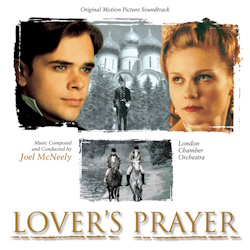 Original Review by Jonathan Broxton
It’s not very often that I’m forced to eat my words, but I have to admit that Joel McNeely has astounded me recently. It’s common knowledge that I came down like a ton of bricks on The Avengers, Virus and Soldier, three scores hardly worth the manuscript they were written on. I considered his return to form on the TV movie Sally Hemings, while undoubtedly a lovely piece of work, as nothing more than a long-overdue redressing of balance: easily his best score since the days of Iron Will, but nothing to get excited about. Against all expectations, especially my own, his new score for Lover’s Prayer is better yet, a full-bodied orchestral romance that completely knocks the stuffing out of everything he has written in the past. Read more…
Jack Nitzsche, 1937-2000
 Composer Jack Nitzsche died on August 25, 2000, in hospital on Los Angeles, of cardiac arrest brought on by a recurring bronchial infection. He was 63.
Bernard Alfred Nitzsche was born in Chicago, Illinois, in April 1937, the son of German immigrants, and raised on farm in Michigan. He moved to Los Angeles in the late 1950s with aspirations of becoming a jazz saxophonist, but soon found his calling in arranging and studio work. He initially worked for Sonny Bono, but later found his niche working as an arranger for producer Phil Spector. He played a pivotal role in shaping Spector’s the “Wall of Sound,” and was an important contributor to legendary recordings by pop and rock artists including The Ronettes, The Righteous Brothers, Jackie De Shannon (‘Needles and Pins’), and Ike and Tina Turner (‘River Deep Mountain High’).
Later, in the 1960s and ’70s, he collaborated with a wide array of artists, including The Rolling Stones – contributing keyboards and orchestration on several albums, especially songs such as ‘Paint It, Black’ and ‘You Can’t Always Get What You Want’ – and Neil Young, with whom he had a long and occasionally volatile creative partnership.
Nitzsche’s film work was equally distinguished. His first important score was for the 1970 thriller Performance starring Mick Jagger, and he provided ‘uncredited contributions’ to the soundtrack for The Exorcist in 1973. He received his first Oscar nomination for One Flew Over the Cuckoo’s Nest in 1975, and he won an Oscar for the song “Up Where We Belong” from An Officer and a Gentleman in 1982, which he co-wrote with Buffy Sainte-Marie and Will Jennings.
His other important scores include Cruising (1980), Starman (1984), The Razor’s Edge (1984), The Jewel of the Nile (1985), 9½ Weeks (1986), Stand By Me (1986), Revenge (1990), Mermaids (1990), and Blue Sky (1994). His last major score was the for the Sean Penn-director drama The Crossing Guard in 1995; he suffered a stroke in 1998 which ended his scoring career. Read more…
Remembering David Rose, 1910-1990
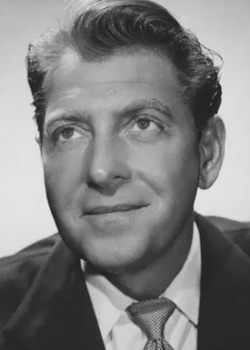 Composer, arranger, conductor and orchestra leader David Rose died ten years ago today in Burbank, California, on August 23, 1990, at the age of 80, from heart failure.
One of Hollywood’s busiest musical craftsmen, Rose scored 36 films and wrote themes and background music for 24 television series, while also enjoying major success as a recording artist. His best-known compositions included “Holiday for Strings” and the chart-topping instrumental “The Stripper.”
David Daniel Rose was born in London on June 15, 1910, and grew up in Chicago. He began playing piano professionally as a teenager and by the early 1930s was leading the house orchestra at radio station WGN. Moving to California in 1940, he became increasingly active in radio and subsequently joined MGM as a musical director. During World War II he served in the U.S. Army and worked on the musical Winged Victory, where he met comedian Red Skelton.
Rose’s first major popular composition was “Holiday for Strings,” recorded in the early 1940s and soon established as one of the most familiar pieces of American light orchestral music. His Hollywood career developed alongside his recording work, and in 1944 he received an Academy Award nomination for the Bob Hope comedy The Princess and the Pirate. The following year, “So in Love,” written with lyricist Leo Robin for Wonder Man, brought him a second Oscar nomination. Read more…
THE GREEN BIRD – Elliot Goldenthal
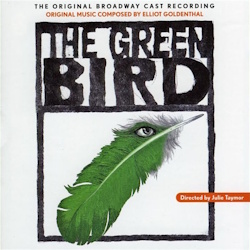 Original Review by Jonathan Broxton
One of the best things about being a fan of such a broad genre as film music is that, occasionally, you get to branch out and follow a composer best known for his soundtrack work into another arena entirely. Elliot Goldenthal, for the best part of twenty years, has been as musically active in the theatre as he has in the cinema. His stage works have include original scores for the plays ‘The King Stag” and “The Serpent Woman”, the concert works “Juan Darien” and “Fire Water Paper”, as well as his acclaimed ballet “Othello” which was released by Varèse Sarabande to great acclaim. The Green Bird marks the third time he has tackled the work of 18th-century playwright Carlo Gozzi, and once again features the idiosyncratic direction of his real-life partner and regular professional collaborator, Julie Taymor. Read more…
THE CELL – Howard Shore
 Original Review by Jonathan Broxton
Writing a review of a film score like The Cell is a very difficult thing to do. The music is so challenging and abstract it almost defies conventional description, and unless you have seen the film it is difficult to appreciate Howard Shore’s scoring techniques which, away from the screen, seem to be made up of mere random noise and ear-shattering dissonance. It’s also a very difficult score to “enjoy” on any kind of emotional, or thematic level, simply because the music is so consistently harsh. Instead, where The Cell’s brilliance lies is in its complexity and structure, and for the thought processes that went into its creation. Read more…
BLESS THE CHILD – Christopher Young
 Original Review by Jonathan Broxton
Having passed the turn of the millennium without so much as a hint of Armageddon, it may seem a little odd for a film dealing with the end of the world on 31 December 1999 to make an appearance now – but Bless the Child has suffered such a turbulent post-production, with re-shoots, re-editing and re-writing galore, that this troubled supernatural thriller is only just now beginning to visit cinema screens across the world. Directed by Chuck (“The Mask”) Russell and starring Kim Basinger, Jimmy Smits, Rufus Sewell, Ian Holm and Christina Ricci, Bless the Child tells the story of Maggie O’Connor (Basinger), a comparatively normal working woman whose world is turned upside down when her six year old niece Cody is kidnapped. As Maggie frantically searches for Cody, she slowly learns that the young girl is not all she seemed: apparently, Cody has special psychic powers which, when applied in a certain manner, can open a gateway between Earth and the Netherworld, where legions of evil demons are waiting to invade. Turning to a paranormal investigator (Smits) as a last, vain hope, Maggie tracks Cody down to the lair of a group of devil worshippers (led by Sewell) and engages in a battle for the soul of the child. Read more…
DRAGONHEART: A NEW BEGINNING – Mark McKenzie
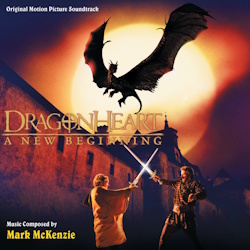 Original Review by Jonathan Broxton
I’m going to start my review of Dragonheart II with the old chestnut “why doesn’t this composer get more work?” But you have to understand that, when I say that, I really do mean it. It pains me to see talentless hacks rise to the top of the scoring ladder writing bland action music for bland action movies, while imaginative, artistic composers like Mark McKenzie are stuck doing orchestrations for other people and scoring straight-to-video sequels like this movie. Other than the score and the special effects, there was very little going for the original Dragonheart – and certainly not enough to warrant a sequel. The screenplay was poor, the execution left a lot to be desired, and as a result it didn’t do particularly well at the box office. But despite all that, here it is – director Doug Lefler’s sword and sorcery follow-up that sees the original dragon’s son, Drake, teaming up with a young vagabond to do battle against evil knights and mysterious Chinese monks in an ancient kingdom. It’s got a great cast – anyone ever heard of Chris Masterson, Henry Van Gorkum or Matt Hickey? – and features Robby Benson (who regularly contributes to Disney animated features) as the voice of the fire-breathing lizard himself. Read more…
HOLLOW MAN – Jerry Goldsmith
 Original Review by Jonathan Broxton
Throughout cinema history, the story of the invisible man has been invented and re-invented by each subsequent generation. From James Whale’s 1933 classic with Claude Rains in the title role, to the popular 1970s TV series starring David McCallum, man’s fascination with making himself diaphanous has made for compelling viewing. In Hollow Man, director Paul Verhoeven has taken this principle one step further, by making his invisible man not just invisible, but also psychotic and murderous: driven insane by the scientific methods that gave him his power. Gory, and more than a little gratuitous (inspect the rear of the insert card for proof!), Hollow Man stars Kevin Bacon as Sebastian Caine, a brilliant but slightly deranged scientist who has perfected a serum that will render whoever uses it invisible. Despite the protestations of his loyal assistant Karen (Elisabeth Shue), and the remainder of his staff, Sebastian tests the drug on himself, with horrific results. Read more…

Shop at the Movie Music UK Store

Member of the


