Archive
UN LONG DIMANCHE DE FIANÇAILLES/A VERY LONG ENGAGEMENT – Angelo Badalamenti
 Original Review by Jonathan Broxton
With the exception of the cult TV series Twin Peaks and the Golden Globe-nominated score for David Lynch’s poetic drama The Straight Story, the vast majority of Angelo Badalamenti’s work has been written for projects on the fringes of the mainstream. He works with offbeat, independent directors like Paul Schrader, and often writes music for films with little or no commercial potential, and often in languages other than English. I’ve been telling myself that I’m a fan of his for quite some time but, when I actually sit down and think about the numbers involved, there are really only four or five titles I actually like: Cousins, The Straight Story, The Beach and Secretary are among them. For this reason I approached his score A Very Long Engagement with a combination of anticipation and unease; on too many occasions, Badalamenti has slightly disappointed me with his final product, despite each film having great potential for excellent music. Fortunately, this is not the case here. Read more…
ALEXANDER – Vangelis
 Original Review by Peter Simons
Since the unexpected success of Ridley Scott’s 2000 sword-and-sandals hit Gladiator, historical biopics are in fashion again; showing us glimpses of the lives of Attila, Helen of Troy, Hannibal and, in this instance, Alexander the Great. Oliver Stone’s film primarily focuses on the eight years of the Macedonian king’s life during which he conquered the vast majority of the then known world. By the age of 25, Alexander (played here by Colin Farrell) had led his armies from Macedonia to India and paved the way for Greek culture to spread its influence. Somewhat controversially, the film also emphasizes Alexander’s bisexual nature and his relationship with boyhood friend Hephaestion (Jared Leto). The spectacular supporting cast Stone gathered together includes Angelina Jolie as Alexander’s mother Olympas and Anthony Hopkins as Old Ptolemy, as well as Val Kilmer, Christopher Plummer and Rosario Dawson. Read more…
EARTHSEA – Jeff Rona
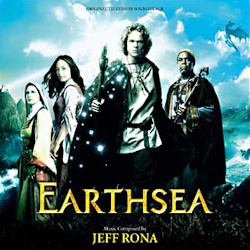 Original Review by Jonathan Broxton
Jeff Rona has had an interesting, somewhat unique career to date. The 48-year old American was one of the first composers-in-residence of the Media Ventures organisation when it first started up in the early 1990s, and scored the biggest hit of his career replacing Maurice Jarre on Ridley Scott’s White Squall in 1996, before sort of disappearing. He has contributed “additional ambiences” to occasional Zimmer outings, and written for TV productions such as the recent “Traffic” spin-off, but for some reason has never truly built on the potential he showed in the early 1990s, or capitalised on his association with Hans Zimmer the way other early-MV composers such as Mark Mancina, Trevor Rabin, Harry Gregson-Williams or John Powell have. Read more…
Remembering Irwin Kostal, 1911-1994
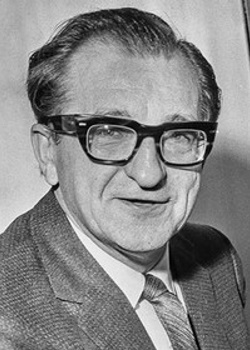 Composer, arranger, orchestrator and conductor Irwin Kostal died ten years ago today, on November 23, 1994, in Studio City, California, at the age of 83, following a heart attack.
One of the great musical craftsmen of the Hollywood musical, Kostal’s career encompassed Broadway, television and cinema, and included two Academy Awards for his work on West Side Story and The Sound of Music. He was also closely associated with Walt Disney, supervising the music for several of the studio’s most celebrated live-action musicals.
Kostal was born in Chicago, Illinois, on October 1, 1911, into a Czech-American family. He began playing piano as a child but was largely self-taught, learning orchestration by studying the scores of Beethoven, Debussy and other composers in his local library. After working as a dance-band musician in Chicago, he became an arranger for the NBC radio program Design for Listening. He moved to New York in 1946 and subsequently worked on television programs including Sid Caesar’s Your Show of Shows and The Garry Moore Show.
By the late 1950s Kostal had become one of Broadway’s leading orchestrators. His most important early assignment was Leonard Bernstein’s West Side Story (1957), whose complex mixture of jazz, Latin rhythms, symphonic writing and Broadway song was orchestrated by Kostal and Sid Ramin. He also worked on shows including Fiorello! and A Funny Thing Happened on the Way to the Forum.
When West Side Story reached the screen in 1961, Kostal joined Saul Chaplin, Johnny Green and Ramin in adapting Bernstein’s music for the much larger resources of the film orchestra. The result retained the rhythmic ferocity of the stage score while giving numbers such as “Tonight,” “America,” “Maria” and the climactic ballet sequences an enormous cinematic sweep. The four men shared the Academy Award for Best Scoring of a Musical Picture, one of ten Oscars won by the film. Read more…
NOUVELLE-FRANCE/BATTLE OF THE BRAVE – Patrick Doyle
 Original Review by Jonathan Broxton
It’s been a while, but Patrick Doyle is back. Having been displaying his considerable talents in the arenas of quiet British comedy (Bridget Jones’s Diary, Calendar Girls) and period farce (Gosford Park) since the turn of the millennium, Scottish composer Doyle has finally returned to the romantic soundscapes he created regularly in the early 1990s and applied them to Nouvelle-France, a lavish French-Canadian film which called for the broad themes, lush orchestrations and powerful melodies many of us fell in love with a decade ago. Read more…
NATIONAL TREASURE – Trevor Rabin
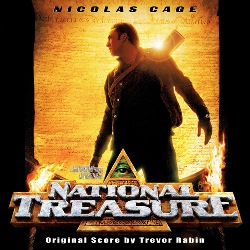 Original Review by Jonathan Broxton
One of late-2004’s surprising smash hit movies, National Treasure is a ludicrous but enjoyable action-adventure romp starring Nicolas Cage and directed by Jon Turteltaub. Cage plays Ben Gates, a sort of combination archaeologist/historian/treasure hunter who is carrying on the family legacy by searching for the ‘national treasure’, a hoard of fabulous wealth passed on from generation to generation by Knights Templar and Freemasons, which he believes was hidden in a secret location by the United States’s founding fathers, including George Washington and Benjamin Franklin. Having been double crossed by his former partner Ian Howe (Sean Bean) and left for dead in the Arctic Circle, Ben escapes and returns to home soil, where he teams up with technical whiz Riley (Justin Bartha) and beautiful museum curator Abigail (Diane Kruger). Together, the trio try to locate a map which Ben believes is hidden on the back of the Declaration of Independence, and find the treasure before Ian does… Read more…
Michel Colombier, 1939-2004
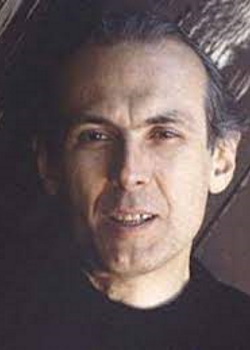 Composer, arranger, conductor and pianist Michel Colombier died at his home in Santa Monica, California, on November 14, 2004, at the age of 65, following a battle with cancer.
One of the most versatile French composers to enjoy a substantial Hollywood career, Colombier wrote music for more than 100 film and television productions while also working extensively in jazz, pop, ballet and concert music.
Colombier was born in Lyon on May 23, 1939, and grew up in Mulhouse, where his father played in the local opera orchestra. He studied piano and violin before entering the Paris Conservatoire and developed an early fascination with American jazz. In 1961 he became musical director for Barclay Records, arranging for Charles Aznavour, and later worked with artists including Serge Gainsbourg and Petula Clark.
His film career began in France during the 1960s, and he subsequently worked with directors including Claude Chabrol, Vittorio De Sica, Marcel Carné and Claude Lelouch. Particularly notable were Jean-Pierre Melville’s austere crime drama Un Flic (1972), Philippe Labro’s The Inheritor (1973), and Jacques Demy’s ambitious all-sung musical Une Chambre en Ville (1982). Colombier’s ability to combine classical technique with jazz, pop and electronic textures quickly distinguished him from more traditionally symphonic composers. Read more…
Carlo Rustichelli, 1916-2004
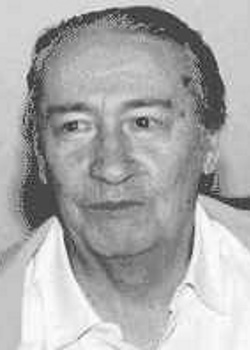 Composer Carlo Rustichelli died in Rome, Italy, on November 13, 2004, at the age of 87.
One of the most prolific and versatile composers in Italian cinema, Rustichelli wrote music for more than 250 films during a career spanning some five decades, working in virtually every genre from neorealist drama and comedy to horror, historical epics and spaghetti westerns.
Rustichelli was born in Carpi, near Modena, on December 24, 1916, into a musical family. He studied piano in Bologna before continuing his training in composition at Rome’s Santa Cecilia Academy, initially working in opera and theatre. He entered the film industry during the 1940s, but cinema became the focus of his career after meeting director Pietro Germi, beginning a collaboration that would last more than 25 years.
Their first significant collaboration was Lost Youth in 1947, followed by In the Name of the Law (1949) and The Path of Hope (1950). Rustichelli subsequently scored almost every major Germi film, including The Railroad Man (1956), A Man of Straw (1958), The Facts of Murder (1959), Divorce Italian Style (1961), Seduced and Abandoned (1964), The Birds, the Bees and the Italians (1966), and Alfredo, Alfredo (1972). His music became an essential part of Germi’s cinema, equally comfortable with intimate drama, Sicilian folk influences, sentiment and biting comic irony.
Divorce Italian Style, starring Marcello Mastroianni, was perhaps their most internationally famous collaboration. Rustichelli’s witty, deliberately exaggerated music perfectly complemented Germi’s savage satire of Sicilian morality and helped establish the composer’s reputation outside Italy. His gentler dramatic writing was equally effective, and A Man of Straw earned him his first Nastro d’Argento for Best Music in 1959.
The early 1960s were among Rustichelli’s busiest years. He scored Nanni Loy’s powerful wartime drama The Four Days of Naples (1962), Florestano Vancini’s The Long Night of ’43 (1960), Bernardo Bertolucci’s debut La commare secca (1962), and worked with Pier Paolo Pasolini on Accattone, Mamma Roma, Ro.Go.Pa.G. and The Gospel According to St. Matthew. His ability to draw on folk music, classical traditions and immediately memorable melodies made him exceptionally adaptable to the rapidly changing Italian cinema of the period. Read more…
KINSEY – Carter Burwell
 Original Review by Jonathan Broxton
Regular readers of Movie Music UK will know that I have often found Carter Burwell to be a ‘hit and miss’ composer. For as much as I enjoyed his work on things like Fargo, Conspiracy Theory, The Hi-Lo Country and Rob Roy, I was left unimpressed with Gods & Monsters, Hamlet, The General’s Daughter, and many of his more popular and successful scores for the Coen Brothers. I don’t really know what my problem is – he is obviously intelligent, talented, and well-liked by directors such as James Foley, Michael Caton-Jones and Spike Jonze, who return to him time after time to score their films. The only think I can chalk it up to is personal musical taste – his scores just don’t “do” it for me on a regular basis. However, having said all that, I safely say that Kinsey is most definitely one which will join the list of Burwell works I admire – for me, it’s easily his most satisfying score of the last five years. Read more…
THE POLAR EXPRESS – Alan Silvestri
 Original Review by Jonathan Broxton
A film surely destined to be a future Christmas classic, Robert Zemeckis’s film version of Chris Von Allsberg’s children’s tale The Polar Express is one of the most anticipated films of late 2004. Using the revolutionary “motion capture” technique that brought Gollum to life in Lord of the Rings, state-of-the-art animation, and featuring Tom Hanks in a number of vocal roles, The Polar Express brings to life the adventures of a nameless little boy who has come to believe that Santa Claus does not exist. However, late on Christmas Eve night, while the boy is lying in bed listening for the sound of reindeer hooves on the roof, he is amazed to discover a steam engine pulling up outside his bedroom window. The cantankerous but kindly conductor invites the boy on board to accompany several other children on a magical journey to prove that Santa does exist, and that the spirit of the season is alive and well in those who still believe. Read more…
DOGORA: OUVRONS LES YEUX/DOGORA: OPEN OUR EYES – Étienne Perruchon
 Original Review by Jonathan Broxton
A film from the same mold as Godfrey Reggio’s “qatsi” trilogy (Koyaanisqatsi, Powaqqatsi, Naqotqatsi), Dogora: Ouvrons Les Yeux is a documentary feature which ruminates on life, a film without narrative which uses the powerful combination of imagery and music to tell its story. Directed by Patrice Leconte, who was inspired to make the film after an eye-opening visit, Dogora is a film about Cambodia: its people, the landscape, and the culture. By focusing on the lives of everyday Cambodians as they go about their daily business – eating, sleeping, working, playing, travelling – Dogora provides the world with an intimate, realistic portrait of a still largely undiscovered culture, which is still best-known to the West for its bloody history under the Khmer Rouge regime, and the iconic images of the beautiful Angkor Wat temple which adorns the nation’s flag. Read more…
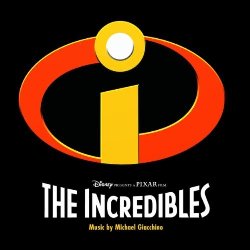
THE INCREDIBLES – Michael Giacchino
 Original Review by Jonathan Broxton
Within our little world of film music, Michael Giacchino is already pretty famous. Having written some of the most spectacular game scores in history for Dreamworks’ Medal of Honor series, and having contributed music to the hit ABC series Alias since its debut in 2001, Giacchino has gradually built up a strong fan base of admirers who fully expect him to develop into one of film music’s major players in the next 10 to 15 years. When it was announced that John Barry, the original choice of composer for The Incredibles, was no longer attached to the project, and that Giacchino would be his replacement, a great whoop of delight was heard: finally, a big screen vehicle worthy of his talents! Read more…

Shop at the Movie Music UK Store

Member of the


