Archive
Remembering Toru Takemitsu, 1930-1996
 Composer Toru Takemitsu died ten years ago today, on February 20, 1996, in Tokyo, Japan, of pneumonia while undergoing treatment for bladder cancer. He was 65.
Takemitsu was born in Tokyo in October 1930 and spent part of his childhood in Japanese-occupied Manchuria. During the final years of World War II he encountered Western classical music, and after the war immersed himself in composers including Claude Debussy, Olivier Messiaen and Arnold Schoenberg. Although he studied briefly with Yasuji Kiyose, he was largely self-taught.
Film soon became central to his career. His association with composer Fumio Hayasaka helped introduce him to the Japanese film industry, and in 1956 he co-wrote the music for Ko Nakahira’s Crazed Fruit, an early landmark of the Japanese New Wave. The score’s jazz influences already revealed Takemitsu’s willingness to combine popular styles, avant-garde techniques, electronics and unconventional instrumental sounds.
During the 1960s he became one of the defining musical voices of Japanese cinema, collaborating repeatedly with directors Hiroshi Teshigahara, Masaki Kobayashi, Masahiro Shinoda and Nagisa Oshima. Takemitsu treated the entire soundtrack as a compositional object, often giving music, ambient noise, electronically manipulated sound and silence equal dramatic importance. Read more…
FIREWALL – Alexandre Desplat
 Original Review by Jonathan Broxton
It’s funny how, all of a sudden, a composer comes out of nowhere and becomes one of your favourites. French composer Alexandre Desplat first appeared on the international scene in 2000 with his elegant score for the chess-themed romantic drama The Luzhin Defence; since then, through scores such as Girl With a Pearl Earring, Birth, Hostage, The Upside of Anger and Syriana, he has risen to become arguably the most exciting Gallic composer since Georges Delerue, with the capacity to write both thrilling action music and sensitive orchestral material with equal skill. Two Golden Globe nominations and a recent César Award for ‘The Beat That My Heart Skipped’ would seem to reinforce his place in the bigger scheme of things. His score for Firewall will hopefully be just as well received, and cement his position as one of Hollywood’s brightest stars. Read more…
Akira Ifukube, 1914-2006
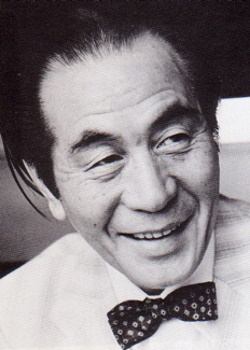 Composer Akira Ifukube died in Tokyo, Japan, on February 8, 2006, at the age of 91, from multiple organ failure.
One of the most important Japanese composers of the twentieth century, Ifukube wrote nearly 300 film scores during a career spanning half a century, but remains internationally famous for his association with Toho’s monster films and especially for creating the thunderous musical identity of Godzilla.
Ifukube was born in Kushiro, Hokkaido, on May 31, 1914. Growing up in northern Japan, he was exposed to the music of the indigenous Ainu people, whose rhythms and melodic patterns would profoundly influence his musical language. Largely self-taught as a composer, he originally studied forestry at Hokkaido Imperial University and worked in the timber industry before turning professionally to music. After World War II he began teaching composition in Tokyo and entered the Japanese film industry.
His first feature score was Senkichi Taniguchi’s Snow Trail in 1947, beginning an extraordinarily prolific period in which he worked with many prominent Japanese directors. Early assignments included Akira Kurosawa’s The Quiet Duel (1949), Kaneto Shindo’s Children of Hiroshima (1952), Josef von Sternberg’s Anatahan (1953), and Hideo Sekigawa’s Hiroshima (1953). His music already displayed the characteristics that would define his career: heavy rhythmic writing, powerful brass, modal melodies and a distinctive fusion of Western symphonic technique with Japanese musical traditions. Read more…

Shop at the Movie Music UK Store

Member of the


