NAMELESS STARS – Dong-Jin Kim
 GREATEST SCORES OF THE TWENTIETH CENTURY
Original Review by Craig Lysy
In 1959, director Kang-Yoon Kim persuaded Asea Films to support a “Chosun Ilbo” (national spirit) film commemorating the 30th anniversary of the Gwangju Student Independence Movement of 3 November 1929. He collaborated with screenwriter Keum-Dong Choi to craft a story that utilized the concept of han in depicting what was a defining moment of national sacrifice. Han is a collective feeling of unresolved grief and injustice, and it frames the students’ patriotic uprising against the brutal and oppressive Japanese occupiers. Jae-Myeong Lee was assigned to oversee production, while Kim also served as director. Remarkably, this was the first and last film he would direct. A fine cast was assembled, including Hae-Nam Hwang as Sang-Hun Kang, Mi-Lyeong Jo as Choi Young-Ae, Nam-Hyeon Choi as Mr. Song, Ok Jeon as Sang-Hun’s mother Seung-I, Bin-Hwa Lee as Mr. Song’s daughter, Myeong-Su Choi as Tae-Min Lee, and Seok-Yang Chu as the Japanese policeman Nakajima.
The story follows Sang-Hun Kang, the son of a patriot who had also sought Korean independence during the Japanese occupation. He is a member of the anti-Japanese group Seonjinhoe, whose membership includes students from numerous schools. A sympathetic Chinese couple allows the group to meet secretly in a second-floor room above their restaurant. For twenty-four years, Korea has endured a brutal occupation in which Korean students are taught revisionist history that discredits their Joseon heritage, promotes the superiority of the Japanese people, prohibits the use of the Korean language, and mandates the learning and use of Japanese. An unfair baseball game, in which Japanese officials cheat to secure victory, serves as the catalyst that ultimately ignites widespread student protests against colonial rule.
The day on which this simmering anger erupted was 3 November 1929. What began as a localized strike in Gwangju against discriminatory colonial education, oppression, and harassment quickly spread across the peninsula, drawing in secondary schools, universities, and broader public participation. Japanese authorities responded by using military force to harshly suppress the demonstrations. More than 1,600 students were arrested, approximately 580 were expelled from their schools, and over 2,200 were suspended indefinitely. Although the protests did not succeed in restoring Korean sovereignty, they proved instrumental in revitalizing the national spirit and awakening a renewed determination to end Japanese rule. The film was commercially well received, with audiences praising its compelling storytelling and dramatic editing, particularly in its climactic final reels. Although it did not receive any Academy Award nominations, critical reception was highly positive, with reviewers commending the film’s solid execution, ensemble performances, and effective storytelling.
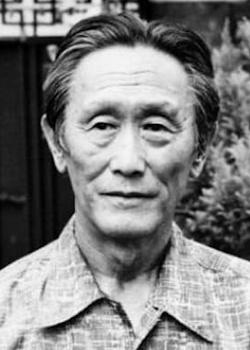 During the 1950s, the South Korean film industry experienced a renaissance and gradually transitioned toward high-quality feature productions. Dong-Jin Kim had earned widespread acclaim as one of South Korea’s most respected songwriters, renowned for his prolific contributions to gagok (Korean lyrical art songs), including Gagopa and When Spring Comes. The director believed that Kim’s background as a violinist and his formal studies in Japan provided the technical expertise necessary for film scoring. This confidence was reinforced by Kim’s successful work on the films The Pure Love and Gongcheoga, both released in 1958.
Kang-Yoon Kim met with Dong-Jin Kim to discuss his musical expectations for the project. He explained that this was a nationalistic and carefully crafted commemorative film intended to evoke Korean pride and resistance against imperialism. Accordingly, he wanted the score to amplify these patriotic and emotional themes. He also emphasized that he would be embracing the concept of cinematic han throughout the film. To that end, he explained that the finale would deliberately avoid focusing on the brutality of the Japanese response. Instead, the film would conclude on a note of pride, celebrating the resilience of Korean resistance and the enduring hope that the Taegeukgi, the national flag, would one day fly freely over Korea once again. Kim therefore understood that his music would need to empower, sanctify, and commemorate the nobility of the students while bringing the film to a hopeful conclusion.
Upon viewing the film, I believe Kim recognized that he had been given a vast canvas upon which his music would need to address a broad range of themes: brutal occupation, cultural genocide, simmering student resentment and anger, political intrigue, and the constant threat posed by an omnipresent colonial police force aided by Korean collaborators. Yet against this backdrop stand numerous intimate subplots that bring the student leaders to life as individuals. As a classically trained violinist and composer, Kim elected to employ a full symphony orchestra and traditional Western instrumentation to support a dramatic musical narrative. He also embraced Hollywood conventions by writing lyrical melodies and recurring leitmotifs, techniques that he had previously employed in his celebrated gagok compositions. Through these methods, he sought to heighten the emotional intensity of the student resistance narrative.
Finally, in accordance with the director’s wishes, Kim sought to provide the Gwangju Student Independence Movement with a distinct musical identity. Rather than embracing overt bombast, he chose solemnity, composing a dignified marcia patriottica enhanced by choral passages featuring students singing the Gwangju Student Song. He also created slower, more somber variations of the principal theme for scenes of betrayal and loss, evoking cinematic han, the uniquely Korean aesthetic of unresolved grief that was common in films of this era. For the character of Young-Ae, Kim needed to express her profound internal conflict arising from her brother’s service in the Japanese police. To achieve this, he crafted a lyrical canzone-like theme borne by teneri strings and adorned with delicate woodwind writing, highlighting her nobility, isolation, and personal sacrifice.
There is no commercial release of the score, as such I will use film time indices and scene descriptors to provide film context. 0:00 “Logo 1” reveals modernist, textural electronica sound design, which supports the display of the Korean Film Archive logo. 0:16 “Dedication” reveals narrative script without musical accompaniment’ “This film is dedicated to all the nameless stars who gave their lives in the Gwangju Student Independence Movement who stood up against the rule of Japanese imperialism”. 0:45 “Logo 2” opens with trumpeting fanfare as the logo of Asea Films displays. 0:57 “Narration” reveals the narrative script “Nameless Stars – The Gwangju Student Independence Movement” against a backdrop of its famous Gwangju national monument. A mournful solo cello joined by strings solenne supports a narrator recalling the events of 3 November 1929;
“This is the day the students of Gwangju City rose up against the Japanese. They marched the streets in protest, choosing death over life under the oppression of imperial rule. It awakened the spirit of national pride all over the country. 54,000 students joined in. Many were injured, killed and tortured in prison. But the torch of justice lit that day became a raging flame as it shone brightly in the hearts of all Koreans. The blood and tears shed by the young people changed our history forever and will never go dry. Their spirit and legacy will linger among us and light the path of the nation to march.”
1:49 “Main Titles” offers an inspiring score highlight where Kim masterfully captures the very heart of the film’s narrative. It supports the flow of the opening credits, which reveals Pil-Soon, walking along a winding country road. Kim supports with reverence, offering a solemn marcia patriottica empowered with choral accompaniment singing the “Gwangju Student Song”. At 4:24 we enter the film proper with Kang Pil-Soon continuing his walk at night on a small-town street. He climbs over a wall to his house, and enters, which wakes his wife Seung-i. She misses him dearly, but he brings her bad news, that when he leaves in the morning, he will not be returning until Korea is freed. He asks that she bear this burden for the country. 7:39 “Dawn” reveals a rooster crowing, which means it is time to go. He hands her a gift for their son Sang-Hun when he grows up, a Taegeukgi (the national flag of Korea). Kim supports with an aching cello tristi and retinue of kindred strings expressing his heartache of having to abandon his wife and two children for the cause. He departs, she follows and gifts him her jewelry saying he will need money for the road. The violins take up the melodic line with the solo cello shifting to counterpoint as he asks her to take care of the kids. She is tearful, as she does not know if she will ever see him again. Kim’s music for this scene of parting and heartbreak is poignant, providing the necessary gravitas for the scene.
We flash forward ten years and we see Seung-I relating her sadness to her daughter Sang-ran while her son Sang-Hun believes that father is in Shanghai working for the provisional government. He bids farewell and is told to visit Cho Cheol’s grave. 10:35 “Cho Cheol’s Grave” reveals his son Dong-Yun paying homage to his father who was executed by the Japanese. He remains angry, unable to accept the transgression. He is counseled by Sang-Hun’s children to be patient and unite with those who oppose the Japanese, the Sungjin Society. Kim supports with mournful strings of remembrance, as Dong-Yun struggles with his grief. 12:17 “Roses of Sharon” reveals Young-Sik, his wife, and his sister Young-Ae lounging in a field; They hear a sad male voice singing the poem “The Roses of Sharon”. There is the sadness of loss in the notes, which speaks of the transience of life. Yet I discern a kernel of hope in that while the poem pines for the loss of today’s beauty (the Roses of Sharon), it foretells of a new, and resilient beauty (Sakura/cherry blossoms) born from the loss. They look out and see Dong-Yun and Sang-Hun and his sister Sang-ran walking along a dirt road below. Young-Ae cries out “In-Ok!”, which displeases her brother. He asks how she knows him, and Young-Ae says In-Ok is my friend. Down below In-Ok relates that Young-Ae’s brother, Young-Sik works for the Japanese police. Young-Sik orders her to stay away from these people as they seem dangerous. They descend the hill and Young-Sik asks who sang the song, and Sang-Hun says it was him. When asked what it means, he deflects and counters with, “Can a man not sing a song?” Young-Ae says it is a song about nature. She convinces him to leave, and he departs saying to stay out of trouble. Young-Ae apologizes, and departs, saying, have a nice day. 16:22 “Seung-I heartache” reveals her trying to write a letter to Pil-Soon, but is unable to find the words. Kim supports with a sad, solo flute full of longing.
In a high school, we see a blackboard with Japanese characters, and the Professor Hasegawa teaching Japanese history, saying Japan is ruled by an emperor with unbroken genealogy of 10,000 generations. A student asks that when Emperor Andeok died as a young boy at 12 years of age, how can the emperor’s genealogy be unbroken when he was too young to have a son? The Hasegawa is flustered, then enraged as the students begin mocking laughter. He storms out in a fury as he has lost face. As Hasegawa walks down the hall, he hears Professor Song teaching Korean history where Korean Admiral Yi Sun-sin used his turtle ships to defeat the Japanese invasion of Korea in 1592. When Song asks what this victory means? Sang-Hun answers; “It means if I kill all my enemies, my life will not be wasted. I will die in peace.” Later in Principal Shirai’s office his staff complain the student attitudes are worsening everyday due to outside influencers. The aggrieved Hasagawa enters and informs that professor Song was teaching about the victory of Admiral Yi Sun-Sin. A monitor is dispatched and demands he stop teaching lies. When Song says he was teaching historical truth, he is ordered to the principal’s office, causing the student to stand up enraged. Song instructs them to sit and departs as ordered.
Song is ordered by the Shirai to leave and go to an undisclosed location. As he departs, students rush and surround him in the hallway earning the ire of the Japanese. 23:25 “Song Departs” offers a score highlight of terrible pathos, a Pathetique of loss. Aching celli luttuosi draped with weeping violins support a musical narrative of despair as the students watch from the windows as Professor Song is loaded into a car. Later, a Japanese official walk down the school corridor with the camera showing row after row of distressed students. In the principal’s office, his subordinate argues that Song is an ardent nationalist, and this is our chance to get rid of him. He adds that the use of the Korean language must be stopped. Another official joins and declares a problem – it is 6 pm and the students refuse to go home. The Shirai is wary of escalation if police are brought in. Later that night the students see Professor Song returning. They rush and converge upon him with affection. He says nothing has happened and to please return home. On the way home Sang-Hun and two friends mock two “Jap” women, and then fret as they pass a policeman, that they seemed to be watched these days.
Later, Young-Ae tells sister-in-law that she is going out, and is warned that consorting with bad friends can bring trouble to our family. She is joined by Sang-Hun who thanks her for joining. They walk to a Chinese restaurant whose Chinese owners the Wangs are sympathetic to the student’s cause. Wang signals them all is clear and they join the other students in a secret second floor meeting room. 30:48 “Japanese Patrol” reveals that on the street below Young-shik and a Japanese secret policeman Nakajima. They see a lot of students in the café and decide to go in. Kim sow tension with a Buzzing Bee Motif borne by a tremolo and ponticello strings effect, which mimics the fluttering and swarming sound of bees. Young-Sik tells the students that it is late and that they should be home studying. They remain seated and the Japanese policeman yells for them to go home, and they grudgingly depart.” As the owner places money in a box, he reaches behind a curtain and pulls a string that causes a flag to move in the meeting room – a warning to make no noise. They blow out the candle and sit still. The bee-like Tension Motif reprises joined by foreboding bass and a trilling piccolo as the policeman inspects the back room. Eerie woodwind figures join as tension escalates as the policeman scans the back room. After what seems an eternity, he turns and tells Young-Sik, let’s go. After they leave the owner and his wife mock the Japanese, and then signal the all-clear upstairs.
In an unscored scene, the Seunjin Society formally admits Choi Young-Ae of Yamada High School. She is then introduced to the other committee members. Kang Sang-Hun then explains the history and vision of their society; founded 26 August 1925 to keep the national spirit alive and burning. He says we oppose Japanese education in Korean schools. Together we will strive to get our nation back, and fight for freedom against colonial rule. 36:04 “Young-Ae is Thankful” offers a score highlight, a tender respite. Afterwards Sang-Hun walks Young-Ae home and she tells him that she does not feel lonely anymore. When he asks why she was lonely, she says because she is surrounded by Japanese students, and the fact that her brother works for the Japanese did not help. She thanks him for giving her the strength and ending her loneliness with a new purpose in life. Sang-Hun thanks her for sharing, as she returns home. Kim supports with Young-Ae’s Theme, borne in canzone form by strings teneri with woodwind adornment. Within the musical narrative we discern her terrible loneliness, that she has unburdened herself, and that she has at last found acceptance.
39:40 “I Am Leaving Too” reveals that it is Sang-Hun’s birthday and Professor Song is hosting a dinner party to celebrate. They talk of the past, and the future, with professor Song regretting the world his generation has left them. Sang-Hun however is confident that they will regain their freedom. They ask Sang-Hun to recite a poem “I Am Leaving Too” by the famous Korean poet Kim Sang-o to commemorate the evening. He agrees, yet instead of a recitation, he sings it verses;
“I am leaving too,
How can I spend my youth in tears?
I am leaving too
How can I give up
This cherished seaside so easily?
I can see in the misty eyes,
All the valleys and fields
Imprinted in my heart.
The beloved people whose wrinkles
Even look so dear.
I may leave them behind
But not forget them.
As I flee, but my heart
Yearns for them.
As I look back
The wind stirs the clouds,
The hills up ahead
May no welcome me,
I am leaving too,
How can I spend my youth in tears?
I am leaving too.”
The poem speaks to Korea’s unbearable national shame as it suffers under the brutal Japanese subjugation, occupation and cultural genocide. It expresses a profound connection to the land of Korea, its verdant fields, valleys and seaside, and the bittersweet grief and sorrow of a person forced to flee their beloved homeland. The poem closes with anxiety, an uncertain future, and potential hostility for a refugee fleeing to a new land. We see everyone deeply moved with heads bowed. Kim chose to not support with music, believing Sang-Hun’s poignant performance more than sufficient to carry the scene. Afterwards, in 41:07 “We Walk The Same Path” Ik-Ok sits with Young-Ae outside and recites the first three lines of the poem;
“I am leaving too,
How can I spend my youth in tears?
I am leaving too…”
She tells him that she worries that schooling and her family will prevent her from walking the same path as he and Sang-Hun. The melodic line shifts to woodwinds, with strings supporting in the background. He reassures her that she will and offers to walk her home. She thanks him and he invites them to a baseball game he’ll be playing in Saturday.
It is Saturday and Young-Ae is sad that Gwangju (Korean team) is losing to Gwangoseon (Japanese Team) in the nineth inning. Seung-jae leads off with a triple. In the ministerial tent the Japanese ministers fret that they cannot lose to the Koreans. The head minister says not to worry. The Japanese students boo, and the Koreans respond by singing with non-lexical vocals, the “Gwangju Student Song”. The next batter strikes out, with the last strike being a clear ball as it was shoulder height. The batters throws down his bat in disgust. The next batter hits a single, the runner from third base is called out even though the throw was late and dropped. Seung-jae protests, and two Japanese ministers come out, slap him twice to the ground, and then one minister places his shoe on his face. The Korean students run out and have to be restrained by men with clubs as the Japanese students taunt them with a mocking song. 43:11 “Humiliation” reveals an injured and humiliated Seung-jae being helped off the field and the game called off with Japan declared the winner. Kim supports with a bitter string borne musical narrative with a descending contour of despair as the Korean students suffer yet another humiliation by the Japanese. In a small huddle, Sang-Hun counsels that we must let this go for now, and they had been through worse. Another student joins and says the police and Japanese ministers are meeting in the principal’s office. In the office, the ministers believe Professor Song is the nexus of the student’s rebelliousness. They order that surveillance be increased and allow the principle to continue to handle the situation for now.
In an unscored extended sequence of scenes we see the next day on a train Japanese men and students displacing Korean passengers, and treating them like dogs. After disembarking, a Korean woman is accosted by Japanese students, she slaps one and is shoved to the ground. A frail Korean man comes to her defense, and a huge brawl breaks out between Koreans and the Japanese. Police intervene with many of the Korean students fleeing to avoid arrest. That night Dong-Yun hides with Young-Ae in the shadows as police enter his home and begin beating his father for not disclosing his where abouts. Dong-Yun cannot bear his father being beaten and turns himself in. In a Japanese house a student is chastised by his father for allowing a Korean to beat him up. He tosses him a sheathed dagger and tells him to use it as the world will not miss the death of any Korean. The next day on the train, the Japanese student brandishes his knife, trying to provoke a response. 57:19 “Young-Sik Brutality” reveals him forcibly transporting three roped students supported by mournful strings full of despair. Rage is seen in the eyes of the other Korean students as Young-Sik orders all of them to sit, yet they defy him. 58:49 “The Farmer’s Song” reveals Koreans siting on a train platform. Women full of sadness hum the traditional song melody, as a man begins to sing its wistful lyrics;
“Listen to me farmers,
Listen to me farmers,
The rice paddy is only
as big as the half moon,
It’s not even a half moon.
It’s a crescent moon.
Oh, look! A merchant ship,
Listen to me farmers,
Listen to me farmers,
The harvest time has come
With all its…”
A Japanese guard orders him to stop as the train arrives. The man gets up and the policeman say you cannot go! The man say I cannot leave my beloved land and must return home. 1:00:33 “Another Beating” reveals that the policeman repeatedly slaps him, shoves him to the ground and then kicks his chest as he yells; “Die!” The Japanese students laugh, while the Korean women watch with sadness in silence as the camera pans their expressions. Young-Shik joins, is told the man is an agitator, and he orders his arrest, forcing him to join the student agitators he is transporting. The male Korean students arrive and are outraged, but a Japanese student pulls out his knife, and dares them to attack him. They charge, he and the Japanese students flee across the tracks and escape as a train arrives and blocks the way. Kim supports with a grievous, dirge like composition, that finds confluence with the gut-wrenching humiliation borne on the faces of the Koreans.
In 1:02:47 “Teach Them a Lesson!”, offer a ferocious score highlight where Kim unleashes the fury of Hell itself. The next day, the Principal Shirai announces to a courtyard full of Japanese students, that they must teach Korean students a lesson. They begin a march with clubs, and the Korean students wait in the street armed with rocks. His assistant worries about the outcome and if they should call the police. The principle however is smug in his belief in Japanese superiority and says they can handle this. More and more students are informed by word of mouth and converge on the square. Dr. Song pleads for the principle to halt the violence. He refuses and tells Song to do it. He joins the fray, but gets caught up in the life and death struggle. We behold the collapse of civilization and return to the brutal primal law of the jungle. Kim speaks to this descent into violence and the primitive by offering a deafening, cacophonous, and primal musical narrative propelled with ferocity by strident horns bellicoso, and harsh woodwinds. The police are called and at 1:06:06 a horrific crescendo di violenza surges of deafening horn blares, cresting at 1:06:42 as mounted police are dispatched. The Korean Students flee and an eerie woodwind descent of expiration supports a stunned Professor Song standing alone in the empty courtyard. Woodwinds usher in a musical narrative filled with bitterness, sadness, and despair as police surround Song and inform him he is under arrest.
Later in the office, the Principal Shirai, the architect of this brawl, has the audacity to accuse Professor Song of fomenting the violence, which he says was started by the Korean students. Song denies this blatant lie and says you deny the truth, and it is obvious that you intend to punish me, so please proceed. Young-Sik escorts him out and the Shirai orders him to beat him good. 1:09:15 “Sang-ran’s Greif” reveals Sang-ran being escorted out by a policeman through the cell block. Hyeong-gi calls out to his sister and is thankful she is being released. Kim supports with grieving strings full of despair. The policeman pulls her away, she turns an at 1:09:46 horns of pain support Young-Sik escorting in a bloodied and beaten Professor Song. She hugs him, weeps and is taken away. An aching Pathetique borne by strings angosciati brings Song to the cell door where his students grieve, as he is taken away. Later, at her home, Sang-ran relates to the remaining committee members how Young-Ae’s brother had badly beaten and bloodied Professor Song. They are shocked and dismayed and do not trust Young-Ae, but Sang-Hun defends her and dissuades them. Young-Ae arrives and says she could not meet with her brother, but met with Officer Yada. She said it will be hard to gain Professor Song’s release, and that they are searching for the other student leaders. They believe it is too dangerous to meet her, and agree to meet later at Ssangilcgun tonight at 10:00. They entrust and dispatch Young-Ae to inform the other members of the meeting tonight.
Afterwards lovers Dong-Yun and Sang-ran share an intimate moment as she relates that she does not trust Young-Ae. She wishes him well, and says she will be with him, all the way. He replies that times are bad, and the road looks rough for our love. She says she can take it, and he departs. A montage follows as Young-Ae one by one alerts the committee members of the 10:00 pm meeting tonight at Ssangilcgun. On her way home a policeman stops her and says it is too late to be out. She points that she lives there and he sends her on her way. 1:15:32 “Young-Sik Threat” reveals her brother Young-Sik emerging from the shadows and stalking her. Tense tremolo violins and a pizzicato cadence carries her walk as she informs another committee member. She returns home and Young-Sik demands to know who she was meeting with. When she nervously says nobody, he slaps her and asks if she is trying to destroy the family? He then demands to know who she met with. He says he knows she hates his job, but declares the world is changing, and that is futile to resist. She reproaches him for betraying their ancestors and the country. He deflects, and says he does what he does to protect her. She answers that she does not care if she starves. He says since you will not talk, I will beat your friends to get it out of them. She begs him not to, but he casts her aside and tells his wife to keep her locked in the house. At 1:18:34 the tense violin tremolo motif resumes now buttressed by grim celli and bass as we see Young-Sik stalking the last house she visited. At 1:18:49 a falling piccolo trill supports Tae-Min leaving his house as Young-Sik hides in the shadows. Kim escalates the tensions with woodwinds as we see Tae-min stalked by Young-Sik. He reaches a police checkpoint, sees Young-Sik emerge from the shadows, and runs off with the two in pursuit.
In the meeting room the members wonder why Tae-min has not showed up. A member arrives and advises Tae-min has been arrested by Young-Sik. Sang-Hun and the members are devastated, believing Young-Ae betrayed them. They all depart and we shift to police headquarters where Young-Sik threatens Tae-min with torture if he does not talk. A man cries out in pain, a dire chord of pain resounds as the door opens at 1:22:04 and we see a now severely beaten Professor Song stagger out. A cello angosciati weeps as Young-Sik advises that this fate awaits you if you do not talk. Tae-min says, do as you wish and Young-Sik takes him to an adjoining room. The students and Professor Song hear the gruesome beating and cries of pain from their cell. We shift to Sang-Hun saying goodbye to his sister Sang-ran. 1:27:57 “Young-Ae’s Plight” reveals her arriving at Sang-Hun’s house and telling Sang-Ran that she has an urgent message for Sang-Hun. Sang-ran smirks with disdain and rebukes her saying; “So you want to also turn in my brother!” She then storms off and a forlorn musical narrative unfolds with a distraught Young-Ae’s Theme borne by weeping woodwinds. Her efforts to warn In-ok and Dong-Hyeong are rebuffed and we see her despair as a rainstorm begins. She next tries Gyeong-Suk and the mother slams the door saying, so you want the girls arrested too! She cries against a wall saying; “Sang-Hun, I did not betray you. Where are you? I need to see you.”
Meeting in the forest, Sang-Hun declares that he cannot bear this anymore and that we must seize the opportunity to disclose all the atrocities of the Japanese. Gyeong-Suk adds that we must lead the way for the whole nation to follow. They decide that they need to get all the students of Gwangju to rise up collectively, but must first organize it. They chose 9 am 3 November as it is a Japanese holiday so they will be understaffed and unprepared. They agree to pass the word to the other students, and then meet 12:00 am tomorrow night at Ssangilchun to confirm our readiness. At the restaurant the Chinese owner is cooking some food. 1:27:27 “Young-Ae Rejected” offers a score highlight of great pathos. It reveals her arrival. The owner says that nobody is here, that he got in trouble with the police, and to go! The distraught musical narrative borne by her despairing theme reprises as she departs and walks home, rejected. We shift to the morning where we see Young-Ae being attended to by a doctor as Young-Sik and his wife look on. He orders bed rest and departs leaving Young-Sik alone with Young-Ae. She is delirious and says “Sang-Hun, I did not betray you, and that I went to Ssangilchun to see you”. We see in Young-Sik face that he is pleased that he now has concrete leads. We shift to the Chinese restaurant owner Wang telling Sang-Hun it is safe to meet as planned.
At 1:30:38 “Young-Ae’s Noble Sacrifice”, the tension motif resumes as Young-Sik tells his wife to watch Young-Ae as he has to go to arrest the students meeting at Ssangilchun. Young-Ae wakes and hears them arguing and tries to leave. The foreboding Tension Motif with a buzzing, bee-like tremelo and ponticello strings propels Young-Sik into the police station as outside Young-Ae staggers toward Ssangilchun. Inside the police call the military police as they need more men as a trilling piccolo joins with the buzzing motif. Sang-Hun continues to dispatch members to the various schools to organize the students. The buzzing tension motif carries Young-Ae’s run past Young-Sik. He follows her into the restaurant, she screams to warn Sang-Hun as Young-Sik pulls out a gun. She bars his way, they fall from the stairs and the pistol fires, mortally wounding Young-Ae. Young-Sik is distraught and Sang-Hun uses his distraction to strike, throwing a rice sack, followed by a flying kick. They fight, Sang-Hun manages to get the gun, as Nakajima enters. Nakajima shoots but hits Young-Sik, and Sang-Hun shoots and kills Nakajima. At 1:34:28 a death chord supports Young-Sik cursing Nakajima for shooting him and falling dead. Sang-Hun kneels over Young-Ae and lifts her up. She with her dying breath says she did not betray him or our country. Her theme, full of pathos, wavers with her passing, and then slowly dissipates into nothingness as a tearful Sang-Hun repeatedly calls her name. Ishisaga, the police chief arrives with a gun, and Wang clubs him unconscious from behind. He orders Sang-Hun to flee, while he stages the scene to support his story that Young-Sik killed Nakajima and Ishisaga. Police arrive, but Sang-Hun manages to escape.
1:36:16 “3 November 1929” reveals Ik-Hun pacing on a patio supported by a pensive Main Theme. Sang-ran joins him and he asks about her brother. She said he is fine and at school, and they depart together. Ji-ru and Soo-man sit outside of school and discuss that with comrade Hong arrested that Seon-ju should contact the guys at the Agricultural School. We shift to another group of six students and they fan out saying; “Let’s do this”. In the principal’s office a formally dressed Mr. Shirai is startled by a loud collective shout by students outside. Sang-Hun shouts; “We cannot just sit and wait for oppression to go away. We must stand up and fight! Come on comrades! Let’s go!” Shirai orders Hasegawa to call the police. The police chief announces an emergency and says let’s get them all. Student run amuck with clubs and farm tools, and smash any Japanese flag they find. At the girl’s school Sang-ran says the boys are out and that the girls need to join. At home, Seung-I speaks to Pil-Soon’s portrait saying that she wishes he was here to see Sang-Hun and Sang-ran fighting for freedom. She decides that it is time to pass on the Taegeukgi and she runs out of the house with the flag. We shift to the girl students at each of their schools forcing their way past their Japanese teachers to join the protest. They too tear down every Japanese flag they find. All across town students run yelling and tearing down Japanese flags. As they enter the Japanese quarter of the city, we see Japanese grabbing their children and fleeing into their houses and shops. Military cavalry and motorized forces depart the military base and head towards the city.
At 1:41:48 “Mansei!” (Long Live Independence!) offers a choral empowered anthem of the rebellion resounds as the girls and boys converge at the town square and tear down all the flags and trappings of Japanese oppression. In prison cells the jailed students and Professor Song stand up with pride as they hear the rebellion unfolding. Back on the streets the anthem shifts to a solemn marcia patriottica empowered with choral accompaniment singing the “Gwangju Student Song”. Seung-I manages to find Sang-Hun, and hands him his father’s gift – the Taegeukgi. He unfurls it, thanks his father, and yells loudly Mansei! Inside the jail the students collectively shout “Mansei! Mansei!” As Japanese troops approach, they attach the flag to a hand-held pole and begin marching again yelling “Mansei!” Gun shots ring out and Sang-Hun is hit in the left arm, he keeps hoisting the flag aided by his mother as students repeatedly thunder “Mansei!” At 1:44:34 the solemn marcia patriottica empowered with mixed choral accompaniment singing the “Gwangju Student Song” resumes as we see a sea of students waving the Taegeukgi. Narrative script joins;
The Gwangju Student Independence Movement spread nationwide;
“to Seoul, to Pyeongyang, to Busan, to Sinuiju, to Hamheung, To Jeonju, to Wonsan, to Daegu. Al over Korea. So many nameless stars fell from the sky, to light the torch of national spirit, against the Japanese imperialist rule.”
We shift to a camera shot of the white Gwangju Student Independence Movement Memorial. With the student mixed choral anthem closing with “The End”.
There is no commercial release of this score. The original 1959 production utilized a monaural sound mix, which was standard for Korean cinema of that era, focusing the orchestral weight within a single audio channel. Regretfully, the audio strength and quality diminish the beauty and emotive power of Kim Dong-il’s score. Dong-Jin Kim’s score offers a heavily Westernized orchestral sound, which was typical of the emerging postwar Korean cinema. For “Nameless Stars”, he was tasked to ennoble and commemorate the 30th anniversary of Gwangju Student Independence Protest that shook the foundations of the nation on 3 November 1929. This required a musical storytelling that would honor, praise, and sanctify the tale of the heroic students, whose galvanizing, patriotic protest awakened a dormant Korean nationalism. Kim, who was inspired by the film, composed a musical narrative, which was dramatic, often sentimental, nationalist, and ultimately hopeful, for a horrific occupation indelibly seared into the collective consciousness of the Korean people. There are three legs on which Kim’s score stands; intimacy, tension, and nationalism. For intimate scenes Kim graced us with exquisite writing for strings and woodwinds, which fleshes out the emotions of the actors, their aspirations, their fears, righteous anger, and filial devotion. Indeed, Kim’s writing for these character interactive scenes fleshes out their humanity and emotionally invests the audience in them.
This is a human tale and Kim masterfully brings the actors to life. Korea is suffering an Orwellian nightmare, beset with mass surveillance, manipulation of truth, control of language, and suppression of dissent. Two tension motifs are used. The first uses a buzzing bee motif borne by a tremolo and ponticello strings effect, which mimics the fluttering and swarming sound of bees. When joined by a trilling piccolo, an unholy communion is achieved, which makes the motif even more chilling. A second tension motif uses a violin tremolo buttressed by grim celli and bass. Both motifs are very effective in evoking menace and striking fear into our hearts. Lastly, we have nationalism, and Kim’s conception and execution is spot on. He grounds the student movement by eschewing western bombast, instead supporting with a solemn marcia patriottica empowered by mixed chorus singing the “Gwangju Student Song.” Folks, “Nameless Stars” offers a classic score for the Golden Age of Korean cinema. It fits its film like a glove, enhancing its narrative from first to last reel. I highly recommend you take in the film, and hope to hear one day a new recording where the beauty and emotive power of Kim’s handiwork can be fully appreciated.
Track Listing:
- NOT AVAILABLE
Music composed by Dong-Jin Kim. Orchestrations by XXXX. Recorded and mixed by XXXX. Score produced by Dong-Jin Kim.

Shop at the Movie Music UK Store

Member of the


