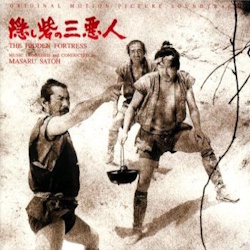
THE HIDDEN FORTRESS – Masaru Sato
 GREATEST SCORES OF THE TWENTIETH CENTURY
Original Review by Craig Lysy
Director Akira Kurosawa believed that, after the sad and tragic narratives of his previous two films, Throne of Blood and The Lower Depths (both released in 1957), it was time for a change. As he explained in an interview, “I want to make a 100% entertainment film, full of thrills and fun.” To that end, he conceived a jidaigeki adventure film – a Japanese period piece. He collaborated with writers Ryūzō Kikushima, Hideo Oguni, and Shinobu Hashimoto to create an original screenplay and secured funding from the Toho Company. Kurosawa oversaw production alongside Sanezumi Fujimoto and also directed the film. For the cast, Toshiro Mifune starred as General Makabe Rokurota, joined by Minoru Chiaki as Tahei, Kamatari Fujiwara as Matashichi, Susumu Fujita as General Hyoe Tadokoro, Takashi Shimura as General Izumi Nagakura, and Misa Uehara as Princess Yuki.
The story is set during the Muromachi Era (1336–1467 C.E.) and follows Tahei and Matashichi, two hapless peasants down on their luck who sell everything they own in pursuit of adventure and fortune as soldiers of the feudal Yamana clan. Yet they suffer one misfortune after another, as though fate itself were conspiring against them. One day, they encounter a man and a woman who offer to pay them in gold to transport them safely across enemy lines. Unbeknownst to them, the man is the renowned General Makabe Rokurota, and the woman is Princess Yuki of the Akizuki clan. After a series of remarkable adventures, Tahei and Matashichi succeed in their mission. Princess Yuki rewards them with gold, which they take back to their village to begin a new life.
The film was commercially successful in Japan, finishing as the fourth-highest-grossing film of 1958. However, it fared poorly in the United States, where critics compared it unfavorably to Kurosawa’s earlier works. The film also failed to earn any Academy Award nominations. Nevertheless, it has undergone a significant critical reappraisal in recent decades, owing in part to the fact that director George Lucas drew inspiration from it while developing the screenplay for Star Wars.
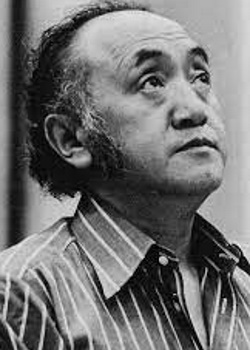 Composer Masaru Satō had stepped in to complete the score for Kurosawa’s I Live in Fear (1955) following the death of his mentor, composer Fumio Hayasaka. Kurosawa was deeply grateful, and Satō’s intervention led to a fruitful collaboration spanning eight consecutive films. The Hidden Fortress marked their second partnership. Satō understood Kurosawa’s guiding principle for the project. Accordingly, he crafted a score that blended three distinct sensibilities: a richly symphonic orchestral style with grand thematic writing; traditional Noh theater influences that impart Japanese cultural character through the use of the thirteen-string koto, taiko drums, the kagura suzu hand rattle, and an array of bamboo flutes including the nōhkan, shinobue, and ryūteki; and finally, an approach rooted in amelodic minimalism and atmospheric textures to shape the emotional tone of individual scenes.
For the score, Satō composed three principal themes. Princess Yuki’s Theme features paired flutes dancing above strummed koto accompaniment. Satō believed the koto represented her noble heritage, while the flute-borne melody reflected her youthful spirit and adventurous nature. When she is viewed from afar, however, Satō employs a stark nōhkan flute and percussion motifs derived from Noh theater music to signify her presence. General Rokurota’s Theme is imbued with bravado and orchestral grandeur, reflecting his noble status. He is the rock – the unshakable and fierce defender of the princess. Satō uses the theme’s opening declarative fanfare as its primary motif. When Rokurota is forced into battle, the full theme unfolds in a heroic military guise, transforming into a marcia grandioso.
The third principal theme supports Tahei and Matashichi, the two hapless and bumbling peasants who serve as the film’s comic relief. Because the story is largely told from their perspective, Satō sought to provide them with a distinctive musical identity. To that end, he animates them with the Buffoon Theme, a whimsical, playful, and almost clownish construct built upon muted, atonal piano figures and ever-shifting high-register woodwind passages. At times, the music descends into outright slapstick, blending silliness with mockery. When the two are conscripted by General Makabe, Satō overlays the theme with jazzy saxophone flourishes to underscore the irony of their situation. Particularly noteworthy is the manner in which the theme evolves throughout the film, mirroring the characters’ moral transformation from greedy rogues obsessed with gold into men who ultimately display humility and generosity.
Much of Satō’s soundscape is also amelodic, indeterminate, formless, and non-linear. Atonal piping woodwinds and muted piano figures are underpinned by a carefully structured rhythmic foundation that anchors what might otherwise seem like musical randomness. Following the film’s success, Kurosawa remarked that Satō’s score for The Hidden Fortress was both successful and an indispensable element in reinforcing the film’s energetic, Hollywood-style sense of adventure.
“Titles” opens dramatically with two repeating phrases by trumpet declarations, answered by woodwinds and punctuated with a drum roll, which support the display of the TOHO Scope logo. At 0:11 a martial drum roll usher in Rokurota’s Theme rendered as a rousing marcia grandiosa, which supports the flow of the opening credits. We enter the film proper at 1:28 on a horn sustain as we see Tahei and Matashichi walking in the countryside. They sold their houses to join the Yamana Clan in search of war booty. Instead, they are mistaken for the enemy Akizuki clan, forced to help dig graves, and then sent away without any food. They are beleaguered, malodorous, and argue, with each blaming the other for their current circumstances. In “Fallen Warrior’s Death” their argument is ended by the abrupt arrival of a staggering, mortally wounded Akizuki samurai. Yamana cavalry arrive and thrust their swords into the man killing him, and then ride off. Tahei and Matashichi are shaken, and count their blessings that they survived. Satō supports his arrival with dire horns and woodwinds followed by a pause of shock. At 0:18 a musical narrative empowered by a ferocious galloping motif replete with trilling woodwinds and drum strikes of doom supports the arrival of the cavalry, and the carnage that follows.
“Peaceful Mountain Pass Road” reveals Tahei and Matashichi arguing over whether to rob the corpse. Tahei refuses and storms off with Matashichi throwing dirt and saying, good riddance! Satō supports with a repeating plodding percussive motif over which play bassoon and low woodwinds. The motif caries Tahei’s departure and ascent up a hill. “Yamana: Temporary Checkpoint” reveals three Akizuki soldiers running over the hilltop declaring that they cannot go forward as there is a Yamana checkpoint. Satō supports by introducing the Buffoon Theme a textural ambiance borne by shifting high register woodwinds comici. In “War Town ~ To the Border” they tell Tahei that not even a mouse could pass, which elicits him to sneak up to see himself. He sees a large encampment and the three other men say that have to go, as they will all be killed if discovered. The flee down the hill and collapse into a pile. Satō again supports with the silly textural ambiance of the Buffoon Theme, borne by piping, and shifting high register woodwinds comici.
“Prisoner’s Loss of Dignity” reveals the four deciding to lay low until fog rolls in to conceal their departure. Satō joins the comedic silliness of the Buffoon Theme and the plodding Travel Motif as we see Matashichi walking through a town. He asks an old man to read him what is posted on the town’s message board. The old man says that “A reward of 10 ryo is offered for the capture of Princess Yuki of Akizuki, and 3 ryo for knowledge of her whereabouts by order of the Lord of Yamana”. The music darkens as Yamana soldiers enter the town herding prisoners and Tahei cowers behind a barrier. But a prisoner runs away toward him, and the guards sweep him up believing he was also an escaped prisoner despite his denials. (*) “Tahei Recaptured” reveals Tahei and the other men wandering in the fog. They march right into the Yamana encampment and the three men are killed and Tahei again taken prisoner. Satō uses the Travel Motif and foreboding textures to support. As Tahei is escorted into the burnt ruins of the Autumn Moon Castle, he passes a departing group of prisoners, which includes Matashichi. They celebrate their reunion, but guards pull them apart and Tahei continues into the ruins as Matashichi departs.
“Burnt Ruins of Autumn Moon Castle” reveals Tahei and the men herded down into a flooded hole at the bottom of the castle. The guard yells that there is 200 kan of pure gold hidden in the castle, which you must find. Until you find it, you are no longer men, but moles. So, dig until you drop, moles! Music enters as they begin to dig in the pit, and is sustained later as they sleep with Satō using instrumental sound effects to sow a grim, and eerie textural musical narrative of toil and woe. “Flight” reveals the night watch patrolling through prisoners sleeping in the courtyard. They suddenly rise up, overwhelm the guards, break down the gate and flee for their lives. On the stairs they are met by soldiers with rifles, which begin to mow them down, but the stamped cannot be stopped, and they are forced to flee. Tahei and Matashichi find each other, cower along the wall and make a vow to die together. The sound of fighting fades away and they rise up and begin to ascend the stairs past the many dead bodies to reenter the castle. Satō supports their good fortune and buffoonery with an extended rendering of their theme borne texturally by ever shifting woodwind chirping effects. At 1:11 their theme shifts to a silly slapstick flight narrative as a woman yells ‘Thieves!” and we see them running with a sack of rice and a metal cooking pot. Later, outside the town, they cook the rice and discuss their situation. They are destitute and Matashichi suggest they find the princess and collect the 10 ryo of gold reward. Tahei frets that this may get them killed, and they both bow their heads in despair. Matashichi then says let’s eat as I cannot think on an empty stomach.
In “Money!” Matashichi is angry the rice is not cooked and tosses a poorly burning log. They hear a metallic chime when it lands, and head off to investigate. The resonating metallic effect of the God Motif supports the discovery of a small gold bar embedded in the branch. At 0:18 their buffoonish theme joins, devoid of form, shifting from one comic woodwind effect to another as they revel in the discovery. Examination reveals it was hidden in the wood Matashichi threw, and bears the signet crest of House Akizuki. In a frenzy of gold lust, they race back to the fire pit and begin a slap stick performance breaking open each branch hoping to find more gold. Finding none, they race over to the site Tahei obtained the branches. At 1:38 a percussive cadence joins their theme as they search. Matashichi finds another identical piece, and when Tahei joins, he rips it out of his hand saying one is mine. An argument ensues, and they begin to fight. “Mysterious Mountain Man 1” reveals they stopping their fight when they notice a grim man looking at them. Satō sow tension with the percussive cadence and the random woodwind squeaks and effects of their theme as they begin walking away. They discover that the man is following them and fret that he may steal their gold. They keep walking, and he continues to follow, stalking them and raising their anxiety. They notice he has vanished, and slowly push on saying it is better to be safe than sorry. That night they sit around a campfire and Tahei proposes that they split the gold equally. Matashichi grudgingly nods his head and a giddy Tahei heads off to sleep and dream of a mountain of gold. He turns and we flow into “Mysterious Mountain Man 2” with a foreboding cadence carrying his approach. Satō’s sow a grim tension and mystery as he turns his back and sits by the fire. They are befuddled and their goofy theme joins the mix, providing comic counterpoint as they approach him warily.
“Good Idea to go Cross Country” offers a completely amelodic, formless, and random atmospheric musical narrative, within which is embedded fragments of the Buffoon Theme, expressed by woodwinds, horns and drums. It reveals them finally conversing with the stranger. When they say they are crossing the mountains to reach Hayakawa, he counters, that it takes them to Yamana instead. Tahei draws a map in the sand of the three kingdoms of Hayakawa, Yamana, and Akizuki and relates their difficulty crossing Yamana checkpoints. The stranger begins laughing and says he supports their plan to sneak into Yamana to reach Hayakawa. He says that the 200 gold pieces he has are useless here, but with three men and three horses we can transport it. In “Shining Extended Staff” Matashichi asks, what gold? To which the stranger answers by tossing another gold bar onto the sand drawing, supported by the Gold Motif.
In “Road to the Hidden Fortress”, the next day the three hikes up a steep hill with Tahei and Matashichi providing comedic buffoonery by grabbing every branch they pass and smashing it to see if gold is found. The stranger stops, and points upwards, saying I have my eye on that place, and Tahei and Matashichi race uphill like mad men propelled by gold lust. Yet the rock-strewn slope keeps sliding halting their ascent. They reach the summit and collapse, completely exhausted. They see a cabin below, and when they turn around, they discover the stranger has vanished. They wonder what is this place, thinking it may be a hidden fortress. The stranger emerges from the cabin, and orders them to come down. Satō supports with a completely amelodic, formless, and random percussive musical passage replete with drum strikes, sharp bamboo percussive strikes, and rolling percussion. They join them below, asks for their names and then orders Tahei to make rice. They in turn ask his name and he say, Rokurota Makabe. Matashichi remembers this name and yells out that you are the legendary Akizuki samurai general, which elicits a wry smile and laughter as he leads then to a second hut. A tunnel descends and they follow him back to the valley floor, and become enraged when they see they climbed the treacherous slope for nothing. They follow him to a small lake and then quench their thirst. He orders them to prepare the rice, and they rebel, refusing to take his orders. Rokurota picks both up and tosses them into the lake, and they acquiesce awed by his physical strength.
“Woman on the Summit” reveals them back at the cabin and looking up to behold a woman on the hill summit. Horns dramatico resound, followed by a shrill nōhkan and rolling drums as Satō infuses Noh Theater sensibilities. They ask Rokurota who she is, and he says that she is his, and if you go near her, he will kill them. “Useless Work” reveals the three returning to the cabin. Rokurota orders them into a pit to dig up the gold and we see them struggling, descending into acrimony, and then uniting to blame Rokurota. Satō supports with a toiling, amelodic, random, and formless, passage of woe, draped with a jazzy saxophone sardonica. He underpins the music with an architectural rhythm, a steady foundational beat that grounds what is seems to be incomprehensible musical randomness. They decide that they have had enough and leave the pit. “Spring Woman” reveals them returning to the grotto to quench their thirst. They arrive to find the woman in the water. Sato introduces his Princess Theme borne with ethereal wonderment by a koto. At 0:16 a fluttering descent supports her sensing she is being watched, turning around, and glaring at Tahei and Matashichi. They are mesmerized by her beauty and walk towards her.
In “Escaping Woman”, she departs carried by the koto with mystical adornment. They follow, but at 0:08 a descent motif supports her turning and whipping them away with her stick. They ask her not be mad, and pursue her. What unfolds now is a classic, musical slapstick passage, which features ‘Mickey Mousing’, buffoonery and comedy as the woman repeatedly beats back Tahei and Matashichi with her stick, or by flinging tree branches into their faces. The last tree branch fling knocks them down, but at 1:06 a koto, piano and shimmering accents support their discovery of a comb adorned with flowers and a crescent moon. Horns and woodwinds sound to express their wonderment. They look up, see in walking away un the distance, and then at 1:33 a wild and frenetic musical pursuit narrative follows as they run madly after her. They are tripped by Rokurota who threatens to kill them if they touch the woman. Matashichi shows him the comb and declares tis surely belongs to a princess. Rokurota admits that it belongs to Princess Yuki of Azuki and demands they return it. In “Reward Money” they refuse, start to run, but stop when he shouts to remind them of the reward. They turn and he pulls out of his pants, three gold wafers, supported by the alluring Gold Motif. Later and enraged Rokurota pulls Tahei out and demands to know where Matashichi is, fearing betrayal. Tahei confirms his worst fears, only to have Matashichi return saying that in the town the people say the princess was caught and executed. They are unaware that Rokurota ordered his sister to impersonate the Princess, knowing they would kill her.
“Rokurota, to the Cave” reveals Matashichi apologizing to Rokurota, who walks away brusquely without a word. Rokurota has decided to not kill Tahei and Matashichi and instead use their plan to bring the gold and Princess Yuki of the Akizuki clan, and seek sanctuary in Hayakawa, whose lord has promised to protect them. Rokurota’s Theme opens on woodwinds, then shifts to horns nobile support with a fleeting reference to Princess Yuki departure joined by dire drums. His theme carries his walk past the spring, then a waterfall. At 0:59 he enters into a hidden grotto empowered by a heraldic fanfare declaration of his theme as he bows, declares it is Rokurota Makabe, and we hear the Princess say; “welcome back.” He is asked for an update, and he says his sister Kofuyu has served her duty and that the Yamana will relax and let down their guard. The Princess is furious at Rokurota sacrificing his sister, and rebukes him. Her servant stops her from whipping Rokurota, but she leaves again rebuking him and repeatedly yelling; “I hate it!” Afterwards he tells the servant that the Princess is burdened rebuilding the Azuki clan. “Princess Yuki’s Tears” reveals Rokurota taking Tahei and Matashichi to the spring and instructing them to retrieve the gold and load in onto the horses for transport. They do so and depart, but complain to Rokurota that taking a girl who can talk jeopardizes the mission. Rokurota informs her she is a mute, and will be no problem. Music enters with a gorgeous interplay by the flute borne Princess Yuki’s Theme, and a grandiose Rokurota’s Theme.
“Horse & Princess” as they travel, Satō reprises Yuki’s Theme with delicacy borne by woodwinds and twinkling adornment. “Riding in the Indicated Direction” reveals they continuing their trek, which Satō supports with a musical narrative of sadness within is woven the flute borne Yuki’s Theme with delicate percussion and tambourine accents. In “Setting Off” once again we are graced with gorgeous interplay of the flute borne Yuki’s Theme and a grandiose Rokurota’s Theme as they come to a small river, and Rokurota leaves to reconnoiter. In “Gestured Excuse” while Rokurota is gone, Tahei and Matashichi conspire to make off with the gold, unaware that the princess can hear their treachery. They try to move her off a bundle of gold and she whips Tahei away. Matashichi convinces her that they need to water the horses and she steps aside. They then begin leaving with the gold, which causes her to follow. Satō takes the silly comedy of the Buffoon Theme to new heights with a delicious slap stick exposition of their theme, which underpins their hapless treachery. “Rokurota’s Scouting” reveals horns orgogliose declarations of Rokurota’s Theme buttressed by drums militare, which support his discovery of a Yamana base on the opposing river bank. We return to Tahei and Matashichi down river walking with sticks out into the river to assess its depth. Two Yamana soldiers on the opposite bank yell out; “What are you doing?” They panic, flee back and the Yamana camp sounds the alarm. The open fire with rifles and Rokurota runs back to the princess.
“Reliable Ally 1” reveals Tahei and Matashichi fleeing back on shore supported by a flight motif. At 0:14 Satō sow a misterioso with befuddlement when Tahei and Matashichi discover the horses are missing. At 0:42 an distressed Rokurota Theme brings him back to camp, which he finds deserted. In “Reliable Ally 2” the plodding misterioso entwined with the Buffoon Theme carry Tahei and Matashichi fleeing with the gold on their backs. Rokurota reacquires the Princess who returns with the horses. She is furious playing a deaf-mute and informs Rokurota of Tahei and Matashichi’s treachery. The plodding motif brings Tahei and Matashichi back to camp where they discover the horses and girl. At 0:29 Rokurota joins and his angry theme resounds as he slaps both for their treachery. He orders Tahei and Matashichi to leave with the gold, but they return as the Yamana forces dominate the opposing river bank. They flee back to Rokurota and beg to rejoin, promising to behave. “Over the Black Smoke” reveals the team discovering black smoke rising in the distance over the secret hidden fortress. Drums of doom, and dire horn declarations punctuate the peril of their circumstances. We flow into a diminuendo as Rokurota sits and meditates. At 0:51 a grim rendering of his theme supports his declaration that they are leaving, moving ahead as planned and the team moves off.
“Bolder Trick” reveals them crossing a bridge and reaching an armed Yamana checkpoint. He hands the guard a branch with a gold bar sticking out and is escorted to the base commander. The commander sees the Akizuki crest and demands to know where he found it. Rokurota says at the base of Mount Surabachi and the commander makes preparation to depart immediately. Rokurota demands a reward, which is refused. He sits down and refuses to go until rewarded. The commander is furious and forcibly has him removed, with music entering with a proud and resolute rendering of his Rokurota’s Theme as he is forced to leave. Later, General Mifume returns with news of the capture of the secret Akuzuki fortress. He says a small band escaped with the princess and the gold, and orders they be found immediately. The commander does not disclose to him that he let them go through as he would be killed. “Castle Town ambient sounds 1” reveals the team’s passage through town. It features source music by a spritely koto. “Castle Town ambient sounds 2” reveals a Noh Theater sensibility with a woman reciting verse supported by wood block percussion as they enter a cheap public lodge.
“Into the Cheap Lodgings” They stop, unload the branches encased with gold, and will secure cheap lodgings for the night. Music enters with a shrill nōhkan flute with Noh sensibilities as Yuki explores the kitchen and takes pity on the Akizuki women cowering from forced prostitution. “Autumn Moon Woman” reveals Yuki being discovered by the owner who believes her beauty is stunning. He desires to make her his finest prostitute and so seeks to buy her from her owner. He is dissuaded when Matashichi informs him that she is a deaf-mute. A samurai enters demands to know who owns a horse in the back and Rokurota says he does. The samurai forces five silver pieces into his hand and takes the horse, which he believes is wasted being a pack horse. Rokurota acquiesces lest he create a scene and draw attention. “Princess Yuki’s Wish” reveals Yuki commanding Rokurota to follow her with her eyes. She commands him to free the Akuziki woman held as prostitute and Satō supports with her theme rendered sadly with pity by an array of shifting woodwinds. Rokurota advises against as it may draw attention to her. We close on an emphatic woodwind sustain, which supports her telling Rokurota to do as she commands. The next day reveals the team on the road with Tahei and Matashichi complaining that they are forced to pull a cart holding the wood as Rokurota would not buy another horse. Behind the freed woman pushes and refuses Rokurota’s command to leave. They are overtaken by Yamana cavalry who ask if they have seen a party with three horses and a woman. They say no, and are told if they do, to report it immediately. They ride off and a giddy Matashichi says getting this cart was a great idea.
“Adept on Horseback” reveals the four Yamana cavalry returning. Two dismount and prepare to search the cart. Rokurota slays both and then mounts a horse to pursue and kill the remaining two lest they warn the Yamana commander. As Rokurota pursues trumpets eroiche declare his theme. At 0:12 Rokurota draws his sword supported by a primal yell and his theme resounds on divided trumpets in harmony. At 0:26 we shift to percussion driven music as he cuts down both samurai. We close at 0:47 on a grim horn sustain as his momentum takes him into the Yamana camp, where he is surrounded. “Spear Match” reveals Rokurota being recognized by his old rival General Toshiro Mifune. Mifune is honorable, calls off his guards and grants Rokurota trial by combat against him, which is dutifully accepted. Mifune chooses spears and offers Rokurota a spear of his choice from any of his men. He tests three, and choses the third for his weapon. The contest begins, however both men hold their ground, preferring the other to attack. They slowly begin circling and then rhythmic almost choreographed movement unfolds, with thrusts, parries, sweeps, butt-end strikes and counter thrusts. Mifune begins to tire and Rokurota senses this, strikes and shatters Mifune’s spear. Mifune declares he has lost, and then sits, awaiting Rokurota’s final life ending thrust. But Rokurota refuses and mounts his horse. Mifune yells out as he has lost face, and Rokurota smiles, and then declares, until next we meet as he rides away. Satō scores the scene texturally, and primally with random taiko drum strikes, sharp bamboo block percussion, and nōhkan shrieks. “Departing Rokurota” reveals Rokurota riding away punctuated with horns declaring his theme.
“Party’s True Shape” reveals the freed slave in town and overhearing men stating that the Akuziki gold is hidden in wood and guarded by three men and a woman, Princess Yuki of Akuziki. The reward is 5 pieces of silver for information and 200 pieces of gold for her capture. But he adds, be wary, as the renowned general Rokurota Makabe guards her. Satō supports with interplay of Yuki’s, and Rokurota’s Themes. Back at camp, Matashichi complains that he is cold as they all sit drenched by the rain. He argues with Tahei as Rokurota sits stoically and Yuki sleeps. They decide to take what they can carry and leave, but stop when he says he will keep all that remains for himself. “Daughter & Rokurota” reveals Rokurota departing, saying he is going to find a place to hide the gold. He passes the freed woman from the village crossing a stream and takes some of the food she is carrying. Repeating, grim statements of Rokurota’s Theme support. “Sleeping Princess” reveals Tahei looking at the sleeping princess with lust. He offers Matashichi stalks, with the one who draws the shorter stalk agreeing to leave. Tahei wins, but the freed woman returns and threatens them with a large rock. A delicate flute tenero borne statement of Yuki’s Theme supports as the woman stands vigil with the large rock.
“Line of Firefighters” reveals Tahei and Matashichi hearing shouting and drum beats and run off to investigate. On a hilltop, and concealed by bushes, they witness a drum empowered procession, joined by chanting. Matashichi says we should join and hide among them as they are heading in the right direction. They do so with the princess and the musical narrative of random drum strikes and rhythmic, patterned, chanting is sustained. Soldiers soon arrive and are patrolling, and looking for suspicious people. “Surprising Rokurota” (unused) reveals Rokurota return to the camp site with barrels he intends to use to hide the gold. The freed slave tells him they have all left to join the Fire Festival, which alarms him, and results with him running to reach them before it’s too late. Satō conceived a short statement of alarm with a fragment of Rokurota’s Theme, but it was dialed out of the film. “Introduction to Firefighters” reveals their introduction with Noh Theater sensibilities using a nōhkan and bamboo block percussion. “Firefighters” reveals the princess watching the spectacle, which is supported by mix choir chanting with nōhkan adornment. The people perform ritualistic, dance like gestures of respect as the princess, Tahei and Matashichi, pull the cart along the perimeter. At 1:12 taiko drums furioso unleash and propel a danza frenetica around the massive bonfire. A crazed man grabs the cart and demands they throw the wood into the fire. They resist until Rokurota arrives and helps the men push the cart into the fire. Tahei and Matashichi are horrified, and then follows Rokurota’s command to dance and blend in with the crowd. Later that night the team returns to the fire pit ashes after everyone has gone to sleep and dig out the gold. Rokurota becomes wary and decides to leave rather than risk being caught, or taking more than they can carry. Tahei and Matashichi are greedy, want to stay and end up taking 40 kg (88 lbs) each, ten kg more than Rokurota recommended.
In “Highland Haunting” they all hear noises, turn and see a large group of soldiers approaching from the forest. They make a discreet exit from the clearing into the forest with Tahei and Matashichi clearly overloaded and burdened by their greed. Later Tahei and Matashichi collapse from exhaustion, yet complain they had to leave gold behind. Tahei and Matashichi bolt and decide to go back despite Rokurota’s order to stay. They complete the dig, and are surprised by two guards who ask what they are doing. They bow their heads and slowly depart. The guards inspect the pit, but when they see Tahei and Matashichi running, they pursue. They reach the camp, the guards arrive, and Rokurota easily disarms them. He then orders them to pick up the sacks and transport them at spear point. All of a sudden Rokurota finds soldiers closing from three sides and orders a quick getaway in the only direction open. Satō supports with a nebulous, and completely formless textural musical passage using random metallic percussion, drum strikes and foreboding foghorn like horns. The music becomes more menacing as the troops get closer and closer. “Going Downhill” reveals them struggling to ascend a steep hill with an unstable rocky slope. Satō supports with formless drum percussion and woodwinds of woe. The two soldiers carry the heaviest loads and one slips and he and Matashichi slide down the hill, but are rescued. At 0:47 resolute horns declare Rokurota’s Theme supported by drums as he leads them through a barren valley. At 1:02 strings grave support them stopping to rest at forest edge with a small waterfall. Rokurota exhorts them that they need to cross the mountain overnight. We close at the summit alight with a full moon as everyone sleeps except a ponderous Rokurota. Satō supports with a lonely solo oboe to support the scene.
(*) “Soldiers Killed” reveals foghorn like horns resounding, which wakes everyone in a panic. The two soldiers bolt, but are cut down by Yamana gunfire. We see hundreds of soldiers exiting the forest and moving towards them from two sides. Rokurota says he will run to create a diversion, and that they should stay low and flee in another direction. “Coming to the Same Conclusion” reveal a shrill and piercing nōhkan flute supporting Rokurota giving Princess Yuki his samurai sword. Their eyes lock as they both know what awaits should she be captured. Rokurota and the slave run for it, and then Tahei and Matashichi also flee. The slave is wounded, Rokurota returns with her, binds her flesh wound and then carries her as they all flee under heavy gunfire. Tahei and Matashichi hide in the bushes and are relieved that they were not detected by the passing soldiers. Yet true to form, they fret that they will be killed if caught. They decide that since they lost their gold, they will instead turn Rokurota in and get the reward money. Rokurota, the princess and the slave continue to flee under repeated gunfire. “To Hayakawa Territory” reveals them reaching a summit, and Rokurota points to a castle in the distance, declaring “Hayakawa Territory!” Thankful woodwinds support, but at 0:06 dire Taiko drums of doom resound as Yamana troops surround them.
“Matashichi & Peace, In the Checkpoint” Tahei and Matashichi report that they can lead them to Rokurota and the guards laugh at them saying they already captured them and the gold. Shifting woodwind textures voice their dispirited Buffon Theme, which slowly become mocking as they exit the camp. In an extended unscored scene, two guards stand next to locked lattice door in a room crowed by samurai. Behind the door lay 200 gold pieces. A captain arrives and says he would rather see Princess Yuki. General Tadokoro arrives, dressed in full battle gear and bearing a spear and his sword and the soldiers outside step aside as he enters the prison. Rokurota, the Princess and the slave are all bound to stakes. As he steps out of the shadows, we see his face disfigured. When Rokurota asks what happened, Tadokoro replies that as friends you thought it kind to spare my life, but it was instead cruel and brought me unbearable shame. He yells look! See how my lord shamed me before everyone. He curses Rokurota, which causes Yuki to erupt and rebuke him for his wrong thinking. She the drops all pretenses and declares her true identity, Princess Yuki of the Akizuki. Rokurota apologizes, but Yuki says she has no regrets, having enjoyed living life and adventure she could have never experienced in her gilded cage of a castle. She thanks Rokurota and says she can now die without regret. She remembers the song she heard at the Fire Festival, and says its words have stayed with me. We flow into “Firefighters’ Song” as she sings with detachment the song. It offers a perfect and profound cinematic confluence;
“The life of a man
Burn it in the fire,
The life of an insect,
Throw it into the fire,
When you realize,
The world is dark,
Life is just a dream”.
The song offers a poetic, yet nihilistic commentary on the nature of life, death, and human folly, suggesting that we should let go of attachment to our life. In terms of the four statements; “The life of a man / Burn it in the fire” suggests that human existence is transitory and destined for destruction, much like wood in a fire. “The life of an insect / Throw it into the fire” equates the life of a human with that of a lowly insect, highlighting the insignificance of both in the face of eternity. It posits that ego and status are ultimately, worthless. “When you realize / The world is dark” signifies the moment of enlightenment, when one realizes that the world is filled with greed, suffering, and ignorance (“darkness”). And lastly, “Life is just a dream” finds its origins in Buddhist philosophy, which posits that the physical world is an illusion (maya) and not the ultimate reality.
“Execution Draws Near” reveals Rokurota and the Princess atop a horse bound, and followed by four horses laden with gold. The captain of the guard inspects as General Mifume sits and stews. Satō supports with a grim passage borne by forlorn horns, wailing flute, portentous strings, and drums of doom. The captain orders the procession to proceed as and we conclude on a crescendo dramatico as Rokurota turns and locks eyes with Tadokoro who sings;
“The life of a man
Burn it in the fire…”
He turns yells a primal battle scream with a spear thrust, and then orders “Let’s Burn it!”. He orders the horses bearing gold turned around, and then spooks them causing them to bolt out of camp. The captain declares Tadokoro is mad and chaos erupts in camp as he knocks his three officers off their horses and chases his ground troops who flee in panic. “Treasonous Pardon ~ Pass Crossing” offers a magnificent score highlight abounding with heroism. It reveals him freeing Rokurota, the Princes and the slave and ordering him to serve her as she is a great leader. Flutes and drum empower a marcia militare. At 0:30 fanfare audace resound as Yuki yells to Tadokoro to not die in vain, and join them. They ride off as Tadokoro offers a diversion attacking his own troops empowered by the aggressive marcia militare. At 1:38 Rokurota’s fanfare eroica resounds joined by woodwinds and drums. It swells into a heroic anthem as we see Rokurota and the princess riding away. Tadokoro fights his way to a horse, and as he rides off, asks that they forgive this traitor. He joins Rokurota and the princess on a hilltop, and the princess begins laughing. She points below and we see the four horses laden with gold galloping along a road.
“Two Bad Men in Prison” reveals the hapless Tahei and Matashichi waking from their sleep outdoors. They are despondent at their bad luck losing the gold and a chance for a happy life. They are stunned when the four gold laden horses arrive and race happily to retrieve them. Tahei claims three and Matashichi frets they should split fifty-fifty as they agreed. Tahei says that was then, this is now, which evokes Matashichi’s anger as they begin to fight. Satō supports the scene with a silly rendering of their Buffoon Theme. Music ends as a calvary brigade arrives and the captain asks how two peasants have so much gold. Tahei and Matashichi flee but are corralled and imprisoned. “Reunion in a Castle” reveals them in the dungeon with Matashichi saying they should stay friends in heaven. Satō uses fragments of their theme to create a random musical passage. The cell door opens, and they cower in fear as we see a foreboding shadow on the wall.
“Reward” reveals Matashichi and Tahei kneeling with their heads down in a Zen sand garden. We hear; Matashichi! Tahei! Look Up! And we see Princess Yuki seated as ruler, with Rokurota standing in an ornate battle uniform, and Tadokoro sitting nearby. They are stunned when she asks, do you not recognize your mute girl as the princess? They gasp in disbelief as she rises supported by a Noh musical passage of kagura suza, nōhkan and bamboo wood block. She cannot reward them with gold as it is needed to rebuild her kingdom, instead she has Rokurota offer them something else, a single gold ryō, with the caveat they must share it. “Ending” reveals Matashichi and Tahei descending the palace stairs, with each telling the other to keep the reward. Tahei places it in his tunic, and they both laugh. Music enters to conclude the film, which includes kagura suza, nōhkan, Taiko drum strikes, and bamboo wood block percussion, culminating in an oriental flourish.
Masaru Satō’s score was released with Perspecta Stereophonic Sound, which utilized a three-channel mix that was revolutionary for Japanese cinema at the time, providing a fuller and more immersive experience that is still noted in modern restorations. Indeed, the audio quality of this version of The Hidden Fortress score offers the most definitive and high-fidelity presentation available for this score. I believe the album provides an excellent and enjoyable listening experience, offering a fine testament to Satō’s handiwork.
The score for “The Hidden Fortress” was ground-breaking with its pioneering fusion of traditional Japanese music with a “Hollywood-style” symphonic grandeur, which I believe redefined the sound of the jidai-geki (period drama) genre. It marked the first significant collaboration where Sato’s music became an essential, narrative ingredient for director Akira Kurosawa, shedding his role as a protege of Fumio Hayasaka. Upon viewing the film, I believe it presented Satō with significant challenges as he had to support a film narrative which included drama, comedic buffoonery, and samurai action. True to form he composed a rich orchestral score, which blended occidental and oriental sensibilities. He then infused comedic, Jazz, Noh Theater and minimalist accents to create an eclectic soundscape. The film is told from the perspective of our hapless, bungling, buffoons Matashichi and Tahei. In a masterstroke of conception and execution, Satō brought them to life musically. His creative and ever shifting woodwind writing, served to endear them to the audience, and by doing so, the film succeeds beyond expectations. Juxtaposed is the imperiousness and ferocity of Princess Yuki, and the nobility and heroism of the stoic Rokurota, her selfless warrior, and steadfast guardian. Folks, Kurosawa wanted to make a 100% entertainment film, full of thrills and fun and Satō delivered the goods. If you enjoy a film with drama, action, intrigue and comedic buffoonery, then this is a score to explore. However, a standalone listen will not reveal the genius of Satō’s music for Matashichi and Tahei, so I recommend you take in the film to bear witness to a wonderful synergy of music and acting.
For those of you unfamiliar with the score, I have embedded a YouTube link to the titles: https://www.youtube.com/watch?v=uh2l_jIUaW0&list=RDuh2l_jIUaW0&start_radio=1
Buy the Hidden Fortress soundtrack from the Movie Music UK Store
Track Listing:
- Titles (1:34)
- Fallen Warrior’s Death (1:13)
- Peaceful Mountain Pass Road (0:18)
- Yamana: Temporary Checkpoint (0:17)
- War Town ~ To the Border (0:23)
- Prisoner’s Loss of Dignity (0:22)
- Burnt Ruins of Autumn Moon Castle (1:01)
- Flight (1:21)
- Money! (2:49)
- Mysterious Mountain Man 1 (1:19)
- Mysterious Mountain Man 2 (0:35)
- Good Idea to go Cross Country (1:52)
- Shining Extended Staff (0:13)
- Road to the Hidden Fortress (4:24)
- Woman on the Summit (0:15)
- Useless Work (1:47)
- Spring Woman (0:23)
- Escaping Woman (1:45)
- Reward Money (0:18)
- Rokurota, to the Cave (1:19)
- Princess Yuki’s Tears (0:42)
- Horse & Princess (0:38)
- Riding in the Indicated Direction (1:52)
- Setting Off (0:49)
- Gestured Excuse (1:16)
- Rokurota’s Scouting (0:30)
- Reliable Ally 1 (1:09)
- Reliable Ally 2 (1:05)
- Over the Black Smoke (1:23)
- Bolder Trick (0:35)
- Into the Cheap Lodgings (0:17)
- Autumn Moon Woman (0:13)
- Princess Yuki’s Wish (0:40)
- Adept on Horseback (0:55)
- Spear Match (4:28)
- Departing Rokurota (0:12)
- Party’s True Shape (0:35)
- Daughter & Rokurota (0:21)
- Sleeping Princess (0:16)
- Line of Firefighters (2:51)
- Surprising Rokurota (unused) (0:09)
- Introduction to Firefighters (0:06)
- The Hidden Fortress Firefighters (3:08)
- Highland Haunting (3:09)
- Going Downhill (1:57)
- Coming to the Same Conclusion (0:17)
- To Hayakawa Territory (0:15)
- Matashichi & Peace, In the Checkpoint (0:29)
- The Hidden Fortress Firefighters’ Song (1:26)
- Execution Draws Near (1:03)
- Treasonous Pardon ~ Pass Crossing (2:34)
- Two Bad Men in Prison (1:14)
- Reunion in a Castle (0:27)
- Reward (0:11)
- Ending (0:24)
- Castle Town Ambient Sounds 1 (1:00) BONUS
- Castle Town Ambient Sounds 2 (1:19) BONUS
- Child Song (0:44) BONUS
- Titles (Alternative Take) (1:34) BONUS
- Escaping Woman (Alternative Take) (1:49) BONUS
- Adept on Horseback (Alternative Take) (0:56) BONUS
- Departing Rokurota (Alternative Take 1) (0:17) BONUS
- Departing Rokurota (Alternative Take 2) (0:15) BONUS
- To Hayakawa Territory (Alternative Take) (0:15) BONUS
- Reunion in a Castle (Alternative Take) (0:25) BONUS
Toho Music AK-0004 (1958/2002)
Running Time: 74 minutes 04 seconds
Music composed and conducted by Masaru Sato. Orchestrations by XXXX. Recorded and mixed by Yoshikazu Iwasaki. Score produced by Masaru Sato. Album produced by Masao Iwase.

Shop at the Movie Music UK Store

Member of the


