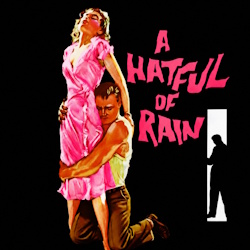
A HATFUL OF RAIN – Bernard Herrmann
 GREATEST SCORES OF THE TWENTIETH CENTURY
Original Review by Craig Lysy
The success of the controversial film The Man with the Golden Arm in 1955, which dealt with drug addiction, catalyzed a transformative change in the Motion Picture Production Code. The code was relaxed to allow films to address the reality of drug addiction in society. 20th Century Fox immediately sought to capitalize on this shift and decided to adapt the Broadway play A Hatful of Rain by Michael V. Gazzo. The original stage production opened on November 9, 1955, at the Lyceum Theatre in New York and ran for 398 performances. The film rights were purchased, Buddy Adler was placed in charge of production with a $1.5 million budget, Fred Zinnemann was tasked with directing, and Gazzo adapted his play into a screenplay with Alfred Hayes and Carl Foreman. The cast featured Don Murray as Johnny Pope, Eva Marie Saint as Celia Pope, and Anthony Franciosa as Polo Pope.
The film offers a compelling and poignant portrayal of the insidious pathology and consequences of drug addiction. Johnny Pope is a decorated WWII veteran who became addicted to morphine while recovering from his wounds. He turns to heroin rather than suffer withdrawal, precipitating a slow spiral into self-destruction as he hides his addiction from his wife and father. We bear witness to the anguish and pain he inflicts upon those he loves as he struggles to overcome the drug’s ever-tightening vice grip on his life. The film was not a commercial success, suffering a loss of $320,000. However, critical reception was favorable, and Franciosa received an Academy Award nomination for Best Actor.
Producer Buddy Adler understood that the film’s narrative was essentially a horror story and would require music capable of conveying that reality while also eliciting sympathy from the audience for the suffering and tragedy unfolding onscreen. He was familiar with Bernard Herrmann’s scores and, when discussing the possibility with Director of Music Alfred Newman, received strong support. Herrmann was happy to accept the assignment and was impressed by Adler’s understanding of the function of music in film. After their introductory meeting, Zinnemann adopted a hands-off approach, essentially granting Herrmann full latitude to compose the score.
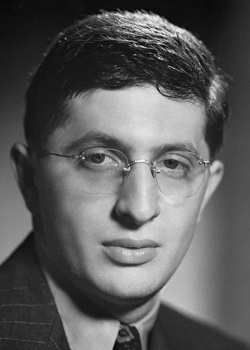 Upon viewing the film, I believe Herrmann perceived that its narrative of addiction needed to be draped in a dark pall of pervasive somberness, beneath which flowed an insidious undercurrent of self-destructive tension. For his soundscape, Herrmann eschewed melodic themes, instead utilizing a number of succinct, repeating motifs. The Addiction Motif, an idée fixe associated with Johnny’s addiction, is brilliantly conceived and serves as the structural nexus of the score. It is built upon a four-note pattern with a descending contour comprised of whole or half steps. This motif provides the structural foundation for many of the film’s more expansive cues, often alternating between strong-beat dissonance and weak-beat resolution to create a sense of unresolved yearning, desperation, and claustrophobia. The motif permeates the film down to its very sinews, never fully resolving and thereby embodying the unrelenting craving created by heroin addiction. Herrmann’s execution of the motif reveals his genius through its malleability and capacity, via numerous variations, to express a multiplicity of emotions. Celia’s Motif is expressed through woodwinds such as oboe and clarinet, usually supported by somber strings. It is characterized by modular simplicity, articulated as a two-note descending figure featuring an initial dissonant strong beat resolving into a weaker beat. Herrmann often expands this two-note cell into a four-note phrase through repetition or transposition. Within its somber expression, the motif conveys yearning as well as the heartache of unrequited love, reflecting Celia’s emotional unfulfillment due to Johnny’s inability to express affection or love toward her.
The Withdrawal Motif offers a truly horrific identity and is, for me, the score’s most terrifying and disturbing idea. Herrmann combines shrill, blaring horns suggestive of searing pain with nervous fluttering woodwinds in a terrifying synergy. I believe that in these scenes it is the music, even more than Don Murray’s acting, that conveys the psychic horror and physical agony of withdrawal. The Pinochle Motif appears only once during the scene in which Pop and Celia set up the pinochle table. It is kindred to the Addiction Motif in that it employs a condensed three-note variation, although structurally it adopts an ascending contour. The motif initially suggests pleasantries; however, it ultimately functions as a veneer motif. On the surface, it projects a lighter and warmer tone, yet by stripping away the additional resolution provided by the Addiction Motif’s fourth note, it too remains unresolved, concealing from Pop the dark reality of marital decay and Celia’s unhappiness. Lastly, integrated within the soundscape are several source songs that provide contemporaneous ambiance, including “Don’t Get Around Much Anymore” by Duke Ellington, “Chattanooga Choo Choo” by Harry Warren, “I’m Making Believe” by James V. Monaco, “Taking a Chance on Love” by Vernon Duke, and “Birdland Blues” by Lionel Newman.
(*) “Logo” offers Alfred Newman’s iconic fanfare, which supports the logos of 20th Century Fox and CinemaScope. We flow into “Prelude (Revised Film Version)”, a score highlight, and masterpiece composition. We open with harsh and jagged string ostinato joined at 0:14 by the shrill screaming horns and nervous, fluttering woodwinds of the Pain Motif as the opening credits display against a back drop of the New York City skyline. This composition offers yet another iconic example of Herrmann’s capacity to intuitively understand the nexus of the film’s narrative, and to evoke it musically. The composition offers an amazing rhythmic conflict with intense kinetic potency. It arises from interplay of two antagonistic motifs in a sophisticated polymetric structure, where one motif is in 3/4 time and the other is in 6/8 time, which serves to create a sense of instability and perplexity. Herrmann would use this approach again two years later in the “Overture/Addiction Title” of “North By Northwest” (1959). At 1:28 the music loses its kinetic drive, and slowly dissipates on a diminuendo as we enter the film proper, which reveals Mr. Pope walking to a large apartment building. At 1:50 Herrmann sow a nebulous, undercurrent of tension as he asks for apartment 38. He is told 3rd floor, and opts to take the stairs as a large crowd waits by the elevator. “Prelude (Original Version)” offers Herrmann’s original conception. It is a more terrifying and grotesque version, that 20th Century Fox executives rejected for being too intense, disturbing and frightening. The rewritten version ultimately used in the film is less disturbing and aggressive, yet still retains the same modernist sensibility and polymetric structure. In my judgement Herrmann’s original conception is superior, musically, but also in executing its mission. As such, I believe 20th Century Fox management made a regrettable creative error.
In an unscored scene, Mr. Pope arrives at his son Johnny’s apartment and reacquaints with his daughter-in law Celia. She is surprised as Johnny was supposed to pick him up at the airport. He decides to go see where Johnny works, and so departs, leaving Celia to fix dinner. On the street he runs into Johnny and after a reunion hug, Pop decides to go see Polo, who promised him $2,500 to assist him start up his new bar in Miami. In (*) “Pop and His Boys”, they arrive at Marty’s Bar and find him disheveled from a fight evicting two rowdy patrons. They try to reacquaint at the bar, but the jazz song “Don’t Get Around Much Anymore”, begins blaring from the jukebox, and Pop decides to go elsewhere so that they can talk. In the storage room Pop breaks, the news that he retired and bought a bar. Tension arises when he says he came up to collect the $2,500 Polo promised him. Polo says he does not have the money, and cannot offer an explanation as to where it went. Pop is furious, shouts some very personal insults at Polo, who flees. We see in Johnny’s eyes regret as he knows Polo spent the money supporting his addiction, a secret he and Polo cannot reveal to Pop. Johnny then leaves telling Pop not to knock Polo in front of him. At the bar Polo is downing whiskey shots as Johnny joins him. In the background the hopeful, and inspirational song “I’m Making Believe” plays in the background. Pop comes out, says he is leaving, and he and Johnny depart.
“The Car” reveals Johnny and Pop walking down the street. Herrmann drapes the scene in repeating dark atmospheric low register sustains, which crest sforzando. As they enter the apartment building, a man (Chuch) exits a parked car and makes a phone call. The cue pauses at 0:33 for an unscored intervening scene where the three dine and chit chat. At 0:34 the cue continues with “The Street” as we see that Johnny seems edgy as he gets up and nervously looks down at the street below. Herrmann sow unease with the repeating Addiction Motif borne by bass clarinet and bassoon, joined by foreboding string figures and horns. On the street two men arrive (Mother and Apples), and the three proceed into the apartment building. Inside Pop asks if Johnny is still in pain from his war wounds, and he says no. When Pop and Celia praise his war record, he becomes combative and says to drop it. The doorbell rings and ‘Mother’, his dealer, asks him to step outside. Johnny excuses himself and the three escort him into the stairwell, where Mother demands the money owed him. He becomes frantic saying that he cannot come up with $500 by tomorrow. Henchman Chuch puts him into a headlock and Mother says bring him $300 by tomorrow and he’ll carry the remaining $200 for a short time. He gives him a bag to tide him over until his ole man leaves, and then gifts him a revolver, saying it’s time to start robbing people so you can pay me. Johnny refuses, Mother knees him in the gut, and then departs with henchman Apples leaving Johnny, Chuch, and the gun in the stairwell. Johnny pleads with Chuch, who is also an addict, and he agrees to tide him over, instructing him to come by his place later.
“The Gun” opens with a dire repeating Addiction Motif, which resounds with trumpets, woodwinds and timpani strikes. At 0:11 Chuch departs, and low register woodwinds emote a foreboding diminuendo of dread, which supports Johnny straightening himself up and placing the gun in his suit pocket. At 0:16 we shift inside where Celia and Pop setup the Pinochle table supported by the Pinochle Motif. While it is kindred to the Addiction Motif, expressed as a condensed, three-note variation of it, emotionally it functions very differently as a veneer motif. On the surface it presents with a lighter, and warmer tone, it too remains unresolved, hiding from Pop, a dark secret of marital decay and Celia’s unhappiness. Warms strings within which are woven suggestions of the Addiction Motif support Johnny’s return. He is criticized for meeting outside, and Celia asks how much money did he lose this time, and he answers, only $2. At 0:54 a grave Addiction Motif reprises as he hangs his suit coat bearing the gun in the closet. I believe “The Closet” (Unused) was replaced by the previous cue. Herrmann uses shrill horns and ominous bass to speak to Johnny hiding a gun in the family closet. (*) “Polo is Drunk” reveals Polo’s boss escorting a very drunk and staggering Polo out as the source song “Taking a Chance on Love” plays on the juke box. Outside he meets a mounted policeman, a friend, who counsels him to go home before he falls down. Th police man then escorts him across the street against the light. Back home they finish the Pinochle game, have a spirited debate regarding the institution of marriage, and Pop departs, escorted to the elevator by Celia. Johnny moves the gun into a chest drawer, and then has a withdrawal fit in the kitchen. He splashes cold water on his face, rolls up his sleeve and prepares to take the heroin, but Celia returns.
Herrmann lets the poignant dialogue carry this dramatic scene. The air is thick with tension as he reminds her calling him useless, with her countering her embarrassment calling his employer and finding out he had been fired again. She is frustrated, and insists they go in the living room and talk. He is fidgety and nervous from withdrawal and finally sits down when she insists. She drops all pretenses asking about the other woman, which he repeatedly denies, yet she is unconvinced. She complains that he leaves here alone a lot and that she sees Polo more than him. She is distraught and essentially tells him, that he has changed, and is no longer the man she married. She asks him to love her again, and he gets up saying he does but we see he cannot break through the heroin’s wall of secrecy. She hugs him, and he cannot bring himself to reciprocate and she turns away hurting from rejection. (*) “Apples Calls Johnny” reveals Mother and Apples having a drink at a nightclub where a gritty jazz piece “The Street” is played by a small band on stage. Apples makes a telephone call to Johnny’s house, but hangs up when Celia answers. Celia complains to Johnny about these calls when they hear a very loud Polo in the hallway. He is staggering drunk and they escort him in, and try to put him to bed. Things become tense when Polo says he will keep Johnny’s secret and not tell Pop. As Celia puts Polo to bed, Johnny takes the gun and puts on his jacket. Celia joins and asks to walk with him, yet he refuses and she turns and says, ok, go to her. As he hesitates, she warns him, that this is the last time you are doing this to me.
“The Search” offers a well-conceived and executed score highlight, which expresses the horror of Johnny’s addiction. It reveals johnny leaving the apartment building with an oppressive Addition Motif carrying him. At 0:25 the music writhes in pain as he stops, and we see him visibly suffering very painful withdrawal symptoms. He resumes his walk to a bench, where he sits buffeted at 0:37 by horrific fluttering woodwinds expressing the Withdrawal Motif. He gets up and walks to Chuch’s apartment, again supported by an oppressive Addiction Motif with bouts of the Pain Motif. He arrives at 1:30 and a diminuendo allows conversation with Chuch who tells him that he can’t give him a fix as ‘Mother’ did not gift him any. He departs at 1:52 buffeted by the Pain Motif and wailing trumpets. The Addiction Motif resumes as he walks the streets. At 2:18 we see Celia preparing a sofa bed for Johnny as she will not sleep with him. Herrmann supports with her chamber-like motif, a repeating, descending, and unresolving four-note identity, which speaks to her sad resignation that her marriage is over. At 2:59 a dramatic fortissimo declaration of the Addiction Motif draped with shrill fluttering woodwinds of the Withdrawal Motif join in a horrific synergy as we see Johnny walking the streets. At 3:14 we shift back home on a foreboding diminuendo as Polo wakes and stumbles out of his bedroom. “The Sidewalk” (Unused) was replaced in the film by the track “The Search”. It was intended to support Johnny desperately searching far and wide for drug dealers. It offers a grotesque and dissonant rendering of the Addiction Motif, which shifts at 0:10 to an intense and desperate repeating four-note motif. At 0:56 the Addiction Motif returns full of the pathos of despair as he cannot find a dealer.
Polo is thirsty, and gulps water from the faucet, waking Celia. The conversation is frank, regarding him disappointing Pop, not coming home, and reneging of the promise of $2,500. He is defensive, more so when she asks him directly to tell her what is wrong with Johnny. He says she needs to ask him herself. I discern a sexual tension as she dries him off after spilling his beer. He becomes nervous, and flees to his bedroom to clean up. (*) “Failed Hold-Up” Johnny comes across a woman alone and unable to hail a taxi. A corrupted, and strident variant of the Addiction Motif carries his approach. They meet face to face, he cannot speak or act, and she flees. Back home Celia elicits Polo to come out and have a muffin with her. Herrmann again supports with her chamber-like, repeating, and unresolving four-note motif. In the kitchen we once again see sexual tension between the two of them. She then drops a bombshell and says he has to move out. When he asks why, she says because I know about your feelings for me. He admits he does love her, and she repeats he has to leave by tomorrow. He tries to hug her, but she says do not try to pick me up and carry me away as I am carrying your brother’s baby. With that he recoils and goes back to his room.
“The Hold-Up” reveals that Johnny has summoned up the courage to rob a man who offers his watch, opens his wallet to reveals just single bills. He begs him not to shoot him as he has a wife and kids and Johnny, recoils, guided by his conscience, and runs away. Herrmann supports with the Addiction Motif rendered as an ominous agitato, which swells on a crescendo. It crests horrifically at 0:27 with a dawn shot of the New York skyline, which then dissipates into nothingness. At home Polo wakes up and joins Celia in the kitchen in over sized pajamas for coffee. They drop all pretenses as he complains why she tolerates her husband being out all night, and she says that she no longer loves him. Adding, she has not felt love or affection from him in months. She is tearful as she dons a coat to go shopping, and Polo asks if he can give her a hug. She consents they hug, and he asks when are you going to tell him. “The Cafeteria” reveals Johnny suffering withdrawal as he aimlessly walks the street. He sees a dealer in a cafeteria, joins him in line, and begs for a $20 bag. The dealer says to meet him at the children’s playground and Johnny departs, now in desperate need of money. Herrmann captures Johnny’s anxiety, growing desperation, and suffering by supporting with a tormenting, and pulsing, two-note motif, which is soon joined by a forlorn Addiction Motif. At home, Pop calls, asks for Johnny, and Polo says he is out at the grocery store. Pop tells him when he returns to come join him for breakfast and hangs up. Johnny returns and Polo offers a sarcastic “Welcome home”, and returns to his bedroom. He returns, tells him that Celia is at work, that he needs to pickup groceries for tonight, and that dad expects him for breakfast. Johnny frets, but goes into the bathroom to freshen up, and notices the gun as he hangs up his jacket.
“The Office” reveals Celia working as one of many typists in a large open office. A supervisor says the boss Mr. Wagner wants to see her in his office, and that she has placed her carbon in backwards. Herrmann expresses the sadness of her life with her chamber-like motif born by weeping strings full of despair. At home Johnny frets that the police dragnet has scared every pusher away, but he was lucky to score a bag. He asks for $20 but Polo refuses, saying the cupboard is bare. They argue over the futility of his habit, to no avail. Back at the office Celia is asked if she is happy working here at Union Metals, and she answers, yes. He says he asks because she is making many errors including putting the carbon in backwards today. He says several jobs will have to be retyped. He asks if there is anything wrong, she answers no, but we see she is not very convincing. Wagner closes saying that he wished she could keep her mind on her job, and dismisses her. As Polo drives Johnny to Pop’s for breakfast, Johnny continues to beg, promising to quit tomorrow, to no avail as Polo says he has heard this all before. He then drops a bombshell that he owes Mother $500 today or else. They arrive at the hotel, and Johnny asks him to come up with him. Polo refuses, but relents when he begs. In the room Polo multiple attempts to apologize and make-up are angrily spurned by Pop. Then Johnny joins in and Polo storms out.
Johnny is very edgy, and nervous as Pop extols how he has a home, wife and kid on the way, while Polo is a loser. This causes Johnny to snap and he lays into Pop on how he was never there for him and a failure as a dad. Pop is stunned and rebuts that he does not know him anymore. Johnny cracks and we see him approaching madness when Polo returns. Pop asks him to help as something is wrong with Johnny. He tries, and Johnny tells Pop, do you really want to know what’s wrong with me? Polo forces him out to the elevator before he can reveal his dark secret. “The Playground” as they descend in the elevator, the Addiction Motif magnifies Johnny’s claustrophobia. At 0:38 we see a playground with kids playing, and the drug dealer sitting on a bench, supported by a pulsing two-note woodwind motif. At 0:53 horns dramatico declare the Addiction Motif with timpani strike of doom as Polo and Johnny depart the apartment. At 1:00 Polo tells Johnny he is turning him in and shifting strings vortices buttressed by blaring horns support his panic as he repeatedly opens the door and threatens to jump out. The car careens through traffic almost causing several accidents as Polo fights to keep Johnny in the car. At 1:42 a diminuendo supports Polo relenting and promising to do anything Johnny wants. He says to take to the playground at 14th street and a soft, pulsing, two-note motif, with eerie woodwind accents sow unease and portends danger. They arrive, Polo gets out and sees a man inside the fenced playground. Yet he also sees two unmarked narcotics police cars arrive and decides they have to leave. Dark, bass quotes of the two-note motif answered by two-note pizzicato strings portend danger as they drive away and the dealer looks up and sees he is bracketed by approaching policemen. At 3:29 we surge on a crescendo of desperation, which crests with dissonance as the dealer flees, tries to scale a fence, but is surrounded. At 3:39 a beleaguered Addiction Motif supports Polo’s drive, and arrival home, with him helping a suffering Johnny enter through the back door.
Inside Johnny is suffering, Polo says he is going to turn him in, but is again dissuaded by a frantic Johnny. He grabs Polo and repeatedly says give him $20 and he will turn himself in. Polo tries to call but Johnny rips the phone from him, yelling just go and let me die. Polo slaps him several time to snap him out, but he becomes delirious yelling; “Corporal John Pope P22023 6617. You won’t get anything from me accept name, rank and serial number”. Mother, Chuch and Apples enter demanding payment as they see Johnny delirious and writhing in pain. Polo tries to buy them off but has only $12 in his wallet. “The Window” reveals Chuch and Apples taking Johnny into the bedroom as Mother walks to the window and looks out. High shifting woodwinds repeat the two-note motif, joined by a forlorn Addiction Motif. At 0:20 the music darkens as Mother eyes Polo’s car below and tells him to sell it and pay him $500 to square things. At 0:39 the two-note motif reprises, full of woe as Mother days I’ll be back tonight for the $500 or I’ll put your brother in the hospital with Willie D. Carlo (severely beaten). As Mother and his gang exit, he whistles “Chattanooga Choo Choo” (not on the album) with Polo kicking the door closed. Johnny comes out high and thanks Polo. He promises that he needs his help to break this, and asks to be locked in a hotel room for three days. Polo says that he needs to tell Celia. When Johnny says tell her what? Polo says tell her that you are a junkie, because that’s what you are as he gives him a loving hug.
“The Pawnshop” reveals Polo driving to Happy Jack’s Used Car Dealer to sell his car for $500 so he can pay off Mother tonight. A forlorn Addiction Motif supports, and shifts tone at 0:22 as we see Johnny bagging kitchen appliances to pawn. At 0:42 the motif again shifts key as we Johnny walking into a pawn shop. We close at 1:00 with strings emoting a molto tragico coda of the Addiction Motif. “Homecoming” reveals Celia leaving work and heading home. Tonight, she will let Johnny know that their marriage is over, and so Herrmann expresses both bitterness and profound sadness with her motif. Back home, the fix temporarily cures Johnny’s withdrawal, and he tries to reconcile with Celia by preparing a romantic dinner. However, she tells Johnny that she no longer loves him and wants a divorce. He will not accept it and fervently begs her to not give up on him. When the baby kicks it serves to bring them together and they hug. At Polo’s prodding, he then confesses that he is a junkie and that his habit has caused his absence and inattention. She responds with forgiveness, compassion, and love, while Johnny’s catharsis at last, unburdens him. Pop arrives for dinner and Johnny informs him that he is a junkie and that Polo’s $2,500 was spent on drugs for him. All hell breaks loose as Pop explodes with anger and contempt, for his dope head son, blaming both Polo and Celia. The tirade is too much for Johnny, who suffers a withdrawal event, and flees. Celia I also very distraught, collapses ill, and is rushed to the hospital to avoid losing the baby.
“The Bridge” offers a powerful score highlight where Herrmann joins his two primary motifs and instrumental effects in a terrifying synergy. It reveals Johnny running atop the Brooklyn bridge enveloped by a truly horrific synergy of string vortices, blaring horns, fluttering woodwinds, repeating timpani strikes of doom, and the Addiction Motif writhing with pain. As the musical narrative intensifies, he pulls out his pistol. At 0:33 he sets the pistol on the rail and ponders as the music shifts to a Pathetique borne by strings affanato. The fluttering woodwinds dissipate as he pushes the pistol and it falls to the river below, which Herrmann punctuates. At 0:52 we shift to a foreboding two-note motif as we see a doctor examining Celia. The music subsides, and outside Pop chastises Polo for helping his brother kill himself, adding that he is ashamed to admit you’re my son. Polo release long felt grievances, which causes Pop to slap him in the face. The doctor joins, says Celia and the baby are fine, but she needs to rest. Polo then departs angrily saying Pop should take her home while he searches for Johnny. “The Return” reveals a dazed Johnny stumbling back to the apartment. Herrmann speaks to his psychological unraveling with a see-sawing string ostinati, nervous woodwinds, and dissonant harmonies. The Addiction Motif joins and strings affanato as he begins running for the safety of his apartment. At 0:16 shrill fluttering woodwinds bring him to the elevator and Herrmann unleashes a horrific, and cacophonous synergy of all his pain motifs for a musical narrative from Hell as Johnny takes to the stairwell. At 0:34 a desperate Addiction Motif supports his arrival and attempt to open the door. He enters and we conclude on a shrill stinger that slowly dissipates to nothingness as he finds Mother, Chuch, and Apples waiting.
Mother demands the $500 owed him and waves a bag of heroin as a lure. He hides it and a flashlight behind his back and tells him to choose a hand, saying one hand brings him Nirvana, and the other a beating that will put him in the hospital. Johnny steps forward, and says he is quitting. Mother counters, you’re not quitting as every boy belongs to his mother. Polo arrives, opens his wallet, pays the $500 and orders Mother out. Mother thanks him, and as he is leaving, tosses Johnny a bag, telling Polo this will fix him. Johnny picks it up, says take it with you mother, and tosses it back at him. They depart and Johnny collapses sobbing in Polo’s arms screaming that with his help I can kick it! Pop and Celia return but are locked out. Polo puts a handkerchief in Johnny’s mouth and hides him in his bedroom. Celia, Polo and Pop all argue over how to best treat Johnny, when his horrific scream brings him out of the bedroom. He is writhing in pain and they comfort him. She then orders both Pop and Polo to leave and we flow into “Finale” a score highlight. Now alone, Celia says we have two choices; live, or die. She decides to call the police and a bleak, pulsing, two-note motif carried by woodwinds tristi supports. She makes the call to the police and a string borne Addiction Motif joins as she puts her head on Johnny’s chest and the music slowly dissipates into nothingness to end the film. Herrmann brings closure to his score’s searing evocation of pain, despair, and dissolution, by now expressing emotional exhaustion and, introspection. At 1:16 we segue into “The End” with a final reprise of a transformed Addiction Motif, which concludes at 1:29 with shimmering refulgence, and crowned with a hopeful, major modal chord declared by triumphant horns brilliante.
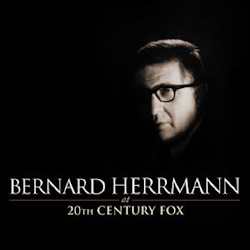 I would like to thank the late Nick Redman, and Robert Townson for their magnificent 14 CD box set “Bernard Herrmann at 20th Century Fox. This recording is an outstanding archival release, the enhanced monaural recording provides a clear and crisp audio quality, and is a wonderful listening experience. Bernard Herrmann was renowned for his innate gift for being able to perceive a film’s narrative nexus, and emotional dynamics. Such is the case here where he intuitively understood that the drug was becoming an implacable, ever-tightening vice grip on Johnny’s psyche, causing him to spiral ever downwards into self-destructive dissolution. His scoring approach would be to create a stark, tense, and modernist soundscape, which would utilize his signature modular construction built from short musical blocks rather than extended melodic lines. Foremost is the Addiction Motif, and idée fixe, which permeates the score. It is built on a repeating four-note pattern with a descending contour of whole or half steps. This motif provides a structural foundation for the film’s more expansive cues, often alternating between strong-beat dissonance and weak-beat resolution. The motif is well-conceived in that it never resolves until its final hopeful, crowning statement with “The End” where it portends Johnny’s salvation. Kindred is the Withdrawal Motif which is empowered by a number of ingenious instrumental effects, to create a dynamic, horrific, and often terrifying synergy. These instrumental effects included; a see-sawing string figure to evoke emotional turmoil, swirling strings vortices to mirror the vicious downward spiral of heroin addiction, shrill screaming horns and nervous, fluttering woodwinds to evoke the psychological and physical manifestation the pain of withdrawal. Indeed, Herrmann’s approach of using constantly cycling, which fails to achieve a traditional resolution served to give the music a relentless, almost claustrophobic feel, evoking Johnny’s hopelessness and entrapment. Folks, “A Hatful of Rain” offers a potent and visceral social problem drama, which employs many of Film Noir’s defining stylistic and thematic elements. You will not find this score on most people’s list of favorite Bernard Herrmann scores because of its abrasive, and often terrifying musical storytelling. Nevertheless, I believe that when all is said and done, that his score transcended the film, offering masterful musical storytelling, which fully expressed the suffering and horror of drug addiction. Forget the stand-alone listening experience, as it is decidedly unpleasant. Instead stream the film to bear witness to Herrmann’s genius, and the power of film music to enhance a film in every way.
For those of you unfamiliar with the score, I have embedded a YouTube link to a 16-minute suite; https://www.youtube.com/watch?v=_WaNU0os3nU&list=RD_WaNU0os3nU&start_radio=1
Buy the Hatful of Rain soundtrack from the Movie Music UK Store
Track Listing:
- Prelude (2:36)
- The Car/The Street (1:28)
- The Gun (1:41)
- The Closet (0:43)
- The Search (3:26)
- The Sidewalk (1:54)
- The Hold-Up (0:41)
- The Cafeteria (1:45)
- The Office (0:46)
- The Playground (4:36)
- The Window (0:52)
- The Pawnshop (1:18)
- Homecoming (1:27)
- The Bridge (1:20)
- The Return (0:57)
- Finale (2:02)
- Prelude (Original Version) (1:10) BONUS
- The Closet (Alternate) (0:55) BONUS
Varese Sarabande CD Club VCL 1211 1128 (1957/2011)
Running Time: 29 minutes 47 seconds
Music composed and conducted by Bernard Herrmann. Orchestrations by Bernard Herrmann. Recorded and mixed by XXXX. Score produced by Bernard Herrmann. Album produced by Nick Redman and Robert Townson.

Shop at the Movie Music UK Store

Member of the


