Archive
FINAL FANTASY: THE SPIRITS WITHIN – Elliot Goldenthal
 Original Review by Jonathan Broxton
It’s been a long wait since Titus for Elliot Goldenthal to spring a new score on the world, but it has been more than worth it. His work on Final Fantasy: The Spirits Within is, from a pure enjoyment perspective, possibly the best of his career to date. I say that it is his best from an enjoyment perspective not because this score is his most challenging or complex – those accolades are reserved for works such as Alien 3 and Titus – but because, in terms of themes and developments, and for old-fashioned beauty, Final Fantasy has them all licked. It’s a dark, dark, score, make no mistake, but it contains more than its fair share of moments in the light. Read more…
James Bernard, 1925-2001
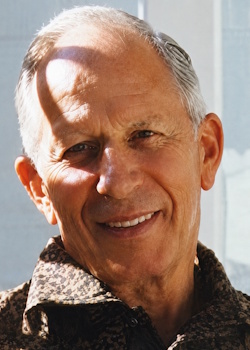 Composer James Bernard died in at his home in Jamaica on July 12, 2001, at the age of 75.
Although his career included radio, theatre and occasional non-horror films, Bernard is remembered above all as the musical voice of Hammer Films. Over an association lasting almost two decades, his pounding rhythms, abrasive harmonies and muscular brass writing helped define the sound of British Gothic horror, accompanying Dracula, Frankenstein and many of Hammer’s other celebrated monsters.
Bernard was born on September 20, 1925, in Kochel am See, Bavaria, Germany into a British Army family, He later re-located to British India with his family, before moving back to England in the 1940s. He was educated at Wellington College, where he met Benjamin Britten while still a teenager, and Britten encouraged his interest in composition. After wartime service in the RAF, Bernard studied with Herbert Howells at the Royal College of Music and later worked as a copyist and assistant on Britten’s opera Billy Budd.
Before becoming a film composer, Bernard had already won Hollywood’s highest honor, although not for music. With his partner, writer Paul Dehn, he devised the story for the nuclear thriller Seven Days to Noon (1950), for which the pair shared the Academy Award for Best Motion Picture Story. Bernard subsequently concentrated on music for radio and theatre, and his score for a BBC production of The Duchess of Malfi attracted the attention of Hammer musical director John Hollingsworth.
Hollingsworth recommended Bernard for The Quatermass Xperiment (1955), beginning the relationship that would dominate his career. Working initially with just strings and percussion, Bernard produced a tense, dissonant score whose unusual sonorities perfectly suited Hammer’s stark science-fiction horror. He followed it with X the Unknown (1956), Quatermass 2 (1957), and then the film that transformed Hammer’s fortunes, The Curse of Frankenstein (1957). Read more…

Shop at the Movie Music UK Store

Member of the

 MOVIE MUSIC UK