Archive
Academy Award Winners 1998
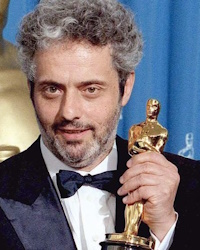 The Academy of Motion Picture Arts and Sciences (AMPAS) have announced the winners of the 71st Academy Awards, honoring the best in film in 1998.
In the Best Original Dramatic Score category, Italian composer Nicola Piovani won the award for his score for Roberto Benigni’s Life Is Beautiful. In his acceptance speech, Piovani said:
It’s impossible for me in this moment [to] speak about my emotion in English. I can tell just: Thank you to the jury. Thank you, the Academy. Thank you, Roberto.
The other nominees for Best Original Dramatic Score were David Hirschfelder for Elizabeth, Randy Newman for Pleasantville, John Williams for Saving Private Ryan, and Hans Zimmer for The Thin Red Line.
In the Best Original Comedy Score category composer Stephen Warbeck won for his score for the Elizabethan-era comedy Shakespeare in Love. In her acceptance speech, Warbeck said:
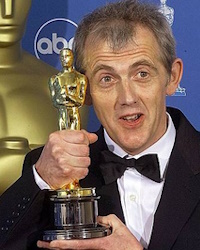 It’s a very, very exciting moment. Thank you very much. Especially exciting because John Madden is such a fantastically stimulating person to collaborate with. So thank you, John. Thank you to the Academy. Thank you to Sarah, Jessica, Herbert, Matilda. And thank you to my mother and father. Thank you to the lovely producers, without whom we wouldn’t be here or the people involved in this. Thank you to William Shakespeare, Bertolt Brecht, and The Kippers, for inspiring me to write music for the theater and other things. And thank you, thank you to all the friends who worked on the music, without whom it would just be squiggles on a piece of paper: John Parricelli, Eleanor Alberga, Chris Dibble, Nick Ingman, Martin Robinson, Paul, Gary and Frank. Thank you very much indeed. This is lovely. Thank you.
The other nominees were Randy Newman for A Bug’s Life; Matthew Wilder, David Zippel and Jerry Goldsmith for Mulan; Marc Shaiman for Patch Adams; and Stephen Schwartz and Hans Zimmer for The Prince of Egypt.
In the Best Original Song category, composer and lyricist Stephen Schwartz won for “When You Believe” from The Prince of Egypt performed by Whitney Houston and Mariah Carey. Schwartz, however, was not present to accept the award, as he was in New York rehearsing a show.
The other nominees were Diane Warren for “I Don’t Want to Miss a Thing” from Armageddon; Carole Bayer Sager, David Foster, Tony Renis and Alberto Testa for “The Prayer” from Quest for Camelot; Allison Moorer and Gwil Owen for “A Soft Place to Fall” from The Horse Whisperer; and Randy Newman for “That’ll Do” from Babe: Pig in the City.
Ernest Gold, 1921-1999
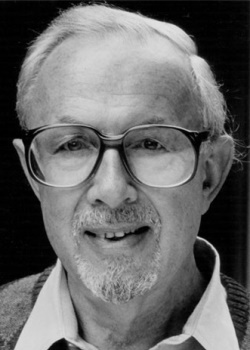 Composer and conductor Ernest Gold died in Santa Monica, California, on March 17, 1999, at the age of 77, following a stroke.
An Austrian-born composer who became one of Hollywood’s leading musical voices during the 1950s and 1960s, Gold wrote scores for more than 100 film and television productions. He received four Academy Award nominations, winning for Otto Preminger’s Exodus, and enjoyed an especially fruitful collaboration with director Stanley Kramer.
Gold was born Ernst Sigmund Goldner in Vienna on July 13, 1921, into a musical family and began composing while still a child. Following the Nazi annexation of Austria, his family emigrated to the United States in 1938, settling in New York. Gold initially wrote popular songs while continuing his musical studies, and eventually moved to Hollywood, where he began working on low-budget features while also orchestrating and conducting for other composers.
After a decade of smaller assignments, Gold’s career accelerated in the late 1950s. He worked with Stanley Kramer on The Defiant Ones (1958) and then composed On the Beach (1959), Kramer’s bleak drama about the aftermath of nuclear war. Gold ingeniously incorporated the Australian song “Waltzing Matilda” throughout the score, transforming the familiar melody from something nostalgic and comforting into an increasingly tragic reminder of a world facing extinction. The score earned him his first Academy Award nomination and won the Golden Globe for Best Original Score.
Gold’s greatest success came the following year with Otto Preminger’s epic Exodus (1960), starring Paul Newman. Its expansive main theme, combining sweeping romanticism with musical gestures intended to evoke the film’s Israeli setting, became one of the most popular film themes of its era. The soundtrack was an enormous commercial success, the theme was recorded by numerous artists, and Gold won the Academy Award for Best Dramatic or Comedy Score as well as two Grammy Awards. Exodus remains by far his best-known work and established him internationally as a major film composer. Read more…
NINETEEN EIGHTY-FOUR – Dominic Muldowney
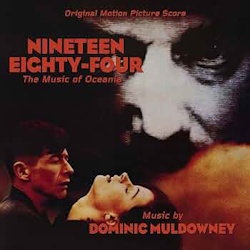 Original Review by Jonathan Broxton
The thought police. Big brother is watching you. Who, if anyone, can claim to be unaware of the legacy left by George Orwell’s novel Nineteen Eighty-Four, in which he outlined his terrifying vision of a totalitarian, oppressive future in the land of Oceania. Director Michael Radford, who would later go on to helm the recent Oscar winner Il Postino, adhered faithfully to the guidelines set out by Orwell during filming, using the precise locations and dates set out in the text, assembling a stellar cast including Richard Burton, John Hurt and Cyril Cusack to breathe life into the classic prose.
Upon its release, Nineteen Eighty-Four was a critical and commercial smash hit, but one of the most debated elements of the film surrounded the eventual removal of the original score in favour of pop songs by the British rock group, the Eurythmics. Since the release of Nineteen Eighty-Four, Dominic Muldowney has become one of the most influential composers in English theatre, but has limited his screen work to a few feature films and episodes of the TV series Sharpe. Nineteen Eighty-Four remains his most celebrated cinematic work to date, but until now has been unavailable on CD. This release from the Airstrip One company and producer Christopher Landry marks the first time the complete score has ever been heard on CD. Read more…
BAFTA Nominations 1998
 The British Academy of Film and Television Arts (BAFTA) has announced the nominations for the 52nd British Academy Film Awards, honoring the best in film in 1998.
In the Best Original Music category, which is named in memory of the film director Anthony Asquith, the nominees are:
- DAVID HIRSCHFELDER for Elizabeth
- BARRINGTON PHELOUNG for Hilary and Jackie
- STEPHEN WARBECK for Shakespeare In Love
- JOHN WILLIAMS for Saving Private Ryan
These are the first nominations for Pheloung and Warbeck. It is the third nomination for Hirschfelder, and the ninth nomination for Williams. Hirschfelder previously won for Strictly Ballroom in 1992. Williams previously won for Jaws and The Towering Inferno in 1975, Star Wars in 1978, The Empire Strikes Back in 1980, E.T. the Extra-Terrestrial in 1982, Empire of the Sun in 1988, and Schindler’s List in 1993.
The winners of the 52nd BAFTA Awards will be announced on April 11, 1999.

Shop at the Movie Music UK Store

Member of the


