Ernest Gold, 1921-1999
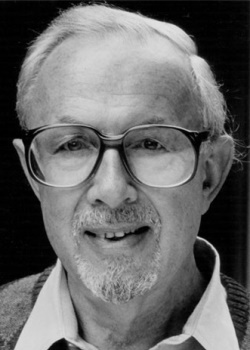 Composer and conductor Ernest Gold died in Santa Monica, California, on March 17, 1999, at the age of 77, following a stroke.
An Austrian-born composer who became one of Hollywood’s leading musical voices during the 1950s and 1960s, Gold wrote scores for more than 100 film and television productions. He received four Academy Award nominations, winning for Otto Preminger’s Exodus, and enjoyed an especially fruitful collaboration with director Stanley Kramer.
Gold was born Ernst Sigmund Goldner in Vienna on July 13, 1921, into a musical family and began composing while still a child. Following the Nazi annexation of Austria, his family emigrated to the United States in 1938, settling in New York. Gold initially wrote popular songs while continuing his musical studies, and eventually moved to Hollywood, where he began working on low-budget features while also orchestrating and conducting for other composers.
After a decade of smaller assignments, Gold’s career accelerated in the late 1950s. He worked with Stanley Kramer on The Defiant Ones (1958) and then composed On the Beach (1959), Kramer’s bleak drama about the aftermath of nuclear war. Gold ingeniously incorporated the Australian song “Waltzing Matilda” throughout the score, transforming the familiar melody from something nostalgic and comforting into an increasingly tragic reminder of a world facing extinction. The score earned him his first Academy Award nomination and won the Golden Globe for Best Original Score.
Gold’s greatest success came the following year with Otto Preminger’s epic Exodus (1960), starring Paul Newman. Its expansive main theme, combining sweeping romanticism with musical gestures intended to evoke the film’s Israeli setting, became one of the most popular film themes of its era. The soundtrack was an enormous commercial success, the theme was recorded by numerous artists, and Gold won the Academy Award for Best Dramatic or Comedy Score as well as two Grammy Awards. Exodus remains by far his best-known work and established him internationally as a major film composer.
His partnership with Kramer continued through some of the director’s most ambitious films. Gold scored Inherit the Wind (1960), Judgment at Nuremberg (1961), A Child Is Waiting (1963), the epic comedy It’s a Mad, Mad, Mad, Mad World (1963), Ship of Fools (1965), and The Secret of Santa Vittoria (1969). The extraordinary range of these films demonstrated Gold’s versatility, from the grave dramatic writing of Judgment at Nuremberg to the exuberant, almost manic orchestral comedy of It’s a Mad, Mad, Mad, Mad World. The latter and The Secret of Santa Vittoria both brought him additional Academy Award nominations.
Elsewhere, Gold scored films including The Young Philadelphians (1959), The Last Sunset (1961), Pressure Point (1962), and later Sam Peckinpah’s brutal war film Cross of Iron (1977). His music often combined strong thematic writing with a sophisticated symphonic technique, and although his greatest successes belonged to the large-scale dramatic cinema of the 1960s, he continued composing for films and television into the 1980s, including Tom Horn (1980) and the television productions Wallenberg: A Hero’s Story and Gore Vidal’s Lincoln.
Away from cinema, Gold wrote concert works including symphonies, chamber music, a piano concerto and other orchestral pieces. He always regarded himself as a serious composer rather than exclusively a Hollywood craftsman, although it was film music that ultimately brought him his widest audience.
He leaves behind his first wife, actress Marni Nixon; his second wife Jan, and several children. His son, Andrew Gold, is also a composer and songwriter, who famously penned the theme tune “Thank You For Being a Friend” from the TV series The Golden Girls.

Shop at the Movie Music UK Store

Member of the


