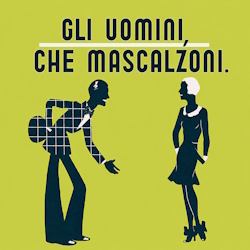
GLI UOMINI, CHE MASCALZONI/WHAT SCOUNDRELS MEN ARE – Cesare Andrea Bixio
 GREATEST SCORES OF THE TWENTIETH CENTURY
Original Review by Craig Lysy
After the success of Italy’s first “talkie,” La Canzone dell’Amore, in 1930, the Italian film industry embraced the new format and blossomed. Director Mario Camerini aspired to be at the forefront of this emerging era of Italian cinema and transform it from one dominated by theatrical adaptations shot in reconstructed studio environments to one embracing outdoor filming in scenic, naturalistic locations across Milan and Lake Como. A marriage made in heaven followed when Cines studio executives decided to create a modern, populist romantic comedy while establishing a refreshing, realistic visual style by shooting on actual Milanese locations rather than artificial studio sets. The result was the film Gli Uomini, Che Mascalzoni, or What Scoundrels Men Are. A team of writers, including Camerini, Aldo De Benedetti, and Mario Soldati, wrote the screenplay; Cines managed production; and Camerini directed. Vittorio De Sica starred as Bruno, joined by Lia Franca as Mariuccia.
The film is set in 1930s Milan and follows the fortunes of a charming chauffeur named Bruno who falls in love with a perfumery worker named Mariuccia. Wanting to make a good impression on their first date, he borrows his employer’s car. Yet the outing soon unravels, leading to a series of quarrels, misunderstandings, and reconciliations. The film was a massive commercial success and is now celebrated as one of the first Italian features to incorporate on-location shooting, capturing the bustling streets, modern architecture, and lively crowds of Milan. It also catapulted lead actor Vittorio De Sica to stardom and featured the iconic hit song “Parlami d’Amore, Mariù.” Critics likewise embraced the romantic comedy, praising its “perfume of youth” and its fresh and gracious storytelling.
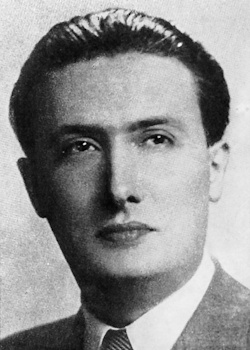
Following the arrival of “talkies,” Cines studio president Emilio Cecchi made a strategic decision to invest in lighthearted romantic comedies energized by catchy, popular songs. This strategy was designed to counter the dominant box-office influence of Hollywood musical imports, which were flooding the Italian market. Director Mario Camerini shared this perspective and was determined to include an original, catchy romantic theme song for their “proletarian romantic comedy.” To that end, Cesare Andrea Bixio, one of Italy’s finest songwriters, was hired to score the film. Camerini specifically instructed Bixio to compose a beautiful love song with lyrics by Ennio Neri. The result was the historic hit “Parlami d’Amore, Mariù.” Bixio crafted the song for De Sica’s tenor vocal, and it unfolds as a sweeping valzer romantico as Vittorio declares to Mariù that she is his whole life and urges her to embrace his love and banish all sadness.
 For the film’s soundscape, Camerini and Bixio chose to use “Parlami d’Amore, Mariù” as an idée fixe—the beating heart of the film. It offers a quintessential romantic serenade, blending operatic vocal intensity with a simple 3/4 waltz tempo, which makes the melody elegant, nostalgic, and incredibly accessible. Structurally, Bixio composed its harmonic progression to alternate between minor-modal melancholy and major-mode resolutions, perfectly reflecting the film’s mix of romantic longing and working-class comedy. The song’s melody is deeply lyrical, soaring, and sensual, yet possesses the directness of a popular folk song. It also incorporates elevated, almost operatic vocal writing that gives the singer plenty of room for vibrato and expressive rubato.
For the orchestral underscore, Bixio embraced a light-music (musica leggera) orchestral approach popular in the interwar era. This “White Telephone” (Telefoni Bianchi) musical aesthetic offered a luxurious, escapist style associated with 1930s Italian cinema. It was named after the symbolic white telephones used by prop masters on sets, which evoked an idealized, romanticized world of wealth, Art Deco glamour, and bourgeois comfort. Given the growing influence of American jazz on Italian popular culture, Bixio chose to infuse his soundscape with elements of American hot jazz, salon fox-trots, and European ballroom dance rhythms. This gave the bustling city scenes a contemporary, cosmopolitan bounce. Additionally, Camerini and Bixio collaborated to integrate the music with diegetic sounds, such as the use of mechanical street organs in a restaurant. Camerini’s decision to include Bixio’s song “Parlami d’Amore, Mariù” in the film was met with objections from the production company. In the end, Camerini’s judgment was validated, as the song became even more famous than the film itself.
There is no commercial release of the score. As such I will use film scene descriptors and time indices to provide film context. 0:00 “Main Titles” offers a wonderful score highlight. The film opens with the Anonymous Pittaluga and Italiana Cines logos. Bixio masterfully establishes the tone of the film by gracing us with a beautiful instrumental exposition of his iconic “Parlami d’Amore Mariù”. As the credits flow, the song’s melody is expressed with a sunny, cheerful, and romantic arrangement that sets a carefree, lighthearted, and sentimental tone for the film. 1:07 “Part One – A New Day takes us into the film proper where we see Milan waking up to greet a new day. We open with a languorous Main Theme supporting as we see store owners opening up. We flow into a busting taxi depot where Tadino surrenders his night shift earnings to the pay master, and picks up some milk. He goes home and tells his daughter Mariuccia to get out of bed. Bixio supports with a light, and sentimental ambiance. When he enters her bedroom and opens the curtains, sunlight flows in supporting by bubbling woodwinds of delight as Mariuccia peers out from beneath the sheets. The music sours as he departs and says rise, and work! As she gets up and dresses, her theme becomes spritely borne by strings animato and bubbling woodwinds. Variations of her theme support as she takes a latte and departs for work. We close with Tadino falling asleep supported by strings sonnolenti.
5:19 “Off to Work” offers a wonderful score highlight, the playful and lighthearted interaction of our lovers to be. Bixio perfectly imbues the scene with carefree and bubbling woodwinds of delight, which carry Mariuccia’s walk to work. She picks up a paper, and drops a coin, which Bruno chivalrously picks up and returns to her. She thanks him and walks on. He is clearly attracted to her and follows on his bicycle with the musical narrative offering a lighthearted, playful and breezy ambiance. He makes no effort to hide he is following her and interested. The music becomes mocking as he crashes into a garbage can. This allows her an opening to catch a tram and escape. But he is not to be deterred. He rides up propelled by a sunny and confident Main Theme and grabs bars on an open window, and smiles at her. She begins to warm to him as he is forced to pull away, and laughs as he is sprayed with water by a street cleaner. He catches up again and the Main Theme evolves into a dance-like form full of life as she prepares to disembark. She does, quickly moves on and finds refuge in the arms of two girlfriends. The walk three abreast and tell Bruno to leave her alone as we are not interested in men on bicycles. Bruno replies, then I will get a car, which makes them laugh as they walk into the perfume store. Where they work. The three come out in the work uniforms and prepare the store for opening.
At the auto shop Bruno polishes up the owner’s car, as he intends to borrow it to impress Mariuccia. His boss calls, and orders him to bring the car as his wife needs it today for shopping. Bruno manages to convince the owner that the car needs extensive repairs and will be ready tomorrow. His boss relents and says they will use their cousin’s car. Later, the perfumery shop closes for the day. The girls all depart after work, with Mariuccia walking alone. 13:07 “First Date” offers a romantic score highlight. It reveals Bruno arriving, and sweet talking her into allowing him to drive her home. Bixio supports Bruno’s false façade of wealth with a spirited, bubbling, and carefree musical narrative as we see historical sights in Milan. Later, we see them on a country road and she asks him, where he is taking her. He says the lakes, and she is surprised as she has never been there. They arrive and the camera offers a sweeping cloudscape crowing Lake Como, with the Main Theme shifting at 13:47 to a solo violin led rendering as a romanza to support a montage of beautiful vista shots. He takes her on a steamboat ride on the lake supported by the Main Theme They sit together and she deters his amorous advances. Later as they drive back to Milan, he asks her to stop for a drink. When she declines, he asks if someone is waiting for her? When she answers no, he stops and takes her into an osteria where a quartet of men are singing at 14:56 “Parlami d’Amore, Mariù” with accordion accompaniment. As they are served ham, biscuits and wine, they hear music from inside the osteria and go to investigate.
16:05 “Love Awakens” reveals that an older couple have placed money in a pianola and now dance to “Parlami d’Amore, Mariù”, Bruno is taken in by the song, and takes Mariuccia to the dance floor. As they dance, he sings amorously to her, and we see in his warm and genuine smile and his sincerity, which now begins to capture Mariu’s heart. They have a wonderful dance. As he takes her outside, he hears his car horn blowing. He excuses himself to take care of the little brats and runs off as “End of Part One” displays.
“Part Two” displays. The wife and family of Bruno’s boss arrive. She asks Bruno why he is here and not in the shop? He says that he fixed the car, and took it here on a test drive. She dismisses their cousin, who drives off, saying Bruno will drive them home. Bruno is trapped by circumstances and so gives a boy money and tells him to inform the lady inside that he will be back shortly. In 19:01 “The Date Unravels”, on the way home Bixio supports Bruno’s desperation with a frantic, fast-paced, rhythmic, and chaotic musical narrative as we see the car speeding back home. A montage of scenes unfolds with interludes showing the speedometer ascending from 60 – 100 kmh. They arrive with the family giggling from their wild ride. He drops them off and speeds back to the osteria. 19:50 “Catastrophe!” offers a blurred and dizzying speeding montage reprises scenically, as does the frantic musical narrative as desperate Bruno heads back to retrieve Mariu. He crashes into a mule pulled fruit car, that damages the car. A policeman arrives and issues a ticket, and say he must remain until the road is cleared. 21:07 “Mariu’s Devastation” reveals her sitting at the picnic table at night under a lamp. Her theme borne by weeping strings express her sadness from being abandoned. The owner comes out, hands her the bill, and apologizes, saying he has to close. She is humiliated when she gives her all her money and it is not enough. He excuses himself and says he will be back. His wife returns, and tells her, so, you cannot pay? Mariu breaks down, begins sobbing, and tells her what has happened. A scene shift reveals a tractor towing Bruno’s broken car, and merchant’s cart, followed by the policeman. We shift back to the osteria, and the son comes out, and convinces mama to put her up for the night. Mariu continue to sob, and thanks her profusely. As mama escorts Mariu, she tells her that “All men are scoundrels”.
The next day, the son, who is smitten with Mariu, drops her off at her apartment and gives her a flower. She thanks him and runs up. On the stairwell she sees papa walking up the stairs below. She runs to her bedroom, pulls the curtains closed, and gets into bed under the covers to feign sleep. He opens the curtains and asks if she slept well. She says yes, and he departs saying get up and work. At work, Bruno’s boss is furious and rejects Bruno’s offer to pay him back with monthly installments. He fires him, gives him 100 Lira, and Bruno departs saying goodbye sir. At the perfumery Mariu sees Bruno approaching as she escorts a customer out. She returns and advises her friend that the cyclist is back. Inside he tries to apologize, but she keeps cutting him off. He offers to buy some perfume, but is stunned by the price of the two bottles she offers. He is corralled into buying one for 350 Lira and she escorts him out. 28:34 “Second Thoughts” reveals her watching him walk away through the window. He angrily throws the bottle into the gutter and a heartbroken rendering of her theme supports. 28:54 An energetic and hopeful musical narrative unfolds as a hiring add appears on screen; “Chauffer, skilled mechanic 1,000 Lira/month. Apply at Casella 465.” He does and finds nothing and sour music punctuates his disappointment. The next day the add repeats at 800 Lira/month, and again he finds nothing, with sour music again punctuating. The add repeats now at 600 Lira/month and he goes a third time and finds a note and the music uplifts atop spritely strings full of joy. However, it dissipates as he reads that the letter is from his former employer demanding payment to fix his car. Bruno tears up the note and we again see him perusing the help wanted ads in the paper to a dispirited musical narrative. He finds one; “Chauffeur, few requirements, 350 Lira/month – call 80-667”. We shift to the business where he is outfitted in his uniform.
Bruno drives his employer Count Piazzi at a restaurant, where he joins two colleagues. Then the three women of the perfumery walk up and Bruno hides so Mariu does not see him. She declines the offer to dine with the group, but accepts the Count’s offer to drive her home when she sees Bruno. The two get in and Bruno drives off clearly agitated. The Count is amorous and lights her cigarette intimately. He asks her to spend the afternoon with him and then kisses her hand. He invites her to the Lakes on Sunday and becomes more amorous. Bruno has had enough. He stops the car, gets out, takes off his uniform and says he cannot do this anymore and then departs in a huff. Mariu decides she has had enough and gets out also and follows him. She catches him and asks why he abandoned her. He asks to be left alone and walks off and into a café. He orders a fernet and she follows him in. She stands next to him, and he asks if she would like a drink. She says yes, and thanks him. She tries to open up, but he is brusque. He hurts her feelings when he says to leave him alone as he says girls like you are for rich guys. She asks, him is that how you see me? And he barks, yes! This breaks her heart and she departs. He drinks her fernet and we see he realizes that his temper again got the best of him. “End of Part Two” displays. “Part 3” displays. We see Bruno waiting outside the perfumery. It closes, and he goes in asking for Mariu, and is told she is not here. He asks why and is told she does not work here anymore. On the street he is joined by her coworker, who whispers something in his ear. He thanks her and rides off. 37:10 “Milan Trade Fair 1” reveals Bruno’s arrival at the Trade Fair, which also has an amusement Park animated by carnivalesque music. His search of the fair’s pavilion leads to his discovery of Mariu. After a cordial greeting, she asks if he was looking for her, and he says no, that he was just passing by. She is disappointed but perks up when he says he went to the perfumery looking for her. Her boss tells Mariu to get back to work, and Bruno says he will come by tomorrow to see her.
40:08 “Milan Trade Fair 2” reveals Bruno has returned and is waiting for Mariu to arrive. A montage of the fair is supported by a cacophonous musical narrative, a mechanical din punctuated by fragments of the Main Theme, fragmented audio from public address speakers, radio demonstrations, and sales pitches broadcasting simultaneously across the pavilion. Mariu sees him and confides to her friend Gina that it is all her fault. As two wealthy men arrive, she tells Gina, maybe they can hire Bruno. After accepting a drink from Mr. Pozzi, a wealthy engineer, he asks why she never smiles? Gina says her relative over there is out of work, and perhaps you can hire a trained mechanic? He dispatches his assistant to fetch Bruno much to Mariu’s delight. Gina and Mariu excuse themselves to report for work, and Bruno runs happily to talk to Mariu. He tells her that he will take the job so he can be close to her. But Mariu asks him, me or her, and she points to the girl at the caramel stand next door that was flirting with him. In 43:56 “Love Rekindled”, before he can answer “Parlami d’Amore, Mariù” blares out from a wall mounted speaker – their love song, and they both smile. He woos her with several compliments and the excuses himself as he has to report to work. We shift to the interior of the massive pavilion and a montage of marvelous machines and contraptions is seen. Bruno is seen selling an electric button, that when pressed can turn on and off a fountain pump, with many other applications. Gina receives a telegram from her boyfriend Mario asking Mariu to join with the engineer who found Bruno a job. She refuses, and Gina tells her you need rich men like this in your lives, not poor ones like Bruno. Later, we see Bruno exhausted having gone through a huge pile of brochures. The closing siren sounds, he gets an advance from his boss, and heads off to see Mariu. He is disappointed that she is not there. The flirtatious woman next door gloats and says she left with a gentleman and you may find them at the amusement park. The woman calls to him, and says a girl like her is not for you, and she ensnares him to take her on a date, to which he agrees.
49:50 “Amusement Park” reveals the park lit up at night and supported by carnivalesque music. Bruno finds Mariu in a bumper car with the middle-aged engineer, and so gets in a car with his date and proceeds to repeated rear end the car with the engineer and Mariu. Mariu sees Bruno with his arm around the girl and becomes sad. Bixio adapts his Main Theme, rendering it as a more lively, disjointed version with a frantic tempo that mimics the jerky, unpredictable movements and collisions of the amusement park bumper cars. Bruno and his date following Gina, Mariu and their dates to a restaurant, and take a table where they can view each other. In 53:07 “The Dance Backfires”, Bruno hears their love song “Parlami d’Amore, Mariù” and drags his date to the dance floor. Mariu is also dragged by her date to the dance floor. Their theme is played with a vibrant upbeat dance rhythm as Bruno deliberately tries to make Mariu jealous. Instead, it makes her sad, and uncomfortable. The dance ends, they all sit down, and the engineer moves his chair close to Mariu as Bruno’s date fawns over him. Well, Mariu has had enough, excuses herself, and grabs Bruno’s arm as he leaves with his date. He tells her that she needs to go back to her people and then leaves. She starts sobbing and flees the restaurant. Bruno sees she is distraught and dumps his date and runs after her. Their Love Song shifts to a faster-paced and aggrieved instrumental version.
She gets into a cab; he follows and we see (Mariu does not) that the driver is her father Tadino. She reaches for Bruno, but he pushes her away. She sobs and he says crocodile tears, all you women are the same. He asks why she went out with him, and she hands him Gina’s note. He reads it and becomes contrite, saying, what a fool he has been. Up front Tadino nods his head in agreement. In 57:42 “Finale” their Love Theme joins as he tosses the note out the window. He wipes tears from her eyes with her handkerchief, takes her into a loving embrace, and asks her to marry him. He adds, that she knows how much he loves her. But adds – no more perfumery please. You are staying home and cooking, which elicits a smile and another head nod of consent from Tadino. Tadino stops the cab outside their apartment. He gets out and opens the door. Mariu is shocked, as he orders her out. Then he orders Bruno out, who takes off his hat and acts deferential. Bruno says he is a good man, Mariu agrees, but papa says be quiet. He escorts Mariu next door to a bar, and orders Bruno to join. Inside papa orders three stregas and they toast. Tadino is forced to leave when a patron demands his taxi service. He unlocks the apartment door and hugs Mariu. He then embraces both and says – very good. They all say good night as papa makes it clear that Bruno is not spending the night. Papa asks his patrons to let his son-in-law ride in the front seat with him. As they pull aways we conclude with one last reprise of “Parlami d’Amore, Mariù”, which brings us to a most satisfying conclusion with “The End”.
I believe Cesare Andrea Bixio’s score for Gli Uomini, Che Mascalzoni was a transformative, landmark breakthrough in the history of Italian cinema. It introduced the leitmotif structure to Italian film, and was one of the first Italian films where the soundtrack wasn’t just background music, but an active, integrated part of the storytelling. I also believe that score perfectly captured the mood of the film’s on-location Milan setting, providing a romantic, modern rhythm that mirrored the burgeoning middle-class culture of 1930s Italy. It is also notable for and launching “Parlami d’Amore Mariù,” one of the most enduring popular songs in 20th century Italian music. Indeed, the iconic waltz immortalized the film, and became an international standard, which defined the sound of the era, entering the repertoire of generations of singers. Lastly the score became a highly successful template for the modern studio promotion. Cines Studio intentionally used Bixio’s music to build a cross-media marketing strategy, which aggressively distributed printed sheet music alongside the film’s theatrical release. This production strategy achieved a level of public pervasiveness that forever changed how the Italian film and record industries co-promoted each other.
Folks, prior to this groundbreaking score, Italian film music largely relied on operatic excerpts or generic mood music. Bixio’s score offers a quintessential example of an idée fixe dominating the score’s storytelling. It is rendered in a multiplicity of guises, which reflect this mercurial and tempestuous relationship, ultimately demonstrating the power of love to overcome all obstacles. Bixio proved that a catchy, original song specifically written for a film could become a massive national hit independent of the movie itself. This seminal event became a blueprint for Italian film music and the integration of an original theme song established a successful formula for Italian cinema. I believe Bixio paved the way for later Italian legends like Ennio Morricone and Nino Rota, who similarly saw the utility of infusing their scores with unforgettable, recurring musical themes to define their films. Not only that, lead actor Vittorio De Sica would go on to be widely considered one of the most influential filmmakers in the history of cinema, notably via films such as Shoeshine, The Bicycle Thieves, and The Garden of the Finzi Continis, and his son Manuel De Sica would become an important film composer in his own right, as would Cesare Bixio’s sons Carlo and Franco.
Track Listing:
NOT AVAILABLE
Music composed by Cesare Andrea Bixio. Conducted by Raffaele Stocchetti. Orchestrations by Raffaele Stocchetti. Score produced by Cesare Andrea Bixio.

Shop at the Movie Music UK Store

Member of the


