Archive
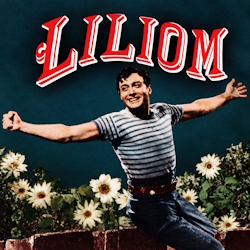
LILIOM – Franz Waxman, Jean Lenoir
 GREATEST SCORES OF THE TWENTIETH CENTURY
Original Review by Craig Lysy
The escalation in persecuting Jews, and Josef Goebbels banning his latest film “The Testament of Dr. Mabuse” elicited director Fritz Lang to flee Nazi Germany (he was half-Jewish) for Paris in 1933. He was warmly received by fellow émigré, producer Erich Pommer of Fox-Europa. Pommer was a legend of the German film industry who produced Lang’s film “Metropolis” (1927), and so he offered him to direct “Liliom”, a film that would adapt Ferenc Molnár’s 1909 stage play. Lang was renowned for his dark and futuristic epics, relished a departure to making a romantic fantasy and happily agreed. It would be the only French language film of his career, as he soon would depart for Hollywood. Pommer would personally manage production and Robert Liebmann and Bernard Zimmer would adapt the play, and write the screenplay. For the cast, Madeleine Ozeray would star as Juli/Her daughter with Liliom, Charles Boyer would join as Liliom, Pierre Alcover as Alfred, Maximillienne as Madame Menoux and Florelle as Madame Moscat. Read more…
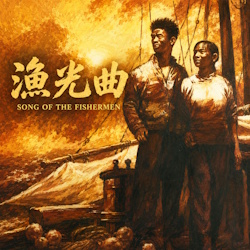
SONG OF THE FISHERMEN – Guang Ren
 GREATEST SCORES OF THE TWENTIETH CENTURY
Original Review by Craig Lysy
The impetus for making Song of the Fishermen was the desire of 1930s Chinese filmmakers to highlight the struggles of the working class and expose social inequality. Against a backdrop of profound national and economic crises, director Chusheng Cai aimed to create a realistic, emotional story that would awaken public sympathy as China faced severe economic depression, foreign imperialism, and natural disasters. Cai secured funding from the United Photoplay Service, the Lianhua Film Company, and its Second Studio in Shanghai. Lo Ming-yau managed production, while Cai directed and wrote the screenplay. Wang Renmei starred as Kitty, with Han Langen as Monkey, Tang Tianxiu as Xu Fu’s wife, Luo Peng as He Ziying, and Yuan Congmei as Liang Yuezhou. Read more…
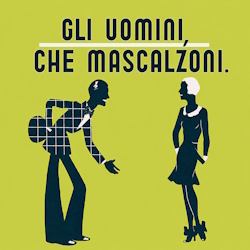
GLI UOMINI, CHE MASCALZONI/WHAT SCOUNDRELS MEN ARE – Cesare Andrea Bixio
 GREATEST SCORES OF THE TWENTIETH CENTURY
Original Review by Craig Lysy
After the success of Italy’s first “talkie,” La Canzone dell’Amore, in 1930, the Italian film industry embraced the new format and blossomed. Director Mario Camerini aspired to be at the forefront of this emerging era of Italian cinema and transform it from one dominated by theatrical adaptations shot in reconstructed studio environments to one embracing outdoor filming in scenic, naturalistic locations across Milan and Lake Como. A marriage made in heaven followed when Cines studio executives decided to create a modern, populist romantic comedy while establishing a refreshing, realistic visual style by shooting on actual Milanese locations rather than artificial studio sets. The result was the film Gli Uomini, Che Mascalzoni, or What Scoundrels Men Are. A team of writers, including Camerini, Aldo De Benedetti, and Mario Soldati, wrote the screenplay; Cines managed production; and Camerini directed. Vittorio De Sica starred as Bruno, joined by Lia Franca as Mariuccia. Read more…
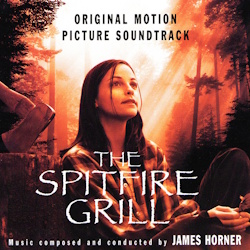
THE SPITFIRE GRILL – James Horner
 THROWBACK THIRTY
GREATEST SCORES OF THE TWENTIETH CENTURY
Original Review by Jonathan Broxton
The Spitfire Grill is a small-scale American drama film written and directed by Lee David Zlotoff, a television veteran best known as the creator of MacGyver and for his work on Remington Steele. The film marked Zlotoff’s feature directing debut and stars Alison Elliott as Percy Talbott, a young woman released from prison after serving time for manslaughter who decides to make a new start in the tiny town of Gilead, Maine. There she finds work at the Spitfire Grill, a weathered local diner owned by the formidable Hannah Ferguson, played by Ellen Burstyn. Percy gradually forms an especially important friendship with Hannah’s niece-by-marriage Shelby, played by Marcia Gay Harden, while Will Patton, Kieran Mulroney, and Gailard Sartain round out the principal cast. The story is essentially one of wounded people finding community and redemption: Percy’s arrival disturbs the town’s settled routines, but her energy eventually revives both the Grill and some of the people around it, even as secrets involving Hannah’s past and a mysterious figure living in the nearby woods begin to surface. Read more…
DER BLAUE ENGEL/THE BLUE ANGEL – Friedrich Hollaender
 GREATEST SCORES OF THE TWENTIETH CENTURY
Original Review by Craig Lysy
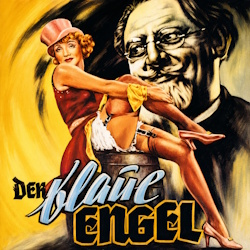
Following the success of The Jazz Singer in 1927, Hollywood, by 1929, was rapidly dominating global cinema with its new synchronized sound technology. Germany’s leading film studio, Universum Film AG (UFA), sought to create a massive, high-profile project to demonstrate that German cinema could compete internationally. To that end, Der Blaue Engel (The Blue Angel) was chosen. The studio also sought to capitalize on the career achievements of iconic silent movie actor Emil Jannings, who in 1928 had become the first recipient of the Academy Award for Best Actor in Hollywood. However, with the arrival of sound, his thick German accent made him unsuitable for American talking pictures, and it was hoped that The Blue Angel would provide Jannings with a prestigious film through which he could demonstrate a successful transition to German talkies. Erich Pommer was placed in charge of production and, at Jannings’ request, secured Hollywood director Josef von Sternberg on loan from Paramount Pictures. Carl Zuckmayer and Karl Vollmöller led a team that adapted Heinrich Mann’s 1905 novel, Professor Unrat (Professor Filth). While the novel was a sharp, satirical attack on the bourgeois hypocrisy and rigid authoritarianism of Imperial Germany, Sternberg heavily altered the story. He shifted the focus away from political satire to create a more intimate psychological tragedy about romantic obsession and personal degradation. Jannings starred as Professor Immanuel Rath, joined by Marlene Dietrich as Lola and Kurt Gerron as Kiepert. Read more…
CHETNIKS! THE FIGHTING GUERRILLAS – Hugo Friedhofer
 GREATEST SCORES OF THE TWENTIETH CENTURY
Original Review by Craig Lysy
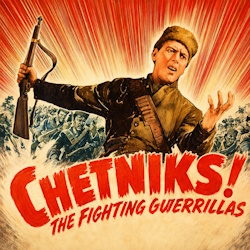
The 1943 film Chetniks! The Fighting Guerrillas was originally titled “The Seventh Column” and based on a story by Jack Andrews. The film was conceived as wartime propaganda, intended to show American and global audiences that Hitler’s forces were not invincible. It portrayed the Chetniks as fearless underdogs fighting a guerrilla hit-and-run campaign to liberate their nation under the inspired leadership of General Draža Mihailović. 20th Century Fox greenlit the project and assigned Bryan Foy and Sol M. Wurtzel to production. Louis King directed and co-wrote the screenplay with Jack Andrews and Edward E. Paramore Jr. Philip Dorn starred as Draža Mihailović, joined by Anna Sten as Ljubica Mihailović, Shepperd Strudwick as Lieutenant Aleksa Petrović, Virginia Gilmore as Natalia, and Martin Kosleck as Gestapo Colonel Wilhelm Brockner. Read more…
THE FALL OF A NATION – Victor Herbert
 GREATEST SCORES OF THE TWENTIETH CENTURY
Original Review by Craig Lysy
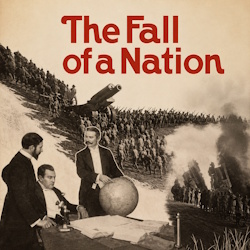
The 1916 film The Fall of a Nation was created for two primary reasons. Author Thomas Dixon wanted to capitalize on the popularity of his 1915 novel “The Birth of a Nation” with a sequel novel. Second, he wanted to urge Americans to prepare for World War I and warn against the dangers of pacifism. Dixon would manage production of the sequel using his own production company Dixon Studios with a budget of $31,000. He would also direct, and write the screenplay. For his cast, Lorraine Huling as Virginia Holland, Percy Standing as Charles Waldron/Prince Karl von Waldron, Arthur Shirley as John Vassar. Flora MacDonald as Angela Benda, Paul Willis as Billy, Phil Gastrock as Thomas and Clarence Geldart as General Arnold. Read more…
WINTERSET – Nathaniel Shilkret
 GREATEST SCORES OF THE TWENTIETH CENTURY
Original Review by Craig Lysy
Playwright Maxwell Anderson was profoundly disturbed by the highly controversial execution of Nicola Sacco and Bartolomeo Vanzetti in 1927. He drew inspiration from the event and wrote Winterset in 1935 as a poetic and dramatic exploration of the aftermath of a similar injustice. A 1935 stage production was a massive hit, winning the very first New York Drama Critics Circle Award. Given its success, RKO Pictures bought the screen rights to capitalize on its prestige with a film version. Pandro S. Berman was assigned as producer with a budget of $400,000, Alfred Santell was tasked with directing, and Anthony Veiller would write the screenplay. RKO decided to recruit most of the Broadway cast for the film. Burgess Meredith would star as Mio Romagna, joined by Margo as Miriamne Esdras, Eduardo Cianelli as Trock Estrella, John Carradine as Bartolomeo Romagna, Paul Guilfoyle as Garth Esdras, Maurice Moscovitch as Papa Esdras, and Edward Ellis as Judge Gaunt. Read more…
THE GREEN PASTURES – Erich Wolfgang Korngold, Hall Johnson
 GREATEST SCORES OF THE TWENTIETH CENTURY
Original Review by Craig Lysy
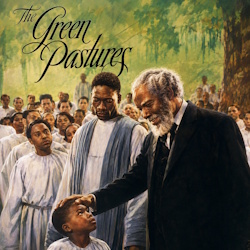
A Broadway stage production of “Green Pastures” by Marc Connelly won the 1930 Pulitzer Prize for Drama. It opened February 26, 1930 at the Mansfield Theatre in New York and ran for 640 performances. It was based on the 1928 novel Ol’ Man Adam an’ His Chillun by Roark Bradford and the 1930 Pulitzer Prize-winning play of the same name. Following the massive success of the stage play, Warner Brothers decided to purchase the film rights for $100,000. The decision was controversial as the studio would be taking a significant financial and social gamble for the era by keeping the play’s premise entirely intact – making “The Green Pastures” the second of only seven feature films during the entire Hollywood Studio era to star an all-Black cast. Co-owner Jack L. Warner would manage production with an $800,000 budget, Marc Connelly and William Keighley would direct, Sheridan Gibney would write the screenplay based on the novel and play. The cast would include Rex Ingram as Jehovah and Adam, Oscar Polk as Gabriel, Eddie Anderson as Noah, and Ernest Whitman as Pharaoh. Read more…
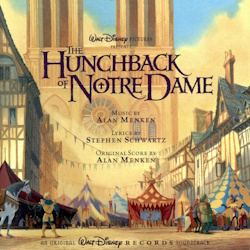
THE HUNCHBACK OF NOTRE DAME – Alan Menken, Stephen Schwartz
 THROWBACK THIRTY
GREATEST SCORES OF THE TWENTIETH CENTURY
Original Review by Jonathan Broxton
I’m going to make a statement here that might be controversial, but here goes. I think that the score for The Hunchback of Notre Dame by Alan Menken and Stephen Schwartz is the greatest piece of music ever written for a Disney animated feature, going all the way back to 1937 and Snow White and the Seven Dwarfs. Yes, that includes Pinocchio and “When You Wish Upon a Star,” that includes The Jungle Book and “The Bare Necessities,” that includes The Little Mermaid, and Beauty and the Beast, and Pocahontas, and all the others. It is, for me, the most sophisticated, the most dramatically intelligent, the best orchestrated, the darkest, and the most mature of all the Disney scores, and the fact that it isn’t better loved, or better respected, by fans of the genre is, in my opinion, a huge oversight. Read more…
THE GENERAL DIED AT DAWN – Werner Janssen
 GREATEST SCORES OF THE TWENTIETH CENTURY
Original Review by Craig Lysy
In 1936 Paramount Pictures came upon an unpublished manuscript by novelist Charles G. Booth inspired by the real-life exploits of Morris “Two-Gun” Cohen. Cohen was a colorful, British-born Jewish adventurer who traveled to China and became a general in the National Revolutionary Army. He served as the personal bodyguard to Sun Yat-sen, leader of the 1911 revolution that toppled the Qing Dynasty. The studio was impressed, purchased the film rights, and signed Booth to a multi-film writing deal. William LeBaron was assigned to the production, Oscar-winning director Lewis Milestone was recruited, and Booth would collaborate with Clifford Odets to write the screenplay. The studio wanted marquee star power for the film, so Gary Cooper would star as O’Hara, joined by Madeleine Carroll as Judy Pierre, Akim Tamiroff as General Yang, Dudley Digges as Mr. Wu, Porter Hall as Peter Pierre, and Philip Ahn as Oxford. Read more…
INDEPENDENCE DAY – David Arnold
 THROWBACK THIRTY
GREATEST SCORES OF THE TWENTIETH CENTURY
Original Review by Jonathan Broxton
When I look back at the time now, it’s increasingly clear to me that the years between 1994 and 1996 were formative in terms of how they shaped my taste in both film and music. Those were the years when I was really let loose on the world of cinema for the first time, enjoying a huge variety of movies and film scores, and many of the films I saw during those 36 months remain some of my all-time favorites. As such, it’s also important to recognize that I tend to look back at that period through rose-tinted glasses, and it’s with that in mind that I come to Independence Day. Read more…
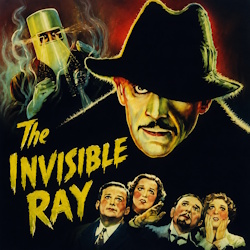
THE INVISIBLE RAY – Franz Waxman
 GREATEST SCORES OF THE TWENTIETH CENTURY
Original Review by Craig Lysy
Bela Lugosi and Boris Karloff were coming off the success of their recent film, The Raven (1935), and Universal Pictures producer David Diamond wanted to cast them in a new film to be called Bluebeard. However, the script proved unsatisfactory, and the studio put the project on hold. A new film, The Invisible Ray, was chosen; however, it quickly went off track when director Stuart Walker left because he was dissatisfied with the script. Undeterred, Edmund Grainger was placed in charge of production with a large $168,875 budget, Lambert Hillyer was hired to direct, and Howard Higgin and Douglas Hodges were assigned to write the screenplay. For the cast, Boris Karloff played Dr. Janos Rukh, Bela Lugosi played Dr. Felix Benet, joined by Frances Drake as Diana Rukh, Frank Lawton as Ronald Drake, and Violet Kemble Cooper as Mother Rukh. Read more…
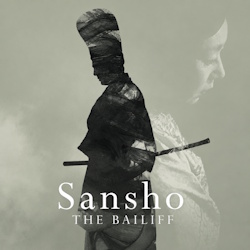
SANSHO THE BAILIFF – Fumio Hayasaka
 GREATEST SCORES OF THE TWENTIETH CENTURY
Original Review by Craig Lysy
Director Kenji Mizoguchi was inspired by Mori Ōgai’s 1915 novella Sanshō Dayū. Its tale about the tragic realities of human trafficking in feudal Japan resonated with him because of his own harrowing childhood experience of being given up for adoption. Also influential were his Marxist-feminist politics and his belief that post-WWII Japan needed to re-examine its brutal and oppressive past. Mizoguchi decided to use this historical tragedy to create a morality play exploring themes of resilience, human dignity, and the universal need for compassion. In the early 1950s, Mizoguchi’s career was ascendant, and although jidaigeki (period dramas) were not popular with the Japanese public, Daiei Film decided to back the project. Masaichi Nagata was assigned to produce, Mizoguchi would direct, and Fuji Yahiro and Yoshikata Yoda would write the screenplay. A fine cast was assembled, including Kinuyo Tanaka as Tamaki, Kyōko Kagawa as Anju, Eitarō Shindō as Sanshō, and Yoshiaki Hanayagi as Zushiō. Read more…
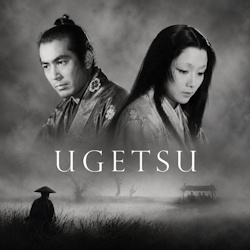
UGETSU – Fumio Hayasaka
 GREATEST SCORES OF THE TWENTIETH CENTURY
Original Review by Craig Lysy
Producer Masaichi Nagata of Daiei Film Studio decided to offer renowned director Kenji Mizoguchi a new project following the critical and commercial success of his previous film, The Life of Oharu (1952). He sweetened the deal by granting Mizoguchi complete artistic control and a large budget. Mizoguchi accepted the offer, with Masaichi Nagata overseeing production. Screenwriters Matsutarō Kawaguchi and Yoshikata Yoda were instructed to draw inspiration from two stories in Ueda Akinari’s Ugetsu Monogatari (Tales of Moon and Rain, 1776): Asaji ga Yado (The House in the Thicket) and Jasei no In (The Lust of the White Serpent), resulting in this film: Ugetsu. For the cast, Machiko Kyō starred as Lady Wakasa, joined by Mitsuko Mito as Ohama, Kinuyo Tanaka as Miyagi, Masayuki Mori as Genjūrō, and Sakae Ozawa as Tōbei. Read more…

Shop at the Movie Music UK Store

Member of the


