CHAPAEV – Gavriil Popov
 GREATEST SCORES OF THE TWENTIETH CENTURY
Original Review by Craig Lysy
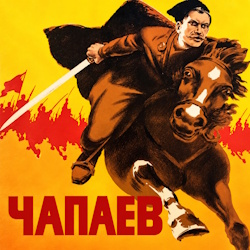
Chapaev was commissioned by the Chief Directorate of the Film and Photo Industry as a propaganda tool to establish a relatable, mythological hero to champion the working class. In the early 1930s, the Soviet government was heavily promoting Socialist Realism, an artistic mandate, that required art to reflect both the realities and the ideological goals of the Communist state. As such, they created a unifying, accessible “people’s hero” in the person of Vasily Chapayev, a charismatic, self-educated peasant commander, who fought valiantly for the Red Army against the loyalist Whites during the Russian Civil War. Lenfilm would manage production, Georgi Vasilyev and Sergei Vasilyev would co-direct, and write the screenplay based on the 1923 novel Chapaev by Dmitry Furmanov. For the cast, Boris Babochkin would star as Vasily Chapaev, joined by Boris Blinov as Dmitry Furmanov, Vavara Myasnikova as Anka, and Leonid Knit as Petka.
The film is a war-biopic based on the diaries of Dmitry Furmanov. It chronicles the exploits of the brilliant, but uneducated peasant commander Vasily Chapaev as he heroically leads the Red Army’s 25th Division against the White Army during the Russian Civil War. Dmitry Furmanov is an educated and disciplined Communist Party-political commissar. The two men clash over command styles, but over time mutual respect develops and the two ultimately form a close brotherly bond as Furmanov improves Chapaev’s men effectiveness with better organization and modernization. Yet when Furmanov is reassigned, a cascade of events leads to Chapaev’s defeat and death. Chapaev was a massive commercial success, becoming one of the most popular and culturally significant films in the history of Soviet cinema, while also performing well internationally. Critical acclaim was universal and the film is now considered the canonical masterpiece of Socialist Realism. International acclaim included it winning the Grand-Prix at the 1937 Paris World Fair, while the 1978 international critics poll lauds it as one of the best 100 films in history. The film received no Academy Award nominations.
Gavriil Popov was a prominent member of the Association for Contemporary Music (ASM), known for his energetic and modernist, orchestral vigor. Directors Sergei and Georgi Vasilyev were seeking a composer who could create musical storytelling, which could weave together traditional folk sensibilities, and martial rhythms, with bold revolutionary themes. Socialist Realism required modernist cinematic techniques, and they believed that Popov could create a score with the necessary power and drama to support the film’s heroic storytelling, and visual intensity of their battle sequences.
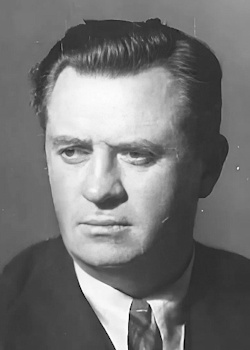 Upon viewing the film, I believe Popov saw that he was afforded an epic tapestry on which to compose. He surely understood that this was Vasily Chapaev’s story, and that his heroic fight, to establish the socialist state was paramount. In conceiving his soundscape, Popov decided to blend three different sensibilities; To be true to himself and authentic, he would use his modernist, avant-garde style to create his trademark dissonant counterpoint to underscore moments of psychological suspense, fear, and battlefield tragedy. This modernist approach would provide a jarring contrast against the more traditional, and rousing revolutionary themes. Robust and martial themes and fanfares would be needed to propel battles, and establish the heroic scale of the Russian Civil War. He would use sharp trumpet fanfares, heavy snare drums, and bold low register horns to signify the discipline and strength of the Red Army. These driving and rhythmic military motifs would fuel, and propel the Red Army’s campaigns, thus giving the film a sweeping, cinematic momentum. Most importantly, he would use the lyrical and inspired beauty of folksongs to provide emotional counterpoint to the battles, and ground Chapaev’s struggle as a man championing the long-suffering peasantry. Popov would seamlessly weave these rustic melodies into the orchestral fabric, using woodwinds to introduce lyrical, melancholy themes that break up the aggressive battle cues. Indeed, one of the film’s most memorable music happens on screen when the men sing the traditional Russian folk song “Black Raven” (Черный ворон), which serves as the structural backbone of the entire film.
The song evokes great pathos and tells the sad tale of a young dying Cossack soldier who lies under a willow tree and looks up at a raven circling above him. In defiance, he tells the bird that it will not get his carcass because he is not ready to yield to death. He does however ask the raven to fly to his home and deliver a blood-stained token, his handkerchief, to his family to let them know his fate. This song reoccurs as an empowering theme for Chapaev and his troops, achieving a profoundly final tragic rendering in the tragic final act where Chapaev makes his desperate, and ultimately fatal attempt to cross the Ural River under enemy fire. Lastly, some additional traditional folk songs and classical pieces were woven into the tapestry of Popov’s score, including; Symphony No. 6 in B minor, Op. 74, Pathétique – Movement 3: Allegro molto vivace by Pyotr Ilyich Tchaikovsky, Piano Sonata No. 14 in C# minor, Opus 27, No. 2 “Moonlight Sonata” by Ludwig von Beethoven, “By the Rivers, by the Waves” (По морям, по волнам) traditional, and “The Storm Raged” (Ревела буря) traditional.
The score has no commercial release so, as such, I will use film scene descriptors and time indices to provide film context. In 0:00 “Main Title”, as the film title displays, heraldic fanfare by trumpets militare resound to evoke the atmosphere of the Russian Civil War, and the Red Army’s campaigns. The opening credits flow against a draped background, as we flow into a solemn exposition of the Black Raven Theme, drawn from a traditional Cossack folk song. The music is heavy, and anchors the character of Vasily Chapaev as a tragic folk hero, the salt of the earth, born from the common people. The melancholic music presages the tragic fate that awaits Chapaev. At 1:12 we flow into Chapaev’s march, a proud and resolute march, which expresses his bravery, resoluteness, and leadership. At 1:29 “Victory Over the Czechs” we enter the film proper reveals a crowd of men running to greet a horse drawn wagon bearing their leader Chapev supported by a chorus of bells. Chapaev orders the men to follow him to attack Czech forces that have seized a strategic bridge. He leads a charge, again propelled by a chorus of bells, and we see the Czech troops assuming defensive positions to hold the bridge against the Red counterattack. Yet when they see that they a vastly outnumbered, they break ranks and flee.
At 3:22 “Chapaev Inspects the Troops” reveals Chapaev inspecting his troops. He dresses down two; one for losing his rifle and one for losing a machine gun. He orders both into the shallow river to retrieve them. He dismisses them and says he will personally inspect every soldier’s rifle, which cause some who have lost theirs to fidget. At 4:25 We see Chapev standing atop the bridge as a chorus is heard. He turns, and see a massive reinforcement column marching toward him empowered by “The Black Raven” rendered as a proud anthem. A man walks out onto the bridge and extends his hand, and says he is Commissar Dmitry Furmanov.
Chapaev advises Furmanov that his arrival is most welcome as I have orders to assume the offensive tomorrow. 06:28 “Quiet!” reveals the men encamped around headquarters singing the famous traditional folk song “The Black Raven”. Chapaev’s aide-de-camp Petka comes out on the porch and fires his pistol, which silences the men. He yells; “Quiet, citizens! Chapaev is going to think!” Inside Chapaev plans an attack on the village Lomikhinskaya, some counter to instead attack the White’s right flank. When they ask for the Commissar’s opinion, he supports Chapaev. Chapaev then orders an encircling attack to begin at 5 am. Narrative script reads; “The village has been taken”. In Chapaev’s office he dresses down his deputy commander for exposing himself and securing an arm wound. He the reviews battle tactics and troop positioning with him on a table using potatoes. Outside Petka, prepares to teach Anka how to uses a machine gun, but instead surrenders to lust and forces a kiss, which is rebuffed. We shift to the White forces command train car, where a Lieutenant offers a dismissive assessment of Chapaev, only to be told by his commander Colonel Sergei Borozdin that Chapaev is a formidable opponent to be respected.
“Alexander the Great” takes us back to Red headquarters, where two soldiers complain to Furmanov about Chapaev’s unreasonable orders. Chapaev, joins and orders the men out. Furmanov asks Chapaev to reconsider as their requests are reasonable. He becomes angry, threatens to kill Furmanov, but instead smashes a chair on the floor. Furmanov diffuses the anger by asking Chapaev; “Alexander the Great was also a great general, but why break the stool? This compliment likening him to a great conqueror disarms Chapaev. He says that he has never heard of him, and that he only learned to read two years ago. Chapaev, now calm, says he must learn more about this Alexander. On the stairs at 20:41 music enters when Chapaev begins singing “I’m a soldier, very trim and handsome, I am only twenty years old…”
Furmanov stops him and counsels that as commander, you dress slovenly, not trim, and that you need to dress in a manner appropriate with your position to set a good example with the men. Chapaev asks how Furmanov knows how Alexander dressed, and the conversation ends warmly with both men laughing. Back at White headquarters, Colonel Borozdin receives a communique from his Aide-de-camp Petrovich. It reads that Cossack Dmitry Potapov was arrested when trying to desert. He informs Petrovitch that his orders are clear regarding deserters, but he is taken aback when Petrovitch advises that he is his brother. Yet Borozdin refuses to stay the execution, much to Petrovitch’s dismay. Narrative script reads; “Chapaev’s division was pushing forward…” A young soldier wakes Furmanov and advises that members of the 3rd platoon are pillaging the village. Furmanov orders platoon commander Zhikharev be brought to him. In the village a soldier steals a family pig, and is cursed by an old woman. A village man complains to his friend of their sad life where White’s and Red’s both rob us. At headquarters Furmanov confronts Zhikharev who is dismissive, and says unconvincedly, that he is not complicit. Furmanov orders his arrest. Furmanov then hands him paper and commands him to order his men to return everything they stole.
Later, Chapaev arrives and confronts Furmanov, saying only he has the authority to arrest his commanders. He goes to release Zhikharev, but the guard pushes him back. Chapaev is now furious, he tears off all his rank accoutrement, sword and gun and shouts; “Who is commanding this division? You or I?” Furamov answers calmly; “You, and I”. Chapaev shouts that I am Chapaev! Who sent you! Why are you riding on my fame! Furmanov again answers calmly, that he does not need his fame. He adds that only the Party has authority to recall me. A man and several villagers enter and demands to speak to Chapaev. Chapaev says I am he, and sits down. He thanks Chapaev for returning all the goods stolen from our town. The villagers all shake their hands and depart as Chapaev and Zhikharev marvel at what Furamov accomplished. Chapaev asks Furamov to call up a meeting as he will be speaking. He dresses down his men for disgracing the Red Army. How dare you rob your brother peasant! We are sacrificing our lives for peasants and workers! He says, be warned that he will shoot anyone caught plundering. Later, we see Petka commending Anka for assembling the Maxim machinegun in record time. 37:23 “Petka and Anka” offers a romantic score highlight. It reveals Petka opening the window and a romanza flows in atop a breeze. He soon sets off on a mission and although he is clearly attracted to Anka, and wants her make love to her, for now he has to suffice with a simple goodbye hug. She rushes outside to watch him walk done the road at sunset and their Love Theme reflects her yearning for his safe return. At 39:33 the melody become aching, shifting to a quiet and exquisite descending violin and cello line, which plays softly, mirroring Anka’s silent tears.
40:07 “Petka and Petrovich” reveals Petka, carried by a fading woodwind borne Love Theme, arriving at a lake. Petrovich is startled, falls in, and as he comes out grabs his gun and shoots, but no bullet emerges as Petka advises with a smile that he disarmed it. He asks him why he was fishing, and he said to make fish soup for his brother who is dying from a severe beating. Later Petka is debriefed by Chapev and Furamov and he tells them he freed the poor man, but returned with his gun. Chapaev says that he will appear before the tribunal, and then dresses him down for his slovenly appearance. 43:25 “Moonlight Sonata” reveals Colonel Borozdin playing Ludwig von Beethoven’s immortal sonata, supported by strings tristi. Petrovich lurks behind contemplating murder, but drops his mop, which alerts Borozdin of his presence. He turns and Petrovich sobs, saying repeatedly that his brother is dead. Borozdin is clearly troubled by the news and slams the piano’s fallboard. Back at the Red camp, Furamov and sentries capture Petrovitch, who presents himself for surrender. He says Petka freed him, but now returns her with his own will. He is debriefed by Chapaev and Furamov and he advises of an attack tomorrow. Chapaev orders Petka to take him to the kitchen and guard him, and he does so happily, telling Petrovitch that he saved him from a tribunal. Afterwards, Furmanov supports Chapaev’s plan to strike first and departs.
49:52 “Black Raven” reveals Chapaev laying on the floor and examining the battle map. A baritone voice sings a solemn rendering of the traditional Cossack song. Petka wakes up on a bunkbed above and asks Chapaev why isn’t he sleeping? He rebuff’s Petka’s mothering, tells him to go to sleep and the song continues with him singing along. He frets to himself that they do not have enough ammunition, or men. Petka keeps nagging him, and he orders him to bed. 53:52 “Mutiny” opens with trumpet militare fanfare as we see Chapaev, Petka and his command staff on a hilltop overlooking the battlefield below. Chapaev declares that the White’s attack in 30 minutes. Everyone goes to their places and he orders Petka below. We and we shift to Anka and her gun mate at the machine gun. He informs her that if the battle is fierce, we’ll be out of ammo in half an hour. Petka gallops back to Chapaev and yells that a mutiny has killed a squadron commander. Chapaev rides down furiously, while below a Cossack exhorts the men to stick together and not listen to the enemy. A mutineer pulls him down and yells enough! He says we’ve had our share of fighting, and let others fight now. The crowd begins shouting we have had enough! Let’s go home! The men all run back into ranks, the mutineer turns, and is shot dead by Chapaev. He exhorts them to fight for the revolution.
At 57:55 “The Battle” opens with trumpets militare declaring reveille as Chapaev orders his Cossacks to mount their horses. Canon fire is heard as Furmanov views Kappelev’s officer regiment below. He asks where is Chapaev? Below the Whites approach in line formations propelled by martial field drums. Chapaev’s Red infantry lay and wait on the highground. The Reds open with rifle fire, and Anka’s gunmate dies of a heart attack, leaving her alone to operate the machinegun. The White’s continue to march in formation, and then finally lower their rifles into firing position. Some of the men panic and flee forcing Furmanov to run down. He meets the deserters, and rouses them to return with him, which they do. The White drums are deafening and at 1:01:35 the White soldiers begin running to storm the Red position. Anka opens fire and begins mowing the Whites down, aided by Reds tossing grenades. The Whites flee and timpani strikes mark Anka running out of ammo. Yet the camera shifts and we see a Cossack cavalry charge. Narrative script reveals; “At Kappelev’s Regimental Headquarters”. Inside a poster displays White forces crushing Chapaev’s Reds like fleas! We shift to a Chapev closeup as he smiles and says; “Swell drawing! Son-of-a-bitches! Afterwards as the men take tea, Anka reports. Chapaev asks why she hesitated to open fire, and she says I waited for them to get close so I could kill more. Chapaev and the men are impressed, and he commends her fighting spirit, awards her the poster, and asks her to join them for tea.
Narrative script reads “Autumn”. 1:04:59 “Petka Sings” reveals Petka and his comrades singing “A Story of Wordless Love” by Eduard Asadov. The song is a speaks dramatically of the sometimes-blind intensity of youth. In the song a cynical father mocks his young son, claiming that romantic love is a myth and a foolish fantasy. The son, in order to prove his absolute devotion to the girl he loves, takes a sharp saber opens his own chest, cuts out his beating heart, and brings it to his beloved to prove his love is real. As he rushes to her, he trips and drops the heart in the dust. Instead of crying out in anger or pain, the bleeding, severed heart looks up at the boy and anxiously asks: “My dear son, did you hurt yourself?” This is a metaphor on the unconditional, ultimate nature of a parent’s love (symbolized by the heart’s concern for the boy even after being discarded). Chapaev joins in and afterwards, tells Petka, it is a funny song. “Furmanov Transferred” offers a poignant score highlight and cinematic confluence. It reveals Chapaev receiving a communique from headquarters, which he reads with Furamov. It orders Furmanov to depart immediately due to an emergency. He will be replaced by Commissar Sedov. Chapaev says they hurt me by this action, but Furmanov says they have many fronts to consider. Outside a car arrives, and Furmanov introduces the new Commissar. Music enters at 1:07:25 as Chapaev rejects a handshake instead warmly embracing Furmanov and kissing his cheek. Popov supports softly with somber, lyrical strings and a mournful men’s wordless chorus that reflect the forged, deep personal bond formed between the two men, their political comradeship, and deep sense of personal loss. All the men wave goodbye as Furmanov’s car travels down a long dusty road. The chorus slowly dissipates as the car disappears on the horizon. With the loss of Furmanov, Chapaev loses his stabilizing anchor and sounding board. Popov understands this, and presages a fateful downward momentum, which will ultimately climax with Chapaev’s tragic death.
Borozdin reviews the disposition of the Red forces with its headquarters lodged in Lbishchensk. He believes Chapaev’s forces are isolated and can be encircled by flanking pincer attacks. His staff agrees that this is their last chance to annihilate Chapaev, and so Borozdin agrees to personally command the operation. As his adjutant departs, he turns and inform Borozdin that the Allied commander placed a 20,000-ruble bounty on Chapaev’s head. 1:10:55 “The Storm Raged” reveals it is nighttime, the men a bedded down and Petka leads a chorus a traditional song, The Storm Raged by Kondraty Ryleyev as a ponderous Chapaev listens. During the song Sedov’s recommendation of doubling the guards or increasing patrols due to the new moon darkness are rejected by Chapaev who believes the White’s fear him. Chapaev then tells Petka and Anka that they are young and will have a wonderful life together. Chapaev then takes the lead in singing the song. The selection of this melancholy traditional Russian ballad demonstrates brilliance as it evokes deep emotions of heroic fatalism, that portends a tragic end. The poems opening lines describe a roaring storm, lightning, and howling winds, which offers an externalization of the inner turmoil, of the Cossack leader Yermak. He is consumed by heavy thoughts while sitting alone on the bank of the Irtysh River. The gloomy, and expansive Siberian landscape creates a profound sense of isolation and finality. While the leader stays awake with a fateful premonition of glory, his loyal comrades sleep peacefully nearby. Yermak’s thoughts are calm, solemn and resolute. Yet he looks at his sleeping friends with tender sorrow, knowing that the morning will call them to both glory and death. 1:16:14 “Nocturne” offers a beautiful score highlight. It reveals the camera shifting to idyllic nocturnal vistas of tranquility. We shift back inside and see a montage of faces, starting with Petka and Anka sleeping peacefully. Popov supports with a soothing, string and woodwind borne Nocturne, which belies the coming assault. We shift outside and a large column of White cavalry, infantrymen, canons and a tank approach on a road. Woven within the nocturne are foreboding, low register instrumental tones, which reflect the vulnerability of Chapaev’s brigade – the calm before the storm. The somnolent musical narrative reveals sentries dozing off with the music slowly intensifying at 1:17:55 as two White scouts approach unnoticed by the sleeping sentries. At 1:18:09 Popov punctuates the knifing of Chapaev’s two sentries with stabbing thrusts.
“The Attack” reveals a scout whistling and Borozdin and his officers arriving on horseback. He is informed that the road to Chapaev’s camp is now open. He orders a flare shot, and the attack commences with a cavalry charge. Rifle fire from Chapaev’s camp sentries wakes everyone and sounds the alarm as White cavalry swarm the camp. Chapaev rallies his men and they take a stand, however White scouts begin setting afire all the hay, barns and buildings in the camp. At Anka’s urging Chapaev follows her to their machine gun in the clock tower as they are vastly outnumbered and cannot hold. After they flee the Whites storm the headquarters. Chapaev sets up the machinegun on the second floor and begins mowing down White troops below. The wires have been cut, so Chapaev dispatches Petka and Anka to ride to Sakharnaya and Yelan for reinforcements. Petka helps Anka onto a horse and says go, as he cannot leave him. They hug, and she rides off. Petka returns, and helps Chapaev reload, again driving back the Whites below. A tank arrives and fires its two machine guns which strafe the clocktower and wound Chapaev in the arm. They cannot stand much more of this and so Petka runs out with two hand grenades and disables the tank, only to see the Whites deploy an artillery piece. Petka says we have to retreat, but Chapaev says he never retreats. The first shot severely damages the tower, Petka and Chapev are forced to flee, and the second shot destroys the machine gun.
1:24:28 “Anka Arrives” offers the score’s emotional apogee. It reveals her delivering the message and the commander ordering his calvary to assemble supported by martial field drums and trumpet militare reveille. Rousing antiphonal fanfare empowers their ride to save their comrades. Petka and Chapaev reach a cliff overlooking the Ural River. Below he sees his men swimming out to reach safety on the other side. As they descend the steep slope, Petka calls for help to move Chapaev, who is wounded, to the other side. They reach the shore and Chapaev dives in saying he can make it on his own. Petka and two men remain to keep the White’s at bay so Chapaev can reach safety. Petka’s gun jams, and he sprints to waters edge but is shot at 1:27:12, his death crowned by horns tragico, which usher in a dirge. Chapaev continues to swim away, however a machine gun arrives and begins strafing the water. A crescendo tragico commences and culminates with his death at 1:28:05 with the camera shifting to the heavens. 1:28:08 reveals a Red commander ordering a counterattack cavalry charge propelled by a kinetic and ferocious galloping motif, within which is woven music drawn from Movement 3: Allegro molto vivace from Symphony No. 6 in B minor, Op. 74, Pathétique by Pyotr Ilyich Tchaikovsky. Petrovich, who was hiding in hay, springs up and slays Colonel Borozdin to avenge his killing of his brother. At 1:28:53 Popov punctuates the sword strike with slashing strings. Red canons rain Hell down on the White forces, with a massive explosion killing the cliff top soldiers who killed Chapaev. The explosion is followed by “The End”.
Gavriil Popov’s score fundamentally transformed and elevated Soviet film music from mere background accompaniment into a complex, independent artistic force. As Stalin’s favorite film, Popov’s modernist techniques, created a stylistic duality, joining revolutionary heroism and dissonant tension, which established a precedent for Socialist Realism that would become a template for Soviet films for decades. Popov’s score seamlessly merged authentic Russian folk songs with intense symphonic weight, setting a foundational blueprint for Soviet historical and propaganda films. Indeed, Popov proved that musical storytelling could actively drive the psychological and emotional narrative of a film, establishing it as an equal partner to cinematography.
For me, I believe the legacy of Gavriil Popov’s score to the Soviet Civil War epic Chapaev to be an artistic and political turning point in early Soviet sound cinema. The film opened a sad and dark chapter in the life of a brilliant avant-garde composer, who pivoted toward state-sanctioned Socialist Realism in order to survive. I believe that the political pressure to maintain this accessible, conformist style permanently altered Popov’s trajectory as a composer. Sadly, for me it reveals the dashed, unfulfilled promise of his exceptional, radical, early concert works, offering a cautionary tale of how state ideological pressure, and threat of incarceration in the infamous Soviet Gulag, could domesticate a genius. The reader should note that during the era Dimitry Shostakovich was also teetering on banishment to the Gulag, accused of embracing Formalism.
For those of you unfamiliar with the score, I have embedded a YouTube link to the Chapaev, The Hero of the Urals song: https://www.youtube.com/watch?v=J0d5TR0ZbJE&list=RDJ0d5TR0ZbJE&start_radio=1
Track Listing:
NOT AVAILABLE
Music composed and conducted by Gavriil Popov. Orchestrations by Gavriil Popov. Recorded and mixed by XXX. Edited by XXX. Score produced by Gavriil Popov.

Shop at the Movie Music UK Store

Member of the


