DEEP IN THE HEART 2: TEXAS RIVERS – Noah Sorota
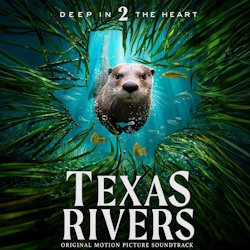 Original Review by Jonathan Broxton
Last year I wrote a review of the score for the nature documentary The American Southwest, composed by Noah Sorota. I described it as “awash in gorgeous melodic passages, expressive instrumental colors, and deep emotional content,” noted that it was “a series of interconnected vignettes that tell the stories of the creatures that inhabit a spectacular natural location,” and described the music as “sweeping and exhilarating, sometimes thoughtful, sometimes amusing and quirky, and sometimes darkly dynamic, but always captivating, engaging, and hugely enjoyable.” I could almost write the same review for Deep in the Heart 2: Texas Rivers, another feature documentary with music by Sorota that absolutely knocked my socks off.
The film was written and directed by Ben Masters, who also wrote and directed The American Southwest and the first Deep in the Heart film from 2022. It is an environmentally conscious nature documentary that looks at the flora and fauna of Texas, especially those found in and around the springs, rivers, wetlands, and bays that sustain the state’s wildlife. Ethan Hawke narrates, while the film’s other stars include mountain lions, otters, turkeys, and whooping cranes.
As I mentioned in my previous review, Noah Sorota is a 42-year-old composer and violinist originally from Kentucky. After moving to Los Angeles in 2002, he started his career at Remote Control, working as a technical assistant, synth programmer, and occasional violin soloist for Hans Zimmer, Steve Jablonsky, and Henry Jackman, among others. He started scoring short films and indie features as early as 2006 and got his big break in 2011, scoring all four seasons of the TNT sci-fi series Falling Skies. More recently, he scored four seasons of the excellent sci-fi comedy series Resident Alien. It is becoming increasingly clear to me that Sorota is a composer of considerable talent, capable of wielding large orchestral forces and writing beautiful themes to tell rich, powerful stories about nature.
 The score was recorded in Texas with the Dallas Chamber Symphony, and it is another beautiful symphonic delight, full of melody and vivid responses to individual animals and landscapes. Water is the central character of Deep in the Heart 2: Texas Rivers, and Sorota gives it music that can move, shimmer, gather force, and occasionally run dry. His writing works on an expansive scale while giving smaller creatures their own moment in the spotlight.
The album’s greatest strength is its sense of motion. Sorota has described using rippling arpeggios and undulating melodic lines to suggest flowing water, an idea that gives the score a natural thread as it travels between very different settings.
Within that flowing structure, numerous individual cues stand out. The “Main Title” opens the journey in a somewhat introspective way, with abstract orchestral textures and instrumental colors that gradually coalesce into a lush, warm, sparkling, quietly majestic theme emphasizing the beauty and life of the Texas landscape. The gorgeous piano writing and soaring brass countermelodies are very special indeed.
These wide-open statements appear throughout the album, making an especially strong impression in cues such as the wondrous “River Ecosystem,” the graceful “Springs,” the mischievous and perky “The Liver of the River,” the whimsical “Snowy Wetlands,” and the stunning “The Rio Grande.” In each, Sorota allows his orchestra to grow in size and scope in a different way, to consistently outstanding effect.
There is plenty of room for musical character, too, with individual animals getting standalone pieces that match their personalities. “The Lower Picos, Mountain Lion” is regal and dramatic. The music for the “Aoudad” – a type of wild sheep – matches the harsher terrain it inhabits, with urgent woodwind pulses set against minor-key string chords that occasionally remind me of something Ennio Morricone might have written. “The Night Hunt” is distinctly darker and more sinister, while “Gobbler’s Waltz” and “Otter Oddities” offer some of the score’s lighter pleasures, full of dancing woodwinds, romantically elegant strings, cascading harp glissandi, and shimmering chimes.
As with The American Southwest, one of the best things about Sorota’s writing is the way he treats the wildlife as a collection of distinct personalities rather than a procession of beautiful photographs. It’s something George Fenton understood in his music for the classic BBC David Attenborough documentaries, and something composers like Steven Price have continued in recent years. Sorota’s scores deserve to be considered alongside theirs.
The film also widens its focus from individual animals to the health of the rivers themselves, and what we as humans can do to mitigate the damage being done to them. The quirky but poignant “Windmills and Aquifers,” “Dams,” and the wondrous “Drought, San Marcos” point toward the demands placed on Texas water. Some cues use country-inflected instruments, including fiddles and guitars, but by the end Sorota once again lets the full orchestra shine.
Elsewhere, cues like “Elegy for a Broken Land,” “After the Water Recedes,” and “Below the Surface” suggest the emotional weight of damage already done through mournful strings, despondent piano lines, and a serious, slightly ominous mood. Parts of “Below the Surface” even veer unexpectedly into horror score territory. The more hopeful music in “Restoring the River” and “Recovery of the Neches” offers a welcome counterweight. Sorota’s beautiful writing gives these difficult subjects more force: by this point in the album, there is a clear sense of what is worth protecting.
The soaring “Whooping Crane, Denouement” and the extended “End Credits” provide a suitably broad frame for the film’s final thoughts, reaching some truly spectacular musical heights. The reprise of the main title theme in the end credits is especially satisfying, bringing a rich, vibrant piano line to the fore within the stirring orchestral sound.
What makes Deep in the Heart 2: Texas Rivers so appealing is that its environmental concern and its delight in wildlife seem to belong to the same musical vision. Sorota and the Dallas Chamber Symphony have made an inviting companion to Masters’s images, one that can turn from a small animal encounter to the fate of an entire river without losing its warmth. To repeat what I said about The American Southwest: I really can’t recommend Deep in the Heart 2: Texas Rivers strongly enough. Even if you took my advice and listened to that score last year, much of Sorota’s work may still be unfamiliar to you. These two documentary scores, together with earlier projects such as the first Deep in the Heart film, make a compelling case for seeking out more of it. Noah Sorota is establishing himself as a strong, versatile, expressive orchestral composer whose music demands a bigger audience.
Buy Deep in the Heart 2: Texas Rivers soundtrack from the Movie Music UK Store
Track Listing:
- Main Title (3:15)
- The Lower Picos, Mountain Lion (4:42)
- Aoudad (1:44)
- The Night Hunt (2:21)
- River Ecosystem (4:09)
- Gobbler’s Waltz (5:09)
- Windmills and Aquifers (5:01)
- Springs (2:04)
- The Liver of the River (4:27)
- Elegy for a Broken Land (4:25)
- After the Water Recedes (1:36)
- Restoring the River (1:08)
- Dams (2:40)
- Snowy Wetlands (2:02)
- Otter Oddities (4:31)
- Recovery of the Neches (2:59)
- Below the Surface (3:30)
- The Rio Grande (3:28)
- Drought, San Marcos (5:30)
- Whooping Crane, Denouement (3:59)
- End Credits (Extended) (4:51)
Neumeark Music (2026)
Running Time: 73 minutes 31 seconds
Music composed and conducted by Noah Sorota. Performed by the Dallas Chamber Symphony Orchestra. Orchestrations by Noah Sorota. Recorded and mixed by Mark Donahue and Jeff Biggers. Album produced by Noah Sorota.

Shop at the Movie Music UK Store

Member of the


