Archive
THE VILLAGE – James Newton Howard
 Original Review by Jonathan Broxton
With the exception of The Sixth Sense, which was brilliant on all fronts, I have never been that fond of M. Night Shyamalan’s slow-moving thrillers, or of the scores his regular composer James Newton Howard wrote for them. Unbreakable was sub-par, and Signs was a fairly good film but I was one of the few who did not connect with the score. Shyamalan’s fourth and latest film is The Village, a mysterious tale set in Covington, a hamlet in 19th century Pennsylvania. Creatures dwell in the woods near the village, and an unspoken truce has existed between the humans and the creatures for decades – essentially, we won’t disturb you, if you don’t disturb us. However, things change for the worse when young Lucius Hunt (Joaquin Phoenix) ventures beyond the boundaries and into the domain of ‘Those We Don’t Speak Of’ and incites their wrath. With a cast that includes Sigourney Weaver, William Hurt and Adrien Brody, the film has the right credentials to be a success, while the score is a rarity in that, already, it is by far the best for a Shyamalan film to date. Read more…
Piero Piccioni, 1921-2004
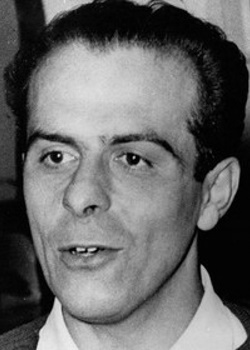 Composer, pianist and conductor Piero Piccioni died in Rome, Italy, on July 23, 2004, at the age of 82.
One of the most prolific and distinctive voices of post-war Italian cinema, Piccioni combined jazz, lush orchestral writing, pop, lounge music and the avant-garde across a career encompassing hundreds of compositions for film, television and radio.
Piccioni was born in Turin on December 6, 1921. Largely self-taught as a musician, he developed an early passion for American jazz, especially Art Tatum and Charlie Parker, and first performed on radio in 1938. Following World War II he led his own jazz ensemble, Orchestra 013, and spent time in New York, where he immersed himself further in American jazz. He initially pursued a career as a lawyer, working with film companies including Titanus and De Laurentiis, before abandoning law for music.
Piccioni entered cinema during the early 1950s, initially using the pseudonym Piero Morgan. His first feature score was Gianni Franciolini’s Il Mondo le Condanna, followed by Alberto Lattuada’s La Spiaggia. His jazz background immediately distinguished his music, with improvisation, sophisticated harmonies and rhythmic vitality becoming recurring characteristics of his work.
One of Piccioni’s most important relationships was with director Francesco Rosi, for whom he scored 13 films. Their collaboration began with I Magliari in 1959 and continued through Salvatore Giuliano (1962), Hands Over the City (1963), The Moment of Truth (1965), More Than a Miracle (1967), The Mattei Affair (1972) and Chronicle of a Death Foretold (1987). Rosi’s politically charged cinema brought out a more austere side of Piccioni, notably in the sparse music for Salvatore Giuliano and the largely electronic textures of The Mattei Affair. His work on Salvatore Giuliano earned him the Nastro d’Argento.
Piccioni was equally renowned for his long friendship and collaboration with actor-director Alberto Sordi. Scores including An Italian in America (1967), Amore Mio Aiutami (1969) and Polvere di Stelle (1973) revealed another side of his personality: warm, melodic, playful and frequently steeped in jazz, bossa nova and contemporary popular music. His ability to move between Rosi’s serious political dramas and Sordi’s bittersweet comedies demonstrated his exceptional versatility. Read more…
Remembering Hans J. Salter, 1896-1994
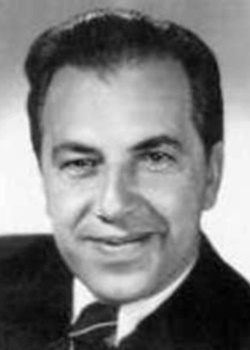 Composer, conductor and musical director Hans J. Salter died at his home in Studio City, California, ten years ago today, on July 23, 1994, at the age of 98.
An Austrian émigré who became one of the principal architects of the classic Universal horror sound, Salter worked on more than 200 films during nearly three decades at the studio. His music accompanied werewolves, vampires, Frankenstein monsters, Sherlock Holmes adventures, westerns and musicals, and brought him six Academy Award nominations.
Hans Julius Salter was born in Vienna on January 14, 1896. He studied at the University of Vienna and Vienna Music Academy with teachers including Guido Adler, Franz Schreker, Felix Weingartner and, briefly, Alban Berg. After working in opera, Salter moved into cinema during the late 1920s, first conducting in Berlin movie theatres and then composing for UFA. As a Jewish musician he was forced out of the German film industry after the Nazi rise to power and eventually emigrated to the United States in 1937.
Universal hired Salter initially as an orchestrator in 1938, but he was soon promoted to composer and became one of the studio’s busiest musical craftsmen. Working frequently with Frank Skinner and other staff composers, he supplied music for everything from Deanna Durbin musicals and Abbott and Costello comedies to serials, melodramas and horror pictures. Much of this work went uncredited or was subsequently recycled as stock music throughout Universal’s productions. Read more…
THE BOURNE SUPREMACY – John Powell
 Original Review by Jonathan Broxton
When The Bourne Identity, the first film based upon Robert Ludlum’s massively successful spy novels, grossed almost $122 million at the US box office, a sequel was inevitable. The Bourne Supremacy sees Matt Damon returning as the eponymous Jason Bourne, the former CIA assassin who, following the exploits of the last film, has settled down with a new identity in a tropical paradise with his girlfriend Marie (Franka Potente). However, when the CIA comes knocking on Bourne’s door once more, trying to frame him for a bungled operation, Bourne decides to fight back and clear his name. The film is directed by Englishman Paul Greengrass, making his Hollywood debut following years of sterling work creating top-notch dramas for British TV, and co-stars Joan Allen, Brian Cox, Julia Stiles and Karl Urban. Read more…
Jerry Goldsmith, 1929-2004
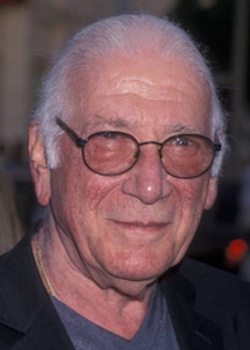 Composer Jerry Goldsmith died on July 21, 2004 at his home in Beverly Hills, California, after a battle with cancer. He was 75.
One of the most prolific, versatile and influential film composers of the twentieth century, Goldsmith wrote music for more than 200 film and television productions during a career spanning half a century. He received 18 Academy Award nominations, winning for The Omen, and created landmark scores including Planet of the Apes, Patton, Chinatown, Alien, Star Trek: The Motion Picture, Poltergeist, Total Recall, Basic Instinct and L.A. Confidential.
Jerrald King Goldsmith was born in Los Angeles on February 10, 1929. He began playing piano as a child, later studying with pianist Jakob Gimpel and composer Mario Castelnuovo-Tedesco. At the University of Southern California he attended classes taught by Miklós Rózsa, whose score for Spellbound had helped inspire Goldsmith’s ambition to write for films. He later studied at Los Angeles City College before joining CBS as a clerk-typist in its music department.
At CBS, Goldsmith progressed from selecting library music to composing for radio and live television. His early credits included Climax!, Playhouse 90, Perry Mason, Gunsmoke and The Twilight Zone, an extraordinarily demanding training ground in which music often had to be written and recorded at great speed. His first credited feature score was the western Black Patch in 1957, although television remained an important part of his career throughout the following decade.
Goldsmith’s breakthrough in cinema came during the early 1960s. Lonely Are the Brave (1962) displayed his gift for western Americana, while John Huston’s Freud (1962) brought his first Academy Award nomination with a dark, psychologically unsettling score. He followed with The List of Adrian Messenger (1963), Seven Days in May (1964), A Patch of Blue (1965), In Harm’s Way (1965), The Blue Max (1966) and The Sand Pebbles (1966), rapidly establishing himself as one of Hollywood’s most inventive dramatic composers. Read more…
I, ROBOT – Marco Beltrami
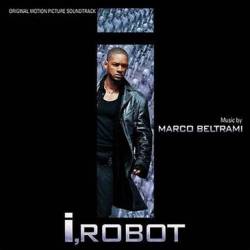 Original Review by Jonathan Broxton
Marco Beltrami was a late addition to the creative team of I Robot, following the dismissal of original composer Trevor Jones by director Alex Proyas. Beltrami had just nineteen days to write and record his replacement score – no mean feat to accomplish in such a short space of time, and with the added pressure of knowing that the film was one of 2004’s most anticipated summer releases. His success is nothing short of remarkable, and it’s quality is testament to his increasing stature as one of film music’s true emerging talents. Read more…
KING ARTHUR – Hans Zimmer
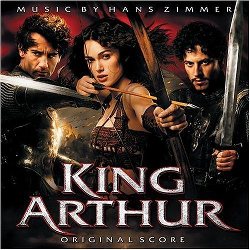 Original Review by Jonathan Broxton
I was going to open this review by saying something along the lines of “Can Media Ventures sink any lower than this, yet another tepid regurgitation of past scores?”, but in actual fact, the more I have listened to King Arthur, it seems less terrible than it did on that first spin. It’s certainly not a great score: it’s unoriginal, clichéd, and at times quite laughably predictable in its construction and execution. But, mixed in with all the familiarity, there’s a great score trying to break out. Zimmer only lets it shine in brief, so-near-and-yet-so-far snippets, which tantalise the listener into wondering what this score could have been, if only… Read more…
THE CLEARING – Craig Armstrong
 Original Review by Jonathan Broxton
I’ve been a big admirer of the work of Scottish composer Craig Armstrong throughout his relatively short career. From his early work on William Shakespeare’s Romeo and Juliet, through great scores such as Plunkett & Macleane, The Bone Collector, The Quiet American, Moulin Rouge and Love Actually, Armstrong has continually displayed a mastery of the orchestra, superb use of electronics, and an aptitude for powerful and memorable themes. It comes as something of a shock, therefore, to discover that The Clearing is a quite horribly boring score, easily one of the worst for a mainstream release in 2004. Read more…

Shop at the Movie Music UK Store

Member of the


