THE GREEN PASTURES – Erich Wolfgang Korngold, Hall Johnson
 GREATEST SCORES OF THE TWENTIETH CENTURY
Original Review by Craig Lysy
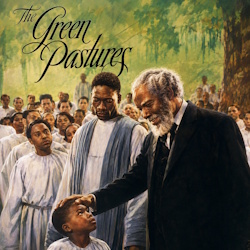
A Broadway stage production of “Green Pastures” by Marc Connelly won the 1930 Pulitzer Prize for Drama. It opened February 26, 1930 at the Mansfield Theatre in New York and ran for 640 performances. It was based on the 1928 novel Ol’ Man Adam an’ His Chillun by Roark Bradford and the 1930 Pulitzer Prize-winning play of the same name. Following the massive success of the stage play, Warner Brothers decided to purchase the film rights for $100,000. The decision was controversial as the studio would be taking a significant financial and social gamble for the era by keeping the play’s premise entirely intact – making “The Green Pastures” the second of only seven feature films during the entire Hollywood Studio era to star an all-Black cast. Co-owner Jack L. Warner would manage production with an $800,000 budget, Marc Connelly and William Keighley would direct, Sheridan Gibney would write the screenplay based on the novel and play. The cast would include Rex Ingram as Jehovah and Adam, Oscar Polk as Gabriel, Eddie Anderson as Noah, and Ernest Whitman as Pharaoh.
The film offers the story of the bible as imagined by black school children in a small southern Sunday School. As the teacher reads the Book of Genesis, a girl visualizes Heaven and is transported there. She meets God, who recreates the stories of the Bible; Creation, Adam and Eve, Adam and Cain, Noah and the Great Flood, Moses and The Exodus. The film closes with God on his throne surrounded by angels contemplating who is going to be crucified. The film was a huge commercial success, earning $3.3 million. Critical reception was mixed with some praising it for showcasing a massive, very talented black cast, while others found it overly stage-bound and condescending. The film received no Academy Award nominations.
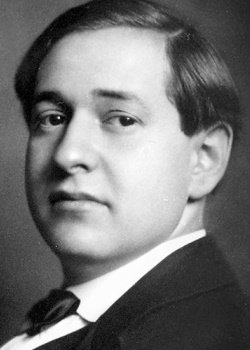 When Warner Brothers did and internal screening of the completed film, they decided that three scenes needed support of an orchestral score; “The Creation of the World”, “The Flood”, and “Pharaoh’s Arrival”. Erich Wolfgang Korngold was at the time under an exclusive contract with Warner Brothers and regularly worked on a variety of the studio’s pictures as an arranger and sequence composer before taking on full-length feature scores. They were also very impressed with his brilliant work adapting classical and orchestral themes for the studio, most notably his celebrated arrangements for “A Midsummer Night’s Dream” (1935), as well as his Academy Award nominated score to “Captain Blood” (1935). He was offered the scoring assignment fully understanding that the movie featured a rare all-Black cast at a time when severe segregation rules existed on Hollywood studio lots. Korngold, who was Jewish was sympatico having himself been a victim of exclusion and prejudice by the Nazis. For the three cues that he was asked to score, Korngold composed in his usual sumptuous, richly orchestrated, and dramatic style. Korngold felt deep empathy for the production and the cast, and so he refused to accept any payment, or screen credit for his work on the film, contributing his music simply because he “enjoyed doing it”. Lastly, Korngold took a strong personal liking to the project, and famously ate his meals with the cast and crew in the stagehands’ canteen. In a now famous stand against discrimination, when he discovered that composer Hall Johnson and actor Rex Ingram (who was playing Jehovah) were barred from eating at the executive commissary because they were black, he became indignant, stood up, and stormed out shouting “I am going to eat with God and Johnson!”
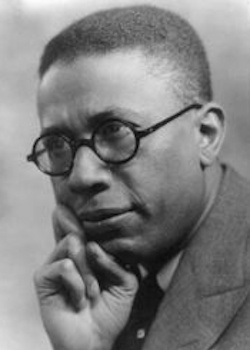
The musical selections in the 1936 film The Green Pastures were entirely comprised of traditional African American spirituals. These songs were deliberately chosen to frame the Old Testament Bible stories through the lens of a rural, Southern African American community. The songs were curated and arranged by the renowned choral director Hall Johnson. Johnson had previously arranged the music for the original 1930 Pulitzer-Prize-winning Broadway stage play. Warner Brothers wanted to duplicate this success, and so brought him to Hollywood to direct the film’s choral performances. His selection and integration of the songs were guided by several key principles. The first was Thematic Storytelling: Spirituals were handpicked to correspond directly to the biblical events depicted, such as “Go Down Moses” for the Exodus narrative and “I’m So Glad (Trouble Don’t Last Always)”. The Second: A Cappella Arrangements. Johnson’s selection focused on unadorned, rich vocal harmonies. The Hall Johnson Choir performed the musical score almost entirely a cappella, allowing the raw, emotional power of the human voice to narrate and underscore the emotional weight of the film. The third: Cultural Authenticity. Johnson selected jubilee and plantation songs to match the folklore style adapted from Roark Bradford’s Ol’ Man Adam an’ His Chillun. The songs act as the emotional connective tissue for the film’s anachronistic settings such as the reimagining Babylon as a New Orleans jazz nightclub.
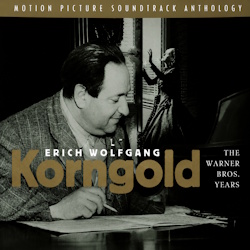
There is no commercial release of the songs, and the only music available from the score comprises just two cues on the 1996 album Erich Wolfgang Korngold: The Warner Bros. Years. As such I will use film time indices and scene descriptors to provide film narrative context to the music. At 0:00 the Warner Brothers Pictures logo displays. At 0:11 the film title displays on a book cover, and the flow of the opening credits commences as script atop aged paper. Johnson supports with the Black Spiritual “Walk Together Children”, which is sung A Capella by Hall Johnson’s mixed choir. 1:15 “Foreward” reveals narrative script, with the opening song “Walk Together Children” continuing uninterrupted: “God appears in many forms to those who believe in him. Thousands of Negroes in the deep South visualize God and Heaven in terms of people and things they know in their everyday life. The Green Pastures is an attempt to portray that humble, reverent conception.”
 I found “Walk Together Children” a deeply moving hymn, which is sung fervently, and pairs a heavy feeling of sorrow with a bright hope for a better future. This song was created by enslaved people and it offers comfort, by reminding listeners that they are never alone in their struggles. It opens with a plea for unity, then asks families and friends to hold each other up when life feels very hard, to not give up hope as there will be tears and sadness in life. It also promises that the heavy burden will not last forever, to have courage, as a free, peaceful, and happy future awaits in the Promised Land. I believe Johnson, in a masterstroke, brilliantly established the tone of the film. 1:47 “Ringing The Bell” reveals our entry into the film proper, carried by a church bell, as we see a negro church on a hill top. The camera takes us in to Reverend Deshee pulling the church bell rope as little Carlisle looks on. Later, following a wonderful Sunday dinner, the Reverend ask Carlisle to walk to Sunday school with him. At 3:16 a strummed ukulele plays in the background as mama dresses the kids for Sunday school. They set off and we shift to Carlisle walking with the Reverend. They find all the kids huddled around a Circus poster, and the Reverend hurries them on as he intends to talk about genesis. In class he recites the lineage and ages of the antediluvian patriarchs. The kids, with their inquiring minds, flood the Reverend with questions. He relates how heaven was perfect and idyllic, and the blessed lives the angels led before the creation of man.
In 0:910 “Rise and Shine” the camera shifts upwards into the clouds, which slowly part to reveal a park filled with adult angels relaxing, with some fishing for catfish, while children angels are playing and having fun. We flow into “Rise and Shine” a traditional Black spiritual from Jubilee and Plantation Songs, which is sung A Capella by Hall Johnson’s mixed choir. At 10:05 the hymn retreats to the background as we see parents interacting with their misbehaving kids. In assessing the song, I believe “Rise and Shine” captures a believer’s pure and vibrant joy, blending sacred reverence with an electrifying, foot-stomping rhythm. It offers a celebration faith, while also evoking a deep, communal sense of love and belonging. Lastly, the song celebrates a spiritual awakening, a musical sunrise, which sweeps away darkness to reveal God’s radiant and divine light. At 12:16 “God Arrives” God’s chief messenger, the Archangel Gabriel announces the impending arrival of Jehovah. All the angels adjust their robes, and their children’s, as they will be standing in the Divine presence. Jehovah arrives and leads the angels in a call and response hymn, “Certainly Lord” (AKA as “Have You Got Good Religion”). The hymn ends with the congregation bowing their heads reverently. My assessment reveals that this is a traditional “Call and Response” hymn, where a solo voice asks a question about trusting God, and the full choir answers with a confident, “Certainly, Lawd.” This warm and devotional conversation between fellow believers elicits singers to put their whole hearts into the words. The harmonies are rich and reveal a lifetime of hope and belief. The song starts quiet and gentle, but slowly gets louder and more joyful. By the end, the powerful collective sound of voices fills the room, as an affirmation that; “Yes, Lord, I believe.” It is a humble but strong promise by the listener to trust in God’s love.
Afterwards God calls for everyone to partake of the fish fry. 14:10 “My God is So High” reveals God asking an angel to lead us singing the hymn. This hymn offers a powerful traditional spiritual that evokes a deep sense of wonderment for God, who is so high above us, so deep below, and so wide that our minds cannot fully understand. This feeling creates a deep sense of awe. It also says that although God is mighty, the singer is reminded that God is everywhere and sees everything. This brings feelings of comfort, security, and protection. As the song progresses, it transitions to feelings of pure joy and freedom, celebrating that there is nothing too hard for God to do. Lastly, the hymn when sung in a group, creates a strong feeling of togetherness, a warm, shared bond that brings a deep sense of community and hope. 15:31 “Let The Firmament Swell” opens with God saying his custard is off, and that it needs more firmament. The choir is signaled to stop singing, and they bow their head in reverence for a miracle. He calls for a massive amount of firmament, and thunder rumbles, new clouds fill the sky, and wordless choir swell with rolling voices, empowered by upward sweeping horns brillante as the heavens open. Clouds now envelope the gathering, and God says, He is pleased. However, when everyone worries about the dampness, God decides that he must create the Earth. 16:52 “The Creation” reveals God saying that we must create the Earth so the firmament may drain, and then the Sun so Earth may be illuminated. The camera shifts to the heavens as the light is separated from the darkness. Korngold provides a grandiose, swelling orchestral theme to match the visual scale of the universe coming into being. Gabriel calls the other angels to look down upon the Earth, and as they all run, they sing a joyous exaltation.
17:31 “Behold, The Earth!” reveals that as they look down and gaze awestruck upon the spinning Earth, Korngold completes his piece with grand, uplifting magnificence upon a crescendo glorioso. Afterwards, God is pleased with his creation, and decides that he needs to put someone down there to enjoy it. He leaves Gabriel in control and announces to the angels that he is leaving to perform another miracle. He says; “In my own image, let there be man.” 18:53 “In Bright Mansions Above” the angelic choir begins singing the hymn as we see God walking down the cloud embankment until he disappears from sight. This traditional spiritual is a deeply moving song, which expresses a profound hopefulness in overcoming our earthly struggles. It speaks of a heartfelt yearning to reunite with loved ones who have passed away. And lastly, it offers peaceful comfort to all, declaring that death is not the end, but a joyful path to Heaven, where all sadness disappears. On Earth, in the garden of Eden, we find Adam, a clothed black man reveling in his existence. God arrives and they make their acquaintances. When God asks how things are going, Adam says he will do fine once he learns the ropes. God, however says that you are a family man, who needs a family. Adam does not understand, and God places him in a deep sleep. He creates Eve and tells them to oversee this garden and take care of each other. He grants them all the water and food in the garden, save one, which he points out. 21:50 “Now, don’t you let nobody turn you ’round” reveals God departing as the choir begins singing the hymn, which ends with a camera shot of the angels looking down from Heaven.;
This spiritual offers a message of steadfast faith and unity, which counsels’ believers (here Adam and Eve), to stay on the right religious path. The chorus warns believers not to let anyone or anything distract them from living a faithful, moral life – “Keep away from that Eden tree”. We return to Reverend Deshee Sunday School class where they discuss what happened to Adam and Eve. They discuss life outside of Eden, and how Cain killed Abel. We shift to furrowed fields where God confronts Cain over the dead body of Abel. God banishes him for his crime and yells for him to go, find a woman, and start a family to atone. At 23:41 “Sinnerman”, the chorus begins singing another traditional Black spiritual. The hymn tells the story of a person trying to hide from divine justice (Cain), realizing too late that there is nowhere to escape God’s justice. The hymn retreats to the background as God declares that Adam and Eve, you better have Seth, and lots more children. He muses that he does not like how things are going. As we shift back to Heaven, the hymn resumes.
Back in Heaven, God tells Gabriel that it has been 400 years since he visited the Earth, and decides to visit to see how things are going. God departs and at 27:15 “Dere’s No Hiding Place Down Here”. The hymn fades into the background, replaced by tolling church bells, as God strolls down a country road. The song’s central message is that no one can hide their true self or sins from God. It evokes a feeling of awe and smallness in the face of God, and the urgency of a soul desperately seeking shelter. Lastly, it warns of a “Judgment Day” where every hidden thing comes to light, which forces the singer, and the listener, to face their deepest fears and flaws honestly, as one seeks God’s grace. We switch to a woman playing a ukulele and singing a vocalise. God says that is not good and joins her. He tells her such a song sung on the sabbath is wrong. She is flippant, and irreverent and says no one follows what the preachers say anymore. He then meets her boyfriend, a Cain descendent, who also displeases him. God walks away saying, “Bad Business”. He comes across young men and boys gambling and drinking. When God walks into town and he finds a den of iniquity. Later, he meets a preacher, Noah, who says no one comes to his sermons anymore. He asks his fellow preacher to join his family for a Sunday chicken dinner. God meets Noah’s wife who is gracious. Noah paints a terrible picture of humanity. God reveals himself, and says that He is a God of Wrath and vengeance, and that is why I am going to destroy this world. He tasks Noah to build an ark as collect two of every animal. We switch months later and crowds mock Noah’s ark. 43:00 “The Flood” as we see a torrential downpour, which causes the crowd to flee. Noah’s sons finish loading the final animals, which are arranged alphabetically. Korngold unleashes an orchestral tempest, opening with cascading strings expressed in sweeping, quick downward runs by violins and celli, which evoke the falling rain and rising waters. He sows feelings of danger and suspense, by weaving sequences of notes that slowly crawl upward, making the listener feel uncertain and overwhelmed. Resounding low register horns and tubas mixed with thundering timpani drums express the wrath of God and the violence of the storm. Remarkable to me is that even in such a terrifying scene, Korngold brings rich, and beautiful colors to the orchestra, replete with the requisite “Hollywood” grandeur.
45:26 “Moving, Moving, Moving Lord” supports the passage of the ark over a massive ocean, which covers the Earth. I believe that the hymn sung in the Noah’s Ark scene uses powerful repetitive gospel vocals to evoke deep feelings of hope, awe, and spiritual safety. The uplifting music creates a strong sense of comfort while contrasting the storm’s danger with the promise of God’s protection. 46:01 “De Ol’ Ark’s a-Moverin’” reveals the ark landing on Mount Ararat crowned with a rainbow halo. The chorus sings the thankful hymn as a dove lands on Noah’s hand.
Noah thanks the Lord, not knowing he stands behind him. He says he is starting over, and commands Noah to release all the animals and to plant all the seeds. He then summons Gabriel, and informs him that he hopes this all works out. We return to the classroom where Reverend Deshee says that unfortunately, it did not work out, because as soon as the Lord turned his back, the people were as bad as ever. In Heaven, God frets to Gabriel of the problems mankind causes. He decides on a plan and commands Gabriel to fetch Abraham, Jacob and Isaac. They arrive and after discussion, God decides to task Moses with liberating the Hebrews and taking them to the promised land. After they depart, God declares that he will visit Moses as this scheme has to work. He meets with Moses and tasks him with liberating the Hebrews from Pharaoh and taking them to the promised land in Canaan. 59:22 “Let My People Go” reveals God preparing Moses and Aaron for what lay ahead. In heaven the angelic chorus sings with reverence;
59:30 “Egypt” opens with the display of several banners titled; “Enchanted and Invisible Cadets of Egypt Boys Brigade”. We shift additional banners carried by trumpeting pomp and circumstance; “Royal Young Peoples Pleasure Club”, and “Flag of King Pharaoh’s Private Guard”, “Palace Protective Association”, Supreme Magicians and Wizards of The Universe”, and finally, “Private Flag of His Honor, Old King Pharaoh”. Korngold supports with a parade of banners and courtly procession led by Pharaoh, backed by a grand, majestic, orchestral march full of pomp and circumstance. Most interesting is how Korngold successfully blends European classical grandeur with the lively, syncopated rhythms that evoke a festive Black cultural pageant sensibility. Moses and Aaron confront Pharaoh by turning Moses staff into a snake. Pharaoh is impressed but refuses their demand to liberate the Hebrews. He says each day I kill the Hebrew baby sons and now command they make bricks without straw. Moses responds behold God’s will, and raises his staff upwards a thunder claps saying all first-born Egyptian boys will now die. Dozens drop dead and Pharaoh’s dead son is brought to him on a liter. 1:06:51 “You Cannot Fight The Lord” opens with “Oh God, Oh God”, followed by a wailing wordless choral lament as Pharaoh grieves over his dead son, and Moses says; “You Cannot Fight The Lord”. A devastated Pharaoh collapses on his son as he says let them go. Chorus joins as Moses and Aaron depart with a thankful, “Let my people go”. At 1:07:38 “I Don’t Feel Noways Tired” offers a musical highlight. The camera shows only the feet of many walking out of Egypt during Exodus. Johnson supports with the Black spiritual.
The song offers a powerful anthem of hope and resilience, which expresses with confidence, that better days lay ahead. The song and film imagery achieve a profoundly moving confluence. At 1:08:37 trumpets dramatico resound to shatter the moment. It turns out that Moses has brought them to the Jordan River and can go no further as he broke God’s law. He Appoints Joshua to lead the people into Caanan and to conquer the city of Jericho. At 1:11:36 Moses orders the signal to march, and trumpets resound as the people begin singing a reprise of “I Don’t Feel Noways Tired”. As the people pass by, they pat Moses on his shoulder in thanks. When the last has passed by, God joins Moses and says he will take him up to a place much better than Canaan. At 1:14:13 “Joshua Fought the Battle of Jericho” he assures Moses that he is also helping Joshua. He lifts his arm, trumpets resound, thunder roars, the walls of Jericho come crashing down, and the chorus sings.
God takes Moses by the hand up to Heaven as the song concludes. The hymn offers an emotionally powerful Black spiritual. It transitions from quiet, steadfast faith and deep sorrow to a thrilling, explosive joy. For enslaved people who created it, the tumbling walls symbolized ultimate liberation, and the collapse of oppressive barriers. We return to Reverend Deshee’s class where he lectured that the Hebrews again sinned, and blasphemed and were taken into bondage by Babylon. The film shifts to a banquet in Babylon where the king awaits the arrival of his guest, the High Priest of the Hebrews. In the movie, this scene in Babylon is presented in a very creative way as an upbeat, contemporary New Orleans-style nightclub scene. This setting gave Johnson latitude for a song and dance performance that was upbeat, lively, theatrical, and rhythmic, which perfectly aligned with the movie’s unique, southern-folklore take on biblical tales. He commands entertainment.
1:16:15 “Hail! De King of Babylon” offers a song and dance number that was composed and arranged by Hall Johnson. A man is escorted in, and is taken aback by the ungodly setting, while the King is displeased that his party has stopped. When the king discovers that the man is a prophet, he derisively commands him to prophesize. The prophet says for them all to repent before it is too late, lest you suffer the same destruction as Sodom and Gomorrah. His preaching is interrupted by the arrival of the High Priest whom is complicit with the king. He relates to the king that he kicked the man out as he was not broad-minded. When the prophet again says repent or the Lord will smite you down, the King orders him shot, and the prophet falls dead to the floor. The high priest is wary, begins to pray for God to forgive the king, when a series of lightning bolts crash and frighten the crowd. 1:20:15 “Jehovah’s Rejection” then God’s voice is heard and he voices his grievance and supreme frustration with humanity, saying he repents for ever creating them, and I’ll deliver them no more! Johnson supports with and ethereal angelic women’s wordless choir. We shift to Heaven where the angels continue to sing the sad, wordless lament. It has been hundreds of years and a delegation of Archangels meets with God, and plead for him to not remain estranged from our people. God remains angry and says; I repent for ever creating them, and I’ll deliver them no more!” He then dismisses them. Afterwards God relates to Gabriel that he has heard a man called Hezdrel, whom he wants to listen to. He says Jerusalem, my beautiful city is under siege, and then places his hands over his ears in pain and repeatedly says; “I am not coming down!” He dismisses Gabriel, and then looks down upon the earth as says he knows you are fighting bravely, but that he is not coming down there.
In 1:24:04 “Hezdrel Beseeches God” we shift to Earth and see Jerusalem under canon bombardment. A bugle militare sounds and beleaguered soldiers assemble. Hezdrel is advised that King Herod will take the city tomorrow, destroy the temple, burn the Ark of the Covenant, and put all survivors to the sword. Hezdrel dismisses the men, saying tend to the wounded and get some rest. He then beseeches God, who hears his words, and frets as wordless mixed choir sings in the background. God relents that he is feeling low, and coming down to feel better, but adds I am not going to intervene. Thunder supports the arrival of God who remarks that Hezdrel looks like Adam. Hezdrel asks if he is a preacher, and God says, yes. God then asks why are you all so brave? Hezdrel replies that they all have faith in the Lord. God replies that God repented creating man. Hezdrel replies, not that old God of wrath, as we have a new Lord. God is indignant and asks, who said so? Hezdrel replies, our preacher, old Mr. Hosea. God is flummoxed when Hezdrel says there is still only one God, but he got tired of his appearance as an old man, of only seeing the sins of man, and being a God of wrath. He changed, is no longer fearsome, and has become a God of mercy. Hezdrel adds that they discovered mercy through suffering, and through suffering, faith. God thanks him for teaching him something, and departs. 1:28:18 “March On” trumpets militare resound with urgency, canon’s resume their bombardment, and the final fighting for the city begins. Hezdrel rallies his men, charges as choir sings the inspirational hymn.;
At 1:29:02 “Rise and Shine” we shift to Heaven where God sits on a chair as the mixed choir of angels sing the celebratory hymn. The music retreats into the background as Gabriel relates that the Lord looks pensive. Gabriel asks is it serious, and the Lord says he has been thinking…and Gabriel raises his hand to silence the choir. God relates Hezdrel’s speaking of Hosea, and how they found mercy through suffering. God then relates, that he is trying to find it too. That God too must suffer. Their attention turns to the Earth, where an angel relates the unfolding crucifixion, a terrible burden for one man to carry. God smiles, has an epiphany, and says yes. The clouds close in and once again Heaven is obscured by them. The reverend Deshee dismisses his class, and the film concludes with the reverend saying good night to Mr. Clutty. 1:32:05 “Cast Credits” features a vibrant and celebratory instrumental rendering of the tradition spiritual, “I’m So Glad (Trouble Don’t Last Always)”, which concludes the film on a joyous note.
 I believe that the 1936 film “The Green Pastures” directed by Marc Connelly and William Keighley, was one, of only six feature-length films in the Hollywood Studio era, to feature an all-Black cast. It broke down cultural barriers and potentiated a seminal event, which forever changed Hollywood film making. By introducing Black spiritual, and sacred music to mainstream global audiences, Composer, Arranger, and Choir Master Johnson served to elevate it to a mainstream cinematic art form. Prior to “The Green Pastures”, Black spirituals were frequently treated by Hollywood as mere novelty background music or simple folk songs. Johnson shattered convention by using the film to showcase the complex harmonic structures, emotional depth, and raw power of the genre. He meticulously arranged traditional spirituals to drive the film’s narrative, treating them with the same artistic weight that a European composer would give an opera or an oratorio. Yet Johnson also sought to preserve Black oral traditions of sacred music, as such he rejected the overly “polished” or Westernized classical styles taught in universities, instructing his choir to sing with the authentic glides, microtones, and rhythmic inflections native to the rural Black South. Sung almost entirely a cappella, Johnson allowed the raw, emotional power of the human voice to narrate and underscore the emotional weight of the film. In regards to Korngold’s scoring of the “The Green Pastures”, I believe it helped solidify the development of the “Golden Age of Hollywood” sound. Because the movie relies heavily on religious themes, Korngold employed with reverence, his signature operatic lushness, that he joined with symbolic leitmotifs, to emphasize the divine presence, thus giving the picture a sense of symphonic grandeur.
The film features arrangements and performances by the Hall Johnson Choir, the first professional all-Black choir in the United States, which was founded by Hall Johnson in 1925. Their participation in “The Green Pastures”, both the 1930 Broadway play, and the 1936 film, elevated the Black spiritual from traditional folk music into a respected, structured art form comparable to European vocalist, and choral music. The massive commercial success of the film provided the ensemble with a national and international platform. Indeed, following the 1936 release, the choir became Hollywood’s premier vocal group for major studio productions, lending their talents to landmark films like Lost Horizon (1937), Dumbo (1941), and Cabin in the Sky (1943). Lastly, although Erich Wolfgang Korngold’s contribution to “The Green Pastures” was small (5:17 min of music), he continued to build upon the sumptuous, operatic, and symphonic “Hollywood Sound” he began in Captain Blood (1935), Anthony Adverse (1936), that would dominate Hollywood musical culture for 30 years.
For those of you unfamiliar with the score, I have embedded a YouTube link to “The Flood”: https://www.youtube.com/watch?v=WznBrmrt5MA&list=RDWznBrmrt5MA&start_radio=1
Track Listing:
- SONGS
- Walk Together Children
- Oh! Rise and Shine
- Have you Got Good Religion (Certainly Lord)
- My God is so High
- In Bright Mansions Above
- Now Don’t Let Anybody Turn You ‘round
- Sinnerman
- Dere’s No Hiding’ Place Down Dere
- Moving, Moving, Moving Lord
- De ol’ Ark a Moverin’
- I Don’t Feel Noways Tired
- Joshua Fought The Battle of Jericho
- March On
- Oh! Rise and Shine (reprise)
- Hallelujah, King Jesus!
- I’m So Glad (Trouble Don’t Last Always)
- SCORE
- The Creation (1:23)
- The Flood (2:46)
- Pharaoh’s Procession (1:08)
Running time: 4 minutes 09 seconds
Rhino Movie Music R2 72243 (1936/1996)
Music composed and conducted by Erich Wolfgang Korngold. All songs arranged by Hall Johnson, performed by The Hall Johnson Choir. Orchestrations by Erich Wolfgang Korngold. Score produced by Erich Wolfgang Korngold. Album produced by Marilee Bradford and Tony Thomas.

Shop at the Movie Music UK Store

Member of the


