THE HUNCHBACK OF NOTRE DAME – Alan Menken, Stephen Schwartz
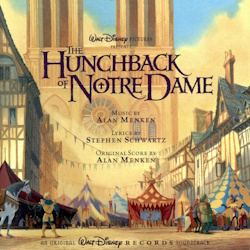 THROWBACK THIRTY
GREATEST SCORES OF THE TWENTIETH CENTURY
Original Review by Jonathan Broxton
I’m going to make a statement here that might be controversial, but here goes. I think that the score for The Hunchback of Notre Dame by Alan Menken and Stephen Schwartz is the greatest piece of music ever written for a Disney animated feature, going all the way back to 1937 and Snow White and the Seven Dwarfs. Yes, that includes Pinocchio and “When You Wish Upon a Star,” that includes The Jungle Book and “The Bare Necessities,” that includes The Little Mermaid, and Beauty and the Beast, and Pocahontas, and all the others. It is, for me, the most sophisticated, the most dramatically intelligent, the best orchestrated, the darkest, and the most mature of all the Disney scores, and the fact that it isn’t better loved, or better respected, by fans of the genre is, in my opinion, a huge oversight.
The film is based on Victor Hugo’s 1831 novel Notre-Dame de Paris, but it substantially changes the story to make it suitable for a family-oriented Disney film – the original novel is considerably bleaker and, most importantly, does not have Disney’s happy ending. The Disney version of the story follows Quasimodo, a kind, physically deformed young man who has spent nearly his entire life hidden inside the bell tower of Notre Dame Cathedral in Paris, where he rings the cathedral bells. He is forbidden from entering society by his guardian, Judge Claude Frollo, who raised Quasimodo after causing the death of Quasimodo’s mother when he was a baby; she was a Romani gypsy, persecuted in Parisian society at the time. However, rather than treating Quasimodo as a son, Frollo psychologically controls and physically abuses him, teaching him that the outside world is cruel. Quasimodo’s only companions are three anthropomorphic gargoyles who come to life when no one else is around, and he longs to leave the cathedral and experience the world. Things change for Quasimodo when he sneaks out during Paris’s Festival of Fools and meets a Romani dancer named Esmeralda, who saves him from public humiliation. He also meets Captain Phoebus, a dashing soldier recently appointed to serve under Frollo who is becoming increasingly horrified by Frollo’s brutality.
The story eventually turns into a four-person conflict involving Quasimodo, who has fallen in love with Esmeralda; Esmeralda and Phoebus, who have fallen in love with each other; and Frollo, who has developed an obsessive sexual desire for Esmeralda while continuing to abuse Quasimodo. However, Frollo is unable to reconcile his attraction with his rigid religious worldview and blames Esmeralda for tempting him rather than accepting responsibility for his own feelings. As his obsession becomes increasingly violent, Frollo resolves that Esmeralda must either submit to him or die. The film was directed by Gary Trousdale and Kirk Wise, who previously directed Beauty and the Beast, and employed a voice cast that included Tom Hulce as Quasimodo, Demi Moore as Esmeralda, Heidi Mollenhauer as Esmeralda’s singing voice, Tony Jay as Frollo, Kevin Kline as Phoebus, and Paul Kandel as Clopin, the underground leader of the Romani people residing in Paris.
Part of what I love about The Hunchback of Notre Dame as a film is how adult it is. Even considering the fact that Disney sanitized Hugo’s original work to an enormous degree, it still tackles subjects that are strikingly daring for Disney animated features, including religious hypocrisy, racism and persecution, attempted genocide, infanticide, sexual obsession, public humiliation, and abuse. The opening song asks, “Who is the monster and who is the man?” This is, of course, a somewhat simplistic idea, but that question essentially provides the framework for the entire film and asks children to think about concepts that Disney doesn’t usually address. I also love the visual look of the film, which combines hand-drawn animation with then-cutting-edge CGI, and at times feels more like a Gothic storybook illustration brought to life than a conventional children’s cartoon. It makes unusually expressive use of light, shadow, and color – especially during scenes involving fire and candlelight, of which there are many – and it takes design ideas from the architecture of Notre Dame Cathedral and from Paris itself and brings them beautifully to life. The comedy gargoyles are the film’s only real misfire, but with that one element aside, I just love everything else about it.
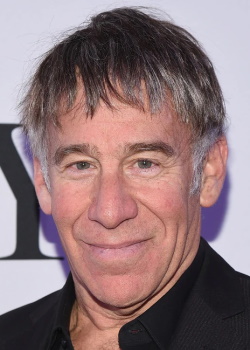
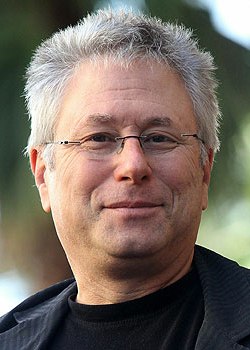 However, the crowning glory of the film is its music, which has a score by Alan Menken and original songs by Menken and Stephen Schwartz. This was the second collaboration between Menken and Schwartz after Pocahontas; Menken was, of course, the central musical figure of the Disney Renaissance, having previously won multiple Oscars for The Little Mermaid in 1989, Beauty and the Beast in 1991, and Aladdin in 1992, while Schwartz at that point was still best known for his 1970s Broadway musicals Godspell and Pippin, and prior to Pocahontas had very little experience working in film. He would not go on to write Wicked until several years later. While Menken and Schwartz won Best Score and Best Song Oscars for Pocahontas in 1995, they had actually begun working on Hunchback as early as 1993, traveling to Paris for research. The development of the music went through several iterations – Disney head Jeffrey Katzenberg initially envisioned the film as a rock opera and wanted Meat Loaf and Cher to sing as Quasimodo and Esmeralda, pop singer Cyndi Lauper was involved at one point, as was Broadway legend Mandy Patinkin – but eventually they settled on a sound that was very different from the Broadway-pop vibe of their earlier works and was at times closer to sacred Gothic choral music.
The film features seven original songs, the first of which is the brilliant “The Bells of Notre Dame,” which functions as a prologue, origin story, musical overture, and statement of the film’s central idea, all in roughly six minutes. It was actually Schwartz’s suggestion that the opening sequence be structured almost like an opera, and it was a brilliant one; it moves expertly through Paul Kandel’s narration as Clopin, character dialogue, and solo singing by Jay as Frollo and David Ogden Stiers as Notre Dame’s archdeacon, interspersed with orchestral scoring, tolling bells, and an enormous Latin choir. It also introduces several of the key musical themes that eventually carry over into the score, notably the enormous opening 12-note theme that begins the piece as a representation of Notre Dame itself. Musically, it’s a clever mix of everything the score has to offer, from Catholic liturgy and romantic symphonic scoring to French boulevard tropes and even Romani folk music. There’s an action-music chase sequence in the middle of the song, with thunderous orchestral writing and a Latin choir accompanying Frollo as he chases Quasimodo’s mother onto the steps of the cathedral, and some wonderfully flamboyant brass flourishes underneath the verse where the Archdeacon admonishes Frollo for his actions and threatens him with divine judgment.
“Out There” is Quasimodo’s ‘I Want’ song in the classic Disney tradition, but Quasimodo’s desire is unusually modest – he isn’t asking for wealth, adventure, or even romance. He just wants one day in which he can simply live among other people. It actually begins with Frollo and Quasimodo having what appears to be a familiar conversation, with Frollo reinforcing everything he has taught Quasimodo—that the world is dangerous and that people will reject him. However, once Frollo leaves, the musical atmosphere opens up dramatically, and Quasimodo sings about his longing to experience ordinary life outside the cathedral. The vocal disparity between the two characters – Tony Jay’s rich baritone as Frollo, Tom Hulce’s quiet meekness as Quasimodo – is initially startling, and it reinforces the enormous imbalance of power between them, but when Quasimodo is up on the roof, there is a sweeping romanticism that emerges from him that makes you feel for the character. Menken’s orchestrations slowly transition from moody darkness to lush, soaring optimism – there is some especially magnificent contrapuntal writing for horns underneath the verse that begins “Out there among the millers…” – and the whole thing climaxes with a 12-note theme for Quasimodo, which is different from the 12-note theme for Notre Dame, but subliminally links the two together. Interestingly, during his 1993 trip to Paris, Schwartz arranged access to the cathedral before its public opening hours, climbing alone to the bell tower with a notepad, and wrote most of the lyrics for this song right then and there, in the character’s own home.
 “Topsy Turvy” is another Clopin song, sung again by Paul Kandel as the character in his guise as Master of Ceremonies for Paris’s Festival of Fools, and it is a whimsical, comedic exploration of the French boulevard and Romani folk music sounds I mentioned earlier, sung with a frisky, ebullient attitude. I love how a version of the 12-note Notre Dame theme acts as the melody for the crowd as they entice the public to the festival. Kandel is doing his best Maurice Chevalier impression, the Esmeralda dance sequence has wonderfully authentic Eastern European vibes, and there’s a poignant reprise of Quasimodo’s 12-note theme as he is chosen to be the King of Fools, but then the whole thing ends with a raucous celebration that could have come straight from the Moulin Rouge.
This contrasts greatly with Esmeralda’s song “God Help the Outcasts,” which is deliberately understated, quiet, and reflective. Heidi Mollenhauer sings Esmeralda’s part in place of Demi Moore, and in the song she initially watches wealthy worshippers asking God for prosperity, fame, and personal blessings. However, having just witnessed Quasimodo’s humiliation at the Festival of Fools, she asks for mercy for people who have nothing. It’s a lovely look at the character, establishing her as the film’s real moral center, and it’s interesting because this song also produces an important contrast with Frollo: both characters operate from religious standpoints, but Esmeralda associates religion with compassion, while Frollo associates it with judgment and punishment. ’Twas always thus, and always thus will be. Visually, the scene is impressive, as Esmeralda wanders around the cathedral first bathed in candlelight, and then enshrouded in shimmering color as she stands in the light of the cathedral’s famous stained glass Rose Window. And, musically, Menken takes a gentle, intimate, lyrical approach, with fragile, searching strings and tender piano carrying the melody.
However, for me the pièce de résistance is the “Heaven’s Light/Hellfire” sequence, which I personally consider to be one of the most outstanding musical moments in Disney history. It begins in “Heaven’s Light” with Quasimodo expressing his tender, innocent love for Esmeralda after she saved him at the Festival of Fools – bittersweet, emotional, and lovely – but then quickly moves over to “Hellfire,” which shows Frollo having a very different reaction to his encounter with Esmeralda. It’s really quite extraordinary because the song is essentially a villain’s confession of sexual desire framed as a religious crisis; Frollo desires Esmeralda but considers himself righteous, so rather than accepting responsibility for his feelings, he concludes that she has bewitched or corrupted him. The Latin choir repeatedly invokes the language of confession and judgment – mea culpa, kyrie eleison – while Frollo does almost the opposite of confessing: he transfers his guilt onto Esmeralda. In other words, Frollo is asking God to destroy the source of his temptation rather than asking to become a better person. The gigantic chorus and Latin liturgical material make his private obsession sound cosmically important, which reflects how Frollo himself perceives it, and Tony Jay’s extraordinary performance is crucial – he doesn’t sing Frollo as a flamboyant cartoon villain, but rather as a man delivering a prayer or judicial pronouncement, which makes the moments when he loses control considerably more frightening.
Menken’s music in the “Hellfire” sequence is overpoweringly dramatic: I love how the two halves are separated by the 12-note Notre Dame theme, I love the rich cello line under the first verse, I love the emergence of a new 6-note brass motif for Frollo based on the syllables of ‘Beata Maria,’ and I love how the 12-note Notre Dame theme is ultimately used to carry Frollo describing his physical and emotional reaction to Esmeralda – ‘This burning desire is turning me to sin’ – highlighting the religious dogma that drives how he interacts with the world. It’s brilliant musical language, with Schwartz’s dark, emotionally complex lyrics and Menken’s clever musical architecture working together perfectly. There are also some amazing visual touches in the sequence in context, from the bank of red-hooded, faceless monks chanting the Latin lyrics, to the blazing apparition of Esmeralda dancing provocatively in Frollo’s fireplace, to the demonic shadows that envelop him as he curses Esmeralda to hell. It’s an absolute masterpiece.
To go from that to a song like “A Guy Like You” is a tonal shift so rapid it’s liable to give you whiplash; it’s a piece of French fluff blended with soft jazz, accordions, and whatnot, sung by Jason Alexander, Charles Kimbrough, and Mary Wickes as Quasimodo’s three gargoyle friends, trying to encourage him by focusing on all his positive traits. I hate it, it’s silly, and it breaks the mesmerizing spell created by the rest of the work. The same is true, to a lesser degree, of “The Court of Miracles,” which is Paul Kandel’s third song as Clopin; this time, he is singing in his true guise as the underground leader of Paris’s Romani community of thieves and swindlers, gleefully planning to execute the captured Phoebus and Quasimodo after they stumble into his lair. It’s a fun romp that has a tone close to the sound of the original pre-Zimmer Pirates of the Caribbean scores and contains a number of verbal zingers and double entendres, but it’s a bit of a throwaway scene and just breaks up the action. The final song is a brief reprise of “The Bells of Notre Dame,” which ends the song score with a wonderful flourish and a climactic crescendo of the 12-note Notre Dame theme.
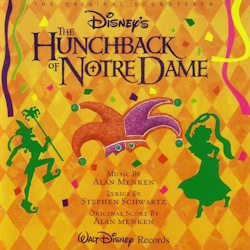 Menken’s score, as one would expect, is structurally related to many of the songs, with the 12-note Notre Dame theme, Quasimodo’s theme, and Frollo’s Hellfire theme all playing important roles. The pretty melody from ‘God Help the Outcasts’ appears in the theme for Esmeralda too, but interestingly there is no clear love theme for Phoebus and Esmeralda, which is perhaps something of a missed opportunity. In terms of orchestration, the single major influence on Menken’s score is the sound of the cathedral itself: bells, enormous choirs, Latin chants, and liturgical music. Menken incorporates those elements liberally into the orchestral score, to the extent that they essentially define it. The choir sometimes represents the church, sometimes the people of Paris, sometimes judgment or conscience, and sometimes it simply gives Notre Dame an almost supernatural presence. The bells work similarly, in that they are the literal objects that Quasimodo rings, but they’re also musical symbols of his relationship with the cathedral and with Paris outside it.
The original soundtrack album contains six cues of score material, beginning with the “Humiliation” cue, which underscores Quasimodo’s awful experience during the Festival of Fools scene. Menken employs high, searching strings and anguished-sounding brass amid the 12-note Quasimodo theme, the rhythmic parts of “Topsy Turvy,” and the Latin chanting from “The Bells of Notre Dame” in a way that becomes increasingly frantic and overwhelming as it goes on, before ending on a calmer note with some subtle references to Esmeralda’s theme and the ‘Heaven’s Light’ motif as the wretched hunchback is rescued by what, to him, appears to be an angel. “The Bell Tower” is a gorgeous thematic highlight that underscores the subsequent meeting between Quasimodo and Esmeralda inside his cathedral home; the interplay of Esmeralda’s theme and Quasimodo’s theme is hesitant, nervous, and playful, but eventually warm and tender, with a sparkling quality conveyed by light chimes, plucked harps, and lithe strings, eventually climaxing with a lovely choral outburst.
“Paris Burning” immediately follows the “Hellfire” song, underscoring the scene where Frollo orders Phoebus to set fire to houses as part of his desperate search for Esmeralda. The cue builds on the enormous sound of the “Hellfire” song and is essentially an action sequence based on that sound, with the 12-note Notre Dame theme, massive Latin chants, tolling bells, and even a pipe organ giving liturgical weight and dramatic heft to the pounding orchestra.
“Sanctuary” and “And He Shall Smite the Wicked” continue in a similar vein, and together underscore the climax of the film wherein Quasimodo swoops down and rescues Esmeralda, who is about to be burned at the stake by Frollo for being a witch, and carries her to the cathedral’s bell tower. Frollo violates the laws of religious sanctuary and sends in his guards to recapture her; this results in a battle both inside and outside Notre Dame, with Phoebus and the gypsies fighting against Frollo’s guards, and Quasimodo finally standing up to Frollo himself as he tries to protect Esmeralda. Ultimately, Quasimodo’s physical strength – from years of ringing the bells – overcomes Frollo, and he plummets to his death from the bell tower.
The stereotypical snare drum sounds of an impending execution run through the opening moments of “Sanctuary,” in combination with more dramatic and ominous Latin chanting and stronger use of bells and pipe organs. The Notre Dame theme and Quasimodo’s theme feature prominently, and then the action sequence that begins at the 1:50 mark, as Quasimodo breaks free from his chains and rushes to save Esmeralda, is magnificent. The roaring, brass-heavy action variation of Quasimodo’s theme gives fuel to his anger, the explosion of power at 2:20 accompanies him as he heroically swings down the fiery walls of the cathedral on a rope, and the whole thing erupts into glorious choral majesty as he holds Esmeralda’s limp body aloft in front of the Rose Window and screams ‘Sanctuary!’ in defiance of his lifelong tormentor.
I love the deeply emotional writing for strings and choir at the beginning of “And He Shall Smite the Wicked,” but it quickly becomes dark during the climactic confrontation between Quasimodo and Frollo; there are fleeting fragments of both their themes and the Notre Dame theme, which become agitated and frantic, with the Latin choirs and church organs seemingly passing final judgment on Frollo for his crimes. The musical forces Menken wields in these three cues are unexpectedly immense – bigger than anything in his career to that point – and are tremendously satisfying for anyone whose tastes extend towards the deliciously melodramatic and compositionally intricate.
The final cue, “Into the Sunlight,” concludes the score with brassy martial fanfares and a lovely, sweeping choral reprise of the melody from “Out There” as Quasimodo is welcomed by the people of Paris and heralded for his bravery, and the hunchback shyly, reluctantly, embraces the fact that he can finally have a life among them.
Three songs written for the film were eventually discarded, one of which – “Someday” – was included as an end-credits song. It was performed by different music groups in different territories, with American R&B group All-4-One recording the song for the USA release, British R&B girl group Eternal recording it for the British version, and Luis Miguel recording it for the Latin American Spanish market. Which version appears on your soundtrack album will be determined by which market you bought it in. The album also includes a pop version of “God Help the Outcasts” performed by Bette Midler, which is fine.
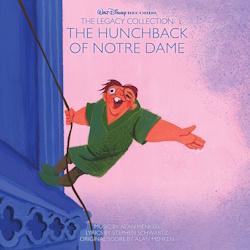 One of the other two songs, “In a Place of Miracles,” is included as a bonus track on the Disney Legacy Collection album, which was released in 2021 and expands the score’s running time to just under two hours, with the addition of several previously unreleased score tracks, plus the aforementioned song variations, alternate cues, and demos. Some of those unreleased score tracks are outstanding. There is an unexpected peacefulness and wholesome playfulness to the orchestral lines of “Morning in the Bell Tower,” which uses extended segments of both “Out There” and “A Guy Like You” as part of the score, with the latter appearing as a leitmotif for the gargoyles. There is a palpable sense of longing in “The World Outside,” while the extended eight-minute version of “And He Shall Smite the Wicked” adds even more delicious choral power to the already wonderful finale.
In what is perhaps one of the biggest ironic twists in Oscar history, The Hunchback of Notre Dame broke the streak of Best Score Oscar wins for Alan Menken, despite being an entirely superior work to all four of the previous scores that actually won, and at the time of writing it remains the last time he was nominated in any category. He was nominated in the Best Original Musical or Comedy Score category but lost to Rachel Portman’s Emma, and none of the songs were nominated at all, which to me is a massive disappointment. “You Must Love Me,” Andrew Lloyd-Webber’s new song for the screen version of Evita, took home the gong, and Menken and Schwartz’s work here was somehow considered inferior to a Kenny Loggins song from One Fine Day. Go figure.
Ultimately, though, awards and accolades are beside the point. The Hunchback of Notre Dame is, for me, Alan Menken’s masterpiece, and the finest musical achievement in the history of Disney animation. There are individual elements that don’t work – I could happily live the rest of my life without ever hearing “A Guy Like You” again – but at its best this is music of extraordinary dramatic intelligence, thematic complexity, emotional depth, and sheer power. Menken and Schwartz took the musical vocabulary of the Disney Renaissance and pushed it somewhere darker, richer, and more sophisticated, combining Broadway songwriting, Gothic symphonic grandeur, Catholic liturgy, enormous choral writing, and intricate recurring themes into something that feels completely unique. From the thunderous opening of “The Bells of Notre Dame,” through the yearning beauty of “Out There” and “God Help the Outcasts,” to the astonishing dramatic heights of “Hellfire” and the overwhelming choral majesty of the finale, there is scarcely another Disney score that attempts this much, let alone succeeds so spectacularly. Thirty years later, I remain baffled that it isn’t more widely recognized as one of the great achievements of its era. It is dark, beautiful, intelligent, moving, occasionally terrifying, and musically magnificent, and if you have ever dismissed The Hunchback of Notre Dame as simply another 1990s Disney cartoon, I strongly encourage you to listen again – preferably loudly, preferably with the complete score, and preferably with the bells of Notre Dame shaking the walls.
Buy the Hunchback of Notre Dame soundtrack from the Movie Music UK Store
Track Listing:
- ORIGINAL 1996 RELEASE
- The Bells of Notre Dame (written by Alan Menken and Stephen Schwartz, performed by Paul Kandel, David Ogden Stiers, and Tony Jay) (6:25)
- Out There (written by Alan Menken and Stephen Schwartz, performed by Tony Jay and Tom Hulce) (4:26)
- Topsy Turvy (written by Alan Menken and Stephen Schwartz, performed by Paul Kandel) (5:36)
- Humiliation (1:39)
- God Help the Outcasts (written by Alan Menken and Stephen Schwartz, performed by Heidi Mollenhauer) (3:45)
- The Bell Tower (3:05)
- Heaven’s Light/Hellfire (written by Alan Menken and Stephen Schwartz, performed by Tom Hulce and Tony Jay) (5:25)
- Paris Burning (1:56)
- A Guy Like You (written by Alan Menken and Stephen Schwartz, performed by Jason Alexander, Charles Kimbrough, Mary Wickes, and Mary Stout) (2:54)
- The Court of Miracles (written by Alan Menken and Stephen Schwartz, performed by Paul Kandel) (1:27)
- Sanctuary! (6:02)
- And He Shall Smite the Wicked (3:30)
- Into the Sunlight (2:08)
- The Bells of Notre Dame (Reprise) (written by Alan Menken and Stephen Schwartz, performed by Paul Kandel) (1:11)
- Someday (written by Alan Menken and Stephen Schwartz, performed by All-4-One) (US Soundtrack) (4:18)*
- Someday (written by Alan Menken and Stephen Schwartz, performed by Eternal) (UK Soundtrack) (4:20)*
- God Help the Outcasts (written by Alan Menken and Stephen Schwartz, performed by Bette Midler) (3:29)
- 2021 LEGACY COLLECTION
- The Bells of Notre Dame (written by Alan Menken and Stephen Schwartz, performed by Paul Kandel, David Ogden Stiers, and Tony Jay) (6:22)
- Morning in the Bell Tower (4:07)
- Out There (written by Alan Menken and Stephen Schwartz, performed by Tony Jay and Tom Hulce) (5:52)
- The World Outside (3:11)
- Feast of Fools (1:06)
- Topsy Turvy (written by Alan Menken and Stephen Schwartz, performed by Paul Kandel) (5:33)
- The Pillory (3:50)
- Humiliation (1:20)
- Frollo’s Judgement (3:05)
- God Help the Outcasts (written by Alan Menken and Stephen Schwartz, performed by Heidi Mollenhauer) (3:42)
- The Cathedral (7:04)
- Heaven’s Light / Hellfire (written by Alan Menken and Stephen Schwartz, performed by Tom Hulce and Tony Jay) (5:58)
- Find the Girl (3:18)
- A Guy Like You (written by Alan Menken and Stephen Schwartz, performed by Jason Alexander, Charles Kimbrough, Mary Wickes, and Mary Stout) (2:57)
- Escape (7:51)
- The Court of Miracles (written by Alan Menken and Stephen Schwartz, performed by Paul Kandel) (1:41)
- Sanctuary! (2:19)
- And He Shall Smite the Wicked (8:02)
- Emergence (2:12)
- The Bells of Notre Dame (Reprise) (written by Alan Menken and Stephen Schwartz, performed by Paul Kandel) (1:09)
- Someday (written by Alan Menken and Stephen Schwartz, performed by All-4-One) (4:18)
- God Help the Outcasts (written by Alan Menken and Stephen Schwartz, performed by Bette Midler) (3:30)
- The Bells of Notre Dame (Demo) (7:19) BONUS
- Die Glocken Notre Dames (written by Alan Menken and Stephen Schwartz, performed by Jens Janke, Norbert Lamla, Carlo Lauber and Chorus) (6:03) BONUS
- Out There (Demo 1) (4:07) BONUS
- Out There (Demo 2) (4:14) BONUS
- Draussen (written by Alan Menken and Stephen Schwartz, performed by Drew Sarich) (2:37) BONUS
- Topsy Turvy (Demo 1) (6:03) BONUS
- Topsy Turvy (Demo 2) (5:11) BONUS
- God Help the Outcasts (Demo 1) (4:16) BONUS
- God Help the Outcasts (Demo 2) (written by Alan Menken and Stephen Schwartz, performed by Heidi Mollenhauer) (2:54) BONUS
- Someday (Demo) (3:11) BONUS
- Someday (Demo-Heidi Mollenhauer Version) (written by Alan Menken and Stephen Schwartz, performed by Heidi Mollenhauer) (3:16) BONUS
- In a Place of Miracles (Synth Demo) (written by Alan Menken and Stephen Schwartz, performed by Heidi Mollenhauer) (5:21) BONUS
- Hellfire (Demo) (3:30) BONUS
- Heaven’s Light (Reprise – Demo) (1:28) BONUS
- A Guy Like You (1st Demo) (2:49) BONUS
- A Guy Like You (Full Demo) (4:06) BONUS
Running Time: 57 minutes 26 seconds (Original)
Running Time: 146 minutes 39 seconds (Legacy)
Walt Disney Records 60893-2 (1996) Original
Walt Disney Records D003792802 (1996/2021) Legacy
Music composed by Alan Menken. Conducted by Michael Starobin, William Ross and Jack Everly. Lyrics by Stephen Schwartz. Orchestrations by Michael Starobin and Danny Troob. Recorded and mixed by Bruce Botnick. Edited by Kathleen Fogarty-Bennett. Album produced by Alan Menken and Stephen Schwartz. Legacy expanded album produced by Chris Montan
Leave a Reply

Shop at the Movie Music UK Store

Member of the


The only sour point for me is that on the Legacy Collection the piece of music for the climax – where Frollo chases the heroes around on the bell tower and falls to his death – is completely excluded.
How did they miss that?!