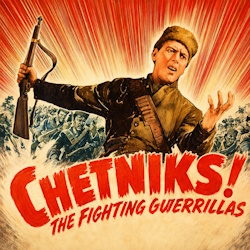
CHETNIKS! THE FIGHTING GUERRILLAS – Hugo Friedhofer
 GREATEST SCORES OF THE TWENTIETH CENTURY
Original Review by Craig Lysy
The 1943 film Chetniks! The Fighting Guerrillas was originally titled “The Seventh Column” and based on a story by Jack Andrews. The film was conceived as wartime propaganda, intended to show American and global audiences that Hitler’s forces were not invincible. It portrayed the Chetniks as fearless underdogs fighting a guerrilla hit-and-run campaign to liberate their nation under the inspired leadership of General Draža Mihailović. 20th Century Fox greenlit the project and assigned Bryan Foy and Sol M. Wurtzel to production. Louis King directed and co-wrote the screenplay with Jack Andrews and Edward E. Paramore Jr. Philip Dorn starred as Draža Mihailović, joined by Anna Sten as Ljubica Mihailović, Shepperd Strudwick as Lieutenant Aleksa Petrović, Virginia Gilmore as Natalia, and Martin Kosleck as Gestapo Colonel Wilhelm Brockner.
Set in 1941 Yugoslavia during WWII, the film follows the fortunes of Colonel Draža Mihailović and his Serbian resistance fighters, the Chetniks, as they battle Axis occupiers throughout the country. Mihailović is depicted as a selfless hero tying down seven Axis divisions. The German Gestapo fails to stop the Chetniks and therefore incarcerates Mihailović’s wife, Ljubica, and their children, Nada and Mirko. Hoping to capture him during an anticipated rescue attempt, the Gestapo sets a trap. However, Mihailović learns of the plot, and the Chetniks foil the Nazi plan. In a climactic finish, Mihailović agrees to meet with the German generals. The meeting is a trap, but he outsmarts his enemies and escapes. The film ends with the Chetniks continuing their fight against the Axis powers. It proved popular with audiences and was a commercial success, while critics also praised its ensemble acting and spirited presentation. However, it failed to receive any Academy Award nominations.
By the early 1940s, Hugo Friedhofer had gained recognition as a premier orchestrator. Alfred Newman, the Director of Music at 20th Century Fox, recognized his talent, began cultivating him as a composer, and assigned him to the project. It was reported that Friedhofer’s initial response was less than enthusiastic, as he disliked minor film assignments and regarded the production as a propagandistic “B” movie. Nevertheless, he decided to accept the assignment because it offered an opportunity to expand his career as a composer, a decision that, in retrospect, proved instrumental in establishing him as a top-tier composer three years later, in 1946, with his Academy Award-winning score for The Best Years of Our Lives.
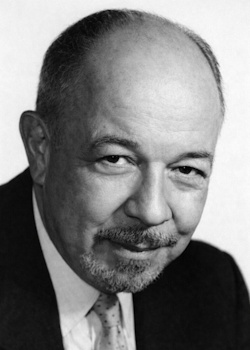 Upon viewing the film, Friedhofer decided to build a robust and thick-textured soundscape. Given the narrative of patriotic defiance against an invader, he crafted slashing, aggressive musical themes to emphasize the violent struggles of the Chetnik resistance fighters against the Nazis. He also composed sweeping melodies to underscore the heavy emotional toll of war on the characters. Moreover, he understood that the film was designed to galvanize American public opinion and inspire Allied morale during the early, dark years of WWII. As such, he imbued the score with an intense, serious, and deeply patriotic tone, while focusing heavily on tight, synchronized narrative underscoring and employing driving rhythmic elements to pace the film’s continuous raid and ambush sequences. He relied on heavy percussion and rousing horn motifs to evoke the gritty, relentless nature of the Slavic resistance struggle against the Nazi occupation. Finally, he employed traditional European compositional sensibilities to ground the film in its Yugoslavian setting.
In conceiving his soundscape, Friedhofer decided to again utilize leitmotifs, which can be divided into three groups. The Chetnik Theme utilizes the “Prepare Yourselves, Prepare” song melody as an anthem, serving as the musical identity of the hero, Mihailović, and, by extension, the resistance fighters under his command. Friedhofer empowers it with a stirring, syncopated march rhythm primarily carried by trumpets and horns militaire. To provide the requisite cultural sensibilities, he introduces a distinctive Slavic-Balkan harmonic color through contrasting natural and harmonic minor-modal inflections, which give the heroic march an exotic, determined, and slightly melancholic undertone. As a master orchestrator, he passes the theme’s melody from bold horn statements to sweeping, soaring strings to evoke patriotism, solidarity, and a cinematic sense of hope for the European resistance.
For the villains, the Enemy Theme serves as the identity of Gestapo Colonel Wilhelm Brockner, as well as General von Bauer, and, by extension, the Gestapo and Wehrmacht forces under their command. In a compelling juxtaposition with the Chetnik Theme, Friedhofer relies heavily on rigid, angular, and highly chromatic lines, underpinned by a heavy, martial 4/4 meter driven by low-register horns, woodwinds, and snare drums. The harmonic structure is intentionally dissonant and oppressive, conveying a menacing military threat. Rather than offering lyrical expression, the theme is propelled by strident horns, harsh staccatos, and ominous low-register string ostinatos.
The remaining principal ideas are the Familial, or Children’s, Theme and the Love Theme. These intimate themes are tender and expressed in slower, more lyrical adagio passages. Friedhofer’s use of gentle solo oboe and flute lines, underpinned by warm, lush string arrangements and diatonic harmonies, imparts vulnerability and innocence, providing a stark emotional contrast to the brutal military marches dominating the action sequences. The Love Theme supports two romantic relationships: the marital bond between General Draža Mihailović and his wife, Ljubica, and the relationship between Natalia, a spy, and Draža’s aide, Aleksa. By utilizing a shared theme, Friedhofer musically links the two couples, emphasizing their collective resilience and shared emotional stakes rather than individualizing their subplots. He offers a classic Golden Age, string-borne romanza adorned by woodwinds. For the Family Theme, Friedhofer wrote a gentle, folk-like melody reflecting Draža’s love for his children, Mirko and Nada. The music conveys familial devotion and reminds us of what Draža is fighting to protect, while highlighting the heartbreak of war tearing families apart.
There is no commercial release of the score, and the audio quality of the available video is poor, featuring significant background hiss, muffled dialogue, and distorted audio peaks. Due to the absence of a modern restoration, the sound is characteristic of an unrestored public-domain print. Accordingly, I will use film time indices and scene descriptors to provide narrative context for the music.
At 0:00 Alfred Newman’s iconic fanfare for 20th Century Fox resounds. In 0:12 “Main Title” Friedhofer immediately establishes Slavic cultural sensibility by supporting the Main Title with the tradition Serbian folk song “Spremte Se, Spremte Četnici” (“Prepare Yourselves, Prepare”). The song has an energetic duple meter tempo and is rendered as a proud marcia patriottica empowered by men’s chorus, which supports the flow of the opening credits. Emotionally, it offers a rousing call to arms to defend the motherland. It exudes bravery and an indomitable fighting spirit. The music is minor modal, and woven within the song’s fabric is a deep sadness, offering a cry for lost friends, and a reminder of hard times in history. Yet the song closes with hope, the promise of Yugoslavia regaining its freedom.
0:57 “Prologue” opens with narrative script, which offers a laudatory salute to the heroic and patriotic efforts of Draža Mihailović and his fighting Chekniks. Friedhofer transforms the song’s bearing from a march, to a heartfelt, more lyrical, and salutary rendering by strings solenne. 1:19 “Invasion!” reveals the Axis invasion of Yugoslavia on 6 April 1941 by German, Italian, Bulgarian and Hungarian forces. Waves of German bombers fill the sky as thousands of troops cross the frontier and force Yugoslav surrender eleven days later on 17 April 1941. The country was then dismembered; since the Croats collaborated, they were rewarded with the puppet State of Croatia governed by the fascist Ustaše regime. Serbia was placed under direct German military occupation, Montenegro and Kosovo were occupied by Italy, Macedonia was annexed by Bulgaria, and the northern territories annexed by Hungary. Friedhofer opens with a tremelo by strings terrore, which usher in a maelstrom of martial aggression. This oppressive and violent musical narrative propelled by a marcia della’inferno supports the montage of invasion scenes. 1:41 “The Chetnik’s Strikes Back” reveals that as the German commander proudly announces total victory to a room full of officers, he is killed by a sniper shot. This unleashes a firestorm of German retaliation, which is propelled by strings furiosi and trumpets militare of the German Theme. Yet a German motorcade is seen ambushed and destroyed by Chekniks, followed by a train being blasted off its tracks. Each attack is empowered by the Chetnik Anthem. At German headquarters, the army commander General von Bauer raves against mounting German losses, disparaging the Chetniks as bandits who strike and then retreat into the mountainous terrain. He adds that the Chetniks are tying up seven divisions needed to support the recently launched invasion of the Soviet Union. He orders his commanders to go into their mountain strongholds and bring him the head of their leader Mihailovic.
3:24 “Italian Ransom” opens with a proud and defiant declaration of the Cketnik Anthem as Mihailovic watches an Italian supply convoy of eight trucks winding through a narrow pass on a road below on the valley floor. They are enroute to Kotor, and at 3:53 Mihailovic orders his mounted troops to attack, and they ride forth empowered by their ferocious anthem. Down below the convoy, led by a command limousine proceeds, and Friedhofer sow a low register foreboding musical narrative. At 4:14 explosions in front of the command car halt sthe convoy. The Chetnik cavalry swarms and slaughters the Italians propelled by a festive rendering of their theme. The commander Major Franceso Bederro surrenders, and a solemn Chetnik Theme supports Mihailović accepting the surrender. The manifest, includes machine guns, ammunition, tinned fruit, and dehydrated vegetables. The musical narrative becomes lighthearted as Mihailovic is informed that the trucks lack sufficient gas to commandeer. He orders his men to tap into the telephone wires and contact German headquarters in Kotor. At 5:51 a grim German Theme supports German Headquarters answering the phone, and transferring the call to General von Bauer. Von Bauer is furious at Mihailovic impudence in demanding gas in exchange for the Italians and refuses to part with gas for ‘worthless Italians”. Yet when Mihailovic threatens to relay this to the Italians, Colonel Brockner advises conceding as they cannot afford to alienate their allies, whom they need.Von Bauer grudgingly agrees and the musical narrative becomes comedic with mockery as the Italians officers, especially the Major are offended by the liters of gasoline that each is being ransomed. The Major demands fifty, and Von Bauer agrees to ten tins, two more than is officers. We close with a coda borne by woodwinds sardonici.
7:59 “Brockner’s Plan” reveals signage; “Gestapo Headquarters” supported by a dire declaration of the Gestapo Fanfare. Brockner and von Bauer quarrel with each rejecting interference in their spheres of command. Brockner suggests killing 100 Serbs for every German killed. He adds, that since you cannot capture Mihailovic, he will by finding and arresting his wife and children and using them as bait. He informs von Bauer that they will close off the city of Kotor and search one by one, every house until they find his family. At 9:25 music resumes with gestapo going house to house supported by a marcia diobolica. The first house finds only bitter widows and an adolescent daughter. Moving to the second house, at 10:17 a string borne Family Theme supports her opening the door and presenting her papers, he asks for her husband, and she says he died in battle. The theme becomes warm as she confirms she has children, and he demands to see them. She calls George and Anna and they declare their familial name of Radic. 10:46 “Papa Returns” reveals the music shifting to buffoonery as a juggler and his mule arrive. He says he is delivering milk, and as he brings a cannister he apologizes saying it is hard to get into town these days. He is brusquely brushed aside by the Gestapo captain who departs with his men. Inside a warm Family Theme full of familial love joins as we see the milkman is Draža. This warm musical narrative continues as Draža and his children Mirko and Anna share an intimate moment. For safety, the kids head out to put the mule in the barn so as to not arose suspicions. At 12:27, after they depart, Ljubica turns to Draža and the Love Theme blossoms as she sits on his lap and is cradled by his loving embrace. He tells her it is moments like this that sustains and validates him. Yet sadness flows into the narrative as she worries that he might fall into the German’s hands. He reassures her that they will prevail because we have the will to be free. Strings nobile crown the moment as she hugs him dearly and expresses her undying love. At 13:31 the intimate moment is broken as Mirko and Anna run in carried by the warmth of the Family Theme. A narrative of familial happiness unfolds with some of Friedhofer’s most tender, and sentimental writing of the score as Ljubica prepares dinner and is gifted some stolen Italian tins of food. As they sit down to eat, Draža leads them in Grace but the moment is shattered by Gestapo pounding on the door.
15:42 “Deer Meat” opens with dire Gestapo fanfare resounding as Draža takes his clothes and hides. She opens the doors, says you have already been here, and offers her papers. They push by and enter the house, smell the food and taste it. They demand to know how she got deer meet, ask for her rations card, and examine it. They refuse to return her card as there will be an investigation. Mirko charges one of the officers and dire horns resound as he is thrown to the floor. Ljubica is told to better control her brat and they depart, with one soldier scooping out a portion of the stew. Racing strings energico support Mirko running and grabbing a fire poker, only to be stopped by his father. Friedhofer sow uncertainty and when Draža sees that Ljubica is distraught, he goes and comforts her supported by a tender Love Theme. 17:54 “Brockner New Orders” offers a dire musical narrative within which is woven the Gestapo Theme, which supports Brockner dictating a letter: “Anyone caught sympathizing or supporting Draža Mihailović and his Chetniks, will be arrested and executed without trial. Anyone engaged in labor not approved by the Gestapo chief will have their rations card revoked. All 2,000 Serb prisoners in the concentration camp will be shipped to Germany. We end darkly as he lectures his Serbian secretary Natalia (a spy), that her countrymen must learn to submit to our rule as you have. 18:51 “Natalia and Aleksa” Natalia arrives home supported by a foreboding string tremolo. She sets her purse down, turns and becomes joyous as Aleksa, her lover, and one of Draža’s aide, runs into her arms empowered by the Love Theme, which blossoms as they embrace. She gifts him the latest orders and the grim Nazi Theme joins as he reads 2,000 prisoners to be sent to Germany to work in the fields and factories. She adds that once they were soldiers, now they’re slaves.
We shift at 19:45 atop dire German Fanfare to “Liberating The Prisoners”. Drums of doom propel a narrative of woe as we see Serb prisoners of war being herded like cattle, and then packed like sardines into railroad cars. Draža and Aleksa watch from the shadows, as the train departs and steams through the countryside. At 20:45 the engineer sounds the emergency stop whistle as he sees the tracks ahead barricaded. Friedhofer slowly ratches up tension as we see the Chetniks laying in wait, ready to ambush. A dramatic decelerando brings the train to a stop joined by foreboding strings, which presage the attack. Trumpets militare launch the attack buttressed by a ferocious Chetnik Theme at 21:08 as the Chetnik’s ambush the train. They are victorious, and their now celebratory theme becomes a paean of jubilation as the joyous prisoners are liberated. At 21:48 a forlorn march brings the captured German captain, Draža offers to forego execution, if he agrees to deliver a personal message to Colonel Brockner. The captain agrees, and we shift to Brockner’s office. Brockner demands to know why his life was spared, and the captain says, so I could relay a message to you. Brockner orders him to relay the message and the captain does so, reluctantly; “Draža thanks Colonel Brockner for the reinforcements sent him, and that he will use the troops to good effect”. Brockner is furious, orders him out, and as he departs, we see a white swastika painted on the tunic over his buttocks. Brockner frets that he cannot break these people and bring them into submission. He says the only way is to get to Mihailović, is through his wife and children. A diabolical Nazi Theme sounds a Brockner says the way to break the people’s will so they will speak, is to starve them. He says, hunger will lead a man to betray his brother.
23:53 “Brockner’s Plan” reveals crowds surrounding Gestapo headquarters empowered by the diabolical Nazi fanfare, which usher in a malevolent musical narrative. Brockner opens the broadcast microphone and announces over public speakers his new order;
“No food of any kind will be sold or given in any manner by any person to any non-German inhabitant. For any violation, the giver and receiver will both be hanged, regardless of sex or age. This order will remain in effect until the wife and children of the rebel leader Draža Mihailović are turned over to the Gestapo. We know, that you know, that this family resides in the city. Even the most stupid of you know that the sooner we apprehend them, the sooner you will eat again. I shall wait five minutes”.
As he reads the speech, tense strings sow anxiety, joined at the conclusion by foreboding drums and grim horns. At 24:58 the camera pans the crowd supported by a beleaguered Chetnik Theme, which slowly transforms to a dirge. Ljubica is distraught, but reassured by another woman. A tentative Children’s Theme joins as Mirko and Anna make eye contact in the school. At 25:39 dire Nazi Fanfare sounds as Ljubica enters Gestapo Headquarters. She is left alone in the annex with Natalia who she informs that she is turning herself in. Distressed strings and a forlorn flute support Natalia’s pleads to not be a fool. Ljubica frets about the children, but Natalia warns it will not matter and to not trust the Gestapo. Brockner enters and Natalia angrily tells Ljubica to get out and quit sniffing around here for mercy. She then forcibly escorts her out. Tense strings of relief support Natalia as her acting convinced Brockner. They both look out the window below at the crowd dispersing prior to the elapse of the five-minute deadline supported by a beleaguered Chetnik Theme. In 26:38 “Fight Fire, With Fire”, soaring Alpine-like horns declare the Chetnik Fanfare as we shift to Chetnik Headquarters in the mountains. Outside men singing the Chetnik Fighting song wafts in as a sergeant from the 10th Infantry Regiment advises Mihailović of the Gestapo’s starvation of the people of Kotor. The sergeant reports discontent by men from Kotor with families. He informs Draža that they want to liberate Kotor and save their families. Draža is sympathetic, and assures him that he will not allow Kotor to starve. Draža is told by his officers that the starvation plan will soon be imposed on Belgrade and other cities. Draža says he understands, and that we will fight fire, with fire. Back at German Army Headquarters, General von Brauer informs Brockner that his scheme will not work. He adds that they tried the same thing in Northern Greece and he now understands that the people would rather starve than betray their leaders. Natalia interrupts and says there is a Serbian courier here with a message from Mihailović. The courier states that General Mihailović wishes to meet with General von Brauer at 3pm tomorrow under a flag of truce. Von Brauer accepts and convinces Brockner to rescind his order to shoot the courier, as he must deliver their response. Brockner says he plans to shoot Mihailović in the public square, while von Brauer says, let’s first hear what he has to say.
29:35 “The Parley” Mihailović and two officers approach the German sentry guarded gate supported by a forthright trotting motif. The sentries panic and raise their rifles. Mihailović says he is here under a flag of truce to parley with General von Bauer. Two German Wehrmacht officers arrive, apologize, and say they will escort them to the general. As they all depart at 30:00, the Chetnik Theme rendered forthrightly as a marcia orgogliosa supports as stunned towns folk watch in disbelief. Mihailović assures them that they are not giving up. They arrive at Wehrmacht Headquarters as a menacing line of Gestapo stand at the ready. The receiving German officer is cordial, and reminds that regulations require they perform a search for weapons. The German Fanfare supports as they frisk the men. Inside both sides declare their positions; von Brauer says the Yugoslav government surrendered and under international law, you are rebels not afforded protections under international law. Mihailović counters that he and the people of Yugoslavia have not surrendered. Brockner says as guerillas, he has the right to shoot all of you. Mihailović counters with an ultimatum – stop the starvation of Kotor or…Brockner interrupts and escorts Mihailović to the window. He says the firing squad below awaits you. Mihailović says he understood that you would not honor military conventions, to which Brockner replies, you are not a military entity, but guerillas not protected by the convention. As Brockner prepares to escort them, Mihailović issues his ultimatum; if we are killed, von Brauer’s wife Elena and daughter Magdalena, and Brockner’s girlfriend will be executed. He offers proof tossing on the desk von Brauer’s wife’s wedding ring, and Brockner’s girlfriend’s bracelet. Brockner is undeterred and heads out to give the order. At 34:38 von Brauer shouts, “Give that order and I will kill you!” punctuated by dire German Fanfare. The Chetnik Theme supports as Mihailović assures that he will release his hostages after you have provided all families of Kotor with one month’s supply of food rations. Von Brauer tries to bluff, but Mihailović pulls out an ace from his sleeve – he has captured Field Marshall von Clausewitz and also holds 600 German officers and men. All will be shot to the last man if you do not comply with the ultimatum. An aggrieved German Theme supports von Brauer offer to personally escort them to the gate. Outside the Gestapo Fanfare sounds as the Gestapo captain orders; Ready! Aim!…but is countermanded by von Brauer. A spritely Chetnik Theme carries their departure. At the gate the General reminds Mihailović that he will not extend such courtesy when next they meet, and Mihailović replies, I am sure of it. He then salutes, says Auf Wiedersehen, and rides off carried by a spritely Chetnik Theme.
36:55 “Mirko’s Mistake” reveals the German teacher ordering the school children to sing “Horst-Wessel-Lied”, an anthem of the Nazi Party, with the singers required to perform the Nazi salute for the first and fourth verses. Mirko defiantly refuses to sing, and the teacher approaches him, orders him to extend his hand, and then slaps his palm with a ruler. She then orders him to sing and returns to the front of the classroom. When she sees him still not singing, she stops the song, and says sit down. She extols the song’s hero, Horst Wessel, the first martyr for the Nazi Party, and that it is a privilege to sing the song and honor him. She then rages against the criminal Draža Mihailović and Mirko reflexibly stands up and defends my fath… Tense tremolo strings sow anxiety and danger as the teacher says what did you say? Mirko, supported by the Chetnik Fanfare by muted French horns nobile, tries to redress his error by saying that his father says Mihailović was a patriot. When she asks who is your father, Friedhoffer sow menace as Mirko hesitates and says he is dead. We see the teacher believes otherwise.
39:00 “The School Teacher Visits Brockner” reveals the teacher visiting Colonel Brockner, with her arrival buttressed by dire Nazi Fanfare. Natalia says the colonel is not in and so the teacher sits down to wait. She relates that she is a child psychologist who knows when a child deceives her and then discloses that she has discovered Mihailović’s family is here in Kotor. This alarms Natalia, who says it is late, and since the colonel will most likely not return, could you provide a written report as he prefers them. The school teacher complies. Friedhofer sow a growing anxiety, with Natalia becoming increasingly nervous. She looks out the window at 40:49 and the Nazi Fanfare resounds as Brockner exits his limousine. At 41:02 Brockner enters carried by a menacing Gestapo Theme. The school teacher says she has urgent news of national importance. He escorts her to his office, and racing strings of urgency carry Natalia’s desperate departure. 41:24 “Natalia Warns Ljubica” reveals Ljubica preparing the kids for bed supported by the Family Theme. She sends them to bed and a frantic Natalia arrives saying they have to leave at once. Friedhofer builds tension as they run upstairs Gestapo pound on the door. Ljubica send Natalia out the back door and goes to answer the front door. Colonel Brockner greets her as Frau Mihailović and enters with two men. She drops all pretenses, defends her husband and says you may kill me as I will not assist you. Yet the music darkens, with palpable menace as he walks upstairs to retrieve Mirko, her son. She becomes frantic and at 44:18 a dire Nazi Theme sounds as Brockner opens the bedroom door and we see a terrified Mirko. An angry and frantic musical narrative unfolds as they seize Mirko and Ljubica resists. Yet she and the music quell as Brockner warns that he will shoot Mirko for resisting arrest if she does not stop. She does, and the Nazi Theme carries Brockner’s departure. A scared Anna runs in carried by her theme and becomes distraught when she looks out the window and sees Mirko be taken away. We close on stings of heartache as mother and daughter hug.
Von Brauer has an adjutant broadcast the Fuhrer’s offer of an armistice if Mihailović lays down his arms. Mihailović and his staff listen to the broadcast while von Bauer convinces Brockner to join him traveling to Mihailović’s headquarters under a flag of truce to formalize the surrender. They arrive and are escorted in, welcomed cordially with Mikhalovic introducing his aides, Major Danilo and Lieutenant Petrovic. Von Brauer insists on a one-on-one meeting, so Brockner, Dinilo and Petrovi depart. They sit and von Bruaer offers terms: amnesty for all past crimes, you are made Commander-in-Chief of all Yugoslav forces, all riches you desire will be granted. A protector will be appointed to run the country. Mihailović declines as it continues the loss of liberty and subjugation of Yugoslavia. Von Brauer asks him then to submit his terms, and that he is willing to consider them. He says his forces are secure from your tanks, planes and artillery in our impregnable mountains. 49:34 “Here Are My Terms” opens with tremolo strings, which usher in a grim, yet resolute Chetnik Theme as Mihailović says his terms are withdraw all German and Axis forces from Yugoslavia unconditionally, or we will fight until the last German leaves or dies. At 49:52 a grim German Fanfare sounds as von Brauer gets up, and says so be it. Let the fate of the people be on your head. Mihailović opens the door, and orders the general escorted to his car. As he leaves, von Brauer says, expect no mercy, punctuated by a grim German Theme. As Draža closes the door and ponders, a contemplative rendering of the Chetnik Theme supports.
50:34 “Ljubica” offers a score highlight with poignant thematic interplay. The door opening shatters Draža’s pondering as Brockner presents Ljubica, saying she accepted his invitation to accompany us. He departs, and the Love Theme carries her into his welcoming arms. The Children’s Theme joins tenderly as he asks about the children. She assures him they are all unharmed. She says they promise peace if he surrenders, but is unsure if they are being truthful. A solemn Chetnik Theme joins as he relates that there is not difference in how the Nazi’s treat nations that surrendered, versus nations that fight their occupation. Friedhofer weaves together the Chetnik, Love and Children’s Themes as Ljubica explains that the reason they came here unafraid was that they hold Mirko hostage. She is fearful, but a solemn and resolute Draža’s Theme supports him declaring that they think they can beat me through my son, they will not succeed. A grim German Theme joins as she adds that tens of thousands of troops have been passing through town on the way to Albania. When she asks if he knows what this means? He answers yes, but that it does not matter. He exhorts her patriotism saying that without freedom life is not worth living. The Chetnik Theme swells with patriotic pride as she is won over, and they embrace. Draža then summons Colonel Brockner. He thanks him for his wife’s visitation, and Brockner says that she is welcome to stay. 54:55 “Brockner’s Terms” reveals him now presenting Mihailović his terms, supported by an ominous rendering of the Nazi Theme; “If at the end of 18 hours you have not surrendered to us, and your guerillas have not begun to disband, then every man, woman, and child in Kotor will be executed”. The music descends into despair as Ljubica says she is returning to die by her children’s side. As Brockner departs, he is stopped at knife point by Colonel Dornilo, but Mihailović says stand down, as we honor the truce. They obey, but Aleksa asks why not kill him? Mihailović says if we did, the massacre of Kotor would star immediately. Now, we have 18 hours to come up with a rescue plan. We close at 55:59 as he looks out the window. Ljubica and his eyes lock supported by a sad Love Theme as both realize this may be the last time, they see each other. After she departs they discuss tactics and realize they are out gunned, out manned, and will face tanks, artillery and mechanized units.
57:06 “Mihailović’s Plan” is one of deception, baiting, and surprise attack. A diversionary force will head to the mountain pass Krstac, which leads to Kotor, where they will trick the Germans into thinking that they are surrendering, and entice them to deploy sufficient force to massacre them. This will reduce the garrison at Kotor, which we will attack where their defenses are weakest – from the mountains on the other side. Aleksa is dispatched on a mission to infiltrate Kotor, and surveil the German defenses with aide from Natalia. A vibrant and confident Chetnik Theme supports the plan. At Wehrmacht Headquarters von Brauer and Brockner argue over tactics, with von Brauer advocating a decisive military strike, while Brockner urging patience, convinced the Chetnik’s will disband in order to save their families. Von Brauer receives a phone call alerting him of the Chetnik’s descending to Krstac Pass. He orders the deployment of three regimens of infantry with machine guns, and four batteries of artillery to ambush and massacre them. 1:00:08 “Light The Torches!” reveals Mihailović ordering the diversionary convoy to descend to the pass, with torches lit and mounted on each cart to falsely amplify their numbers. As they head out, men’s chorus sings a proud rendering of the Chetnik song “Spremte se, Spremte Četnici”. At 1:00:35 a menacing German Theme supports the movement of the German forces. Von Brauer is pleased at the report he receives that the Chetnik’s are complying with the surrender terms, and descending en masse with torches. He orders deployment to ensure none escape, and that all are massacred. A resolute and menacing German Theme empowers the passage of troops and artillery. At 1:01:07 we shift back to the torch lit Chetnik convoy descending into the pass, empowered by “Spremte se, Spremte Četnici”. Above Mihailović moves out, saying they should reach Kortor around the same time the convoy reaches Krstac Pass. The song retreats into the background as Mihailović and his troops navigate the narrow mountain path.
1:01:46 “Aleksa’s Mission” reveals Aleksa being outfitted by a tailor into his German Army captain’s uniform. Friedhofer supports with a subtle tension born by woodwinds. A reserved Chetnik Theme joins as Natalia arrives with his official papers. Foreboding low register strings carry his departure. He meets a patrol and is immediately arrested. Aleksa is outraged and declares that he is Captain Luther of the 4th artillery regimen. The captain of the patrol smiles, and says he is Captain Luther and has no twin brother. At 1:03:01 we shift back to the pass with “Spremte se, Spremte Četnici” continuing to support the diversion column’s descent. Von Brauer arrives, hears their singing, and orders that they be annihilated the moment they present themselves for surrender. The Chetnik song is sustained as we see German troops disembarking and deploying. A scout reports to Captain Sava that German troops are deployed 1 mile ahead. Sava orders the men to abandon the tied pack mules and carts and let the road’s downhill slope sustain the caravan’s descent. At 1:04:30 German troops have deployed with machine guns ready, supported by an eerie string tremolo buttressed by dire muted horns. Back to Kotor, Mihailović orders a concerted attack on the city’s east, west and south gates. “Aleksa and Natalia Interrogated” reveals Brockner interrogating both in his office. A menacing Gestapo Theme portends their fates. Brockner receives a phone call saying the firing squad is assembled. He says we will proceed at once. We shift to the Chetnik stealth approach to Kotor with the music darkening when they unexpectantly discover massive artillery pieces deployed, with the target, Kotor. The leader says to hold as he must appraise Mihailović. Back in Brockner’s office, at 1:05:54 muted trumpets and a drum roll of doom support Aleksa and Natalia being escorted to the office window. Fanfare malevola declare the Nazi Theme as Aleksa and Natalia watch dozens of people reach the wall of execution. Brockner says von Brauer is a fool, taken in by your deceit. Therefore, he will begin the correct plan, executing all the inhabitants of Kotor. A molto tragico statement of the Chetnik Theme supports Aleksa and Natalia’s gasp when they see Ljubica, Mikor and Anna at the wall.
1:06:21 “The Chetnik’s Attack!” reveals shifting back to the diversion caravan still empowered by “Spremte se, Spremte Četnici”, which echoes through the pass. Sava says get ready and several men pull up on the blasting machine plunger that will detonate the dynamite. At 1:06:37 Sava signals now! Several men push their plungers and the Germans are decimated by cascades of massive explosions, with von Bauer and his aide buried in an avalanche of rocks. At 1:06:49 the town is rocked by explosion shock waves and the firing squad sergeant orders the prisoners returned to their cells and his men to deploy. Brockner orders Aleksa and Natalia taken with him and Friedhofer whips his orchestra into frenzy, unleashing a tour de force empowered by the Chetnik Anthem. Mihailović launches his attack on Kotor and the artillery battery intended to destroy Kotor. Aleksa is wounded but still manages to wrestle Brockner to the ground. He rips away his pistol, they both stand, and Aleksa executes him at 1:08:22, punctuated by trumpets of retribution. The anthem assumes a heroic expression as the Germans are overwhelmed and either slaughtered or surrender. At 1:09:56 warm French horns of thankfulness resound and Draža finds and liberates Ljubica and the kids, with all joining in a joyous familial embrace. 1:09:07 “Finale” offers a magnificent score highlight. It reveals Mihailović’s victorious and defiant broadcast of a radio message to his fellow Yugoslavs, the Nazis and the world;
“We have a foot hold on the sea, and are in a better position to carry on the fight. Today our flag flies over more than 20,000 square miles of our country, but I give you my solemn promise that I shall not lay down my sword until every inch of Yugoslavia is reclaimed from the invader. If there are Nazi’s listening, I have this to say to them. As long as you treasure our country and carry arms, this Holy War will continue. Neither German might, or German frightfulness can deter us from the goals we have set – complete freedom for our people.”
Friedhofer is masterful in supporting the film’s emotional apogee. The music begins as a lower, supportive dramatic undertone during the initial words of the speech. It deliberately swells in both volume and instrumentation as his speech builds in intensity, empowered by a horns trionfanti and soaring strings to powerfully evoke a sense of nobility, sacrifice, and ultimate victory. He also masterfully integrates the traditional Yugoslav national anthem (Hej, Sloveni / Bože pravde) and the Chetnik patriotic march theme, blending them into a crescendo that mirrors the message of defiance against Nazi occupation. As Mihailović concludes his address looking toward a liberated future, the orchestra reaches a grand, symphonic crest, which concludes gloriously in a horn flourish as “The End” displays.
Hugo Friedhofer was tasked to compose, with an ideological purpose, a propaganda score, to rouse support among Americans, and to foster Allied solidarity during the height of World War II. I believe he succeeded on all counts, composing a very effective, evocative, and emotionally compelling orchestral score, which vilified the Nazis, and ennobled our Chetnik freedom fighters, with their heroic leader Draža Mihailovic achieving a musical apotheosis in the finale with his stirring and defiant victory speech to the world.
There are times when a composer is presented with a film in desperate need of a score to enhance its narrative. Such was the case with “Chetniks! The Guerilla Fighters”. This propagandist, B-movie had a plot focused heavily on melodramatic hostage rescue attempts, with slow pacing, and suffering from a lack of suspense. Despite this, Friedhofer rose to the challenge and successfully blended authentic folk elements with dramatic late-Romantic Era orchestral leitmotif scoring. He utilized his deep knowledge of orchestral color to imbue his score with a sweeping romanticism that humanized, and generated sympathy for the plight of Mihailović’s family. He also injected the requisite tension and a heroic gravitas, which animated the defiant Chetnik’s spirit of the resistance, while also making the film feel grander than its budget. I believe that the musical identities of our villains and heroes were masterfully conceived, and executed. The Nazis achieved a diabolical confluence of musical menace and malevolence, which embodied their evil, cruel, and ruthless actions during the film. For our Chetnik heroes, Friedhofer’s interpolated a rousing, and traditional “Chetnik Fighting Song”, which provided an inspiring, emotional hook for audiences’ whose proclivity is to support the underdogs. Folks, you will not find this score in any Friedhofer Top Ten lists, never the less it offers a well-conceived and executed score, perfectly tailored for its film. Indeed, the film is much better due to it.
For those of you unfamiliar with the score, I have embedded a YouTube link to the Trailer: https://www.youtube.com/watch?v=U4flgYihdFA
Track Listing:
NOT AVAILABLE
Music composed by Hugo Friedhofer. Conducted by Emil Newman. Orchestrations by Hugo Friedhofer. Score produced by Emil Newman.

Shop at the Movie Music UK Store

Member of the


