Archive
Under-the-Radar Round Up 2023, Part 2
 Original Reviews by Jonathan Broxton
I’m pleased to present the latest instalment in my on-going series of articles looking at the best under-the-radar scores from around the world. This article, the second of 2023, covers five scores for projects all from French cinema, highlighting yet again just what a treasure trove of outstanding music is coming from that country right now. The scores covered run the gamut of genres, from light comedy to historical melodrama, period romance, and more!
Under-the-Radar Round Up 2017, Part 3
Original Reviews by Jonathan Broxton
The third installment in my annual series of articles looking at the best “under the radar” scores from around the world returns to the United Kingdom, with a look at a half dozen or so more outstanding scores from films made in Britain. This set of scores from comprises comedies, dramas, and even a horror movie, and includes one by an Oscar-winner, one by a well-loved multiple Oscar nominee, and one by one of the most impressive newcomers to emerge in 2017.
Under-the-Radar Round Up 2017, Part 1
Original Reviews by Jonathan Broxton
The first installment in my annual series of articles looking at the best “under the radar” scores from around the world concentrates on music from films from my home country, the United Kingdom. There has been a wealth of riches from all four parts of the country – England, Scotland, Wales, and Northern Ireland – and this first set of reviews encompasses a rich and varied set of scores from Oscar winning favorites and talented newcomers, dramas, documentaries, comedies, and even a groundbreaking animation. There will be more to come from the UK later!
PRINCESS KAIULANI – Stephen Warbeck
 Original Review by Jonathan Broxton
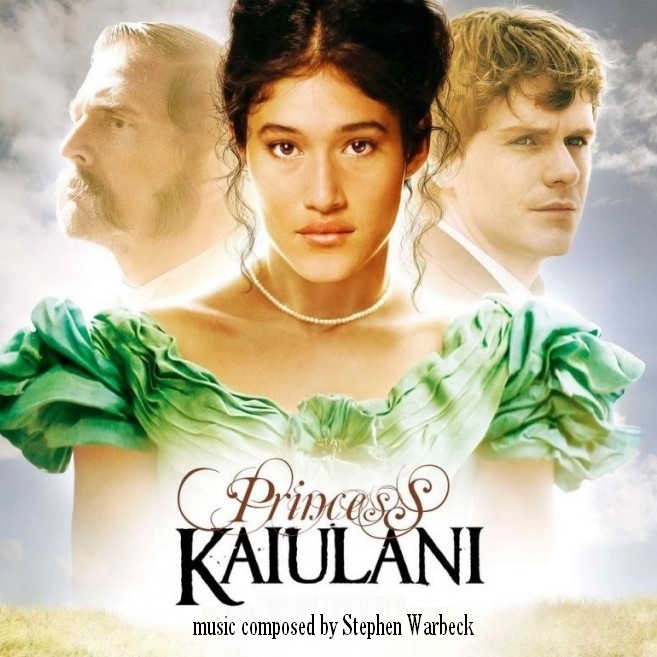
Princess Kaiulani is a film about the life of the extravagantly-named Victoria Kaiulani Kalaninuiahilapalapa Kawekiu i Lunalilo Cleghorn, who was the heir to the Kingdom of Hawaii until the overthrow of the Hawaiian monarchy in 1893. Kaiulani – who was educated in England and New York and was in no way the ‘Barbarian Princess’ that the media of the time dubbed her – immediately took up the cause of her country, petitioning US presidents Benjamin Harrison and Grover Cleveland to restore the monarchy, but her efforts were cut short by her untimely death in 1899 at the age of just 23. Nevertheless, Kaiulani was exceptionally popular in the islands, and is remembered today as a strong and tireless campaigner for Hawaiian rights and sovereignty. The film is directed by Marc Forby, stars The New World’s Q’Orianka Kilcher as Kaiulani alongside Barry Pepper, Will Patton and Julian Glover, and features a rich and expansive original score by Stephen Warbeck. Read more…
PROOF – Stephen Warbeck
 Original Review by Jonathan Broxton
One of the best reviewed films of late summer 2005 has been Proof, the latest effort from John Madden, the Oscar-winning director of Shakespeare in Love and Captain Corelli’s Mandolin. Based on the Tony Award and Pulitzer Prize-winning stage play by David Auburn, it stars Gwyneth Paltrow as Catherine, the daughter of the brilliant, recently-deceased, mathematician and scientist Robert (Anthony Hopkins), who in the latter years of his life was plagued by the onset of dementia. As Robert’s sole care-giver, Catherine – an equally brilliant scholar – spent day and night with her father tending to his needs, and is aggrieved when her sister Claire (Hope Davis) jets in from New York full of bluster and empty words of consolation, and a former dissertation student named Hal (Jake Gyllenhaal) starts poring through her father’s work looking for some spark of genius within the madness. Worst of all, Catherine begins to think that, as well as inheriting her father’s intellect, she may also have inherited his tendency for insanity… Read more…
CHARLOTTE GRAY – Stephen Warbeck
 Original Review by Jonathan Broxton
In the four years since he won the Oscar for his score for Shakespeare In Love, British composer Stephen Warbeck’s stock has risen considerably. At first, I was guilty of dismissing him as a flash in the pan: after all, prior to that film, his only work of note was for the popular UK crime series Prime Suspect and the critically acclaimed Mrs. Brown, at that time his only internationally released score. Since then, however, Warbeck has continually surprised and delighted me with score after score of exquisite music. First came Billy Elliott, then Quills, and then Captain Corelli’s Mandolin, easily one of my favorite scores of 2001. The new level of expectation on Warbeck is such that now I look forward to each new work by him, hoping that he can surpass his last effort each time – and it comes as something of a shock to learn that, with Charlotte Gray, he has not. Read more…
CAPTAIN CORELLI’S MANDOLIN – Stephen Warbeck
 Original Review by Jonathan Broxton
Stephen Warbeck just gets better and better. I have to admit that, when he won the Oscar for Shakespeare in Love back in 1998, I dismissed his victory as nothing but sheer luck – a middling composer being fortuitously attached to the right movie at the right time. As time has passed, however, my opinion has changed. Fanny and Elvis and Mystery Men were OK. Billy Elliott was good. Quills was excellent. And now, with Captain Corelli’s Mandolin, Warbeck has finally emerged as a bonafide competitor to John Barry, George Fenton and Rachel Portman as the British composer of choice for romantic dramas. Read more…
Academy Award Winners 1998
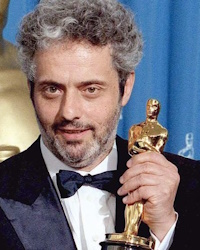 The Academy of Motion Picture Arts and Sciences (AMPAS) have announced the winners of the 71st Academy Awards, honoring the best in film in 1998.
In the Best Original Dramatic Score category, Italian composer Nicola Piovani won the award for his score for Roberto Benigni’s Life Is Beautiful. In his acceptance speech, Piovani said:
It’s impossible for me in this moment [to] speak about my emotion in English. I can tell just: Thank you to the jury. Thank you, the Academy. Thank you, Roberto.
The other nominees for Best Original Dramatic Score were David Hirschfelder for Elizabeth, Randy Newman for Pleasantville, John Williams for Saving Private Ryan, and Hans Zimmer for The Thin Red Line.
In the Best Original Comedy Score category composer Stephen Warbeck won for his score for the Elizabethan-era comedy Shakespeare in Love. In her acceptance speech, Warbeck said:
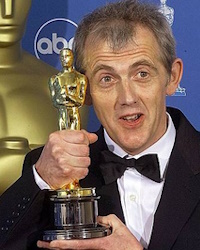 It’s a very, very exciting moment. Thank you very much. Especially exciting because John Madden is such a fantastically stimulating person to collaborate with. So thank you, John. Thank you to the Academy. Thank you to Sarah, Jessica, Herbert, Matilda. And thank you to my mother and father. Thank you to the lovely producers, without whom we wouldn’t be here or the people involved in this. Thank you to William Shakespeare, Bertolt Brecht, and The Kippers, for inspiring me to write music for the theater and other things. And thank you, thank you to all the friends who worked on the music, without whom it would just be squiggles on a piece of paper: John Parricelli, Eleanor Alberga, Chris Dibble, Nick Ingman, Martin Robinson, Paul, Gary and Frank. Thank you very much indeed. This is lovely. Thank you.
The other nominees were Randy Newman for A Bug’s Life; Matthew Wilder, David Zippel and Jerry Goldsmith for Mulan; Marc Shaiman for Patch Adams; and Stephen Schwartz and Hans Zimmer for The Prince of Egypt.
In the Best Original Song category, composer and lyricist Stephen Schwartz won for “When You Believe” from The Prince of Egypt performed by Whitney Houston and Mariah Carey. Schwartz, however, was not present to accept the award, as he was in New York rehearsing a show.
The other nominees were Diane Warren for “I Don’t Want to Miss a Thing” from Armageddon; Carole Bayer Sager, David Foster, Tony Renis and Alberto Testa for “The Prayer” from Quest for Camelot; Allison Moorer and Gwil Owen for “A Soft Place to Fall” from The Horse Whisperer; and Randy Newman for “That’ll Do” from Babe: Pig in the City.

Shop at the Movie Music UK Store

Member of the


