STARBRIGHT – Luděk Dřízhal
 Original Review by Jonathan Broxton
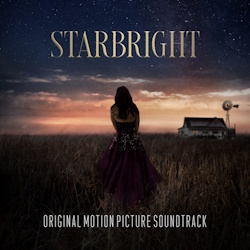
Starbright is a science fiction-fantasy-action film directed by Francesco Lucente, starring John Rhys-Davies, Diego Boneta, Ted Levine, and Alexandra Dowling. The story follows a young woman named Aisling (Dowling), who lives on a remote farm with her grandparents, and whose life changes when something crash-lands in a field near her home. When she investigates, she encounters a mysterious angel-like man named Raphael (Rhys-Davies), who reveals what crashed – a tiny star – which Raphael then entrusts to Aisling for safekeeping. With the additional help of a kind-hearted stranger named Joshua (Boneta), Aisling and Raphael attempt to protect the star from three criminals who wish to exploit its power; what follows (according to the film’s press material) is “a perilous journey through a world where magic and life collide,” with the three characters “discovering that the light’s true power lies in awakening hope in humanity.” Make of that what you will. It sounds rather biblical to me.
Starbright had a tortured production history – it has been in development since at least 2010, when the late James Earl Jones was cast in the John Rhys-Davies role – and it played at festivals and special events in both 2024 and 2025, but it eventually made it to cinemas for a limited theatrical run back in February, more than 15 years later. Reviews were mixed, but critics were mostly positive, with some saying that the film was a “modern fable” and had a “nostalgic 1980s fantasy tone.” This is something that certainly translates to its music, which gave me perhaps the biggest “came in with zero expectations, absolutely blew me away” experience I have had in many, many years.
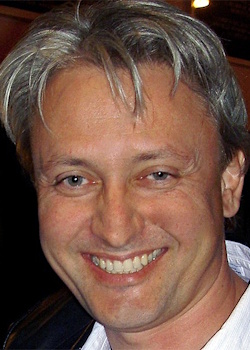
The score for Starbright is by the Czech-born, Los Angeles-based composer Luděk Dřízhal. The composer has been around for quite some time; he was born in 1966, and his IMDb credits show him scoring short films, TV shows, and low-budget features as far back as 2003. He was a child prodigy violinist back home in Prague before relocating to the United States in the 1990s to study in Texas and then at the USC Thornton School of Music. In addition to his film work, he has also written songs and classical pieces, taught courses on music theory at various universities, and much more besides. What is apparent from Starbright is that he is potentially one of the undiscovered greats – this is the first time I have personally heard his music, and, as I said, it knocked my socks off.
 The score is a massive, thematic, old-fashioned fantasy adventure throwback of the highest order. It employs huge orchestral and choral forces and features moments of staggering romance and beauty, coupled with bold and complex action, adaptations of classic movie songs, and more. Dřízhal talked about preparing to score Starbright in an interview he did with film music journalist John Mansell way back in August of 2013, and apparently he wrote and recorded a theme with the Czech National Symphony Orchestra based purely on his impressions of the screenplay.
I don’t know how much of that original music from 2013 remains, as Dřízhal has apparently been tinkering with it for a decade or more, but the final score was recorded with the Prague Metropolitan Orchestra and Chorus, and it’s just sensational. There’s a slightly imperfect quality to the music that I find endearing and charming; it gives it the same kind of “rough-and-ready” quality that you find in scores like Basil Poledouris’s Conan the Barbarian, James Horner’s Krull, or perhaps something like Lee Holdridge and Robert Folk’s Beastmaster scores. I’m not saying that Starbright actually sounds like those scores, musically, but that it has the same feel. This is a score that feels like something from a different time – less polished, less clinical, more sincere, more wholesome, more innocent. I’m not sure if that makes any real sense, but it came across that way to me, and it’s something I greatly appreciated.
The album is a whopping 2 hours and 5 minutes in length, but more than 25 minutes of that is given over to a series of vocal performances and jazz instrumentals of classic movie songs and standards, including Henry Mancini’s “Moon River” from Breakfast at Tiffany’s, Nacio Herb Brown’s “All I Do Is Dream of You,” the Elvis Presley classic “Can’t Help Falling in Love,” the Jerome Kern jazz standard “The Way You Look Tonight,” and even a brief burst of “Nessun Dorma.” These are all good, but the score is what we’re here for, and when you set aside these tracks, you are left with just over 90 minutes of magical orchestral wonderment and thrilling action.
The music associated with Raphael and the fallen star is awash in a mix of gorgeous fairytale tones, religioso textures, and romantic themes, creating a deeply emotional and spiritual palette. The opening handful of cues feature what appears to be the score’s main theme, which is initially rendered on a solo flute in the opening “Creation,” then on a rich solo violin in “Locket,” then by a soulful clarinet backed by warm strings in “Miracle,” and then with an appealing folksy attitude in “Something Wondrous.” Later cues such as “Ferry 2,” the quieter and more reflective “Show You Something,” the elegant “Gondola,” and the surprisingly majestic “Breakfast” revisit the theme prominently, giving the score a strong sense of identity and a central core for listeners to latch onto.
Elsewhere, a secondary theme emerges in cues like the stunning “Falling Star,” “Raphael’s Arrival,” the darker and more introspective “The Ferry 1,” the richly beautiful and dramatic “The Dress,” and the emotionally haunting “Over My Dead Body.” Here we hear the choir really rising to the fore, adding a level of religioso beauty to the score as a whole.
The main theme melody has some superficial similarities to the “Breaking of the Fellowship” theme from Howard Shore’s The Lord of the Rings, perhaps crossed with James Horner’s Cocoon, and some of Thomas Newman’s lyrical work from the same era, while the choral religioso writing will likely remind listeners of scores like Danny Elfman’s Edward Scissorhands, with all the weighty emotion that implies. It goes without saying that these things are all positives; Dřízhal’s intentional throwback sound gives the whole score a wonderful sense of nostalgia that fits with the vibe of the project as a whole.
Counterbalancing all this beauty and wonder is a significant amount of dense, complex action music that really impresses. Cues like the dramatic “Prison Escape,” the bombastic and adventurous “Car Chase,” and the unconventionally powerful “Railroad” are particularly effective in this regard. Something I often talk about in reviews is how, in recent years, action music has become almost entirely about rhythm – layers of percussive beats that drive the scenes along successfully but don’t attempt to do anything more ambitious than that. The action music in Starbright is much more ambitious because it’s much more musical. What I mean by that is that Dřízhal injects numerous clear thematic statements, layers complex instrumental and choral combinations into the rhythms, makes use of clear and prominent counterpoint, and more, all of which makes the whole thing sound richer, more sophisticated, and far more satisfying as a musical experience. This approach was, by and large, the industry standard in the 1980s and 1990s, and hearing Dřízhal successfully recapture this sound is tremendous.
Perhaps my favorite of the action cues is the 7-minute “Kidnapping,” which blends rampaging percussion, brassy fanfares, col legno strings, cascading violin textures, and choral outbursts with moments of harsh dissonance in a dizzying array of styles and patterns that constantly shift and evolve, occasionally taking on a swashbuckling energy that borders on the dance-like. It’s just so creative, so complicated, so ambitious considering the context, and it acts as a showcase for Dřízhal’s dazzling talent.
In addition to the action, Dřízhal sometimes explores more suspenseful sounds that at times approach the world of light horror – parts of “Helicopter Pursuit” and “Disturbance in the Clouds” are notably excellent in this regard, and see the composer employing low, moody brass passages and tremolo strings to heighten the tension. Other cues of note include the unexpectedly playful and whimsical “Angel and Chateau,” which is full of waltzes, the sweetly romantic “Kiss,” and the unexpectedly poignant “Irish Girl,” which offers a lilting solo fiddle part.
The finale of the score begins with the serious, overtly dramatic “Fire,” which adds tolling bells, prominent, purposeful piano, and even some light synths and electric guitars into the main thematic mix of orchestra and chorus, giving it a contemporary, Hans Zimmer-like vibe. “Eclipse” includes a performance of the main theme for solo flute that is exceptionally beautiful, even more so when Dřízhal surrounds it with warm orchestral textures, before moving to a bank of heavenly vocals during its conclusion. “Good Bye” and “Genesis” end the score with an appropriately epic sweep, presenting lush statements of the main theme in a variety of settings, including a sparkling solo violin halfway through the latter cue, an adventurous interlude, and a choral finale that positively soars.
Ultimately, Starbright stands as a remarkable and unexpectedly rich musical achievement, one that proudly embraces the grand traditions of classic fantasy scoring while still feeling sincere and emotionally resonant. Luděk Dřízhal’s work here is bold, thematic, and deeply heartfelt, recalling a bygone era of film music where melody, orchestration, and storytelling went hand in hand. Even if the film itself proves divisive, the score is an undeniable triumph – one that deserves to be heard, celebrated, and revisited. Highly recommended for fans of sweeping, old-school orchestral fantasy.
Buy the Starbright soundtrack from the Movie Music UK Store
Track Listing:
- Creation (1:36)
- Locket (1:18)
- Moon River (written by Henry Mancini and Johnny Mercer, performed by Helen Dřízhal) (3:37)
- Miracle (2:13)
- Prison Escape (6:05)
- Helicopter Pursuit (1:30)
- Disturbance in the Clouds (1:06)
- Falling Star (3:12)
- Raphael’s Arrival (1:33)
- Something Wondrous (3:46)
- Car Chase (3:28)
- The Ferry 1 (2:19)
- The Ferry 2 (2:53)
- Nessun Dorma (written by Giacomo Puccini, Giuseppe Adami, and Renato Simoni) (1:19)
- Angel and Chateau (6:51)
- Car Magic (1:10)
- Show You Something (5:26)
- Can’t Help Falling in Love (written by Hugo Peretti, Luigi Creatore, and George Weiss) (3:02)
- The Way You Look Tonight (written by Jerome Kern and Dorothy Fields) (3:17)
- Gondola (6:12)
- The Dress (3:32)
- Sway (written by Luis Demetrio, Pablo Beltrán Ruiz, and Norman Gimbel, performed by Olimpia Lucente) (2:41)
- All I Do Is Dream of You (written by Nacio Herb Brown and Arthur Freed) (2:31)
- Kidnapping (7:34)
- Kiss (1:02)
- Happy (1:20)
- Railroad (2:56)
- Breakfast (6:49)
- Over My Dead Body (4:29)
- Fire (6:47)
- Eclipse (5:11)
- Irish Girl (2:30)
- Good Bye (1:49)
- Genesis (5:27)
- Moon River (Instrumental) (written by Henry Mancini) [Bonus Track] (3:36)
- Can’t Help Falling in Love (Instrumental) (written by Hugo Peretti, Luigi Creatore, and George Weiss) [Bonus Track] (3:00)
- Sway (Instrumental) (written by Luis Demetrio and Pablo Beltrán Ruiz) [Bonus Track] (2:40)
Ruby Max Entertainment (2026)
Running Time: 125 minutes 24 seconds
Music composed by Luděk Dřízhal. Conducted by Luděk Dřízhal, Dana Landry and Jonathan Zuniga. Performed by the Prague Metropolitan Orchestra. Orchestrations by Luděk Dřízhal and Jonathan Zuniga. Recorded and mixed by Marcus Herzog and Garrett Starks. Edited by Dean Hovey. Album produced by Luděk Dřízhal.
Leave a comment

Shop at the Movie Music UK Store

Member of the


It is nice. It is boring and predictable. Did we hear everything that’s symphonic and romantic and curious and heroic? Based on this OST, yes. But I still hope I didn’t.