UGETSU – Fumio Hayasaka
 GREATEST SCORES OF THE TWENTIETH CENTURY
Original Review by Craig Lysy
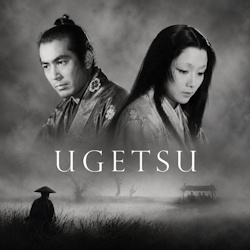
Producer Masaichi Nagata of Daiei Film Studio decided to offer renowned director Kenji Mizoguchi a new project following the critical and commercial success of his previous film, The Life of Oharu (1952). He sweetened the deal by granting Mizoguchi complete artistic control and a large budget. Mizoguchi accepted the offer, with Masaichi Nagata overseeing production. Screenwriters Matsutarō Kawaguchi and Yoshikata Yoda were instructed to draw inspiration from two stories in Ueda Akinari’s Ugetsu Monogatari (Tales of Moon and Rain, 1776): Asaji ga Yado (The House in the Thicket) and Jasei no In (The Lust of the White Serpent), resulting in this film: Ugetsu. For the cast, Machiko Kyō starred as Lady Wakasa, joined by Mitsuko Mito as Ohama, Kinuyo Tanaka as Miyagi, Masayuki Mori as Genjūrō, and Sakae Ozawa as Tōbei.
The film is a morality play that offers a cautionary tale about the destruction wrought by greed, ambition, and selfish desire. It is set during Japan’s tumultuous Sengoku period, when the country was almost continuously ravaged by civil war and social upheaval throughout the 15th and 16th centuries. The story follows two ambitious and greedy peasants, Genjūrō and Tōbei, who abandon their wives in pursuit of wealth and status, only to face consequences that precipitate their personal ruin. The film was a major commercial success both in Japan and the West, where it helped establish Japanese cinema on the global stage. It was also a critical triumph, widely hailed as a masterpiece of world cinema, earning the Silver Lion (Second Prize) at the 1953 Venice Film Festival. It also received an Academy Award nomination for Best Costume Design.
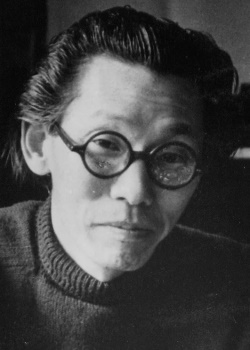
By 1953, Fumio Hayasaka had established himself as one of Japan’s most respected film composers and had earned Mizoguchi’s trust, who regarded him as an indispensable artistic partner following their collaboration on Saikaku Ichidai Onna (The Life of Oharu, 1952). Mizoguchi provided Hayasaka with several specific directives regarding the score. First, he insisted that the Western orchestra be augmented with traditional Japanese instruments. Second, he wanted the film’s dual narratives—realism and otherworldly fantasy—to be draped in a ghostly, haunting, and melancholy musical language. Third, he sought a score that complemented the film’s highly stylized theatricality and Noh-influenced aesthetic. Finally, fellow composers Ichirō Saitō and Tamekichi Mochizuki were engaged to provide period-authentic musical material, which Hayasaka seamlessly integrated into his orchestral score. Their contributions infused the music with traditional Japanese musical idioms, often referred to as hōgaku, appropriate to the film’s 16th-century setting.
 As directed, Hayasaka augmented his Western orchestra with a rich palette of traditional Japanese instruments. These included the shō, a mouth organ constructed from 17 bamboo pipes that produces dense, eerie cluster chords, lending the score an unmistakably supernatural atmosphere. The hichiriki, a short double-reed bamboo instrument similar to an oboe, provides piercing, nasal, and highly expressive melodic lines. The komabue and ryūteki, both high-pitched transverse bamboo flutes traditionally associated with court and ritual music, weave haunting melodic textures. The shakuhachi, an end-blown bamboo flute famously associated with Zen Buddhist monks, grounds the score in moments of spirituality and tension. The shamisen and biwa, plucked string instruments, contribute a mournful timbre, while large taiko drums establish ominous rhythmic foundations during scenes of mounting dread. The tsuzumi, an hourglass-shaped hand drum used in Noh and Kabuki theatre, produces sliding pitches by tightening or loosening its cords, underscoring the film’s psychological unease. Additional percussion, including the kotsuzumi (shoulder drum), ōtsuzumi (hip drum), gongs, and wooden blocks, reinforces the precise, ritualistic rhythms associated with traditional Japanese stage performance.
To fulfill Mizoguchi’s second directive, Hayasaka embraced the aesthetic principles of Noh theatre, employing slow tempi, elastic phrasing, and the deliberate use of ma (silence) to heighten dramatic tension. Noh performance rests on two principal elements: vocal chant (utai) and instrumental accompaniment (hayashi). Unlike Western operatic singing, utai is not governed by fixed pitches, harmonic progressions, or conventional scales. Instead, it employs fluid, elastic vocal inflections led by the shite (principal performer) and shaped collectively by the chorus. Two principal vocal styles are employed: yowagin, a gentle, lyrical, and melodic form used for poetic expression, and tsuyogin, a more forceful, rhythmic, and declamatory style reserved for scenes of conflict, martial action, or supernatural beings. Noh musical architecture is likewise founded upon two structural concepts. Ma (space and time) utilizes prolonged moments of silence, allowing dramatic tension to accumulate naturally. Jo-ha-kyū governs musical pacing, dictating that virtually every aspect of a performance—from individual musical phrases to the structure of the drama itself—follows a gradual acceleration through Jo (introduction), Ha (development), and Kyū (rapid conclusion).
To satisfy Mizoguchi’s third directive, Hayasaka draped the score in an atmosphere of solemnity, melancholy, and haunting otherworldliness. Rather than composing conventional character leitmotifs, he instead embraced what might be described as aural topography, using music to evoke atmosphere, dreamlike states, supernatural mystery, and psychological unease. Finally, after studying the completed film, I believe Hayasaka recognized that Genjūrō’s and Tōbei’s selfish ambitions are the driving force behind their downfall. Consequently, the score needed to communicate not only their aspirations and fateful choices, but also the tragic consequences that inevitably follow.
There is no commercial release of the score. As such I will use film time indices and scene descriptors to provide film narrative context to the music. The Criterion and Janus Pictures logos, and the film’s restoration by Kadokawa Corporation are unscored. 0:43 “Logo” The Daiei Production logo offers a surreal etherealness forcefully punctured by a shrill nohkan flute. 0:56 “Main Titles” offers a score highlight, where Hayasaka conceives a masterful example of Noh Theater musical sensibility. We open with the film title, and flow of the opening credits, which are set against ornate, stylized Japanese byōbu “wind wall” screens. Hayasaka supports with classic Noh Theater sensibilities, which utilizes slow tempos, elastic phrasing, a deliberate use of silence to heighten dramatic tension, and vocal chants (Utai). His Noh musical architecture embraces Ma (Space/Time), which utilizes significant, and deliberate pauses, that are extended, thus allowing tension to build in the silence. Juxtaposed is Jo-ha-kyū, which supports the musical pacing and dictates that virtually every aspect of a performance, from individual songs, to the overall structure of the play. We close with narrative script; “Akinari Ueda’s Tales Moonlight and Rain continues to enchant modern readers with its mysterious fantasies. This film is a new refashioning of those fantasies.”
2:58 “Genjuro and Tobei Depart” reveals a panorama of a farming countryside. The Noh musical narrative continues, as narrative script relates “Early spring, 16th century, a period of civil war. Lake Biwa in Omi Province.” Music stops when we see Genjuro and his wife Miyagi and son Genichi. He is packing their cart with pottery to sell in town when they hear distant gunfire. She worries, but says he will be fine. Neighbor, and brother-in-law Tobei comes out to join with his wife Ohama yelling “Some samurai you’ll make! Crazy fool!” His reply; “How high can a man rise without big dreams?” The two men depart with Tobei pulling and Genjuro pushing. Later an old sage counsels Miyagi, to warn Genjuro not to seek profit in times of upheaval, and instead prepare for an attack on the village. Later Genjuro returns home ecstatic, placing three silver coins he received for his pottery in her hands. She asks where is Tobei, and he says he went off to join the samurai. In their camp, Tobei grovels and begs to join, but is ridiculed and kicked out as he has no spear or armor. 8:12 “Genjuro’s Gift” reveals Genjuro gifting a fine kimono to Miyagi, declaring that his dream of providing for her has finally come true. Hayasaka offers an intimate musical narrative borne by woodwinds teneri and strings as Miyagi responds that she appreciates the garment not for its beauty, but because it reflects his kindness, and love. He then presents her with dried fish, oil, flour, arrowroot and rice cakes. He adds that money is everything, and without it, life is hard, and hope dies. Miyagi however counsels that we should be cautious as the sage warned that war is coming. Yet Genjuro is dismissive, saying war is good for business. Ohama joins, fretting about Tobei, but Genjuro says to not worry as without armor or a spear, no one will take him. Later, when that dirty and disheveled Tobei returns and is reproached by Ohama.
10:58 “Making Pottery” reveals Miyagi spinning a potter’s wheel as Genjuro shapes it with his hands. Hayasaka supports with a circular drum cadence that syncs with the spinning wheel. Genichi hugs Miyagi saying he is hungry, which elicits Genjuro’s ire as he calls him a pest. She reproaches him and says she just wants them to work in peace as husband and wife, and the three of us to live happily together. A montage supports Genjuro placing the pots out to dry in the sun, while Miyagi cures them, and then Tobei and Genjuro store them. Tohei says he intends to sell this batch at Nagahama and make a fortune. Later as the men sleep, the two wives stock the kiln (furnace) and fret that the men will not settle for a peaceful and contented life. Slowly, a haunting Noh nohkan flute joins, shifting the musical narrative to a more somber tone, which portends that Genjuro’s silver lust, and ambition, which has blinded him to the encroaching dangers of the civil war. Miyagi is startled and looks off to the horizon. She runs back and wakes the men who also look, with Genjuro declaring that the rumor was true, and that Shibata’s troops approach. Genjuro climbs to the roof and says the village is being pillaged, the villagers scattering like spiders, and the men are being rounded up. Yet rather than flee to safety with his family, Genjuro says we must keep the Kiln fires burning. Miyagi in a panic grabs the sleeping Genichi and tries to get Genjuro to flee but he refuses as he will lose all his profits. The other neighbors flee only to be cornered by samurai. Genjuro, Tobei and their families finally flee into the woods as the samurai pillage every house and put the men into bondage. Scattered gunshots are heard as the villagers move deep into the forest. They make camp, with the women making food for the men. Ohama becomes concerned when she cannot locate Nobei.
18:39 “Tobei Steals Armor” reveals his stealth approach to an encampment of four samurai. He steals a set of armor hanging from lines and manages to escape undetected, his departure masked by a samurai waking and stretching with a loud yawn. Hayasaka supports with tsuzumi (traditional Japanese hand drums) and taiko drums. The rhythmic pattern is irregular, sparse, and embodies the structural tension found in traditional Japanese Noh theater sensibilities. Back at camp Genjuro is antsy, fretting that his kiln may have burnt out. Miyagi and the sage counsel for him to wait, but to no avail as he runs away. Miyagi leaves Genichi with Ohama and desperately follows him. He reaches home and curses that the fire had gone out. Miyagi joins him, but they flee at the approach of samurai. They pillage what remains and then depart. Genjuro returns and discovers several pots are preserved and finished. He frantically removes them as Ohama, Genichi and Tobei join. Genjuro then announces that will take the lake route to the market in Nagahama. 23:03 “Lake Biwa” reveals their arrival at the shore of Lake Biwa. They load an abandoned boat and after gunfire is heard in the distance, the two couples and Ginichi quickly depart. Hayasaka supports again with tsuzumi (traditional Japanese hand drums) and taiko drums. The rhythmic pattern is irregular, sparse, and embodies the structural tension found in traditional Japanese Noh theater sensibilities. At 23:28 haunting Utai (Noh vocal chants) by a solo woman’s vocal joins the musical narrative as we see them paddling through dense fog. She sings a poignant jisei (Japanese death poem), often attributed to the dying samurai general Akechi Mitsuhide, betrayed by Damiyo Oda Nobunaga in 1582. The poem uses the imagery of a drifting boat to symbolize the fleeting nature of life and power. It embraces the Buddhist precept “mono no aware” – the beautiful, yet fleeting nature of existence.
“In the waters of Azuchi,
A little boat floats along,
All are asleep,
Slumped over the rudder…
The Utai presages that death soon beckons. As Ohama works the rudder oar, Genjuro boasts how he will build a warehouse in the village and expand his operations, which will make him a rich man. The haunting Utai vocal continues;
“This world is a temporary abode,
Where we weep until the dawn comes,
Pitched by the waves…”
Ohama stops propulsion when she sees a boat emerging from the thick fog. Random and sparse Taiko drums strikes sow anxiety as Ohama says it is a ghost on the lake. The man answers that he is no ghost, but a boatman from Kaizu who was overtaken by pirates. He begs for water and then warns them to beware of pirates, for if they see you, they will take your cargo, and then kill you. With his dying breath he says take care of your women. They push the boat away and ask Buddha to have mercy on his soul. Miyagi says that this is a bad omen and that they must turn back. Tobei tells Genjuro to take the women and Genichi back and then push on together. Miyagi agrees, however Ohama refuses, saying she take the risk as she must keep an eye on Tobei for his own good. They deposit Miyagi and Genichi on shore and Genjro tells her to take the mountain path home, not the main road. The boat departs carried by Random and sparse Taiko drums strikes as Miyagi and Genichi wave goodbye. 29:51 “Genjuro and Tobei are Rich” reveals the bustling market, where Genjuro makes a lot of silver selling his pottery. Hayasaka again embraces Noh, however this time empowering the random musical narrative with a choral of woodwinds with twinkling metallic adornment, including; Nōhhan, Hichiriki, Komabue, Ryūteki, and Shakuhachi. A noble lady, Lady Wasaka arrives and purchases several items. When Genjuro finally looks up at her, he is lovestruck by her beauty. Her nurse asks that Genjuro deliver them to Kutsuki Manor. She says he will be paid upon delivery. 32:07 “Tobei’s Obsession” reveals the palace guards running through town and Tobei tells Ohama with this money I could buy armor and at last be a samurai. Ohama begs him not to throw their money away, but he yanks the purse away from her, says leave me alone, and departs calling her an idiot. Hayasaka animates the scene with frenetic tsuzumi (traditional Japanese hand drums) rhythms, with additional drum percussion. Genjuro stays to sell his pottery despite Ohama’s begging, and so she runs off alone after him. Tobei loses Ohama, finds an armorer, and buys samurai armor and a spear as a frantic Ohama searches for him in the village.
33:54 “Ohama is Raped” reveals Ohama has wandered beyond Nagahama searching for Tōbei and ends up in the wrong place, at the wrong time as she encounters soldiers. She fights and flees, but they overpower her. They take her into a house and lay her at the foot of a statue of Buddha. Hayasaka supports bleakly with random tsuzumi hits joined by a haunting, mixed Utai vocals joins as the camera shifts to the beach where we see her two sandals. Returning inside we see a gagged Ohama laying on the floor. A samurai says here are some coins for you, tosses them on the floor, and then departs with his men. She exits the house, and the Utai and drums slowly dissipate as the men move farther and farther away. A new solitary drum rhythm returns as she yells fool, and then; “Look what has become of me!” (In Japanese feudal times, a raped woman was considered damaged property and a source of familial shame, from which there was no recovery). She rages against Tobei for his selfishness and stupidity. 36:45 “A Cold World” reveals Genjuro packing up his wares as Ohama hides weeping in the brush. A shrill Nōhkan sounds, and its sharp, cold timbre offers no comfort to her devastation. A man playing a shakuhachi, now enters and his flute playing reveals Hayasaka’s genius as a composer as he conceives different effects for Genjuro and Ohama. As the flutist calmly walks past Genjuro, the shakuhachi expresses an etherealness, which serves to open a portal that provides passage, from objective reality into the supernatural realm. The serves as a catalyst for his seduction by the ghostly noblewoman Lady Wakasa, emblematic his entry into a false paradise while his family undergoes horrific suffering elsewhere. The flutist then, walks right past Ohama without stopping, with its etherealness now serving as an emblem of a cold, detached apathy for her suffering and shame.
38:57 “Genjuro Seduction” offers a score highlight and testament to Hayasaka’s mastery of his craft. It reveals he being interrupted by the nurse and her mistress. The nurse says we thought you might need a guide to find the way so you may deliver your pottery. He thanks her, and once again is lovestruck by the beauty of Lady Wakasa. Hayasaka supports with a hypnotic, highly stylized, quietly rhythmic beat, which speaks to Genjuro’s spellbound state of mind. The relentless, slow-beat repetition creates a trance, aurally capturing how Genjuro is being drawn away from reality to the realm of the supernatural by her alluring and dangerous beauty. As they approach her dilapidated yet grand mansion, a gong strike at 39:31 usher in Noh sensibilities, a sparse, chilling punctuation by a nōhkan and ritualistic percussion, adorned with ambient chimes and eerie bells tones. The musical narrative is enticing, elegant, and dreamlike, which perfectly aligns with Genjuro’s perspective. He believes he is ascending into a world of high art and noble romance, completely oblivious to a subtle warning woven into the music that Lady Wakasa is not of the living world and instead dwells in a phantom paradise.
41:12 “Genjuro is Invited In” reveals that Genjuro has deposited the purchased pottery on the porch. The nurse says Lady Wakasa, daughter of the late Lord Kutsuki awaits you inside, and after hesitating, agrees to follow her. Hayasaka creates an intricate soundscape for this realm of the supernatural. Intermittent, echoing, and rhythmic Tsuzumi and Taiko drums sow an ominous undercurrent. Faint, Koto pizzicato strings add subtle eerie accents add to the atmosphere and mysterious nature of the house. Harp arpeggios subtly blend Western orchestral elements into the traditional Japanese arrangement. Indeed, these cascading harp strings serve as a universal signifier that Genjuro has entered a dreamscape. The nurse escorts him through the manor, and the asks him to wait. Genjuro assumes a seiza position (formal kneeling-sitting posture) on the floor. He sees other servants lighting candles in the manor. 42:50 “The Proposal” reveals Genjuro waiting with anticipation, Noh woodwinds flutter joined by a faint, wailing biwa, which plays a delicate and cyclical melody. The sound is fragile yet strangely enchanting, mimicking the spell of seduction he has fallen under. She at last arrives empowered by nohkan in a resplendent kimono. She takes him by the hand and they move to the adjoining room where she surprises him with knowledge of his name. She praises the workmanship of his pottery while he keeps his head bowed. At 45:02 the nurse returns with two servants supported by otherworldly tonal effects. He is pleased to see the tea and sake service using the ceramics she purchased from him. Hayasaka uses chimes, interludes of ma (silence) and an echoing resonance to support Genjuro’s descent into a supernatural illusion. She says that his talent must not be hidden away in a poor, remote village, and that he must deepen and enrich his gift. When he asks how he might do this, the nurse stuns him by saying; “By swearing your love for Lady Wakasa” and marrying her at once”. At 47:28 Noh Nōhkan, plucked koto, chimes and harp adornment support Lady Wakasa throwing herself into his arms. Harp glissandi and Nōhkan support her smile, and then departure as two servants join and take him into an adjoining room.
48:31 “Lady Wakasa’s Song” reveals a classic Noh Theater performance; she is adorned in makeup resembling a Noh mask and moves with deliberate, unearthly lightness as she dances with a fan and sings inside her clan’s ruined castle. She sings in Noh style; her voice is highly formalized, deliberately flat and unexpressive, and eerie, purposely signaling to the audience that she belongs in the realm of the spirit world, not among the living. The song lyrics express an eerie, seductive plea begging Genjuro for his absolute, unending devotion. Lastly, the song is a metaphor about the transience of silk, and the tragedy of infidelity;
“The finest of silks,
of choicest hue;
May change and fade away;
As would my life, Beloved One;
If thou shouldst prove untrue,
Our vow to love,
For a thousand years,
Is sealed with this cup.”
Hayasaka uses traditional Noh music sensibilities employing the Nōhkan, Kotsuzumi and Otsuzmi drums, plucked Biwa and ghostly choruses, which when joined with and stark, high-contrast lighting, achieve a perfect otherworldly confluence. A deep, disembodied voice of Lady Wakasa’s father emerges from a mounted samurai mask. The nurse informs Genjuro that Lady Wakasa’s dead father informs us that he approves of her lover. She informs him that the accursed Nobunaga Oda wiped out our noble House Kutsuki. Only Lady Wakasa and I, her nurse survived, but the spirit of the late Daimyo lingers in the palace. She says he is delighted by the news of his daughter’s impending marriage. Genjuro is overcome and the scene shifts to her tucking him into bed. In the adjoining room Lady Wakasa attends to her beauty supported by plucked Biwa and harp glissandi adornment, which create an ethereal ambiance.
53:15 “You are Mine Now” offers a score highlight where Hayasaka expressing Genjuro’s dissolution as he sinks deeper and deeper into the world of the dead. The next day Lady Wakasa returns to Genjuro’s bedside. He wakes, asks why is he here, and she giggles. The nurse arrives with tea and suggests that Lady Wakasa bathe her husband at the spring. A slow camera pans across a garden end with Genjuro sitting in a hot spring. Lady Wakasa tells him that you seem to distrust me, as though I was an enchantress. She then attends to his bathing. She tells him you are mine now, and that you must devote your whole life to me. She then disrobes, joins him, and he takes her into his embrace. Hayasaka masterfully supports with a delicate and nuanced soundscape expressed by a small ensemble consisting of a Shakuhachi, Koto, Biwa, Sho, and European strings and harps. The ensemble joins to express the emotional and mystical pull felt by Genjuro, a dreamlike, floating quality as Lady Wakasa ensnares him, and lastly, the ghost-story elements with an eerie, rhythmic tension, which is used to underscore Genjuro succumbing to a seductive, surreal paradise. A slow camera pans out of the garden, and across a field where we see Genjuro and Lady Wakas having a picnic. She plays a biwa and sings;
She runs away and he chases her saying; “I’ll never let you go. I never imagined such pleasures existed. This is paradise.” She lays atop him, they hug, and the scene fades to black. Hayasaka creates a soundscape expressed by a small ensemble consisting of a Sho, Ryuteki Tsuzumi, Nōhkan, Biwa, and muted strings. Although a romance unfolds on the screen, the musical narrative is not romantic, instead Hayasaka expresses an other-worldly, illusionary, and dream-like soundscape, which will soon trap him forever. We return to the real world where Miyagi and Genichi hide in the shadows of their house as we hear women screaming. Samurai enter the house and search for anything of value. A neighbor gifts Miyagi rice cakes and sends her on her way. On a mountain trail three starving samurai jump her, steal her food, and then as they depart, one stabs Miyagi with a spear. In a horrific scene Miyagi struggles to move on with Genichi on her back wailing. We shift to a battle where we see Tobei sneaking through tall grass as gunfire is heard in the distance. He watches as a samurai General Fuwa performs doryo to his mortally wounded comrade. Tobei sneaks up from behind and kills the general. Later he presents to his commander, Lord Niwa, the head of the opposing general Fuwa. The general is impressed and rewards him with a promotion and brigade of samurai to command. 1:04:32 “Tobei The Hero” reveals a pompous Tobei then riding through town followed by his men. Townsfolk shop owners ingratiate themselves offering food, wine and girls. At his men’s bidding, he agrees to stop, rest and celebrate. Hayasaka supports his “grand entry” without celebratory grandeur, but instead with Noh sensibilities. Inside patrons continue to ingratiate themselves, hoping to curry favor.
In the brothel, a samurai steals Ohama’s money purse and runs out with her in pursuit. She recovers her money, only to come face to face with Tobei. She says, so you are a great man now. While you made your way to the top to realize your dreams, I made a name for myself too in my fancy kimonos and makeup, bedding a different man every night. Some success for a woman, huh? She retreats outside, he follows, and she says he must be pleased as this is what you always wanted. Adding, success always comes with a price in suffering. Your wife may be fallen, but your success wipes the slate clean. She grabs him and says be my man tonight and we will celebrate your exploits. She falls to the ground, begins crying, and he kneels beside her saying; “Without you my success means nothing.” 1:09:16 “Ohama’s Shame” reveals her reproaching him, saying her fate meant nothing to him as long as he became a samurai. She runs away and tries to kill herself jumping into a well. He says she is wrong, and that he thought she would be proud of him if he made good. He weeps, saying I never thought you’d be brought to this. She says she is a defiled woman, and you are to blame. She asks, if he can restore her honor, and he says he can. She says how many times she wanted to die, but waited patiently until the day she could face him. They fall to the ground and the scene fades to black. This is a scene of great pathos, devastation and shame. Hayasaka employs Noh Theater sensibilities to evoke these powerful emotions by using stark Kotsuzumi and Otsuzmi drums rhythms, a mournful plucked shamisen (three string lute), dissonance, and wailing Uta (vocal chants).
In town Genjuro tries to buy some gifts for Wiyagi. When he says please deliver them to Kutsuki palace. The man recoils in horror, tells him to take what he wants, and orders him to leave. On the way home Genjuro encounters a priest who tells him to follow, as he perceives a bad omen. 1:11:49 “Shadow of Death” reveals the priest at his home, informing Genjuro that he sees the shadow of death on his face. As he probes, Genjuro informs him that he spends his days with Lady Wakasa at Kutsuki Manor. The priest tells him that this love is forbidden since Lady Wakasa is a ghost. He adds that if you do not return to your family at once you will be dragged through the gates of the dead and die. Genjuro tries to run off, but acquiesces to the priest’s request to paint holy Buddhist sutras and symbols on Genjuro’s skin to ward off evil spirits. Hayasaka uses Noh theater sensibilities to evoke the precarious state in which Genjuro finds himself, and his entry into the spiritual realm. The reverential musical narrative includes slow, low register and deeply stylized Utai by male chanting, shakuhachi flute, wood block and stark Kotsuzumi and Otsuzmi drums rhythms.
1:13:42 “The Confrontation” reveals Genjuro return to the manor with presents he has bought. Lady Wakasa is ecstatic and tries on her new kimonos and jewelry. Yet he is clearly troubled. The nurse tells him that he must never leave the manor again, as since the fall of our clan, people treat us with contempt and slander our name. He finally breaks down, kneels, bows and asks forgiveness, saying he has a wife and child. He says he left them back home during the chaos of war. She says to forget about them and stay by her side. He says he cannot, and she says forcefully, you may not return. Hayasaka punctuates this at 1:16:12 echoing harp arpeggio, which are emblematic of Genjuro’s awakening to the ghostly illusion. She says to come with her to her land, grabs his arm, but recoils from the Buddhist talisman tattoos. The nurse tears off his tunic to reveal the talisman and reproaches him for his sins. She says she must remain with her for eternity. Then the nurse reveals that the Lady are not real, and that the Lady seeks love that she was denied. At 1:19:20 a shrill Nōhkan empowers Genjuro, who takes up a sword. In a manic sequence he flails like a madman and drives the ghosts out of the castle. Yet in doing so, he accidentally falls and knocks himself out, punctuated by a gong strike. On returning to consciousness, he is arrested by town authorities as a thief for stealing the town’s sacred sword. When he says he obtained it from Kutsuki Manor, they laugh and point to its charred ruin behind him. With the jail burnt down, they free him, but take his money and depart. Hayasaka provides a musical narrative that reflects Genjuro’s confirmation that he is as the priest foretold, trapped in a nightmare. To express this, Hayasaka creates a complex musical narrative. He joins Orientalism, utilizing traditional Japanese instruments like the biwa, ritualistic taiko drums to create a haunting and eerie ambiance. Occidentalism, using echoing harp arpeggios, which are emblematic of Genjuro’s awakening to the ghostly illusion, and lastly, Noh Theater, which utilizes periods of stark, unnatural silence, abruptly broken by distant, echoing Buddhist chants, low, ominous dissonance, and shrill Nōhkan, which highlights the spiritual consequences of Genjuro’s vanity.
1:21:42 “All is Lost” a shrill Sho supports Genjuro getting up, and realizing that he has returned to the living and lost everything. He walks to the burnt out ruins and recalls the ‘finest silk’ poem. Hayasaka understood that the scene where Genjuro returns to the realm of the living necessitates that the supernatural score elements vanish. The new musical mnarative would be animated by stark Noh sensibilities, which eschew traditional melody. As such, he supports with piercing, lonely sounds of the wind and faint, and distant ringing, a sensibility evocative of Geza music, which is often used in Kabuki theater to denote a shift in reality. Genjuro returns home to find it pillaged and vacant, as is Tobei’s house. He keeps crying out Miyagi as he wanders desperately trying to find her. 1:24:05 “Miyagi!” reveals him returning home again and now finding her cooking in the kitchen. He runs in joyously as she runs into his welcoming arms. He apologizes for making her worry. He asks about Genichi, and she says he is sleeping. He insists on holding him, and she takes him to him. Genjuro takes him into his arms saying daddy is back. He weeps and apologizes to Miyagi saying he realizes now how right you were. She pours him some saki, and says meat stew is in the pot. As she scoops the stew and looks at Genjuro, sadness descends upon her face and she begins to weep. He says he feels relieved and that saki has never tasted so good. He puts Ginichi to bed, and then falls asleep from exhaustion. Hayasaka supports with an ethereal, gentle, and dream-like musical narrative borne by koto, biwa and fluttering strings, which informs us that this is a ghostly, otherworldly encounter, and that she is an apparition. Miyagi is now alone and contemplative. She picks up his clothes, lights a candle and begins sowing his torn clothes. At 1:28:00 a lonely sound of a nohkan flute joins in a passage of ethereal, otherworldly beauty. Hayaska informs us of Miyagi’s eternal solitude, capturing the heartache and tragedy of a truly devoted and loving woman who is entirely forgiving, despite being murdered due to her husband’s selfish and reckless ambition.
1:30:10 “Dawn” reveals Hayasaka’s genius as a composer. We behold sunrise with its rays pouring into the house through all the broken wood panels. For this penultimate scene, Hayasaka composed a Noh soundscape led by a solo Nōhkan flute, which functions as a bridge between Genjuro’s perception, and the tragic reality brought by the dawn. As the warm, comforting domestic illusion of the night begins to surrender to the reality of morning light, the music turns increasingly ethereal, informing us that Miyagi’s physical presence is a transient ghostly apparition. Hayasaka’s scoring of this scene is entirely devoid of threat or terror, instead, it carries an overwhelming sense of gentleness, eternal serenity, and grief, capturing Miyagi’s undying devotion, and the heartbreaking reality that she is no longer bound to the living world. The ethereal soundscape is sustained as the camera shifts to the outside to reveal the desolation and ruin of the village. The music dissipates with the approach of the village sage and another man who wake Genjuro. In an unscored scene, Genjuro thanks them for their kindness caring for his family during his absence. The sage and Genjuro kneel by the sleeping Genichi and the sage says he must have heard you were back. Genjuro calls out for Miyagi and the sage asks if he is dreaming? He informs him that Miyagi was killed by the invading samurai. He adds that she would have been so happy to see you. He says the boy has been living with him and his return here last night reveals his bond with you is strong. We see on Genjuro face the slow realization of a horrific truth – that the cozy night spent with his wife was an encounter with an apparition.
1:32:55 “Tobei Repents” reveals him angrily saying; “To Hell with these things!” as he throws all his samurai armor and spear into the river. Ohama says she told him so, but that he was too stupid to learn except through misfortune. He says the war drove us mad with ambition. She asks that her suffering not be in vain, that he pull himself together, and work hard. Hayasaka scores the scene sparsely with Noh sensibilities using a solo Nōhkan flute and stark Kotsuzumi and Otsuzmi drums rhythms. 1:33:55 “Miyagi’s Grants Absolution” reveals Genjuro who is bereft with unbearable grief, kneeling at Miyagi’s grave. He asks why she had to die. From the afterlife we hear her poetic voice;
“I did not die.
I am at your side.
Your delusion has come to an end.
You are again your true self, in the place where you belong.
Your work is waiting…”
Hayasaka masterfully creates a traditional Japanese aesthetic that grounds Genjuro’s personal tragedy within the cyclical nature of life and death. His music is profoundly tragic, yet also tranquil, with the melody borne by Koto, which expresses a slow, melancholic, and deeply intimate. The music perfectly flows beneath the disembodied voice-over of Miyagi’s spirit, supporting her gentle words of forgiveness and encouragement. 1:34:37 “New Life” was co-composed by Fumio Hayasaka, Ichirō Saitō, and Tamekichi Mochizuki, blending Western orchestration with traditional Japanese music to create a spiritual bridge connecting the real world of Jenjuro and Ginichi, to the afterlife where Miyagi dwells. It reveals Genjuro once again hard at work at his pottery wheel supported by austere Noh Theater textures borne by Nōhkan flute, and stark Kotsuzumi and Otsuzmi drums rhythms. From the afterlife we hear Miyagi’s poetic voice, spoken in a gentle, rhythmic and chanting sensibility;
“What a beautiful shape!
Helping you spin the wheel is my greatest pleasure.
How I long to see it when it’s baked!
The firewood is cut and ready,
and the rampaging soldiers are gone.
So, make your wonderful pottery in peace.”
We switch to the outside with Genjuro placing fuel in the kiln. Miyagi’s poetic voice resumes;
“So many things have happened.
You’ve finally become the man I hoped for.
But alas, I am no longer among the living.
I suppose such is the way of the world.”
Genjuro, walks over and with paternal love, caresses the head of Ginichi. We shift to Genjuro cultivating the land as Ohama cooks them rice. The music swells as Genichi takes his bowl and runs to Miyagi’s grave and lays it down as an offering. The individual, sparse notes of the Nōhkan flute and percussion dissolve and join in a somber resolution of filial devotion. As the camera pans out from Genichi, we see the verdant countryside, with the music becoming transcendent as we shift from a child’s individual sorrow, to a poetic sense of acceptance, and communal rebirth as the film closes with the final image of farmers tilling the soil.
Fumio Hayasaka’s score for Kenji Mizoguchi’s masterpiece “Ugetsu” (1953) offers a solemn, atmospheric, and otherworldly work that achieves a perfect synergy with the film’s dual narrative realms of realism and supernaturalism. How Hayasaka utilizes minimalist Noh theater sensibilities to enhance the film’s haunting, poignant, and poetic theatricality offers a testament to his genius. Masterful also is his use of musical tempo to establish a deliberate pacing, which compliments the mythos and poetry of the film’s narrative storytelling. The cinematic confluence achieved reinforcing of Kazuo Miyagawa’s use of traditional emakimono (narrative picture scrolls) to create a fluid, dreamlike, and deeply poetic cinematography is breath-taking. I believe Hayasaka’s score for “Ugetsu” to be one of the greatest ambient and formalist triumphs in the history of cinema. Rather than delivering a conventional, westernized orchestral score, Hayasaka collaborated with traditional musicians Mochizuki Tamekichi and Saito Ichiro, to blend historical Japanese musical forms with sparse cinematic orchestration to elevate the film’s haunting themes. With great effect, he infused his soundscape with preternatural auras, which sowed deep atmospheric unease. His slow, purposeful and sparse usage of notes, and steady, repetitive background percussion, acted as an invisible, and implacable force pulling Genjuro and Tobei like moths to the flame, toward their impending doom. The masterful use of biwa and fue brought home the tragic vulnerability for women and families during war. Hayasaka’s judicious restraint of notes perfectly aligned with, and mirrored the formal, poetic pace of director Mizoguchi’s long takes, and sweeping crane movements. Instead of telling the audience exactly what to feel, the score deepens the audience’s visual space, making the transition between earthly social realism, and ghostly fantasy, feel fluid, seamless, and continuous. Folks, I believe Hayakasa’s score for “Ugetsu” to be a masterpiece, brilliantly conceived, perfectly executed, a score which ultimately transcends its film. I highly recommend you stream the film to experience one of the greats films ever made.
For those of you unfamiliar with the score, I have embedded a YouTube link: https://www.youtube.com/watch?v=RdAgpY554Bk&list=RDRdAgpY554Bk&start_radio=1
Track Listing:
NOT AVAILABLE
Music composed and conducted by Fumio Hayasaka. Orchestrations by Fumio Hayasaka, Ichirō Saito, and Tamekichi Mochizuki. Recorded and mixed by XXXX. Score produced by Fumio Hayasaka.

Shop at the Movie Music UK Store

Member of the


