Archive
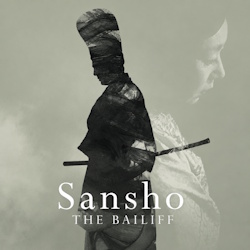
SANSHO THE BAILIFF – Fumio Hayasaka
 GREATEST SCORES OF THE TWENTIETH CENTURY
Original Review by Craig Lysy
Director Kenji Mizoguchi was inspired by Mori Ōgai’s 1915 novella Sanshō Dayū. Its tale about the tragic realities of human trafficking in feudal Japan resonated with him because of his own harrowing childhood experience of being given up for adoption. Also influential were his Marxist-feminist politics and his belief that post-WWII Japan needed to re-examine its brutal and oppressive past. Mizoguchi decided to use this historical tragedy to create a morality play exploring themes of resilience, human dignity, and the universal need for compassion. In the early 1950s, Mizoguchi’s career was ascendant, and although jidaigeki (period dramas) were not popular with the Japanese public, Daiei Film decided to back the project. Masaichi Nagata was assigned to produce, Mizoguchi would direct, and Fuji Yahiro and Yoshikata Yoda would write the screenplay. A fine cast was assembled, including Kinuyo Tanaka as Tamaki, Kyōko Kagawa as Anju, Eitarō Shindō as Sanshō, and Yoshiaki Hanayagi as Zushiō. Read more…
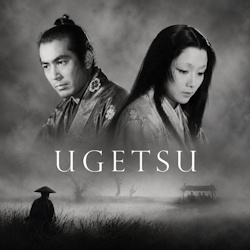
UGETSU – Fumio Hayasaka
 GREATEST SCORES OF THE TWENTIETH CENTURY
Original Review by Craig Lysy
Producer Masaichi Nagata of Daiei Film Studio decided to offer renowned director Kenji Mizoguchi a new project following the critical and commercial success of his previous film, The Life of Oharu (1952). He sweetened the deal by granting Mizoguchi complete artistic control and a large budget. Mizoguchi accepted the offer, with Masaichi Nagata overseeing production. Screenwriters Matsutarō Kawaguchi and Yoshikata Yoda were instructed to draw inspiration from two stories in Ueda Akinari’s Ugetsu Monogatari (Tales of Moon and Rain, 1776): Asaji ga Yado (The House in the Thicket) and Jasei no In (The Lust of the White Serpent), resulting in this film: Ugetsu. For the cast, Machiko Kyō starred as Lady Wakasa, joined by Mitsuko Mito as Ohama, Kinuyo Tanaka as Miyagi, Masayuki Mori as Genjūrō, and Sakae Ozawa as Tōbei. Read more…
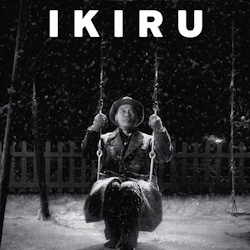
IKIRU – Fumio Hayasaka
 GREATEST SCORES OF THE TWENTIETH CENTURY
Original Review by Craig Lysy
Screenwriter Hideo Oguni was approached by director Akira Kurosawa for his next project, which was to be inspired by Leo Tolstoy’s acclaimed novella “The Death of Ivan Ilyich,” about a man diagnosed with terminal disease who seeks solace for the short time he has left to live. This resulting film, Ikiru, inaugurated a renowned collaboration between screenwriter Oguni and Kurosawa, which would go on to encompass many of the finest films in Japanese cinema, including Seven Samurai (1954), Throne of Blood (1957), The Hidden Fortress (1958), Sanjuro (1962), High and Low (1963), Dodes’ka-den (1970), and Ran (1985). Toho Company agreed to finance the project and assigned production to Sōjirō Motoki. Kurosawa would direct, and the final screenplay was credited to Oguni, Kurosawa, and Shinobu Hashimoto. A fine cast was assembled, which included Takashi Shimura as Kanji Watanabe, Shinichi Himori as Kimura, and Haruo Tanaka as Sakai. Read more…
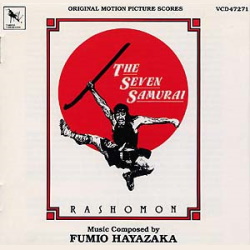
RASHOMON – Fumio Hayasaka
 GREATEST SCORES OF THE TWENTIETH CENTURY
Original Review by Craig Lysy
Renowned director Akira Kurosawa found inspiration for his next film from two short stories by Ryunosuke Akutagawa – In a Bamboo Grove (1922) and Rashomon (1915). He decided to blend the two narratives and collaborated with Shinobu Hashimoto to adapt a screenplay. Financial backing was secured from the Daiei Film company, Minoru Jingo was assigned production with a very small budget of $250,000, and Kurosawa took the reins to direct. For his cast, Kurosawa brought in Takashi Shimura as Kikori the woodcutter, Minoru Chiaki as Tabi Hõshi the priest, Masayuki Mori as Takehiro the samurai, Machiko Kyõ as the samurai’s wife Masako, and Toshiro Mifune as Tajomaru the bandit. Read more…
THE SEVEN SAMURAI – Fumio Hayasaka
 GREATEST SCORES OF THE TWENTIETH CENTURY
Original Review by Craig Lysy
Groundbreaking Japanese director Akira Kurosawa was researching samurai lore for a planned film that would focus on a single day in a samurai’s life. He abandoned this idea when Toho Studio producer Sōjirō Motoki presented him with a tale, which intrigued him – aggrieved farmers hiring samurais to protect their village from bandits. He crafted a script with the assistance of Shinobu Hashimoto and Hideo Oguni, and secured Motoki’s blessings to proceed. This would mark Kurosawa’s first foray into a samurai film and he recruited a fine cast to realize his vision. He meticulously researched historical samurai to create identities for each of the seven. For his seven samurai he brought in Takashi Shimura as Kanbei Shimada, a war-weary ronin who leads the group; Yoshio Inaba as Gorōbei Katayama, a master archer and second in command; Daisuke Katō as Shichirōji, Shimada’s former lieutenant; Sejii Miyaguchi as Kyūzō, a skilled swordsman; Minoru Chiaki as the amiable Heihachi Hayashida; Isao Kimura as Katsushiro Okamoto, a young and untested warrior; and lastly Toshiro Mifune as the comic Kikuchiyo, a commoner pretending to be a samurai who eventually earns the right to be called one. Read more…

Shop at the Movie Music UK Store

Member of the


