Archive
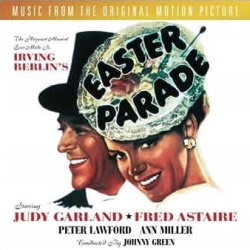
EASTER PARADE – Irving Berlin, Johnny Green, Roger Edens
 GREATEST SCORES OF THE TWENTIETH CENTURY
Original Review by Craig Lysy
Metro-Goldwyn-Mayer Studio was intent on making a new musical to showcase their stars Judy Garland and Gene Kelly. Irving Berlin’s song “Easter Parade,” which inspired the movie, was first sung in his 1933 Broadway revue “As Thousands Cheer” by Marilyn Miller and Clifton Webb. Arthur Freed was place in charge of production with a $2.655 million budget, Charles Walters was tasked with directing, the trio of Sidney Sheldon, Frances Goodrich and Albert Hackett were hired to write the screenplay. Judy Garland would star as Hannah Brown, but casting went off the rails when Gene Kelly broke his ankle. Luckily, he was able to coax Fred Astaire to come out of retirement and take the role of Don Hewes. Cyd Charisse had to be replaced as she tore ligaments in her knees, so Ann Miller took the role of Nadine Hale. Joining them would be Peter Lawford as Jonathan Harrow III. Read more…
AN AMERICAN IN PARIS – George Gershwin, Ira Gershwin, Saul Chaplin, Johnny Green
 GREATEST SCORES OF THE TWENTIETH CENTURY
Original Review by Craig Lysy
Producer Arthur Freed took in a Hollywood Bowl performance of George Gershwin’s music from the Jazz Age and was inspired by the show’s “An American in Paris” number. For the next three years he sought support in bringing his film version to fruition. He found a partner in Gene Kelly who sold MGM executives on the concept of a dance film by screening the film “The Red Shoes” (1948). Arthur Freed was assigned production with a $2.7 million budget, Alan Jay Lerner was hired to write the screenplay, Gene Kelly would manage the choreography, and Vincente tasked with directing, with assistance from Gene Kelly. Kelly had seen Leslie Caron performing a ballet in Paris and he personally recruited her for the role of Lise Bouvier. Joining her would be Gene Kelly as Jerry Mulligan, Oscar Levant as Adam Cook, George Guétary as Hank Baurel, Nina Foch as Milo Roberts and Eugene Borden as Georges Mattieu. Read more…
RAINTREE COUNTY – Johnny Green
 GREATEST SCORES OF THE TWENTIETH CENTURY
Original Review by Craig Lysy
As part of its new talent development program, MGM Studios awarded its distinguished Novel Award to author Ross Lockridge Jr. for his 1947 novel Raintree County. So impressed were they with the book, that they soon purchased the film rights for $150,000. Production was delayed by unforeseen issues, including the suicide of Lockridge and his very costly film rights demands, which delayed the project for eight years. Finally in 1955, David Lewis was tasked with producing the film with a budget of $5.5 million. Edward Dmytryk was selected to direct, and Millard Kaufman was hired to adapt Lockridge’s novel and write the screenplay. A stellar cast was hired with Montgomery Clift as John Witckliff Shawnessey, Elizabeth Taylor as Susanna Drake, Eva Marie Saint and Nell Gaither, Lee Marvin as Orville ‘Flash’ Perkins, Nigel Patrick as Professor Jerusalem Webster Stiles, Rod Taylor as Garwood B. Jones, and Agnes Moorehead as Ellen Shawnessey. Read more…
Remembering Johnny Green, 1908-1989
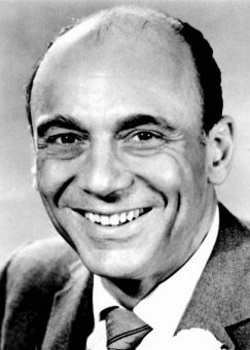 Composer, arranger, conductor and songwriter Johnny Green died ten years ago today, on May 15, 1989, at his home in Beverly Hills, at the age of 80. Green, who had suffered a stroke two years earlier, died from pulmonary edema.
One of the dominant musical figures of Hollywood’s golden age, he served for a decade as music director at MGM, received numerous Academy Award nominations and won five Oscars, four for his work on major film musicals and another as producer of a musical short.
John Waldo Green was born in New York City on October 10, 1908. A musical prodigy, he entered Harvard at 15 and graduated with a degree in economics, briefly working on Wall Street before abandoning finance for music. During the late 1920s and 1930s he became a successful songwriter, arranger, pianist and bandleader. His greatest song, “Body and Soul,” written in 1930, became one of the most enduring standards in jazz, while other successes included “Out of Nowhere” and “I Cover the Waterfront.”
Green’s involvement with films began at Paramount’s Astoria studios in New York, but his Hollywood career took off after he joined MGM during the 1940s. He worked as conductor, arranger and composer before becoming the studio’s music director in 1949, a position he held through the 1950s. In that capacity Green supervised and conducted the music for many of MGM’s most lavish productions, working closely with orchestrators such as Conrad Salinger and helping establish the exceptionally rich orchestral sound associated with the studio’s post-war musicals. Read more…

Shop at the Movie Music UK Store

Member of the


