Remembering Johnny Green, 1908-1989
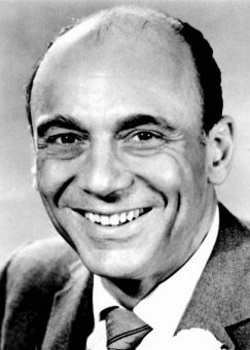 Composer, arranger, conductor and songwriter Johnny Green died ten years ago today, on May 15, 1989, at his home in Beverly Hills, at the age of 80. Green, who had suffered a stroke two years earlier, died from pulmonary edema.
One of the dominant musical figures of Hollywood’s golden age, he served for a decade as music director at MGM, received numerous Academy Award nominations and won five Oscars, four for his work on major film musicals and another as producer of a musical short.
John Waldo Green was born in New York City on October 10, 1908. A musical prodigy, he entered Harvard at 15 and graduated with a degree in economics, briefly working on Wall Street before abandoning finance for music. During the late 1920s and 1930s he became a successful songwriter, arranger, pianist and bandleader. His greatest song, “Body and Soul,” written in 1930, became one of the most enduring standards in jazz, while other successes included “Out of Nowhere” and “I Cover the Waterfront.”
Green’s involvement with films began at Paramount’s Astoria studios in New York, but his Hollywood career took off after he joined MGM during the 1940s. He worked as conductor, arranger and composer before becoming the studio’s music director in 1949, a position he held through the 1950s. In that capacity Green supervised and conducted the music for many of MGM’s most lavish productions, working closely with orchestrators such as Conrad Salinger and helping establish the exceptionally rich orchestral sound associated with the studio’s post-war musicals.
His first Academy Award for musical scoring came for Easter Parade (1948), shared with Roger Edens. Green subsequently oversaw the music for films including Summer Stock (1950), Royal Wedding (1951), The Great Caruso (1951), Brigadoon (1954), Meet Me in Las Vegas (1956) and High Society (1956). His work with George Gershwin’s music on Vincente Minnelli’s An American in Paris (1951), especially the extended climactic ballet, brought him another Oscar and remains one of the high points of the MGM musical tradition.
Green was less frequently heard as a composer of original dramatic scores, but Raintree County (1957) demonstrated that his talents extended well beyond musicals. Edward Dmytryk’s expansive Civil War romance, starring Montgomery Clift and Elizabeth Taylor, inspired an unusually ambitious symphonic score, rich in lyrical themes and Americana. The music became one of Green’s most substantial original compositions for the screen and earned him an Academy Award nomination for Best Original Score.
After leaving MGM, Green enjoyed another major success with Robert Wise and Jerome Robbins’s West Side Story (1961). Working with Leonard Bernstein’s music alongside Saul Chaplin, Sid Ramin and Irwin Kostal, Green supervised and conducted the film’s musical score, preserving the excitement and rhythmic complexity of Bernstein’s Broadway original while adapting it to the demands of cinema. The team won the Academy Award for Scoring of a Musical Picture, and the soundtrack became one of the most celebrated in film history.
Green later provided music for films including Twilight of Honor (1963), Johnny Tiger (1966) and Dmytryk’s Civil War western Alvarez Kelly (1966). Another career peak came with Carol Reed’s Oliver! (1968), for which Green adapted, arranged and conducted Lionel Bart’s stage score while also providing additional dramatic material. The film won Best Picture, and Green received his fourth Academy Award for musical scoring. He also handled the musical direction and arrangements for They Shoot Horses, Don’t They? (1969), earning another Oscar nomination.
Away from film, Green remained active as a symphonic conductor, working with major American orchestras, and served for many years as musical director and conductor of the Academy Awards ceremonies. He was inducted into the Songwriters Hall of Fame in 1972.

Shop at the Movie Music UK Store

Member of the


