Archive
Ron Goodwin, 1925-2003
 Composer Ron Goodwin died on January 8, 2003, at his home near Reading, England. He was 77. Earlier that evening he had completed conducting a series of Christmas concerts with the Bournemouth Symphony Orchestra, and died in his sleep that night.
Ronald Alfred Goodwin was born in Plymouth, Devon, in February 1925, and raised in London . He studied trumpet and piano, eventually attending the Guildhall School of Music. After beginning his career in the 1940s as a music copyist and arranger for music publishers, he found early success orchestrating for dance bands and providing musical direction for celebrated vocalists such as Petula Clark and Jimmy Young, including the orchestration of Young’s hit “Too Young”.
Goodwin made his feature film debut in 1958 with Whirlpool, but it was in the following decade that he rose to prominence as a film composer. He became best known for his dynamic music for war and adventure films, notably 633 Squadron (1964), Where Eagles Dare (1968), and Battle of Britain (1969). His score for 633 Squadron, with its soaring main theme and martial energy, became a classic of the genre and remains one of his most widely recognized works, especially in the UK. Read more…
Buddy Baker, 1918-2002
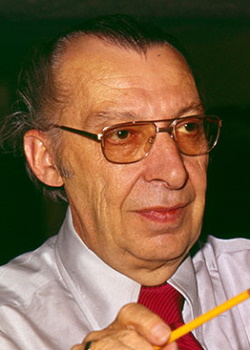 Composer, arranger and conductor Buddy Baker died at his home in Sherman Oaks, California, on July 26, 2002, at the age of 84.
One of the most prolific musicians in the history of Walt Disney Productions, Baker composed, arranged or conducted music for more than 200 films, television programs and theme-park attractions during an association with the studio that lasted almost three decades.
Norman Baker was born in Springfield, Missouri, on January 4, 1918. After studying music at Southwest Baptist College, he moved to California and began working as an arranger for radio and big bands. Among his early successes was his arrangement of “And Her Tears Flowed Like Wine” for Stan Kenton’s orchestra, and he later became musical director for Bob Hope’s radio program. Baker also taught arranging and composition at Los Angeles City College, where one of his students was future film composer Jerry Goldsmith.
Baker joined Walt Disney Productions during the mid-1950s, initially assisting composer George Bruns, and gradually became one of the studio’s principal musical figures. His early Disney work encompassed television, animated shorts and documentaries before he moved increasingly into feature films. His scores included Toby Tyler (1960), A Tiger Walks (1964), The Misadventures of Merlin Jones (1964), The Gnome-Mobile (1967), Rascal (1969), The Million Dollar Duck (1971), The Apple Dumpling Gang (1975), The Shaggy D.A. (1976) and The Apple Dumpling Gang Rides Again (1979). Read more…
Carlo Savina, 1919-2002
 Composer, arranger and conductor Carlo Savina died in Rome on June 21, 2002, at the age of 82.
One of the most prolific and versatile figures in Italian film music, Savina worked on more than 200 films as composer, conductor or musical director. Although his own scores encompassed everything from comedy and drama to spaghetti westerns and horror, he was equally important as a trusted conductor for composers including Nino Rota, Miklós Rózsa, Philippe Sarde and Stephen Sondheim.
Savina was born in Turin on August 29, 1919, into a musical family. His father was principal clarinetist with the EIAR radio orchestra and introduced him to music at an early age. Savina studied violin, piano, composition and conducting at the Giuseppe Verdi Conservatory in Turin, and in 1944 received his diploma in composition. His early concert works included sonatas, chamber pieces and the opera Il vecchio geloso, which won a prize from the Accademia Musicale Chigiana in 1948.
After the Second World War Savina became increasingly active in radio and popular music. He formed his own orchestra, wrote songs and arrangements, and became a prominent conductor for RAI, participating in some of Italian television’s earliest experimental broadcasts. His polished orchestral style and ability to move easily between classical and popular idioms soon led him toward cinema. Read more…
Remembering Georges Delerue, 1925-1992
 Composer Georges Delerue died ten years ago today, on March 20, 1992. He had a stroke, just hours after recording the last cue for the soundtrack to his last film, Rich in Love, and died two days later. He was 67.
Georges Henri Jean-Baptiste Delerue was born in Roubaix, France, in March 1925. A clarinet and piano player as a child, Delerue attended the Turgot Institute, the Roubaix conservatory, and the Conservatoire de Paris, where he studied composition with Darius Milhaud and Henri Büsser. His friends there included Maurice Jarre and Pierre Boulez, and together the three of them would make often make money on the side performing jazz in piano bars near the Paris Opera House.
He began writing stage music during the late 1940s, for the Théâtre National Populaire, the Comédie-Française, and the Théâtre Babylone, before being hired to direct the orchestra of the Club d’Essai for French National Radio and Television. His work for FRNT led directly to him scoring his first major project, television drama, Princes du Sang, in 1952. Read more…
Remembering Ken Darby, 1909-1992
 Composer, arranger, conductor and choral director Ken Darby died at his home in Sherman Oaks, California, ten years ago today, on January 24, 1992, at the age of 82, following a history of heart problems.
One of Hollywood’s most accomplished specialists in vocal and musical arranging, Darby won three Academy Awards for The King and I, Porgy and Bess and Camelot, and contributed to such classics as The Wizard of Oz, Pinocchio, South Pacific and How the West Was Won.
Kenneth Lorin Darby was born in Hebron, Nebraska, on May 13, 1909, and moved with his family to California as a child. He began studying piano at five and trumpet at nine, later receiving private instruction in harmony, counterpoint and composition. While attending college he earned money playing piano and organ in cinemas showing silent films, giving him an early practical understanding of the relationship between music and images.
In 1929 Darby formed the male vocal quartet The King’s Men, which became enormously successful on radio, records and in films. The group was a longtime fixture on Fibber McGee and Molly and appeared in numerous Hollywood productions, including several Hopalong Cassidy westerns. Darby later expanded his vocal arranging activities through the Ken Darby Singers, one of the most respected studio choral ensembles of the period. Read more…
Mario Nascimbene, 1913-2002
 Composer Mario Nascimbene died on January 6, 2002, at his home in Rome, Italy, after a short illness. He was 88.
Born in Milan in 1913, Nascimbene studied composition and orchestration at the Giuseppe Verdi Conservatory. His early work in Italian cinema during the 1940s quickly brought him attention for its originality and subtle emotional shading. He became one of the first Italian composers to find international success in Hollywood, scoring major American productions during the 1950s and 1960s.
Nascimbene’s distinctive style, which often incorporated unconventional instruments and electronic effects alongside traditional orchestration, set him apart. He was an early adopter of tape loops and ambient sound in film scoring, helping to modernize the language of cinematic music. He collaborated with legendary directors including Joseph L. Mankiewicz, Roberto Rossellini, and Michelangelo Antonioni, and scored over 150 films across genres, from historical epics to psychological dramas.
His score for Alexander the Great (1956), starring Richard Burton, and his evocative work on titles such as The Barefoot Contessa (1954), A Farewell to Arms (1957), The Vikings (1958), Room at the Top (1959), Solomon and Sheba (1959), Barabbas (1961), Light in the Piazza (1962), Swordsman of Siena (1962) earned him a place among the leading Italian film composers of his generation. Later in his career Nascimbene worked on several films for the Hammer studio in the UK, notably titles such as One Million Years B.C. (1966), The Vengeance of She (1968), The Mummy (1969), When Dinosaurs Ruled the Earth (1970), and Creatures the World Forgot (1971). Read more…
Ralph Burns, 1922-2001
 Composer, arranger and pianist Ralph Burns died in Los Angeles on November 21, 2001, at the age of 79, from pneumonia and complications following a stroke.
One of the most distinguished arrangers to emerge from the big-band era, Burns enjoyed an unusually varied career spanning jazz, Broadway, film and television. He won two Academy Awards for Cabaret and All That Jazz, an Emmy for Baryshnikov on Broadway, and a Tony Award for the musical revue Fosse.
Ralph Jose P. Burns was born in Newton, Massachusetts, on June 29, 1922. He began playing piano as a child and studied briefly at the New England Conservatory of Music, although he later said that much of his real education in jazz arranging came from listening to records and painstakingly transcribing what he heard. After early work with Charlie Barnet’s orchestra, Burns joined Woody Herman’s band in 1944 as pianist and arranger.
Burns quickly became one of the principal architects of the celebrated Woody Herman sound. His arrangements and compositions included “Apple Honey,” “Bijou” and the ambitious Summer Sequence, whose final movement evolved into “Early Autumn” and became an important showcase for the young tenor saxophonist Stan Getz. Burns’s sophisticated harmonies and unusually subtle orchestral colors distinguished him from many of the more aggressively rhythmic big-band arrangers of the period. Read more…
Remembering Alex North, 1910-1991
 Composer Alex North died ten years ago today, on September 8, 1991, at his home in Los Angeles, California, after a short illness. He was 80.
North was born Isadore Soifer in December 1910, in Chester, Pennsylvania, the son of Jewish immigrants from Ukraine. His father died during surgery for appendicitis in 1915, leaving the family in severe with financial hardships. In the late 1920s, Isadore’s older brother Jacob began writing articles for radical labor publications, and to shield his family from right wing political persecution, Jacob adopted the pseudonym “Joseph North”. Soon the family followed his lead, and Isadore Soifer became Alex North.
In the Second World War, North served as a captain in the U.S. Army Special Services division, where he was responsible for “self-entertainment” programs in mental hospitals. He also composed music for more than twenty-six documentary films for the Office of War Information, which kick-started his love for film music.
After the war North studied at the Curtis Institute, the Juilliard School in New York, and in Moscow with noted Soviet composer Dmitri Shostakovich. A lifelong advocate for serious music in American life, he began his career composing for theater and modern dance, working with such figures as John Steinbeck and choreographer Anna Sokolow.
North’s Hollywood breakthrough came in 1951 with director Elia Kazan’s A Streetcar Named Desire, where his use of dissonance, blues motifs, and psychological underscoring created a new musical language for film. North’s score for director Stanley Kubrick’s Spartacus (1960), with its sweeping orchestral palette and stirring themes, remains a landmark of epic film scoring. Read more…
Remembering Bruno Nicolai, 1926-1991
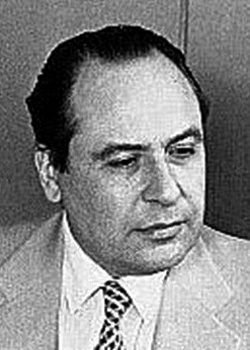 Composer, conductor, and pianist Bruno Nicolai died ten years ago today in Rome on August 16, 1991, at the age of 65.
One of the most accomplished figures in Italian film music during the 1960s and 1970s, Nicolai wrote scores for more than 100 films and television productions while also enjoying an important career as a conductor, publisher and advocate for contemporary classical music. His own work was particularly associated with spaghetti westerns, gialli and European horror cinema.
Nicolai was born in Rome on May 26, 1926. He studied piano with Aldo Mantia and composition with Goffredo Petrassi and Antonio Ferdinandi at the Santa Cecilia Conservatory, as well as organ at the Pontifical Institute of Sacred Music. From 1950 to 1964 he performed as pianist, organist and harpsichordist with the Santa Cecilia and RAI orchestras, while also writing extensively for theatre and television.
At Santa Cecilia Nicolai became friends with fellow student Ennio Morricone, beginning one of the most important—and sometimes misunderstood—professional relationships in Italian film music. Nicolai became Morricone’s preferred conductor and conducted many of his most famous scores, including For a Few Dollars More and The Good, the Bad and the Ugly. He also collaborated with Morricone as composer and conductor on several projects before their partnership ended during the 1970s. Nicolai’s extensive contribution to Morricone’s recordings sometimes led to confusion over authorship, but both men maintained substantial composing careers of their own. Read more…
James Bernard, 1925-2001
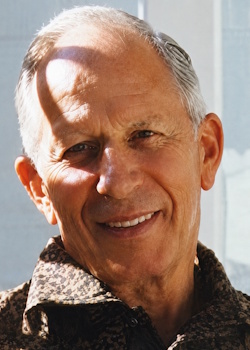 Composer James Bernard died in at his home in Jamaica on July 12, 2001, at the age of 75.
Although his career included radio, theatre and occasional non-horror films, Bernard is remembered above all as the musical voice of Hammer Films. Over an association lasting almost two decades, his pounding rhythms, abrasive harmonies and muscular brass writing helped define the sound of British Gothic horror, accompanying Dracula, Frankenstein and many of Hammer’s other celebrated monsters.
Bernard was born on September 20, 1925, in Kochel am See, Bavaria, Germany into a British Army family, He later re-located to British India with his family, before moving back to England in the 1940s. He was educated at Wellington College, where he met Benjamin Britten while still a teenager, and Britten encouraged his interest in composition. After wartime service in the RAF, Bernard studied with Herbert Howells at the Royal College of Music and later worked as a copyist and assistant on Britten’s opera Billy Budd.
Before becoming a film composer, Bernard had already won Hollywood’s highest honor, although not for music. With his partner, writer Paul Dehn, he devised the story for the nuclear thriller Seven Days to Noon (1950), for which the pair shared the Academy Award for Best Motion Picture Story. Bernard subsequently concentrated on music for radio and theatre, and his score for a BBC production of The Duchess of Malfi attracted the attention of Hammer musical director John Hollingsworth.
Hollingsworth recommended Bernard for The Quatermass Xperiment (1955), beginning the relationship that would dominate his career. Working initially with just strings and percussion, Bernard produced a tense, dissonant score whose unusual sonorities perfectly suited Hammer’s stark science-fiction horror. He followed it with X the Unknown (1956), Quatermass 2 (1957), and then the film that transformed Hammer’s fortunes, The Curse of Frankenstein (1957). Read more…
Remembering Carmine Coppola, 1910-1991
 Composer, conductor and flautist Carmine Coppola died ten years ago today in Los Angeles on April 26, 1991, at the age of 80, after suffering a stroke.
Although much of his film career was closely connected with his son, director Francis Ford Coppola, he created memorable music for some of the defining American films of the 1970s and 1980s, including The Godfather Part II, Apocalypse Now, The Black Stallion and The Godfather Part III. His work brought him an Academy Award and a Golden Globe.
Carmine Valentino Coppola was born in New York City on June 11, 1910, into an Italian-American family. He studied flute and composition at the Juilliard School and Manhattan School of Music and became an accomplished professional flautist. He performed under Arturo Toscanini with the NBC Symphony Orchestra before increasingly turning to composition, arranging and conducting.
Coppola’s connection with cinema became significant when Francis asked him to contribute music to The Godfather (1972). Nino Rota wrote the principal score, but Carmine supplied additional music, including material heard during the Corleone wedding festivities. The collaboration continued more substantially on The Godfather Part II (1974), where Coppola contributed original material alongside Rota’s themes, including music associated with the film’s early twentieth-century American sequences. Rota and Coppola shared the Academy Award for Best Original Dramatic Score, giving Carmine his greatest professional honor. Read more…
Remembering Howard Ashman, 1950-1991
 Lyricist, playwright, director and producer Howard Ashman died in New York City ten years ago today, on March 14, 1991, at the age of 40, from complications related to AIDS.
Although his career was tragically brief, Ashman played a crucial role in revitalizing both the American musical theatre and Disney animation. With composer Alan Menken he wrote the songs for Little Shop of Horrors, The Little Mermaid and Beauty and the Beast, while his final work on Aladdin was completed shortly before his death. He won two Academy Awards for Best Original Song, the second posthumously.
Howard Elliott Ashman was born in Baltimore, Maryland, on May 17, 1950, and developed an early interest in theatre. He studied at Boston University and Goddard College before earning a master’s degree from Indiana University. Moving to New York in 1974, he worked briefly in publishing while writing plays and became involved with the small WPA Theatre, eventually serving as its artistic director.
Ashman’s first collaboration with Alan Menken was the 1979 musical God Bless You, Mr. Rosewater, adapted from Kurt Vonnegut’s novel. Their breakthrough came three years later with Little Shop of Horrors, based on Roger Corman’s low-budget 1960 comedy about a man-eating plant. Ashman wrote the book and lyrics and directed the original production, while Menken composed the music. Its mixture of 1960s pop, Motown, comedy and horror became an enormous Off-Broadway success. Read more…
Piero Umiliani, 1926-2001
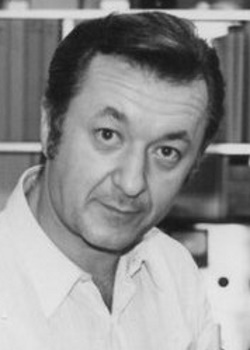 Composer, pianist and conductor Piero Umiliani died in Rome on February 14, 2001, at the age of 74.
One of the most distinctive figures in post-war Italian film music, Umiliani wrote more than 150 scores during a career encompassing comedy, thrillers, westerns, gialli, documentaries and exploitation cinema. A gifted jazz musician and enthusiastic electronic experimenter, he is also remembered internationally for the irresistible “Mah Nà Mah Nà,” one of the most unlikely soundtrack themes ever to become a worldwide popular standard.
Umiliani was born in Florence on July 17, 1926. Fascinated by jazz at a time when the music was discouraged by Italy’s Fascist regime, he listened avidly to Duke Ellington and other American musicians on foreign radio during World War II. He subsequently became an accomplished jazz pianist, performed and recorded with leading Italian musicians, and studied counterpoint and fugue at Florence’s Luigi Cherubini Conservatory. After moving to Rome he worked as an arranger for Armando Trovajoli before establishing himself in cinema.
His breakthrough came with Mario Monicelli’s classic comedy I Soliti Ignoti (Big Deal on Madonna Street, 1958). Monicelli specifically wanted a jazz score, and Umiliani responded with music that brought a strikingly contemporary sound to Italian cinema, including the memorable “Blues for Gassman.” The score was among the earliest Italian films to use jazz so extensively as dramatic accompaniment and immediately established Umiliani as a composer with a musical personality very different from the traditional symphonic school. Read more…
Remembering Aaron Copland, 1900-1990
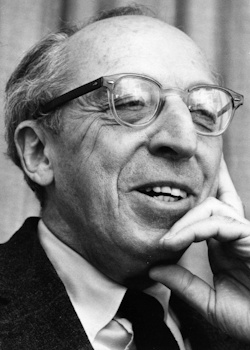 Composer, conductor and teacher Aaron Copland died ten years ago today in North Tarrytown, New York, on December 2, 1990, at the age of 90, following years of declining health.
Widely regarded as one of the defining voices of American concert music, Copland also enjoyed a brief but highly influential career in Hollywood, bringing to films the spacious harmonies, direct melodies and unmistakably American character that had already distinguished works such as Billy the Kid, Rodeo and Appalachian Spring.
Copland was born in Brooklyn on November 14, 1900, the youngest of five children in a Russian-Jewish immigrant family. After studying in New York he travelled to Paris, where he became one of the first American pupils of the influential teacher Nadia Boulanger. Returning home in the 1920s, Copland gradually developed a musical language that combined European modernism with jazz, folk material and an increasingly accessible style intended to speak directly to American audiences.
His first film assignment was Ralph Steiner and Willard Van Dyke’s documentary The City (1939), produced for the New York World’s Fair. That same year Copland entered Hollywood with Lewis Milestone’s adaptation of John Steinbeck’s Of Mice and Men. Rather than imitate the lush late-Romantic style then dominant in studio scoring, Copland used clear textures, folk-like melodies and restrained orchestration, allowing the rural setting and loneliness of the characters to emerge without excessive sentimentality. The score received Academy Award nominations for both original score and scoring. Read more…
Remembering Leonard Bernstein, 1918-1990
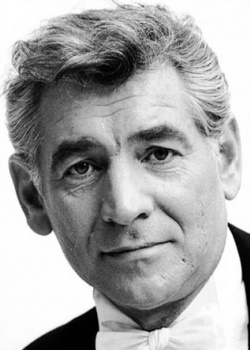 Composer, conductor, pianist and educator Leonard Bernstein died at his Manhattan, New York, home ten years ago today, on October 14, 1990, at the age of 72, from complications of progressive lung failure.
One of the towering figures of twentieth-century American music, Bernstein achieved international fame in the concert hall and on Broadway, but his relationship with cinema was surprisingly brief. He wrote only one original score specifically for a motion picture, yet that score—Elia Kazan’s On the Waterfront—became one of the landmarks of American film music.
Bernstein was born Louis Bernstein in Lawrence, Massachusetts, on August 25, 1918, the son of Ukrainian Jewish immigrants. He studied at Harvard University and the Curtis Institute of Music and achieved national prominence in 1943 when he famously substituted at short notice for Bruno Walter with the New York Philharmonic. He subsequently became one of America’s most celebrated conductors, eventually serving as music director of the Philharmonic while simultaneously pursuing careers as a composer, pianist, broadcaster and teacher.
Cinema first encountered Bernstein’s music through On the Town. The 1944 Broadway musical, written with Betty Comden and Adolph Green and developed from Bernstein’s ballet Fancy Free, was purchased by MGM and filmed in 1949 with Gene Kelly and Frank Sinatra. However, studio chief Louis B. Mayer replaced almost all of Bernstein’s original score, an early indication of the difficulties the fiercely independent composer would have with Hollywood filmmaking. Read more…

Shop at the Movie Music UK Store

Member of the


