Piero Umiliani, 1926-2001
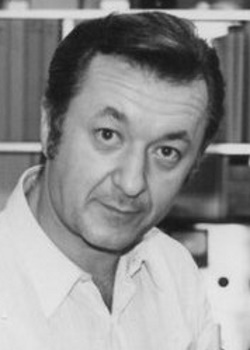 Composer, pianist and conductor Piero Umiliani died in Rome on February 14, 2001, at the age of 74.
One of the most distinctive figures in post-war Italian film music, Umiliani wrote more than 150 scores during a career encompassing comedy, thrillers, westerns, gialli, documentaries and exploitation cinema. A gifted jazz musician and enthusiastic electronic experimenter, he is also remembered internationally for the irresistible “Mah Nà Mah Nà,” one of the most unlikely soundtrack themes ever to become a worldwide popular standard.
Umiliani was born in Florence on July 17, 1926. Fascinated by jazz at a time when the music was discouraged by Italy’s Fascist regime, he listened avidly to Duke Ellington and other American musicians on foreign radio during World War II. He subsequently became an accomplished jazz pianist, performed and recorded with leading Italian musicians, and studied counterpoint and fugue at Florence’s Luigi Cherubini Conservatory. After moving to Rome he worked as an arranger for Armando Trovajoli before establishing himself in cinema.
His breakthrough came with Mario Monicelli’s classic comedy I Soliti Ignoti (Big Deal on Madonna Street, 1958). Monicelli specifically wanted a jazz score, and Umiliani responded with music that brought a strikingly contemporary sound to Italian cinema, including the memorable “Blues for Gassman.” The score was among the earliest Italian films to use jazz so extensively as dramatic accompaniment and immediately established Umiliani as a composer with a musical personality very different from the traditional symphonic school.
Throughout the 1960s and 1970s Umiliani became enormously prolific. His credits included Smog (1962), War Italian Style (1965), Agent 3S3: Passport to Hell (1965), Son of Django (1967), Orgasmo (1969), The Law of the Gangsters (1969), Five Dolls for an August Moon (1970), The Girl from the Moon’s Skin (1972), Baba Yaga (1973) and The Body (1974). His scores moved freely between cool jazz, bossa nova, psychedelic rock, funk, lounge music and electronics, often giving modest genre films a musical sophistication far beyond their budgets.
His most famous composition appeared in Luigi Scattini’s documentary Svezia, Inferno e Paradiso (Sweden: Heaven and Hell, 1968). Originally accompanying a sauna sequence, “Mah Nà Mah Nà” featured wordless vocals by Alessandro Alessandroni and Giulia De Mutiis over a jaunty instrumental backing. The piece subsequently reached American and British charts before achieving immortality through performances on Sesame Street, The Ed Sullivan Show and, most famously, The Muppet Show. Its enormous popularity eventually eclipsed almost everything else Umiliani wrote.
Yet Umiliani was considerably more adventurous than that novelty hit suggests. In 1969 he established his own Sound Work Shop recording studio in Rome, where he experimented with synthesizers, electronic effects, jazz, psychedelia and library music. Albums such as Synthi Time, To-Day’s Sound, Paesaggi and Continente Nero later became highly sought-after among collectors and helped establish him as an important precursor of modern electronic, lounge and sample-based music.
A serious stroke in 1984 largely interrupted Umiliani’s career, but after several years of rehabilitation he returned to performing and recording during the 1990s, including the album Umiliani Jazz Family. His music simultaneously underwent a major revival as younger listeners rediscovered Italian soundtrack and library music; “Crepuscolo Sul Mare” was later prominently used in Steven Soderbergh’s Ocean’s Twelve.

Shop at the Movie Music UK Store

Member of the


