Ralph Burns, 1922-2001
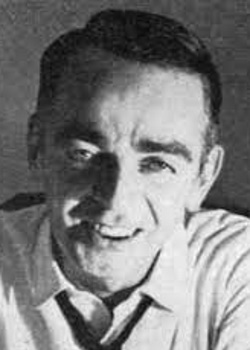 Composer, arranger and pianist Ralph Burns died in Los Angeles on November 21, 2001, at the age of 79, from pneumonia and complications following a stroke.
One of the most distinguished arrangers to emerge from the big-band era, Burns enjoyed an unusually varied career spanning jazz, Broadway, film and television. He won two Academy Awards for Cabaret and All That Jazz, an Emmy for Baryshnikov on Broadway, and a Tony Award for the musical revue Fosse.
Ralph Jose P. Burns was born in Newton, Massachusetts, on June 29, 1922. He began playing piano as a child and studied briefly at the New England Conservatory of Music, although he later said that much of his real education in jazz arranging came from listening to records and painstakingly transcribing what he heard. After early work with Charlie Barnet’s orchestra, Burns joined Woody Herman’s band in 1944 as pianist and arranger.
Burns quickly became one of the principal architects of the celebrated Woody Herman sound. His arrangements and compositions included “Apple Honey,” “Bijou” and the ambitious Summer Sequence, whose final movement evolved into “Early Autumn” and became an important showcase for the young tenor saxophonist Stan Getz. Burns’s sophisticated harmonies and unusually subtle orchestral colors distinguished him from many of the more aggressively rhythmic big-band arrangers of the period.
After leaving Herman, Burns worked extensively as an arranger for singers and recording artists. He collaborated with performers including Peggy Lee, Tony Bennett, Johnny Mathis, Ben Webster and Aretha Franklin, and created the celebrated string arrangement for Ray Charles’s recording of “Georgia on My Mind.” He also recorded several jazz albums under his own name.
By the 1960s Burns was increasingly active on Broadway, where his exceptional knowledge of jazz and popular orchestration proved invaluable. His credits included No Strings, Funny Girl, Sweet Charity, Pippin, Chicago, No, No, Nanette and Dancin’. He developed an especially important relationship with director and choreographer Bob Fosse, whose theatrical mixture of jazz, cabaret and show-business decadence was ideally suited to Burns’s musical sensibility.
That collaboration extended into cinema with Cabaret (1972). Burns adapted and supervised John Kander and Fred Ebb’s stage music for Fosse’s film, reshaping the material around the performances of Liza Minnelli and Joel Grey and creating one of the most distinctive musical soundtracks of the decade. His work earned him the Academy Award for Best Scoring Adaptation.
Burns subsequently wrote the music for Fosse’s Lenny (1974), starring Dustin Hoffman, before composing and arranging Martin Scorsese’s New York, New York (1977). The latter allowed him to draw directly on his big-band background, blending original dramatic scoring with period jazz and songs by Kander and Ebb.
His second Academy Award came for Fosse’s autobiographical All That Jazz (1979), in which Burns supervised and adapted a dazzling mixture of Broadway, pop and orchestral music. Further film credits included Urban Cowboy (1980), Mel Brooks’s History of the World: Part I (1981), Annie (1982), which brought another Oscar nomination, My Favorite Year (1982) and The Muppets Take Manhattan (1984).
Burns remained active on Broadway into his final years. He won the Tony Award for Best Orchestrations for Fosse in 1999 and completed work on Thoroughly Modern Millie shortly before his death; that production brought him a posthumous second Tony Award in 2002, shared with Doug Besterman.

Shop at the Movie Music UK Store

Member of the


