Archive
Elmer Bernstein, 1922-2004
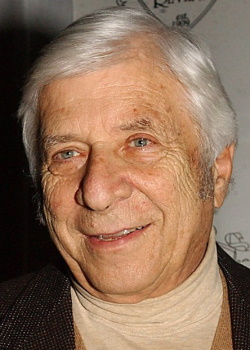 Composer Elmer Bernstein died on August 18, 2004, at his home in Ojai, California, after a lengthy battle with cancer. He was 82.
Bernstein was born in New York City in April 1922, the son of immigrants from Ukraine and Austria-Hungary. He studied piano as a child and showed early promise as a performer; during his childhood, he performed professionally as a dancer and an actor, but then switched to music and trained at the Juilliard School where he was encouraged by prominent figures such as Aaron Copland. During World War II, he served in the Army Air Forces, where he composed and arranged music for military radio programs.
Bernstein moved to California in in the early 1950s, when he was hired to score the thriller Sudden Fear in 1952. However, along with many other artists in Hollywood, Bernstein faced censure during the McCarthy era of the early 1950s, and was called by the House Un-American Activities Committee. After he refused to name names, pointing out that he had never attended a Communist Party meeting, he found himself composing music for Z-grade sci-fi movies such as Robot Monster and Cat-Women of the Moon.
His work on The Man with the Golden Arm (1955), one of the first major studio films to feature a jazz score, brought him back into the mainstream, earned him his first Oscar nomination and marked him as a daring and contemporary voice in film music. His score for The Ten Commandments (1956), an epic of biblical scale, demonstrated his facility with grand orchestration and established him as a composer of serious dramatic substance. He followed it with the heroic and unforgettable theme to The Magnificent Seven (1960), whose galloping rhythms and bold brass fanfares became one of the most enduring musical signatures in film history. Read more…
David Raksin, 1912-2004
 Composer David Raksin died on August 9, 2004, in Los Angeles, after a short illness. He was 92.
Raksin was born in Philadelphia, Pennsylvania, in August 1912. He studied at the University of Pennsylvania and the Curtis Institute of Music, and later with Isadore Freed in New York and Arnold Schoenberg in Los Angeles. He worked as an arranger for Charlie Chaplin on the score for Modern Times in 1936 when he was just 24 years old, and soon after began a long career as a composer for studio films.
With a career spanning more than six decades, Raksin composed music for over 100 films and numerous television programs, earning a reputation for melodic sophistication and dramatic sensitivity. His theme for the 1944 classic Laura is often cited as one of the most memorable in film history, and became a popular standard, with lyrics later added by Johnny Mercer. Raksin’s theme song for the 1953 film The Bad and the Beautiful (also called “Love is For the Very Young”) was also a hit.
Rakin’s other major composing credits include Forever Amber (1947), The Secret Life of Walter Mitty (1947), Force of Evil (1948), Whirlpool (1950), The Magnificent Yankee (1950), Across the Wide Missouri (1951), The Big Combo (1955), Bigger Than Life (1956), Separate Tables (1958), and Two Weeks in Another Town (1962), among many others. He received two Academy Award nominations and numerous honors for his work, which was admired for its lyrical beauty, harmonic depth, and keen dramatic sense. One of his last major scores was for the critically acclaimed nuclear holocaust-themed TV drama The Day After in 1983. Read more…
Piero Piccioni, 1921-2004
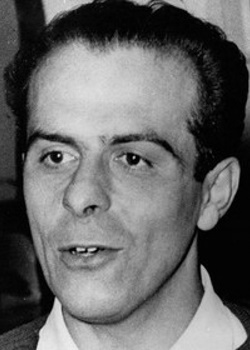 Composer, pianist and conductor Piero Piccioni died in Rome, Italy, on July 23, 2004, at the age of 82.
One of the most prolific and distinctive voices of post-war Italian cinema, Piccioni combined jazz, lush orchestral writing, pop, lounge music and the avant-garde across a career encompassing hundreds of compositions for film, television and radio.
Piccioni was born in Turin on December 6, 1921. Largely self-taught as a musician, he developed an early passion for American jazz, especially Art Tatum and Charlie Parker, and first performed on radio in 1938. Following World War II he led his own jazz ensemble, Orchestra 013, and spent time in New York, where he immersed himself further in American jazz. He initially pursued a career as a lawyer, working with film companies including Titanus and De Laurentiis, before abandoning law for music.
Piccioni entered cinema during the early 1950s, initially using the pseudonym Piero Morgan. His first feature score was Gianni Franciolini’s Il Mondo le Condanna, followed by Alberto Lattuada’s La Spiaggia. His jazz background immediately distinguished his music, with improvisation, sophisticated harmonies and rhythmic vitality becoming recurring characteristics of his work.
One of Piccioni’s most important relationships was with director Francesco Rosi, for whom he scored 13 films. Their collaboration began with I Magliari in 1959 and continued through Salvatore Giuliano (1962), Hands Over the City (1963), The Moment of Truth (1965), More Than a Miracle (1967), The Mattei Affair (1972) and Chronicle of a Death Foretold (1987). Rosi’s politically charged cinema brought out a more austere side of Piccioni, notably in the sparse music for Salvatore Giuliano and the largely electronic textures of The Mattei Affair. His work on Salvatore Giuliano earned him the Nastro d’Argento.
Piccioni was equally renowned for his long friendship and collaboration with actor-director Alberto Sordi. Scores including An Italian in America (1967), Amore Mio Aiutami (1969) and Polvere di Stelle (1973) revealed another side of his personality: warm, melodic, playful and frequently steeped in jazz, bossa nova and contemporary popular music. His ability to move between Rosi’s serious political dramas and Sordi’s bittersweet comedies demonstrated his exceptional versatility. Read more…
Remembering Hans J. Salter, 1896-1994
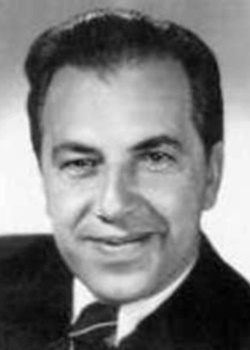 Composer, conductor and musical director Hans J. Salter died at his home in Studio City, California, ten years ago today, on July 23, 1994, at the age of 98.
An Austrian émigré who became one of the principal architects of the classic Universal horror sound, Salter worked on more than 200 films during nearly three decades at the studio. His music accompanied werewolves, vampires, Frankenstein monsters, Sherlock Holmes adventures, westerns and musicals, and brought him six Academy Award nominations.
Hans Julius Salter was born in Vienna on January 14, 1896. He studied at the University of Vienna and Vienna Music Academy with teachers including Guido Adler, Franz Schreker, Felix Weingartner and, briefly, Alban Berg. After working in opera, Salter moved into cinema during the late 1920s, first conducting in Berlin movie theatres and then composing for UFA. As a Jewish musician he was forced out of the German film industry after the Nazi rise to power and eventually emigrated to the United States in 1937.
Universal hired Salter initially as an orchestrator in 1938, but he was soon promoted to composer and became one of the studio’s busiest musical craftsmen. Working frequently with Frank Skinner and other staff composers, he supplied music for everything from Deanna Durbin musicals and Abbott and Costello comedies to serials, melodramas and horror pictures. Much of this work went uncredited or was subsequently recycled as stock music throughout Universal’s productions. Read more…
Jerry Goldsmith, 1929-2004
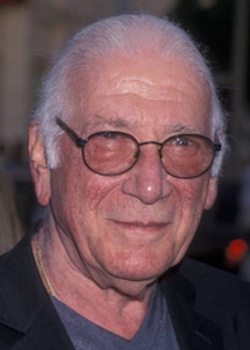 Composer Jerry Goldsmith died on July 21, 2004 at his home in Beverly Hills, California, after a battle with cancer. He was 75.
One of the most prolific, versatile and influential film composers of the twentieth century, Goldsmith wrote music for more than 200 film and television productions during a career spanning half a century. He received 18 Academy Award nominations, winning for The Omen, and created landmark scores including Planet of the Apes, Patton, Chinatown, Alien, Star Trek: The Motion Picture, Poltergeist, Total Recall, Basic Instinct and L.A. Confidential.
Jerrald King Goldsmith was born in Los Angeles on February 10, 1929. He began playing piano as a child, later studying with pianist Jakob Gimpel and composer Mario Castelnuovo-Tedesco. At the University of Southern California he attended classes taught by Miklós Rózsa, whose score for Spellbound had helped inspire Goldsmith’s ambition to write for films. He later studied at Los Angeles City College before joining CBS as a clerk-typist in its music department.
At CBS, Goldsmith progressed from selecting library music to composing for radio and live television. His early credits included Climax!, Playhouse 90, Perry Mason, Gunsmoke and The Twilight Zone, an extraordinarily demanding training ground in which music often had to be written and recorded at great speed. His first credited feature score was the western Black Patch in 1957, although television remained an important part of his career throughout the following decade.
Goldsmith’s breakthrough in cinema came during the early 1960s. Lonely Are the Brave (1962) displayed his gift for western Americana, while John Huston’s Freud (1962) brought his first Academy Award nomination with a dark, psychologically unsettling score. He followed with The List of Adrian Messenger (1963), Seven Days in May (1964), A Patch of Blue (1965), In Harm’s Way (1965), The Blue Max (1966) and The Sand Pebbles (1966), rapidly establishing himself as one of Hollywood’s most inventive dramatic composers. Read more…
Remembering Henry Mancini, 1924-1994
 Composer Henry Mancini died ten years ago today, on June 14, 1994, at his home in Los Angeles, California, after a battle with pancreatic cancer. He was 70 years old.
Enrico Nicola Mancini, nicknamed Henry or Hank, was born in April 1924 in Cleveland, Ohio, the son of Italian immigrants, and raised in a rural steelworking town in nearby Pennsylvania. He showed early musical promise and studied at the Juilliard School, but his education was interrupted by World War II, during which he served in the Army and worked with the Glenn Miller Air Force Band. After the war, Mancini joined Universal-International’s music department, where he gained experience scoring dozens of B-movies, including classics such as Creature from the Black Lagoon (1954).
Mancini’s big break came in 1958 when he collaborated with director Blake Edwards on the television series Peter Gunn, which featured a groundbreaking jazz score that became a hit in its own right. Their partnership continued through numerous films, with Mancini’s music often becoming as iconic as the films themselves. He won an Oscar for scoring Edwards’s film Breakfast at Tiffany’s in 1961, and co-wrote the iconic song “Moon River” for lead actress Audrey Hepburn. He won another Oscar in 1962 for the title song for Edwards’s film Days of Wine and Roses, received an Oscar nomination for timeless slinky jazzy main theme from The Pink Panther in 1964, and earned critical acclaim for his work on several other Edwards-directed films including The Great Race (1965), Darling Lili (1970), 10 (1979), and Victor/Victoria (1982), among many others.
Mancini had a rare ability to blend classical technique with contemporary popular styles, from swing and jazz to lush romantic ballads. Throughout the 1960s and 70s Mancini combined his scoring career with an equally successful parallel career as a songwriter, recording artist, touring conductor, and media personality, which made him one the most famous and popular American classical musicians of his era. His songs were recorded by the most popular vocalists of the day – Andy Williams, Frank Sinatra, Perry Como, Johnny Mathis, Tony Bennett, dozens of others – and many of them topped the charts. Read more…
Fred Karlin, 1936-2004
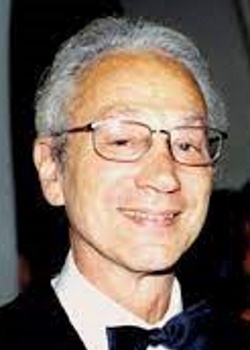 Composer, arranger and trumpeter Fred Karlin died in Culver City, California, on March 26, 2004, at the age of 67, following a battle with cancer.
An exceptionally versatile musician, Karlin wrote more than 130 scores for films and television productions, won both an Academy Award and an Emmy, and became particularly admired for his ability to move effortlessly between jazz, folk, rock, classical and electronic music.
Frederick James Karlin was born in Chicago on June 16, 1936. He began playing trumpet and studying jazz while still a teenager, learning composition with William Russo before attending Amherst College, where his honors thesis was a string quartet. After moving to New York in 1958 he worked as a composer and arranger for musicians including Benny Goodman and Harry James, while also writing for documentaries, commercials and Radio City Music Hall.
Karlin entered feature films with Robert Mulligan’s Up the Down Staircase (1967), starring Sandy Dennis. He quickly became a sought-after composer, following it with Yours, Mine and Ours (1968), Robert Mulligan’s western The Stalking Moon (1968), and Alan J. Pakula’s The Sterile Cuckoo (1969). The latter featured “Come Saturday Morning,” with music by Karlin and lyrics by Dory Previn; the song became a hit for the Sandpipers and earned an Academy Award nomination. Read more…
Remembering Jay Blackton, 1909-1994
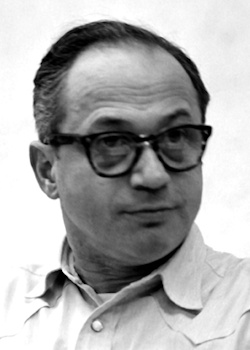 Composer, arranger, orchestrator and conductor Jay Blackton died at Granada Hills Community Hospital in Los Angeles ten years ago today, on January 8, 1994, at the age of 84, from heart failure.
One of the great behind-the-scenes figures of the American musical theatre, Blackton served as musical director, conductor or arranger on more than 25 Broadway productions, including Oklahoma!, Annie Get Your Gun, Call Me Madam, Guys and Dolls and Hello, Dolly!. His comparatively small film career nevertheless brought him an Academy Award for the screen version of Oklahoma!.
Blackton was born Jacob Schwartzdorf in New York City on March 25, 1909. He studied piano and conducting at the Juilliard School and initially intended to pursue a career in opera. In 1927 he became assistant conductor of the New York Opera Comique, and from 1937 until 1942 served as conductor at the St. Louis Municipal Opera, one of America’s most important summer musical-theatre companies.
It was in St. Louis that Blackton attracted the attention of Richard Rodgers and Oscar Hammerstein II, who brought him back to New York for their revolutionary first collaboration, Oklahoma! in 1943. Blackton conducted the original Broadway production and served as its musical director, helping shape the orchestral and vocal sound of a show that transformed American musical theatre by integrating songs, dance and drama more completely than had previously been customary. Read more…
Michael Small, 1939-2003
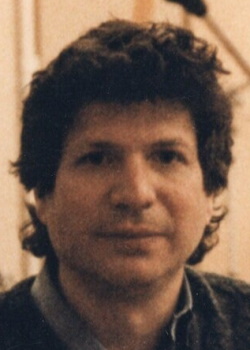 Composer Michael Small died in New York City on November 25, 2003, at the age of 64, from prostate cancer.
One of the most distinctive American film composers of the 1970s, Small became especially associated with psychological thrillers, creating unsettling, frequently unconventional scores for Klute, The Parallax View, Marathon Man, The Stepford Wives and Night Moves. Over a career lasting more than three decades he scored more than 50 films and television productions.
Small was born in New York City on May 30, 1939, and grew up in Maplewood, New Jersey. His father, Jack Small, was an actor who became general manager for the Shubert theatrical organization, and Michael initially dreamed of becoming a Broadway composer. He studied English at Williams College, where he wrote musicals and played jazz piano, and later spent a year studying at Harvard. Only after returning to New York in 1962 did he undertake formal musical training, studying orchestration privately with composer Meyer Kupferman.
Small entered films almost accidentally when producer Edward Pressman heard his work through the BMI musical-theatre workshop and hired him to score Out of It (1969), starring Jon Voight. Two years later he began the collaboration that would define his career when director Alan J. Pakula hired him for Klute (1971). Small’s sparse chamber score used unusual percussion, microtonal xylophone, electronics and a ghostly female voice to reflect both the danger surrounding Jane Fonda’s character and her complicated psychological world. Read more…
Michael Kamen, 1948-2003
 Composer Michael Kamen died on November 18, 2003 in London, England, after suffering a heart attack. He was 55.
Michael Arnold Kamen was born in New York in April 1948, where he attended The High School of Music and Art and the Juilliard School, where he specialized in composition and oboe performance. After being a part of the New York Rock & Roll Ensemble with fellow composer Mark Snow as a youth, Kamen moved to England in the 1970s and found work as ballet composer and as an arranger for pop and rock bands, notably for artists such as Kate Bush, David Bowie and Pink Floyd, for whom he arranged the album The Wall in 1979.
Having already dabbled in film music during the late 1970s, Kamen began embracing cinema fully in the early 1980s, writing the music for acclaimed films such as The Dead Zone and Brazil, and the TV mini-series Edge of Darkness, before cracking the Hollywood big-time with a trio of massively successful action scores between 1986 and 1989 – Highlander, Lethal Weapon and Die Hard. Read more…
Remembering Stanley Myers, 1930-1993
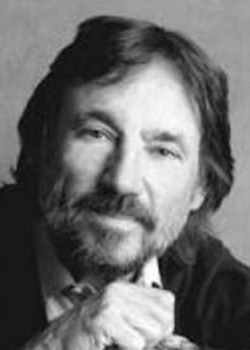 Composer Stanley Myers died ten years ago today in London on November 9, 1993, at the age of 63, following a battle with cancer.
One of Britain’s most prolific film composers, Myers wrote music for more than 100 film and television productions during a career spanning three decades, working with directors including Nicolas Roeg, Stephen Frears, Jerzy Skolimowski, Volker Schlöndorff and Michael Cimino.
Myers was born in Birmingham on October 6, 1930. By the 1960s he had established himself in cinema, with early successes including Jack Smight’s Kaleidoscope (1966) and Joseph Strick’s controversial adaptation of Ulysses (1967). Other notable scores from this period and the early 1970s included The Night of the Following Day, Michael Powell’s Age of Consent, The Walking Stick, Bryan Forbes’s The Raging Moon and the Oliver Reed thriller Sitting Target.
It was The Walking Stick (1970) that produced Myers’s most enduring composition. Its gentle guitar theme, “Cavatina,” was later expanded and recorded by classical guitarist John Williams. Eight years later Michael Cimino used Williams’s performance as the principal theme for The Deer Hunter (1978), where its delicate melancholy provided an unforgettable contrast to the film’s harrowing depiction of war and its aftermath. “Cavatina” became internationally famous and earned Myers an Ivor Novello Award.
Myers was never restricted to a single genre. During the 1970s he became closely associated with director Pete Walker’s distinctly British brand of exploitation horror, scoring House of Whipcord (1974), Frightmare (1974), House of Mortal Sin (1976) and Schizo (1976). Elsewhere he wrote for dramas, thrillers and international productions, including Ted Kotcheff’s The Apprenticeship of Duddy Kravitz and Volker Schlöndorff’s Coup de Grâce. His strongest music invariably reflected a considerable melodic gift, even when working within darker or more experimental material. Read more…
Remembering Roy Budd, 1947-1993
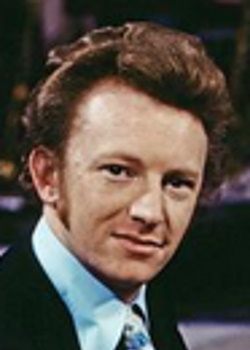 Composer Roy Budd died ten years ago today, on August 7, 1993, of a brain hemorrhage in hospital in London, UK. He was 46.
Roy Frederick Budd was born in London, England, in March 1947. A musical prodigy from a young age, Budd made his public debut on the piano at age six and was performing professionally by his teens. Deeply influenced by jazz legends such as Erroll Garner and Oscar Peterson, Budd quickly carved out a name for himself as a dynamic live performer, often appearing on British television and radio in the 1960s.
His entry into film scoring came in the late 1960s, but it was the 1971 crime thriller Get Carter that cemented his legacy, which he wrote when he was just 24 years old. The minimalist, percussive theme, composed and recorded in just a few days, went on become one of the most instantly recognizable pieces in British cinema history. Budd’s deft combination of jazz, funk, and moody atmospherics would become his signature, earning him further acclaim for scores to films such as Soldier Blue (1970), Fear Is the Key (1972), The Stone Killer (1973), The Marseille Contract (1974), Diamonds (1975), Paper Tiger (1975), Sinbad and the Eye of the Tiger (1977),The Wild Geese (1978), and The Sea Wolves (1980).
Over the course of his career, Budd scored more than 40 films, often working on films starring major British actors of the 1960s and 70s including Michael Caine, Richard Burton, and Roger Moore. In addition to his film work, he remained a passionate jazz performer, frequently recording albums and touring. Read more…
Johnny Douglas, 1920-2003
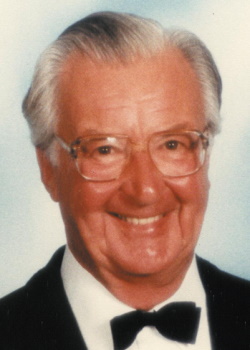 Composer, arranger and conductor Johnny Douglas died at his home in Bognor Regis, West Sussex, England, on April 20, 2003, at the age of 82, following a battle with prostate cancer.
One of the stalwarts of British light music, Douglas wrote scores for around three dozen feature films while maintaining an enormous career in radio, recordings and television. He is remembered above all for Lionel Jeffries’s The Railway Children, whose warmly nostalgic score earned him a BAFTA nomination.
John Henry Douglas was born in Hackney, London, on June 19, 1920, and grew up in Bermondsey. A musical prodigy, he began piano lessons at four and was studying arranging and orchestration before his teens. He formed a dance band while still at school and made his professional debut in 1939 with the Neville Hughes Sextet. During World War II he served in the RAF, where an arm injury temporarily prevented him from playing and encouraged him to concentrate on arranging and composition.
After the war Douglas arranged for bandleaders including Ambrose, Ted Heath and Edmundo Ros before becoming heavily involved in recording. He provided hundreds of arrangements for Decca and in 1958 began a long association with RCA’s Living Strings series, ultimately arranging and conducting more than 80 albums for the label. His polished string writing and gift for melody made him one of Britain’s busiest practitioners of easy-listening orchestral music. Read more…
Walter Scharf, 1910-2003
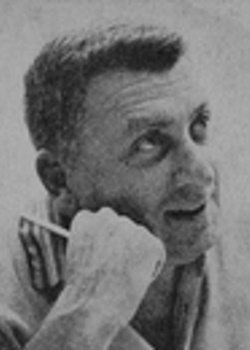 Composer, arranger and conductor Walter Scharf died at his home in Brentwood, Los Angeles, on February 24, 2003, at the age of 92, from heart failure.
One of Hollywood’s most versatile musical craftsmen, Scharf worked on more than 250 film and television productions during a career spanning more than half a century. His credits ranged from Hans Christian Andersen, Funny Girl and Willy Wonka & the Chocolate Factory to The Nutty Professor, Ben and the documentaries of Jacques Cousteau, earning him ten Academy Award nominations, an Emmy and a Golden Globe.
Walter Scharf was born in Manhattan, New York City, on August 1, 1910. His mother, Bessie Zwerling, was a performer in the Yiddish theatre, giving him an early introduction to show business. After studying at New York University he entered professional music as a pianist, arranger and orchestrator, working on Broadway productions including George Gershwin’s Girl Crazy and accompanying singer Helen Morgan. He later joined Rudy Vallée as pianist and arranger.
Scharf moved to Hollywood in 1934 and quickly became part of the studio music establishment, arranging for performers including Al Jolson, Alice Faye and Bing Crosby. He worked on numerous films without screen credit and helped orchestrate Irving Berlin’s “White Christmas” for Holiday Inn (1942). From 1942 to 1946 he served as music director at Republic Pictures, where his ability to compose, arrange and conduct made him invaluable on productions requiring large amounts of music on demanding schedules. Read more…
Remembering Sammy Cahn, 1913-1993
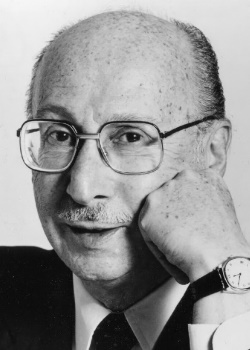 Lyricist and songwriter Sammy Cahn died in Los Angeles ten years ago today, on January 15, 1993, at the age of 79.
One of the most successful writers of popular songs in Hollywood history, Cahn supplied lyrics for hundreds of recordings, Broadway shows and motion pictures, and enjoyed especially fruitful partnerships with composers Jule Styne and Jimmy Van Heusen. He received an extraordinary 26 Academy Award nominations for Best Original Song, winning four times, and wrote many of the songs most closely associated with Frank Sinatra.
Cahn was born Samuel Cohen on New York’s Lower East Side on June 18, 1913, the son of Jewish immigrants from Eastern Europe. He studied violin as a child and initially dreamed of playing professionally, but discovered a greater talent for writing lyrics. After leaving school he teamed with Saul Chaplin, beginning a partnership that flourished during the 1930s in Tin Pan Alley.
Cahn and Chaplin’s early successes included “Rhythm Is Our Business,” “Until the Real Thing Comes Along” and the English lyrics for the Yiddish song “Bei Mir Bist Du Schoen,” which became an enormous hit for the Andrews Sisters. By the early 1940s Cahn had moved increasingly into Hollywood and formed a new partnership with composer Jule Styne. Read more…

Shop at the Movie Music UK Store

Member of the


