Fred Karlin, 1936-2004
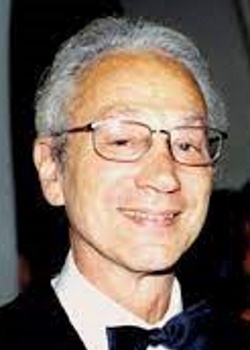 Composer, arranger and trumpeter Fred Karlin died in Culver City, California, on March 26, 2004, at the age of 67, following a battle with cancer.
An exceptionally versatile musician, Karlin wrote more than 130 scores for films and television productions, won both an Academy Award and an Emmy, and became particularly admired for his ability to move effortlessly between jazz, folk, rock, classical and electronic music.
Frederick James Karlin was born in Chicago on June 16, 1936. He began playing trumpet and studying jazz while still a teenager, learning composition with William Russo before attending Amherst College, where his honors thesis was a string quartet. After moving to New York in 1958 he worked as a composer and arranger for musicians including Benny Goodman and Harry James, while also writing for documentaries, commercials and Radio City Music Hall.
Karlin entered feature films with Robert Mulligan’s Up the Down Staircase (1967), starring Sandy Dennis. He quickly became a sought-after composer, following it with Yours, Mine and Ours (1968), Robert Mulligan’s western The Stalking Moon (1968), and Alan J. Pakula’s The Sterile Cuckoo (1969). The latter featured “Come Saturday Morning,” with music by Karlin and lyrics by Dory Previn; the song became a hit for the Sandpipers and earned an Academy Award nomination.
His greatest popular success came with Lovers and Other Strangers (1970). Karlin composed “For All We Know,” with lyrics by Robb Royer and James Griffin, and the song won the Academy Award for Best Original Song in 1971 before becoming a major hit for the Carpenters. Karlin received further Oscar nominations for songs from The Baby Maker and The Little Ark, confirming his reputation as a gifted songwriter as well as a dramatic composer.
One of Karlin’s most distinctive film scores came with Michael Crichton’s Westworld (1973), starring Yul Brynner, Richard Benjamin and James Brolin. The film’s mixture of traditional western imagery and futuristic technology allowed Karlin to juxtapose deliberately familiar western music with electronic sounds, creating an increasingly unsettling musical division between the artificial amusement park and the machinery beneath it. He returned for the sequel Futureworld in 1976.
Other theatrical scores included The Marriage of a Young Stockbroker (1971), The Spikes Gang (1974), Chosen Survivors (1974), Baby Blue Marine (1976), Greased Lightning (1977), Mean Dog Blues (1978), California Dreaming (1979) and Ravagers (1979). His eclectic background meant that he rarely settled into a single recognizable style, instead tailoring his musical language closely to each assignment.
Television eventually became the principal focus of Karlin’s career. His many television films and miniseries included The Autobiography of Miss Jane Pittman (1974), Born Innocent, Bad Ronald, The Trial of Lee Harvey Oswald, The Death of Richie, The Awakening Land, Miracle on Ice and Inside the Third Reich. His acclaimed score for The Autobiography of Miss Jane Pittman, starring Cicely Tyson, won the Emmy for Best Music Composition for a Special Program in 1974.
Karlin was also an important writer and educator on film music. With Rayburn Wright he wrote On the Track: A Guide to Contemporary Film Scoring, which became a widely used reference work, followed by Listening to Movies: The Film Lover’s Guide to Film Music. His final book, 100 Great Film Scores, was completed shortly before his death and published posthumously.
Karlin was married to musician and musicologist Margaret “Meg” Anne Stagg, often credited as “Tylwyth Kymry,” and had four children, daughters Wendy and Kathryn, and sons Eric and Kristopher. In 1978, Wendy murdered Kristopher, and she later served a short-term sentence in a mental hospital.

Shop at the Movie Music UK Store

Member of the


