Johnny Douglas, 1920-2003
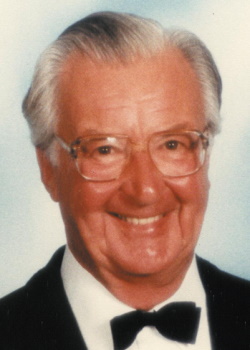 Composer, arranger and conductor Johnny Douglas died at his home in Bognor Regis, West Sussex, England, on April 20, 2003, at the age of 82, following a battle with prostate cancer.
One of the stalwarts of British light music, Douglas wrote scores for around three dozen feature films while maintaining an enormous career in radio, recordings and television. He is remembered above all for Lionel Jeffries’s The Railway Children, whose warmly nostalgic score earned him a BAFTA nomination.
John Henry Douglas was born in Hackney, London, on June 19, 1920, and grew up in Bermondsey. A musical prodigy, he began piano lessons at four and was studying arranging and orchestration before his teens. He formed a dance band while still at school and made his professional debut in 1939 with the Neville Hughes Sextet. During World War II he served in the RAF, where an arm injury temporarily prevented him from playing and encouraged him to concentrate on arranging and composition.
After the war Douglas arranged for bandleaders including Ambrose, Ted Heath and Edmundo Ros before becoming heavily involved in recording. He provided hundreds of arrangements for Decca and in 1958 began a long association with RCA’s Living Strings series, ultimately arranging and conducting more than 80 albums for the label. His polished string writing and gift for melody made him one of Britain’s busiest practitioners of easy-listening orchestral music.
Douglas moved into film scoring during the early 1960s, completing portions of Ron Goodwin’s music for the science-fiction thriller The Day of the Triffids. His subsequent scores included Hot Enough for June (1964), Crack in the World (1965), Circus of Fear (1966) and Run Like a Thief (1967). These assignments ranged from comedy and espionage to science fiction and crime, demonstrating a versatility sometimes obscured by his reputation as a light-music arranger.
His defining achievement came with The Railway Children (1970), starring Dinah Sheridan, Jenny Agutter and Bernard Cribbins. Douglas responded to the Edwardian setting and childhood perspective with an affectionate orchestral score built around a memorable, sweeping central theme. The music captures both the idyllic English countryside and the underlying sadness of a family separated from its father, becoming an essential part of the film’s enduring emotional appeal. The score was nominated for BAFTA’s Anthony Asquith Award for Film Music.
Douglas himself considered Dulcima (1971), starring John Mills and Carol White, among his finest film scores. He conducted the Royal Philharmonic Orchestra for the picture and later named his own record label after it. Dulcima Records, founded in 1983, allowed him to record the orchestral music he loved without the restrictions of commercial record companies.
Television became increasingly important during the latter part of his career, especially music for Saturday morning kids’ animated shows. Douglas wrote and arranged music for animated series including Spider-Man and His Amazing Friends, The Incredible Hulk, Dungeons & Dragons, The Transformers and G.I. Joe. The dense, almost continuous scoring demanded by animation provided a very different challenge from his lyrical film work and introduced his music to a new international audience.
In his later years Douglas continued recording and composed concert works including the symphonic poems The Conquest and The Aftermath. He remained involved with Dulcima Records until shortly before his death. He is survived by his wife Marion and daughters Norma and Martine; his son Martin predeceased him.

Shop at the Movie Music UK Store

Member of the


