Piero Piccioni, 1921-2004
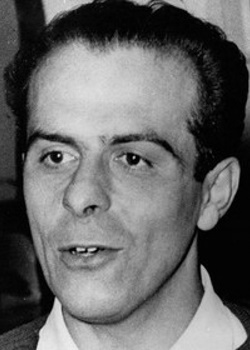 Composer, pianist and conductor Piero Piccioni died in Rome, Italy, on July 23, 2004, at the age of 82.
One of the most prolific and distinctive voices of post-war Italian cinema, Piccioni combined jazz, lush orchestral writing, pop, lounge music and the avant-garde across a career encompassing hundreds of compositions for film, television and radio.
Piccioni was born in Turin on December 6, 1921. Largely self-taught as a musician, he developed an early passion for American jazz, especially Art Tatum and Charlie Parker, and first performed on radio in 1938. Following World War II he led his own jazz ensemble, Orchestra 013, and spent time in New York, where he immersed himself further in American jazz. He initially pursued a career as a lawyer, working with film companies including Titanus and De Laurentiis, before abandoning law for music.
Piccioni entered cinema during the early 1950s, initially using the pseudonym Piero Morgan. His first feature score was Gianni Franciolini’s Il Mondo le Condanna, followed by Alberto Lattuada’s La Spiaggia. His jazz background immediately distinguished his music, with improvisation, sophisticated harmonies and rhythmic vitality becoming recurring characteristics of his work.
One of Piccioni’s most important relationships was with director Francesco Rosi, for whom he scored 13 films. Their collaboration began with I Magliari in 1959 and continued through Salvatore Giuliano (1962), Hands Over the City (1963), The Moment of Truth (1965), More Than a Miracle (1967), The Mattei Affair (1972) and Chronicle of a Death Foretold (1987). Rosi’s politically charged cinema brought out a more austere side of Piccioni, notably in the sparse music for Salvatore Giuliano and the largely electronic textures of The Mattei Affair. His work on Salvatore Giuliano earned him the Nastro d’Argento.
Piccioni was equally renowned for his long friendship and collaboration with actor-director Alberto Sordi. Scores including An Italian in America (1967), Amore Mio Aiutami (1969) and Polvere di Stelle (1973) revealed another side of his personality: warm, melodic, playful and frequently steeped in jazz, bossa nova and contemporary popular music. His ability to move between Rosi’s serious political dramas and Sordi’s bittersweet comedies demonstrated his exceptional versatility.
Elsewhere, Piccioni worked with many of the leading directors of Italian cinema. Notable scores included Mauro Bolognini’s Il Bell’Antonio (1960), Jean-Luc Godard’s Contempt—for which Piccioni provided the music used in the Italian version—Elio Petri’s futuristic satire The 10th Victim (1965), and Lina Wertmüller’s Swept Away (1974). The latter earned him the David di Donatello Award.
Piccioni’s music was often effortlessly stylish, combining strings, brass, Hammond organ, piano, percussion and jazz ensembles with an unmistakably Italian gift for melody. At other times he could be stark, experimental or dramatically restrained. This breadth allowed him to work successfully in comedy, political drama, romance, thrillers, westerns and erotic cinema without developing a single formulaic sound.
Piccioni continued composing into the 1990s, ultimately leaving one of the largest bodies of work in Italian film music. He never achieved quite the international celebrity of Ennio Morricone or Nino Rota, but his combination of jazz sophistication, orchestral elegance and melodic invention has given his music an enduring life beyond the films themselves. Whether writing the politically incisive music of Salvatore Giuliano, the breezy sophistication of his Alberto Sordi comedies, or the sensual grooves that have since become favorites among soundtrack collectors, Piero Piccioni remains one of the essential musical voices of Italian cinema.

Shop at the Movie Music UK Store

Member of the


