Archive
Dudley Simpson, 1922-2017
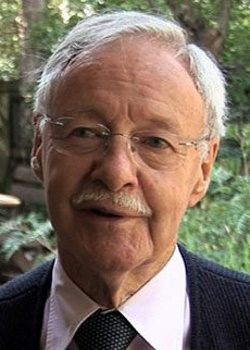 Composer and conductor Dudley Simpson died in Sydney, Australia, on November 4, 2017, at the age of 95.
One of the most prolific composers in the history of British television, Simpson was best known for his extraordinary contribution to Doctor Who, writing incidental music for more than 60 stories and almost 300 episodes between 1964 and 1980. He also composed memorable themes and scores for The Brothers, The Tomorrow People, Blake’s 7 and numerous prestigious BBC drama productions.
Dudley George Simpson was born in Melbourne, Australia, on October 4, 1922. A gifted pianist from childhood, he won an interstate radio competition at 13 and subsequently became the station’s official accompanist. During World War II he served as a warrant officer with the Australian Army in New Guinea, where his hand was injured when a truck he was driving was struck during a Japanese bombing raid. Playing the piano became an important part of his recuperation.
After the war Simpson studied orchestration and composition at the Melbourne Conservatorium of Music and joined the Borovansky Ballet, initially as pianist and assistant conductor. He eventually became the company’s musical director in 1957. Two years later he travelled to Britain as a guest conductor at the Royal Opera House, Covent Garden, subsequently becoming principal conductor of its orchestra from 1960 to 1963. His work included touring with the Royal Ballet and conducting performances featuring Margot Fonteyn and Rudolf Nureyev. Read more…
Daniel Licht, 1957-2017
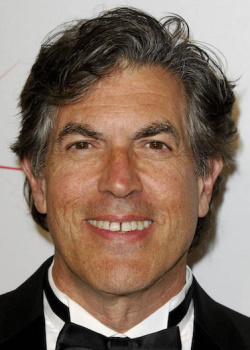 Composer Daniel Licht died at his home in Topanga, California, on August 2, 2017, at the age of 60, following a battle with a rare form of sarcoma.
Best known for his darkly playful music for all eight seasons of Dexter, Licht enjoyed a career spanning film, television and video games, with other notable credits including Children of the Corn II: The Final Sacrifice, Hellraiser: Bloodline, Thinner, Silent Hill: Downpour and the Dishonored series.
Daniel James Licht was born in Detroit, Michigan, on March 13, 1957. He began studying clarinet at eight and guitar four years later, playing jazz professionally while still in high school. At Hampshire College in Massachusetts he studied composition, jazz and world music, interests which subsequently took him far beyond conventional Western orchestral traditions.
After graduating, Licht moved to New York and became involved in the Lower East Side experimental music scene. He performed with jazz musicians including Don Cherry, Jaki Byard and David Amram, while travelling through Europe composing for theatre and dance companies. His fascination with non-Western music took him to Japan and Indonesia, where he studied gamelan music in Java and Bali. These experiences profoundly influenced his later scores, which frequently incorporated exotic instruments and unusual percussion. Read more…
Terry Plumeri, 1944-2016
 Composer, conductor and double bassist Terry Plumeri died at his home in Dunnellon, Florida, on March 31, 2016, at the age of 71.
A versatile musician whose career encompassed jazz, classical music and more than 50 film and television scores, Plumeri was best known to film-music listeners for Black Eagle, Sometimes They Come Back, One False Move and Death Wish V: The Face of Death.
John Terryl Plumeri was born in Greensboro, North Carolina, on November 28, 1944, and grew up in Tampa, Florida. He began studying music at ten and took up the double bass while attending Chamberlain High School. He subsequently studied at the Manhattan School of Music with Robert Brennand, principal bassist of the New York Philharmonic, and served in the United States Air Force Band. While working as a bassist with the National Symphony Orchestra in Washington, D.C., he also studied composition and conducting with Antal Doráti.
Plumeri initially established himself as a jazz musician. During the late 1960s and 1970s he performed with artists including Herbie Hancock, Wayne Shorter, Cannonball Adderley, Yusef Lateef and Quincy Jones, and toured and recorded extensively with Roberta Flack between 1969 and 1974. He played both acoustic and electric bass on albums including Chapter Two, Quiet Fire and the Grammy-winning Killing Me Softly, for which he also wrote “Conversation Love.” His lyrical approach to the bowed bass became one of his particular musical trademarks. Read more…
James Horner, 1953-2015
 Composer James Horner died on June 22, 2015, when the single-engine S-312 Tucano aircraft he was piloting crashed in the Los Padres National Forest near Santa Barbara, California. He was 61.
One of the most successful and recognizable film composers of his generation, Horner wrote music for more than 100 films during a career spanning almost four decades, including Star Trek II: The Wrath of Khan, Aliens, Field of Dreams, Glory, Braveheart, Apollo 13, Titanic, A Beautiful Mind and Avatar. His combination of sweeping melody, unusual instrumental colors, electronics and powerful orchestral writing made him one of Hollywood’s dominant musical voices of the 1980s, 1990s and 2000s.
James Roy Horner was born in Los Angeles on August 14, 1953, the son of Austrian-born production designer and director Harry Horner and his wife Joan. His father enjoyed a distinguished Hollywood career of his own, winning Academy Awards for his art direction on The Heiress and The Hustler. James began playing piano at the age of five and spent part of his youth in England, studying at London’s Royal College of Music. He subsequently returned to California, studied music at USC and continued his graduate studies at UCLA, where he also taught music theory. Initially intending to pursue a career in concert music and academia, Horner discovered film scoring after composing for student productions at the American Film Institute.
Like many important Hollywood filmmakers of his generation, Horner received his first professional opportunities from Roger Corman. His early assignments included The Lady in Red, Humanoids from the Deep and Battle Beyond the Stars (1980), the latter allowing him to write an ambitious orchestral science-fiction score on an extremely limited budget. The production also brought him into contact with future director James Cameron and producer Gale Anne Hurd, beginning relationships that would become enormously significant later in his career. Read more…
Edgar Froese, 1944-2015
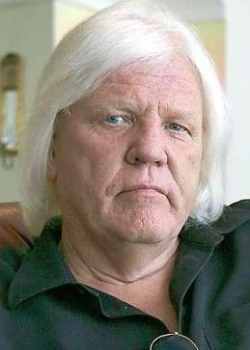 Composer, musician and electronic-music pioneer Edgar Froese died in Vienna, Austria, on January 20, 2015, at the age of 70, after suffering a pulmonary embolism.
As the founder and only constant member of Tangerine Dream, Froese helped transform the possibilities of synthesizer-based music and became an important figure in film scoring, contributing to more than 60 soundtracks including Sorcerer, Thief, Risky Business, Firestarter, Legend and Miracle Mile.
Edgar Willmar Froese was born in Tilsit, East Prussia, on June 6, 1944, and grew up in West Berlin. He studied painting and sculpture at the Academy of Arts while pursuing music, initially concentrating on guitar. After encounters with Salvador Dalí and the experimental culture of the late 1960s, Froese founded Tangerine Dream in Berlin in 1967 and increasingly turned toward synthesizers, tape manipulation and electronic sequencers.
Tangerine Dream’s international breakthrough came with Phaedra (1974), recorded by Froese, Christopher Franke and Peter Baumann. Its hypnotic sequencer patterns, vast electronic textures and slowly evolving melodies became a landmark of the so-called Berlin School of electronic music. Albums including Rubycon, Stratosfear and Force Majeure consolidated the group’s reputation and attracted the attention of director William Friedkin. Read more…
Manuel De Sica, 1949-2014
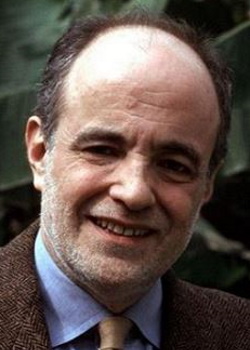 Composer Manuel De Sica died in Rome on December 5, 2014, at the age of 65, following a heart attack.
The son of legendary director Vittorio De Sica and Spanish actress María Mercader, he established an identity independent of his celebrated family through a career encompassing more than 70 film scores, television music, concert works and popular songs. His best-known films included The Garden of the Finzi-Continis, The Icicle Thief, Al lupo Al lupo, Cemetery Man, and Celluloide.
Manuel De Sica was born in Rome on February 24, 1949. He studied music from childhood and attended the Conservatory of Santa Cecilia, where his teachers included the influential modernist composer Bruno Maderna. Although surrounded by cinema—his father was one of the defining figures of Italian neorealism—De Sica initially pursued music on its own terms, developing interests in both classical composition and contemporary popular styles. In 1969 he formed the pop group The Ancients, with whom he appeared on Italian television.
His entrance into film music nevertheless came through his father. De Sica made his feature debut at just 19 with A Place for Lovers (1968), starring Faye Dunaway and Marcello Mastroianni. Their most important collaboration followed with The Garden of the Finzi-Continis (1970), Vittorio De Sica’s acclaimed adaptation of Giorgio Bassani’s novel about an aristocratic Jewish family living under Fascism. Manuel’s elegant, melancholy score brought him international attention and a Grammy nomination, while the film itself won the Academy Award for Best Foreign Language Film. Read more…
Antoine Duhamel, 1925-2014
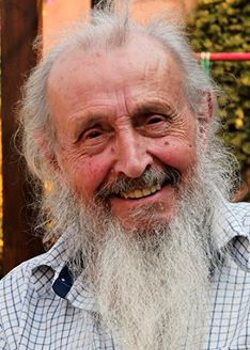 Composer and conductor Antoine Duhamel died in Paris on September 10, 2014, at the age of 89.
One of the musicians most closely associated with the French New Wave, Duhamel wrote more than 60 film scores and worked with directors including Jean-Luc Godard, François Truffaut, Bertrand Tavernier, Patrice Leconte and Fernando Trueba. His music combined rigorous classical technique with a willingness to experiment, resulting in scores that could be romantic, ironic, austere or deliberately disruptive.
Duhamel was born in Valmondois, near Paris, on July 30, 1925, the son of novelist Georges Duhamel and actress Blanche Albane. He studied with two of the most important figures in post-war European music, Olivier Messiaen and René Leibowitz, the latter introducing him to twelve-tone and serial techniques. Alongside cinema, Duhamel maintained a substantial career as a concert composer, writing orchestral and chamber works, songs, oratorios and operas.
His first important film collaboration was Jean-Daniel Pollet’s experimental Méditerranée (1963), but it was Jean-Luc Godard’s Pierrot le Fou (1965) that established his reputation. Duhamel’s music—by turns lyrical, fractured and dramatically emphatic—was used by Godard with characteristic freedom, sometimes interrupting scenes rather than conventionally supporting them. He subsequently scored Godard’s Made in U.S.A. (1966) and Weekend (1967), cementing his association with the New Wave. Read more…
Ken Thorne, 1924-2014
 Composer, conductor and arranger Ken Thorne died on July 9, 2014 in hospital in the West Hills area of Los Angeles, California, at the age of 90.
Best known for his long association with director Richard Lester, Thorne enjoyed a career spanning more than five decades, encompassing film, television and popular music. He won an Academy Award for A Funny Thing Happened on the Way to the Forum and later became familiar to a generation of filmgoers through his scores for Superman II and Superman III.
Thorne was born in Dereham, Norfolk, on January 26, 1924. A pianist from an early age, he began his professional career playing with British dance and big bands during the 1940s before turning increasingly to arranging and composition. By the beginning of the 1960s he had entered the film industry, with early credits including Three on a Spree and Richard Lester’s musical comedy It’s Trad, Dad!
His career changed significantly when Lester invited him to provide the incidental music for the Beatles’ second film, Help! (1965). Unlike A Hard Day’s Night, whose score had been overseen by George Martin, Help! required Thorne to weave the Beatles’ songs into a broader comic-adventure soundtrack. He arranged several pieces in deliberately incongruous styles and provided original incidental material, resulting in a score whose musical wit complemented Lester’s fast-moving visual comedy. The soundtrack earned Thorne a Grammy nomination.
Thorne’s greatest professional recognition followed with Lester’s A Funny Thing Happened on the Way to the Forum (1966). Working with Stephen Sondheim’s songs, he adapted, arranged and conducted the music for the screen, while also providing additional instrumental material. His work won the Academy Award for Best Scoring of Music—Adaptation or Treatment, making it the most prestigious honor of his career.
John Cacavas, 1930-2014
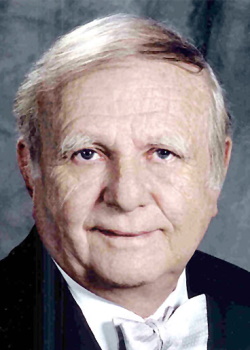 Composer, arranger and conductor John Cacavas died at his home in Beverly Hills, California, on January 28, 2014, at the age of 83, following a period of declining health.
A prolific figure in American film and television music, Cacavas scored hundreds of television episodes, numerous television movies and a smaller but memorable group of feature films, including Horror Express, Airport 1975 and Airport ’77. He remains especially associated with Kojak, for which he composed music for more than 100 episodes.
Cacavas was born in Aberdeen, South Dakota, on August 13, 1930, into a Greek-American family. He became interested in music as a teenager, taught himself saxophone and was leading his own dance band by the age of 14. After studying at Northern State College, he transferred to Northwestern University, where he studied composition and theory. Military service subsequently took him to Washington, D.C., where he worked as an arranger for the United States Army Band.
After leaving the Army, Cacavas moved to New York and worked as an arranger, songwriter and conductor, eventually joining CBS. During this period he collaborated frequently with broadcaster Charles Osgood. Among their projects was Senator Everett Dirksen’s spoken-word recording Gallant Men, which became a major success and won the Grammy Award for Best Spoken Word Recording in 1967. Read more…
Riz Ortolani, 1926-2014
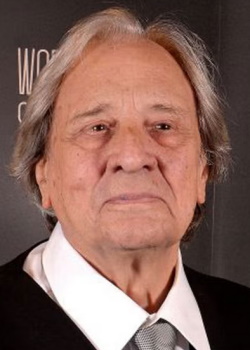 Composer, arranger and conductor Riz Ortolani died in Rome on January 23, 2014, at the age of 87, following complications from bronchitis.
One of the most prolific figures in Italian film music, Ortolani scored more than 200 films and television productions during a career spanning five decades, moving effortlessly between documentaries, romantic dramas, spaghetti westerns, war films, thrillers, horror and exploitation cinema. His international breakthrough came with Mondo Cane, whose theme “More” became a worldwide standard.
Riziero Ortolani was born in Pesaro, Italy, on March 25, 1926. Encouraged by his musically inclined father, he studied at the Conservatorio Gioachino Rossini in Pesaro and subsequently worked as an orchestral musician, arranger and bandleader. He joined Italian state broadcaster RAI and during the 1950s led his own jazz orchestra, which also performed in the United States. His background in jazz, popular music and classical orchestration would become central to the remarkable stylistic versatility of his film scores.
Ortolani became a full-time film composer with the controversial documentary Mondo Cane (1962), directed by Gualtiero Jacopetti, Paolo Cavara and Franco Prosperi. Working with Nino Oliviero, he wrote a strikingly lush and melodic score whose beauty often provided an ironic contrast to the film’s deliberately shocking imagery. Its central melody became the song “More,” with English lyrics by Norman Newell, and quickly escaped the confines of the film. It was recorded by artists including Frank Sinatra, Andy Williams, Shirley Bassey and The Supremes, won a Grammy Award for Best Instrumental Theme, and received an Academy Award nomination for Best Original Song.
The success of Mondo Cane immediately opened international doors. Ortolani scored films including The 7th Dawn (1964), Old Shatterhand (1964) and Anthony Asquith’s star-studded The Yellow Rolls-Royce (1964). The latter produced another major song, “Forget Domani,” which won the Golden Globe for Best Original Song, while Ortolani’s score received a separate Golden Globe nomination. He subsequently worked on The Glory Guys (1965), The Spy with a Cold Nose (1966), Vittorio De Sica’s Woman Times Seven (1967), The Chastity Belt (1967), Anzio (1968) and Buona Sera, Mrs. Campbell (1968). Read more…
Wojciech Kilar, 1932-2013
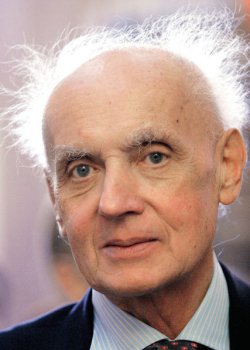 Composer Wojciech Kilar died on December 29, 2013 at his home in Katowice, Poland, after a battle with cancer. He was 81.
Kilar was born in Lvov, Ukraine, when it was still part of Poland, in July 1932, but moved to Katowice in Silesia in 1948 with his father, a gynecologist, and his mother, an actress. Kilar studied at the State Higher School of Music in Katowice under composer and pianist Władysława Markiewiczówna, at the State Higher School of Music in Kraków under composer and pianist Bolesław Woytowicz, and in Paris with the legendary Nadia Boulanger in the late 1950s. Upon his return to Poland, Kilar and fellow composers Henryk Górecki and Krzysztof Penderecki led an avant-garde music movement in the 1960s, during which time he wrote several acclaimed classical works.
Kilar scored his first film in 1959, and went gone on to write music from some of Poland’s most acclaimed directors, including Krzysztof Kieślowski, Krzysztof Zanussi, Kazimierz Kutz and Andrzej Wajda. He worked on over 100 titles in his home country, including internationally recognized titles such as Bilans Kwartalny (1975), Ziemia Obiecana (1975), Rok Spokojnego Słońca (1984), Życie Za Życie (1991) and Pan Tadeusz (1999), plus several others in France and across other parts of Europe. Read more…
Armando Trovajoli, 1917-2013
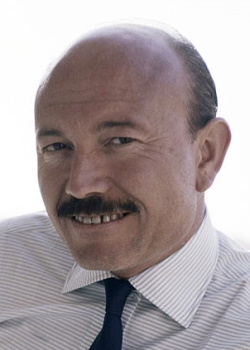 Composer, pianist and conductor Armando Trovajoli died in Rome on February 28, 2013, at the age of 95.
One of the most prolific and versatile musicians of post-war Italian cinema, Trovajoli composed or conducted more than 300 film scores during a career spanning six decades, working with directors including Vittorio De Sica, Dino Risi, Mario Monicelli and, most extensively, Ettore Scola. His sophisticated mixture of jazz, orchestral writing, popular song and unmistakably Italian melody made him one of the defining musical voices of the commedia all’italiana.
Trovajoli was born in Rome on September 2, 1917, and began studying piano as a child. After military service during World War II he graduated from the Santa Cecilia Conservatory in 1948 and studied composition with fellow film composer Angelo Francesco Lavagnino. Jazz remained a lifelong passion: Trovajoli became one of Italy’s leading jazz pianists and performed alongside musicians including Miles Davis, Chet Baker, Stéphane Grappelli and Django Reinhardt.
His film career began when he collaborated with Goffredo Petrassi on Giuseppe De Santis’s neorealist classic Bitter Rice (1949). Alberto Lattuada’s Anna (1951) brought an early popular success through the Latin-flavored song “El Negro Zumbón,” performed onscreen by Silvana Mangano and subsequently an international hit. Read more…
Richard Rodney Bennett, 1936-2012
 Composer Sir Richard Rodney Bennett died on December 24, 2012, in New York, where he had lived since 1979. He was 76.
Bennett was born in Broadstairs, Kent, in March 1936, the son of novelist and lyricist Rodney Bennett, and singer/pianist Joan Bennett. His mother had trained with Gustav Holst and sang in the first professional performance of The Planets. He studied at the Royal Academy of Music under Howard Ferguson and Lennox Berkeley, and later in Paris with the avant-garde composer Pierre Boulez.
Bennett was best known to international audiences for his work in film and television, having composed more than fifty scores over the course of his career. He earned Academy Award nominations for Far from the Madding Crowd (1967), Nicholas and Alexandra (1971), and Murder on the Orient Express (1974), the latter of which contained a lavish orchestral suite evoking 1930s glamour and intrigue, and which remains one of his most celebrated. Other notable works include Lady Caroline Lamb (1973), Equus (1977), Enchanted April (1991), the smash hit comedy Four Weddings and a Funeral (1994), and the score for prestige BBC production of Gormenghast in 2000, which was one of his last major media commissions. Read more…
Richard Robbins, 1940-2012
 Composer Richard Robbins died on November 7, 2012, at his home in Rhinebeck, New York. He was 71, and had been suffering from Parkinson’s disease for many years.
Robbins was born in South Weymouth, Massachusetts, in December 1940, and studied at the New England Conservatory of Music and later later received a fellowship through a fund established by the philanthropist Frank Huntington Beebe to continue his studies in Vienna, Austria. He joined the film production company Merchant Ivory – co-owned by producer Ismail Merchant and director James Ivory – as a musical advisor in the early 1970s and went on to score over a dozen of the company’s films, with his work becoming an integral part of their cinematic identity.
Robbins crafted elegant, emotionally nuanced scores for the overwhelming majority of Merchant Ivory’s most celebrated films, including The Europeans (1979), Heat and Dust (1983), The Bostonians (1984), A Room with a View (1985), Maurice (1987), Mr. & Mrs. Bridge (1990), Howards End (1992), The Remains of the Day (1993), Jefferson in Paris (1995), and Surviving Picasso (1996); he received Academy Award nominations for Howards End and The Remains of the Day, and a BAFTA nomination for A Room with a View. Read more…
Marvin Hamlisch, 1944-2012
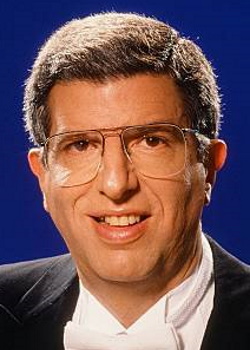 Composer Marvin Hamlisch died on August 6, 2012, at his home in Los Angeles, California, after a brief illness. He was 68.
Marvin Frederick Hamlisch was born in June 1944 in New York City to Austrian Jewish parents. He was a child prodigy who entered Juilliard at age seven, and then attended Queens College, earning his Bachelor of Arts degree in 1967.
A rare winner of the EGOT – Emmy, Grammy, Oscar, and Tony Awards – Hamlisch was one of the most decorated and versatile musicians of his generation. His work ranged from heartfelt ballads to rousing film scores, from Broadway showstoppers to pop hits, all marked by his melodic gift and deep emotional accessibility. He began his career as a rehearsal pianist for Barbra Streisand early in his career, later becoming her musical director and collaborator. His songs became hits for numerous artists, and his work as a conductor with major orchestras further expanded his artistic reach; his popular songs include “Sunshine, Lollipops and Rainbows” and “California Nights” for Lesley Gore, and “The Travelin’ Life” for Liza Minnelli.
His first film score was for 1968’s The Swimmer. He also wrote music for several early Woody Allen films, including Take the Money and Run (1969) and Bananas (1971). Hamlisch’s film work brought him three Academy Awards, all in 1974: two for The Way We Were (Best Original Score and Best Song, shared with lyricists Alan and Marilyn Bergman), and one for his adaptation of Scott Joplin’s ragtime music for The Sting. Other notable film and TV scores in his career include Kotch in 1971, Save the Tiger in 1973, the James Bond film The Spy Who Loved Me in 1977, Ice Castles in 1978, Ordinary People in 1980, Sophies Choice in 1982, Shirley Valentine in 1989, and The Mirror Has Two Faces in 1996. Read more…

Shop at the Movie Music UK Store

Member of the


