Archive
Riz Ortolani, 1926-2014
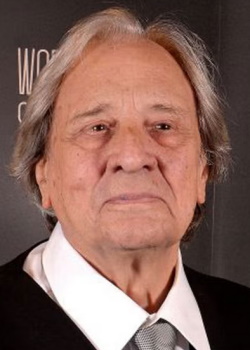 Composer, arranger and conductor Riz Ortolani died in Rome on January 23, 2014, at the age of 87, following complications from bronchitis.
One of the most prolific figures in Italian film music, Ortolani scored more than 200 films and television productions during a career spanning five decades, moving effortlessly between documentaries, romantic dramas, spaghetti westerns, war films, thrillers, horror and exploitation cinema. His international breakthrough came with Mondo Cane, whose theme “More” became a worldwide standard.
Riziero Ortolani was born in Pesaro, Italy, on March 25, 1926. Encouraged by his musically inclined father, he studied at the Conservatorio Gioachino Rossini in Pesaro and subsequently worked as an orchestral musician, arranger and bandleader. He joined Italian state broadcaster RAI and during the 1950s led his own jazz orchestra, which also performed in the United States. His background in jazz, popular music and classical orchestration would become central to the remarkable stylistic versatility of his film scores.
Ortolani became a full-time film composer with the controversial documentary Mondo Cane (1962), directed by Gualtiero Jacopetti, Paolo Cavara and Franco Prosperi. Working with Nino Oliviero, he wrote a strikingly lush and melodic score whose beauty often provided an ironic contrast to the film’s deliberately shocking imagery. Its central melody became the song “More,” with English lyrics by Norman Newell, and quickly escaped the confines of the film. It was recorded by artists including Frank Sinatra, Andy Williams, Shirley Bassey and The Supremes, won a Grammy Award for Best Instrumental Theme, and received an Academy Award nomination for Best Original Song.
The success of Mondo Cane immediately opened international doors. Ortolani scored films including The 7th Dawn (1964), Old Shatterhand (1964) and Anthony Asquith’s star-studded The Yellow Rolls-Royce (1964). The latter produced another major song, “Forget Domani,” which won the Golden Globe for Best Original Song, while Ortolani’s score received a separate Golden Globe nomination. He subsequently worked on The Glory Guys (1965), The Spy with a Cold Nose (1966), Vittorio De Sica’s Woman Times Seven (1967), The Chastity Belt (1967), Anzio (1968) and Buona Sera, Mrs. Campbell (1968). Read more…

Shop at the Movie Music UK Store

Member of the


