Manuel De Sica, 1949-2014
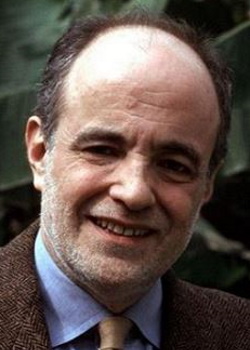 Composer Manuel De Sica died in Rome on December 5, 2014, at the age of 65, following a heart attack.
The son of legendary director Vittorio De Sica and Spanish actress María Mercader, he established an identity independent of his celebrated family through a career encompassing more than 70 film scores, television music, concert works and popular songs. His best-known films included The Garden of the Finzi-Continis, The Icicle Thief, Al lupo Al lupo, Cemetery Man, and Celluloide.
Manuel De Sica was born in Rome on February 24, 1949. He studied music from childhood and attended the Conservatory of Santa Cecilia, where his teachers included the influential modernist composer Bruno Maderna. Although surrounded by cinema—his father was one of the defining figures of Italian neorealism—De Sica initially pursued music on its own terms, developing interests in both classical composition and contemporary popular styles. In 1969 he formed the pop group The Ancients, with whom he appeared on Italian television.
His entrance into film music nevertheless came through his father. De Sica made his feature debut at just 19 with A Place for Lovers (1968), starring Faye Dunaway and Marcello Mastroianni. Their most important collaboration followed with The Garden of the Finzi-Continis (1970), Vittorio De Sica’s acclaimed adaptation of Giorgio Bassani’s novel about an aristocratic Jewish family living under Fascism. Manuel’s elegant, melancholy score brought him international attention and a Grammy nomination, while the film itself won the Academy Award for Best Foreign Language Film.
He continued working with his father on Lo Chiameremo Andrea (1972) and The Voyage (1974), the latter starring Sophia Loren and Richard Burton and proving to be Vittorio’s final feature as director. Manuel’s music for these films revealed a lyrical, romantic sensibility very different from the more experimental tendencies of many contemporary Italian composers.
Following his father’s death in 1974, De Sica developed a prolific independent career. He scored comedies, dramas, thrillers and television productions for directors including Dino Risi, Marco Risi, Pasquale Squitieri, Carlo Verdone, Maurizio Nichetti and Carlo Lizzani. His music for Nichetti’s ingenious comedy The Icicle Thief (1989) earned him a Globo d’Oro, while Carlo Verdone’s Al lupo al lupo (1992) brought him the Nastro d’Argento for Best Music.
One of his most distinctive later scores was Michele Soavi’s cult horror film Cemetery Man (Dellamorte Dellamore, 1994). De Sica combined electronics, atmospheric orchestral writing and an unexpectedly romantic central theme, giving the grotesque mixture of zombies, black comedy and existential fantasy a strangely melancholy musical identity. It became one of his most widely admired scores among international film-music enthusiasts.
Further recognition came with Carlo Lizzani’s Celluloide (1996), a drama about the making of Roberto Rossellini’s Rome, Open City. De Sica won the David di Donatello for Best Music, one of the highest honors of his career. Alongside his screen work he composed symphonic and chamber music, including works for harp, clarinet and other solo instruments.
De Sica also devoted considerable energy to preserving his father’s legacy. He served as president of the Associazione Amici di Vittorio De Sica, supported restoration and retrospective projects, and in 2013 published Di figlio in padre, a personal memoir of their relationship. In 2005 he was appointed a Commander of the Order of Merit of the Italian Republic.
He is survived by his second wife Maria Lucia Langella, his son Andrea De Sica, who became a film director, and his brother, actor and director Christian De Sica.

Shop at the Movie Music UK Store

Member of the


