Archive
Johnny Mandel, 1925-2020
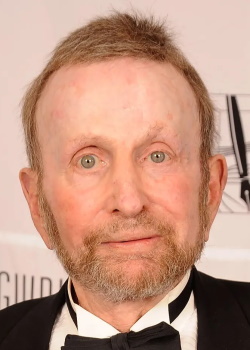 Composer, arranger and musician Johnny Mandel died at his home in Ojai, California, on June 29, 2020, at the age of 94.
One of the most sophisticated voices in American film, jazz and popular music, Mandel wrote scores for more than 30 films and created such enduring songs as “The Shadow of Your Smile,” “Emily,” “A Time for Love” and “Suicide Is Painless.”.
John Alfred Mandel was born in New York City on November 23, 1925. Blessed with perfect pitch, he studied at the Manhattan School of Music and briefly at Juilliard, and became a professional trumpeter and trombonist while still young. During the 1940s and 1950s he played or arranged for bands led by Buddy Rich, Jimmy Dorsey, Woody Herman, Artie Shaw and Count Basie, developing the deep understanding of jazz harmony and orchestral color that would define his later film music.
Mandel moved to Hollywood in 1957 and made an immediate impact with Robert Wise’s I Want to Live! (1958), starring Susan Hayward. The score integrated modern jazz directly into the dramatic fabric of the film rather than treating it merely as source music, and its soundtrack brought Mandel three Grammy nominations. He followed it with films including The Third Voice (1960), Drums of Africa (1963) and Arthur Hiller’s The Americanization of Emily (1964), whose lyrical main theme became the song “Emily” after Johnny Mercer added lyrics. Read more…
Lennie Niehaus, 1929-2020
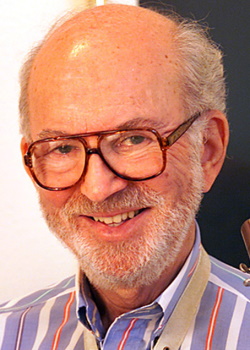 Composer Lennie Niehaus died on May 28, 2020, at his home in Redlands, California, of a heart-related illness. He was 90.
Leonard Niehaus was born in June 1929, in St. Louis, Missouri, but grew up in Los Angeles, where he developed his love for music. He graduated from California State University, Los Angeles, with a degree in music composition. Niehaus began his career as a jazz alto saxophonist, gaining prominence in the 1950s as a member of Stan Kenton’s orchestra. He was celebrated for his fluid improvisation and skillful arrangements, which earned him a respected place in the West Coast jazz scene.
In the 1960s Niehaus began orchestrating for television and film composer Jerry Fielding; Niehaus worked with Fielding on approximately seventy TV shows and films, including Straw Dogs (1971), Bring Me the Head of Alfredo Garcia (1974), the comedy The Bad News Bears (1976), and the horror film Demon Seed (1977). Read more…
Gerard Schurmann, 1924-2020
 Composer and conductor Gerard Schurmann died at his home in the Hollywood Hills, California, on March 24, 2020, at the age of 96, following a period of declining health.
A distinguished figure in both film and concert music, Schurmann was best known for scores including The Long Arm, Horrors of the Black Museum, Konga, Dr. Syn, Alias the Scarecrow, The Bedford Incident and The Lost Continent. He was also an accomplished orchestrator whose work included two of the great epic scores of the 1960s, Exodus and Lawrence of Arabia.
Gerard Schurmann was born in Kertosono, Java, in the Dutch East Indies, on January 19, 1924, to Dutch parents. His mother was an accomplished pianist, and music became an important part of his childhood. He moved to England at 17 during the Second World War and served with the Royal Air Force, eventually using his talents as a pianist to provide musical entertainment for servicemen.
After the war Schurmann briefly worked as cultural attaché at the Netherlands Embassy in London while continuing to perform and compose. Encouraged by conductor Eduard van Beinum, he became associated with Dutch radio orchestras in Hilversum, but his principal ambition was composition. An important mentor was British composer Alan Rawsthorne, whose friendship eventually helped Schurmann enter the film industry. Read more…
Barrington Pheloung, 1954-2019
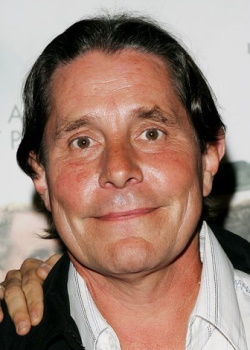 Composer and conductor Barrington Pheloung died in Australia on July 31, 2019, at the age of 65, from respiratory failure.
An Australian who spent most of his professional life in Britain, Pheloung was best known for his haunting music for Inspector Morse, and subsequently Lewis and Endeavour. He also enjoyed a distinguished career in film, theatre and dance, receiving an Academy Award nomination for his score for Hilary and Jackie.
Barrington Somers James Pheloung was born in Manly, New South Wales, on May 10, 1954. He began playing guitar as a child and performed in blues and R&B groups with his brother before discovering Bach in his late teens and becoming increasingly interested in classical music. At 18 he moved to London, initially studying guitar and double bass at Chiswick Music Centre before winning a scholarship to the Royal College of Music. There he studied composition with John Lambert and guitar with John Williams and Julian Bream.
Pheloung’s earliest professional commissions were for dance. While still a student he became involved with the London Contemporary Dance Theatre and was appointed its musical director in 1979, remaining with the company until 1995. He ultimately composed more than 50 works for dance, initially influenced by avant-garde figures including Schoenberg, Stockhausen and Boulez while also incorporating jazz, blues, electronics and unusual percussion.
Television brought him to a much wider audience. After writing music for the first series of Boon in 1985, Pheloung was commissioned to score Inspector Morse in 1987. His melancholy orchestral theme became one of the most recognizable pieces of British television music. Ingeniously, its rhythm incorporated Morse code spelling out M-O-R-S-E, while Pheloung occasionally embedded the identity of a murderer—or a deliberate red herring—into individual episodes using the same technique. Read more…
Scott Walker, 1943-2019
 Singer, songwriter and composer Scott Walker died in London on March 22, 2019, at the age of 76. The cause of death was not publicly announced.
One of the most singular figures in modern popular music, Walker travelled an extraordinary path from 1960s pop idol to uncompromising avant-garde composer. His involvement with cinema was comparatively limited, but his scores for Pola X, The Childhood of a Leader and Vox Lux provided a remarkable late chapter to one of music’s most unpredictable careers.
Walker was born Noel Scott Engel in Hamilton, Ohio, on January 9, 1943, and grew up largely in California. After working as a child performer and session bass guitarist, he joined John Maus and Gary Leeds in the Walker Brothers. The trio moved to Britain in 1965 and became enormous stars with records including “Make It Easy on Yourself” and “The Sun Ain’t Gonna Shine (Anymore),” Walker’s deep baritone making him one of the most distinctive singers of the era.
After leaving the group, Walker embarked on a remarkable solo career. The albums Scott, Scott 2, Scott 3 and Scott 4 combined orchestral pop, existential songwriting and his fascination with Jacques Brel. Following a lengthy period of declining commercial success, he gradually reinvented himself with increasingly experimental music, culminating in Tilt (1995), The Drift (2006) and Bish Bosch (2012). These dense, frequently unsettling works used unconventional percussion, dissonance and vast orchestral textures in ways that often seemed inherently cinematic. Read more…
André Previn, 1929-2019
 Composer André Previn died on February 28, 2019, at home in Manhattan, New York, after a short illness. He was 89.
André George Previn was born in April 1929, in Berlin, Germany, and he showed early musical talent and began studying piano and composition as a child. Fleeing Nazi persecution, Previn’s family emigrated to Los Angeles in 1938, where his uncle Charles Previn, a music director at Universal Studios, introduced him to Hollywood’s burgeoning film industry. He graduated from Beverly Hills High School – where he was a classmate of Richard M. Sherman – and he went to work at MGM Studios as a teenager in the 1940s, where he quickly became a key figure in their music department. Over two decades, he composed, arranged, and conducted music for over 50 films. His film scores displayed a sophisticated blend of lush orchestration and accessibility, contributing significantly to the Golden Age of Hollywood.
His first scores were written when he was still in his early 20s, and he worked on a wide range of films, from westerns like Bad Day at Black Rock (1954) and The Fastest Gun Alive (1956) to dramatic epics like Elmer Gantry (1960) and The Four Horsemen of the Apocalypse (1961), and lighthearted comedies like The Music Lovers (1970). His scores often reflected his classical training, jazz influences, and innate ability to capture the emotional essence of a story. Read more…
Michel Legrand, 1932-2019
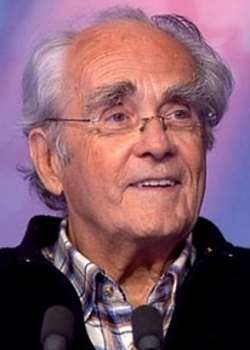 Composer Michel Legrand died on January 26, 2019, in hospital in Paris, France, after a short illness related to a pulmonary infection. He was 86.
Michel Jean Legrand was born in Paris, France, in 1932, the son of composer-conductor Raymond Legrand and his wife, Marcelle Ter-Mikaëlian, who was the sister of conductor Jacques Hélian. Legrand studied music at the Conservatoire de Paris from age 11, working with Nadia Boulanger among others, and as both a composer and a pianist. He achieved early career success in 1954 age 22 when his original jazz album I Love Paris became a surprise hit in Europe. He released numerous more albums in the 1950s, including the popular Paris Jazz Piano in 1959, and then established himself as a jazz composer, pianist, and bandleader in the United States, working with jazz stars such as Miles Davis, Stan Getz, and Lena Horne.
Legrand dabbled in film music from the mid 1950s onwards, but achieved his first significant success in 1960 when he scored director Jean-Luc Godard’s groundbreaking A Woman Is a Woman (Une Femme Est Une Femme) in 1961. Legrand quickly became a key musical component of the French New Wave, working for Godard and other directors such as Jacques Demy and Agnès Varda, among others, on such classics as Lola (1961), Vivre Sa Vie (1962), Cléo de 5 à 7 (1962), La Baie des Anges (1963), Bande à Part (1964), and La Chinoise (1967). His score for Demy’s 1965 musical film The Umbrellas of Cherbourg earned him his first Academy Award nomination, and from that point on Legrand split his time between Hollywood and Europe, working on both big-budget American and films and more artistic French fare. Read more…
Francis Lai, 1932-2018
 Composer Francis Lai died on November 7, 2018, at home in Paris, France, after a short illness. He was 86.
Francis Albert Lai was born in Nice, France, in April 1932. He moved to Paris in his twenties and began composing songs while working with lyricist Bernard Dimey. He accompanied Édith Piaf and wrote songs for French singers such as Mireille Mathieu and Yves Montand before transitioning into film scoring in the mid-1960s. His breakthrough came in 1966 with Un Homme et Un Femme [A Man and a Woman], directed by Claude Lelouch. The film won the Palme d’Or at Cannes, and Lai’s score – particularly its vocal theme – became a major success. He would go on to score more than 30 of Lelouch’s films, notably .
Lai’s most widely recognized international work came in 1970 with Love Story, starring Ryan O’Neal and Ali MacGraw. Its theme became a chart-topping hit in both instrumental and vocal versions, and Lai received the Academy Award and a Golden Globe for the score. His other notable works include Mayerling (1968), Rider on the Rain (1970), Emmanuelle II (1975), Bilitis (1977), and International Velvet (1978). He also composed for television and collaborated with artists such as Carly Simon. Read more…
Stelvio Cipriani, 1937-2018
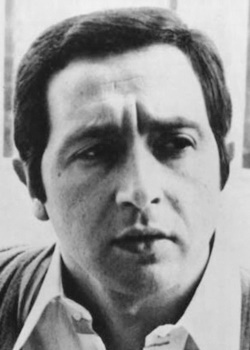 Composer Stelvio Cipriani died in Rome on October 1, 2018, at the age of 81, following a period of ill health after suffering an ischemia the previous year.
One of the most prolific composers working in Italian cinema during the 1970s, Cipriani wrote more than 200 film scores, encompassing westerns, thrillers, horror films, crime dramas, comedies and romances.
Cipriani was born in Rome on August 20, 1937. He studied piano and composition at the Conservatorio di Santa Cecilia and began his professional career accompanying popular singers, including Rita Pavone. He later spent time in the United States studying jazz before returning to Italy and entering the film industry during the mid-1960s.
His first feature score was for the 1966 western The Bounty Killer, followed by The Stranger Returns in 1967, starring Tony Anthony. The latter contained the sort of immediately memorable melody that would become a Cipriani trademark, and its main theme was subsequently recorded by Henry Mancini. Westerns provided some of his earliest opportunities, but Cipriani quickly expanded into almost every area of Italian genre cinema.
His greatest popular success came with director Enrico Maria Salerno’s romantic drama The Anonymous Venetian (Anonimo Veneziano) in 1970. Cipriani’s melancholy central melody, usually led by piano and strings, perfectly captured the film’s story of lost love and impending death against the decaying beauty of Venice. The score became enormously popular in its own right and earned Cipriani the Nastro d’Argento for Best Music, establishing him as one of Italy’s most sought-after film composers. Read more…
Patrick Williams, 1939-2018
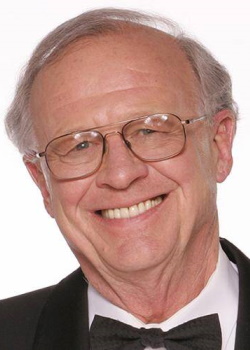 Composer, arranger and conductor Patrick Williams died in Santa Monica, California, on July 25, 2018, at the age of 79, from complications of cancer.
One of the most versatile American screen composers of his generation, Williams scored nearly 50 feature films and an enormous body of television while maintaining a parallel career in jazz and concert music. He received an Academy Award nomination, won four Emmy Awards and two Grammys, and was nominated for the Pulitzer Prize in music.
Patrick Moody Williams was born in Bonne Terre, Missouri, on April 23, 1939, and grew up in Connecticut. A trumpeter and enthusiastic jazz musician, he led his own band while still in school before studying history at Duke University, where he directed the Duke Ambassadors jazz ensemble. After graduating in 1961 he moved to New York, studied composition and conducting at Columbia University, and began working as an arranger and writer of advertising jingles.
Encouraged by Henry Mancini, Williams moved to Los Angeles in the late 1960s and quickly established himself in film and television. His early feature assignments included How Sweet It Is! (1968), followed during the 1970s by films such as Casey’s Shadow (1978), Richard Lester’s Butch and Sundance: The Early Days (1979) and Cuba (1979). His music drew naturally on jazz, big-band writing and the classical orchestral tradition, allowing him to move comfortably between comedy, romance and drama. Read more…
Arthur B. Rubinstein, 1938-2018
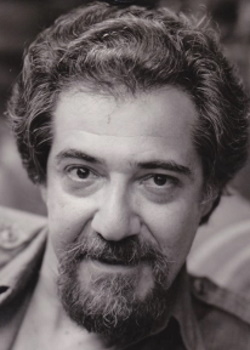 Composer Arthur B. Rubinstein died on April 23, 2018, in Los Angeles, after a short illness. He was 80.
Arthur Benjamin Rubinstein was born in Brooklyn, New York, in March 1938. He studied at the University of Hartford and the Juilliard School, and began his career in theater and concert music before moving into film and television.
Rubinstein’s subsequent career spanned over four decades. A frequent creative partner of director John Badham, Rubinstein’s propulsive electronic score for Blue Thunder (1983) and the suspenseful, thematically rich music for WarGames (1983) remain among his best-known works. His other acclaimed scores include titles such as Short Circuit (1986), Stakeout (1987), The Hard Way (1991), Another Stakeout (1993), and Nick of Time (1995).
He also wrote scores for numerous TV series, including episodes of Scarecrow and Mrs. King, the 1985 reboot of The Twilight Zone, Amazing Stories, Wiseguy, The Love Boat, Sledge Hammer, and even The Simpsons. He won the Primetime Emmy Award for Outstanding Achievement in Music Composition for a Series (Dramatic Underscore) for the episode “We’re Off to See the Wizard” from Scarecrow and Mrs. King in 1986. Read more…
Jóhann Jóhannsson, 1969-2018
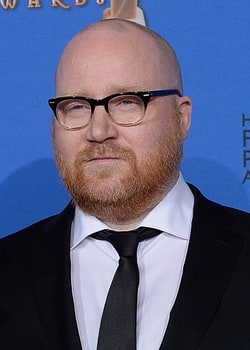 Composer Jóhann Jóhannsson died on February 9, 2018, at his home in Berlin, Germany, of an accidental drug overdose. He was 48 years old.
Jóhann Jóhannsson was born in Reykjavik, Iceland, in September 1969. After graduating from university he started his musical career in the mid-1990s as a guitarist playing in various Icelandic indie rock bands, before founding Kitchen Motors, an art organization that encouraged musical collaborations between artists from numerous different genres. He began scoring television projects and films in his native Iceland in 1999, beginning with the TV series Corpus Camera and the theatrical feature The Icelandic Dream [Íslenski Draumurinn] for director Robert Ingi Douglas, and went on to write several acclaimed scores for Icelandic directors over the next several years.
Jóhannsson scored his first English-language film, Personal Effects for director David Hollander, in 2009, first came to international prominence in 2013 when he was asked to score the dark thriller Prisoners starring Hugh Jackman and Jake Gyllenhaal by director Denis Villeneuve. He followed this with the score for the Steven Hawking bio-pic The Theory of Everything in 2014, for which he won the Golden Globe Award for Best Original Score, and was nominated for an Academy Award for Best Original Score, a BAFTA Award for Best Film Music, and a Grammy Award for Best Score Soundtrack for Visual Media. Read more…
John Morris, 1926-2018
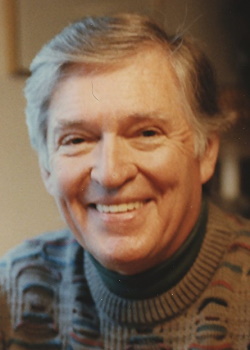 Composer John Morris died on January 25, 2018, at his home in Red Hook, New Jersey, following complications from a respiratory infection. He was 91.
John Leonard Morris was born in October 1926, in Elizabeth, New Jersey. After his family moved to Kansas while he was young, Morris continued studying piano, and by the late 1940s he moved back to the New York City are, where he studied at both Juilliard School and at The New School. He pursued a career as a concert pianist and musical director before transitioning to composing for theater and film. Morris began his long and fruitful collaboration with writer-director Mel Brooks in the late 1950s, and together they worked on two musicals, Shinbone Alley (1957) and All-American (1962).
Morris and Brooks continued to work together when Brooks brought his play ‘Springtime for Hitler’ to the big screen as The Producers in 1967, and their collaboration continued through a string of hits including Blazing Saddles (1974), Young Frankenstein (1974), Silent Movie (1976), High Anxiety (1977), History of the World, Part I (1981), and Spaceballs (1987), among many others. His deft orchestral parodies and lovingly crafted pastiches matched Brooks’ irreverent humor beat for beat. Read more…
Dominic Frontiere, 1931-2017
 Composer Dominic Frontiere died on December 21, 2017, in his home in Tesuque, New Mexico, after a short illness. He was 86.
Dominic Carmen Frontiere was born in New Haven, Connecticut, in June 1931. A classically trained accordion prodigy who performed at Carnegie Hall as a teenager, Frontiere went on to study at the Juilliard School before beginning a career in Hollywood that spanned more than four decades. He first gained recognition as musical director at 20th Century Fox, where he collaborated with Alfred Newman and contributed to a variety of studio productions.
His association with director and producer Leslie Stevens led to Frontiere scoring his first major film, The Marriage-Go-Round, in 1961. That relationship led Frontiere to became an executive of the television and film production company Daystar Productions, a company Stevens run. He composed several famous television themes of the 1960s, such as those for The Outer Limits, The Rat Patrol, Branded, and The Flying Nun, as well as The Invaders, The Fugitive, and 12 O’Clock High for producer Quinn Martin.
In cinema, he earned acclaim for his scores to films including Hang ‘Em High (1968), starring Clint Eastwood, and Freebie and the Bean (1974) while his score for The Stunt won a Golden Globe Award and earned him a Grammy nomination in 1980. Other notable films scored by Frontiere include On Any Sunday in 1971, Cleopatra Jones and the Casino of Gold in 1975, Brannigan in 1975, The Aviator in 1985, and Color of Night in 1994, which was his final major work. Read more…
Luis Enríquez Bacalov, 1933-2017
 Composer Luis Enríquez Bacalov died on November 15, 2017, at his home in Rome, Italy, after suffering a stroke. He was 84.
Bacalov was born in August 1933 in Buenos Aires, Argentina, to a Bulgarian Jewish family and studied music from an early age; his teachers included Enrique Barenboim, the father of famed conductor Daniel Barenboim, and pianist Berta Sujovolsky. Bacalov relocated from Argentina to Italy in the 1950s, and spent the majority of the rest of his life living and working there.
He scored his first film, a low-budget ghost story called Questi Fantasmi, in 1954, and then for many years fronted a rock group in the 1960s called Luis Enrique and His Electronic Men, but first came to prominence in 1964 when he arranged the music for Pier Paolo Pasolini’s film The Gospel According to St. Matthew, which earned him an Academy Award nomination for Best Music Adaptation or Treatment when the film was released in the United States in 1967.
Bacalov quickly established himself as one of the most popular and successful composers in the Italian film industry in the 1960s and 70s; his most famous scores were for spaghetti westerns such as Django (1966), Sugar Colt (1966), Quién Sabe (1967), Lo Chiamavano King (1971), and Il Grande Duello (1972), and gritty crime thrillers such as The Summertime Killer (1972), Milano Calibro 9 (1972), Il Boss (1973), and I Padroni Della Città (1976). He scored Federico Fellini’s City of Women in 1980, Fellini’s first film after the death of Nino Rota, and then achieved arguably his most prominent international success when he won the Academy Award for Best Score in 1995 for Il Postino, The Postman. Read more…

Shop at the Movie Music UK Store

Member of the


