Archive
Christopher Gunning, 1944-2023
 Composer Christopher Gunning died on March 25, 2023, at his home in Hertfordshire, England, after a short illness. He was 78.
Christopher Gunning was born in Cheltenham, Gloucestershire, in August 1944, and studied at the Guildhall School of Music and Drama where his tutors included Edmund Rubbra and Richard Rodney Bennett.
Gunning beganm writing for film in the early 1970s, and his important early works included Goodbye Gemini (1970), the Hammer horror film Hands of the Ripper (1971), the film version of the smash hit sitcom Man About the House (1974), and Porterhouse Blue (1987), which which he received his first BAFTA Television Award.
Gunning’s most enduring contribution to film music came in 1989, when he composed the iconic theme tune for the TV series Poirot, starring David Suchet, for which he received his second BAFTA Television Award. Gunning would go on to score nearly all of the subsequent 70 Poirot TV films between 1989 and 2013. Read more…
Gerald Fried, 1928-2023
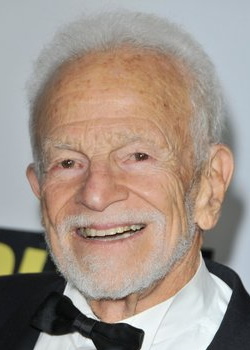 Composer Gerald Fried died on February 17, 2023, in Bridgeport, Connecticut, from pneumonia. He was 95.
Gerald Fried was born in New York, New York, in February 1928, and grew up in the Bronx. He attended the Juilliard School of Music, initially as an oboe player, and later as a composer and conductor. After his graduation in 1945 he was first oboist with the Dallas Symphony, Pittsburgh Symphony and New York’s Little Orchestras. He moved to Los Angeles in 1957 and played for one season with the Los Angeles Philharmonic.
Fried had been introduced to movies by director Stanley Kubrick, a childhood friend; Fried scored the director’s first short, the 1951 film Day of the Fight, and went on to score Kubrick’s first four features: Fear and Desire in 1953, Killer’s Kiss in 1955, The Killing in 1956, and Paths of Glory in 1957.
After his move to Los Angeles Fried began composing and arranging music for television, and worked on numerous popular shows, including M Squad, Shotgun Slade, Riverboat, Gilligan’s Island, The Man from U.N.C.L.E., Mission: Impossible, and Mannix, among many others. Perhaps his most famous piece of score was for ‘Amok Time’, the second season premiere episode of Star Trek, which featured a now-iconic fight sequence between Captain Kirk and Mr. Spock. Read more…
Burt Bacharach, 1928-2023
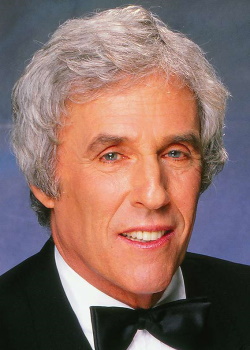 Composer Burt Bacharach died on February 9, 2023, at home in Los Angeles after a short illness. He was 94.
Burt Freeman Bacharach was born in Kansas City, Missouri, in May 1928, but grew up in Queens, New York. He developed a keen interest in jazz as a teenager, after visiting jazz clubs and watching performances by Dizzy Gillespie and Count Basie. He studied music at McGill University in Montreal, at the Mannes School of Music in New York, and at the Music Academy of the West in California, where his teachers included classical greats like Darius Milhaud and Bohuslav Martinů.
After a stint in the US Army he worked as a pianist at resorts in the Catskill Mountains of New York, before going on to work as an arranger and conductor for legendary actress Marlene Dietrich’s nightclub shows. He met lyricist Hal David in 1957, and they began writing songs together; they scored an immediate hit with “Magic Moments” by Perry Como, which reached number 1 in the charts when Bacharach was just 29 years old. Read more…
Eduard Artemyev, 1937-2022
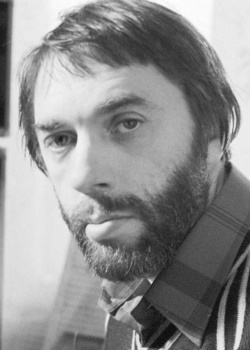 Composer Eduard Artemyev died in Moscow on December 29, 2022, at the age of 85, following hospitalization with COVID-19.
One of the great pioneers of electronic film music, Artemyev wrote music for more than 150 feature films, documentaries and animated productions during a career spanning six decades. Internationally he is best remembered for his collaborations with Andrei Tarkovsky, especially Solaris, Mirror and Stalker.
Eduard Nikolayevich Artemyev was born in Novosibirsk on November 30, 1937, and studied composition at the Moscow Conservatory under Yuri Shaporin, graduating in 1960. Soon afterward he met engineer Yevgeny Murzin, inventor of the remarkable ANS photoelectronic synthesizer. Artemyev became one of the instrument’s earliest champions, at a time when electronic composition remained almost entirely outside the Soviet musical mainstream.
His defining association began when Tarkovsky engaged him for Solaris (1972). Artemyev combined Bach’s chorale prelude Ich ruf zu dir, Herr Jesu Christ with electronic textures generated on the ANS, creating music that blurred the boundary between conventional score, sound design and the mysterious noises of the planet itself. The result was less a traditional science-fiction score than an otherworldly sonic environment, and it established Artemyev internationally as one of cinema’s most adventurous electronic composers. Read more…
Angelo Badalamenti, 1937-2022
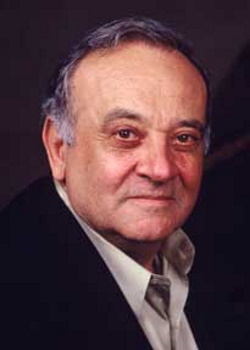 Composer Angelo Badalamenti died on December 11, 2022, at home in New Jersey after a short illness. He was 85.
Angelo Daniel Badalamenti was born in New York City in March 1937, the son of Italian immigrants from Sicily. A piano player from a young age, Badalamenti was already earning money as a pianist accompanying singers at resorts in the Catskill Mountains in his teens; he later studied at the Eastman School of Music at the University of Rochester, and then at the Manhattan School of Music, graduating with a master’s degree in 1959.
He began his career as a songwriter, penning works for singers such as Nina Simone and Shirley Bassey using the pen name Andy Badale. He made his film music debut was early as 1973, scoring the blaxploitation action pic Gordon’s War, but his break came when he was hired to be Isabella Rossellini’s vocal coach for David Lynch’s 1986 film Blue Velvet. Impressed with his work, Lynch asked Badalamenti to co-write the song “Mysteries of Love” for vocalist Julee Cruise, and then asked Badalamenti to composed the score for the entire film. Read more…
Nico Fidenco, 1933-2022
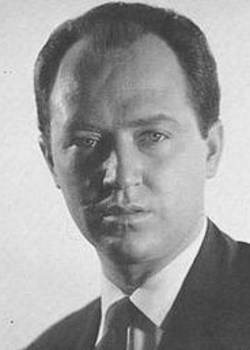 Singer, songwriter and film composer Nico Fidenco died in Rome on November 19, 2022, at the age of 89.
One of the most versatile figures in Italian popular music, Fidenco enjoyed enormous success as a singer during the early 1960s before developing a second career as a prolific composer for cinema. He wrote music for more than 80 films, particularly spaghetti westerns, thrillers, erotic dramas and horror pictures, and became especially associated with the Black Emanuelle series.
Fidenco was born Domenico Colarossi in Rome on January 24, 1933. His family moved to Asmara in Eritrea when he was a child, returning to Italy in 1949. Initially interested in filmmaking, he studied at Rome’s Centro Sperimentale di Cinematografia and worked as an assistant director while attending university. Music remained a private passion until RCA executive Vincenzo Micocci heard his demos and invited him to sing “What a Sky,” the theme from Francesco Maselli’s I Delfini (1960). The record became an immediate success.
His greatest popular triumph followed in 1961 with “Legata a un granello di sabbia.” Rejected by the Sanremo Festival, the song nevertheless became one of Italy’s first great summer hits, spending 14 weeks at number one and becoming the first Italian single to sell more than a million copies. Other successful songs included “Con te sulla spiaggia,” “A casa d’Irene,” “Se mi perderai” and “La voglia di ballare,” while Fidenco also recorded Italian versions of prominent film themes including “Moon River,” Exodus and The World of Suzie Wong. Read more…
Monty Norman, 1928-2022
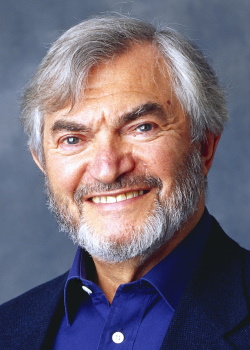 Composer, lyricist and singer Monty Norman died on July 11, 2022 in Slough, Berkshire, at the age of 94, following a short illness.
Although his career encompassed musical theatre, popular song, television and a small number of film scores, Norman secured a permanent place in cinema history through one composition: the James Bond theme, written for Dr. No in 1962 and subsequently incorporated into the musical identity of the entire Bond series.
Norman was born Monty Noserovitch in Stepney, East London, on April 4, 1928, the son of a cabinetmaker and a seamstress from a Latvian Jewish immigrant family. Given a guitar at 16, he began his professional career as a singer, performing with bands led by Cyril Stapleton, Stanley Black and Ted Heath, and appearing at the London Palladium and on radio and television. He gradually moved into songwriting, discovering that composing offered greater possibilities than performing.
By the late 1950s Norman had become a successful musical-theatre composer and lyricist. His credits included Make Me an Offer, Expresso Bongo and the English-language adaptation of Irma La Douce. His association with writer Wolf Mankowitz also produced Belle, or the Ballad of Dr Crippen, whose financial backers included producer Albert “Cubby” Broccoli. Impressed by Norman’s work, Broccoli subsequently invited him to score the first film adaptation of Ian Fleming’s James Bond novels.
Norman had already contributed music to films including Hammer’s The Two Faces of Dr. Jekyll (1960) and The Day the Earth Caught Fire (1961), but Dr. No was by far his most significant screen assignment. He travelled to Jamaica during production and drew heavily on local musical styles, writing pieces including “Kingston Calypso,” “Jump Up” and “Underneath the Mango Tree,” the latter accompanying the famous introduction of Ursula Andress as Honey Ryder. The resulting soundtrack gave the film a distinctive Caribbean character quite unlike the increasingly symphonic sound of later Bond films. Read more…
Vangelis, 1943-2022
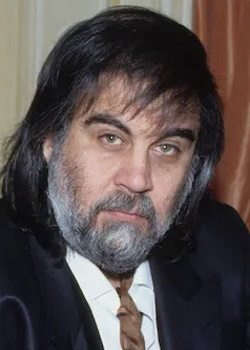 Composer Vangelis died on May 19, 2022, in hospital in Paris, where he was being treated for COVID-19. He was 79.
Evangelos Odysseas Papathanassiou was born in Agria, Greece, in March 1943, and in his youth was a self-taught musician, experimenting by combining pianos with traditional Greek folk music, jazz, and rock. After some early success in Greek pop music circles he co-founded the group Aphrodite’s Child with vocalist Demis Roussos, among others, and together they would enjoy great success in Europe, especially the single “Rain and Tears” in 1968. During this period Vangelis also dabbled in film music, writing music for several domestic films, before eventually making his international film music breakthrough in 1970 with the film Sex Power.
Throughout the 1970s Vangelis continued to have success both as a film composer and a recording artist; he scored popular documentary films such as L’Apocalypse des Animaux, La Fête Sauvage, and Opéra Sauvage, while simultaneously enjoying chart success, notably as one half of ‘Jon & Vangelis’ with Jon Anderson of Yes; their singles “I Hear You Now” and “I’ll Find My Way Home” were chart hits in the UK. His music was also notably used to score the groundbreaking 1980 PBS documentary series Cosmos: A Personal Voyage presented by Carl Sagan, which brought his music to American audiences for the first time. During this period Vangelis developed the iconic sound that would typify much of his career, combining lush and powerful orchestral forces with sometimes very experimental electronica. Read more…
Marilyn Bergman, 1928-2022
 Lyricist and songwriter Marilyn Bergman died at her home in Los Angeles on January 8, 2022, at the age of 93, from respiratory failure related to COVID-19.
For more than six decades she worked almost inseparably with her husband Alan Bergman, forming one of the most successful songwriting partnerships in Hollywood history. Together they won three Academy Awards, four Emmys and two Grammys, creating enduring film songs including “The Windmills of Your Mind,” “The Way We Were” and the song score for Yentl.
Marilyn Keith was born in Brooklyn on November 10, 1928, remarkably in the same hospital where Alan Bergman had been born three years earlier. She studied music at New York’s High School of Music and Art and later psychology and English at New York University. After moving to Los Angeles she began writing lyrics professionally and met Alan while both were collaborating separately with composer Lew Spence. They married in 1958 and thereafter wrote almost exclusively as a team.
Their early successes included “Yellow Bird” and Frank Sinatra’s “Nice ‘n’ Easy,” but cinema soon became central to their careers. They supplied lyrics to Quincy Jones’s title song for In the Heat of the Night (1967), performed by Ray Charles, before achieving their first Academy Award with Michel Legrand’s “The Windmills of Your Mind” from The Thomas Crown Affair (1968). The Bergmans’ intricate, circular lyrics perfectly matched Legrand’s melody and helped make the song one of the most distinctive movie themes of its era. Read more…
Stephen Sondheim, 1930-2021
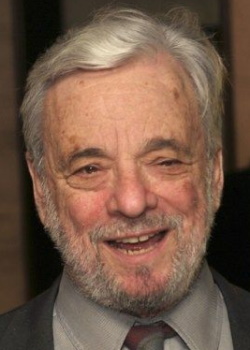 Composer and lyricist Stephen Sondheim died at his home in Roxbury, Connecticut, on November 26, 2021, at the age of 91, of of cardiovascular disease.
Widely regarded as one of the most important figures in the history of American musical theatre, Sondheim transformed Broadway with works of extraordinary psychological and musical sophistication. His direct involvement with cinema was comparatively limited, but included the scores for Stavisky and Reds, songs for Dick Tracy, and numerous celebrated film adaptations of his stage musicals.
Sondheim was born in New York City on March 22, 1930. After his parents divorced he became close to family friend Oscar Hammerstein II, who served as his mentor and taught him the fundamentals of writing for the theatre. Following studies at Williams College, Sondheim achieved his first major Broadway success as lyricist for Leonard Bernstein’s West Side Story in 1957, followed by Jule Styne’s Gypsy in 1959. He soon established himself as both composer and lyricist with A Funny Thing Happened on the Way to the Forum, and subsequently created Company, Follies, A Little Night Music, Sweeney Todd, Sunday in the Park with George, Into the Woods and Passion.
His first substantial original film score came with Alain Resnais’s Stavisky (1974), starring Jean-Paul Belmondo as the notorious French financier and confidence trickster Serge Alexandre Stavisky. Sondheim’s elegant orchestral music deliberately evokes the sophistication of 1930s Paris, combining graceful waltzes and lyrical themes with darker undertones that anticipate the protagonist’s downfall. Unusually lush compared with much of Sondheim’s theatre writing, Stavisky demonstrated that his melodic and dramatic instincts translated naturally to the screen, and remains his most substantial work as a conventional film composer. Read more…
Leslie Bricusse, 1931-2021
 Composer, lyricist and playwright Leslie Bricusse died at his home in Saint-Paul-de-Vence, France, on October 19, 2021, at the age of 90.
One of the most successful British songwriters of the twentieth century, Bricusse enjoyed a career spanning more than six decades across cinema, Broadway and the West End. He won two Academy Awards and a Grammy, and wrote or co-wrote such enduring film songs as “Goldfinger,” “You Only Live Twice,” “Talk to the Animals,” “Pure Imagination” and “The Candy Man.”
Leslie Charles Bricusse was born in London on January 29, 1931, and studied at Gonville and Caius College, Cambridge, where he became president of the Footlights Revue Club and founded the Musical Comedy Club. His first student productions transferred to the West End, and after initially performing as well as writing, Bricusse increasingly concentrated on songwriting.
His most important early partnership was with Anthony Newley. Together they created the stage musicals Stop the World – I Want to Get Off and The Roar of the Greasepaint – The Smell of the Crowd, producing standards including “What Kind of Fool Am I?”, “Once in a Lifetime,” “Who Can I Turn To?” and “Feeling Good.” Their work quickly attracted Hollywood’s attention, and Bricusse developed a parallel career writing songs specifically for films. Read more…
Mikis Theodorakis, 1925-2021
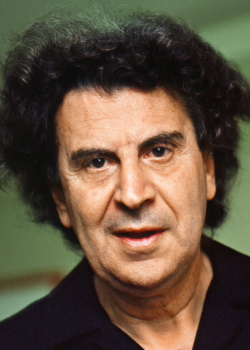 Composer, songwriter and political activist Mikis Theodorakis died in Athens, Greece, on September 2, 2021, at the age of 96.
One of the most important figures in modern Greek music, Theodorakis wrote more than a thousand works encompassing songs, symphonies, operas, ballets and film scores. Internationally, however, he remains best known for the music of Zorba the Greek, Z and Serpico, which brought the sound of modern Greece to audiences around the world.
Michail Theodorakis was born on the Greek island of Chios on July 29, 1925. He began composing as a teenager and studied at the Athens Conservatory before continuing his education at the Paris Conservatoire. His early concert music showed the influence of European modernism, but Theodorakis increasingly sought to combine classical technique with Greek folk traditions, Byzantine music and popular song.
His first film scores were written for Greek productions during the early 1950s, and he soon began working internationally. Among his early credits were Michael Powell and Emeric Pressburger’s Ill Met by Moonlight (1957), Jules Dassin’s Phaedra (1962), Anatole Litvak’s Five Miles to Midnight (1962), and Michael Cacoyannis’s Electra (1962). The latter began one of his most important director-composer relationships and established the intensely Greek musical language that would soon make him internationally famous. Read more…
Claude Bolling, 1930-2020
 Composer, pianist and bandleader Claude Bolling died on December 29, 2020, at a hospital in Saint-Cloud, near Paris, at the age of 90.
One of the leading figures in French jazz, Bolling was also a prolific film composer who wrote more than 100 scores for cinema and television. His jaunty theme for Borsalino became one of the most recognizable pieces of French film music of the 1970s, while his parallel career combining jazz and classical music brought him international success.
Claude Jean Harry Bolling was born in Cannes on April 10, 1930, but spent most of his life in Paris. A precocious pianist, he discovered jazz through recordings by Duke Ellington, Fats Waller and other American musicians, and at 14 won a competition organized by Jazz Hot magazine and the Hot Club de France. He formed his first ensemble while still a teenager and later studied harmony, piano and orchestration, developing a particular devotion to Ellington that remained central to his musical personality.
By the 1950s Bolling was an established presence in French jazz, performing with visiting musicians including Lionel Hampton, Roy Eldridge, Rex Stewart and Cat Anderson. He formed his own orchestra in 1956 and subsequently worked extensively as an arranger and musical director for French popular singers, including Brigitte Bardot, Juliette Gréco and Henri Salvador. Cinema soon became another major part of his career. Read more…
Billy Goldenberg, 1936-2020
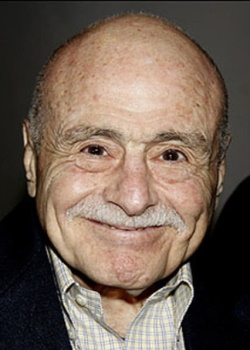 Composer, arranger and musical director Billy Goldenberg died at his home in New York City on August 3, 2020, at the age of 84.
One of the most prolific and versatile composers in American television during the 1970s and 1980s, Goldenberg wrote music for dozens of series and television movies, including Duel, Columbo, Kojak, The Legend of Lizzie Borden and The Lindbergh Kidnapping Case. He was also an acclaimed Broadway musician and served as musical director for Elvis Presley’s legendary 1968 television comeback special.
William Leon Goldenberg was born in Brooklyn, New York, on February 10, 1936. He studied piano from childhood and later attended Columbia College, developing interests in both classical and popular music. After beginning his professional career as a pianist and arranger, he became active in New York theatre and television, eventually working as musical director for several major variety programs.
An important early assignment came when Goldenberg served as musical director and arranger for Singer Presents… Elvis, the 1968 NBC television special that revitalized Elvis Presley’s career. Goldenberg helped shape the musical arrangements accompanying Presley, balancing the show’s large production numbers with the stripped-down performances that reminded audiences of the singer’s original energy. Read more…
Ennio Morricone, 1928-2020
 Composer Ennio Morricone died in Rome on July 6, 2020, at the age of 91, several days after suffering a fall in which he fractured his femur.
One of the most prolific and influential film composers in cinema history, Morricone wrote music for more than 500 films and television productions during a career spanning six decades. From the revolutionary westerns of Sergio Leone to The Battle of Algiers, Days of Heaven, Once Upon a Time in America, The Mission, Cinema Paradiso and The Hateful Eight, he created a body of work of extraordinary breadth, combining unforgettable melody with an endlessly adventurous approach to sound.
Ennio Morricone was born in Rome on November 10, 1928, the son of professional trumpet player Mario Morricone. He entered the Conservatory of Santa Cecilia, studying trumpet, orchestration and composition, most importantly under the distinguished composer Goffredo Petrassi. Although Morricone always regarded himself as a serious composer whose film work was only one part of his musical life, his early professional career was spent playing trumpet and arranging popular music. During the 1950s and early 1960s he became one of RCA Italy’s busiest arrangers while simultaneously writing concert music and participating in Rome’s avant-garde scene. He later became a member of the experimental Gruppo di Improvvisazione Nuova Consonanza, an experience that helped shape his willingness to use unconventional sounds.
After ghostwriting and arranging for other composers, Morricone received his first major screen credit on Luciano Salce’s Il Federale in 1961. His career changed permanently three years later when he was reunited with Sergio Leone, with whom he had briefly attended primary school. A Fistful of Dollars (1964), For a Few Dollars More (1965) and The Good, the Bad and the Ugly (1966) transformed both the western and the possibilities of film scoring. Working with limited budgets, Morricone replaced the traditional Hollywood symphonic sound with electric guitars, bells, whip cracks, gunshots, Jew’s harps, whistles, chanting voices and the extraordinary wordless soprano of Edda Dell’Orso. Alessandro Alessandroni’s distinctive whistling became another essential part of the sound. Read more…

Shop at the Movie Music UK Store

Member of the


