Monty Norman, 1928-2022
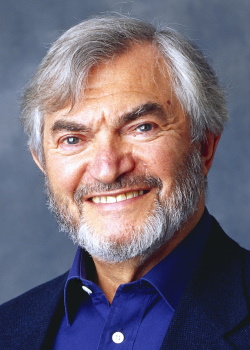 Composer, lyricist and singer Monty Norman died on July 11, 2022 in Slough, Berkshire, at the age of 94, following a short illness.
Although his career encompassed musical theatre, popular song, television and a small number of film scores, Norman secured a permanent place in cinema history through one composition: the James Bond theme, written for Dr. No in 1962 and subsequently incorporated into the musical identity of the entire Bond series.
Norman was born Monty Noserovitch in Stepney, East London, on April 4, 1928, the son of a cabinetmaker and a seamstress from a Latvian Jewish immigrant family. Given a guitar at 16, he began his professional career as a singer, performing with bands led by Cyril Stapleton, Stanley Black and Ted Heath, and appearing at the London Palladium and on radio and television. He gradually moved into songwriting, discovering that composing offered greater possibilities than performing.
By the late 1950s Norman had become a successful musical-theatre composer and lyricist. His credits included Make Me an Offer, Expresso Bongo and the English-language adaptation of Irma La Douce. His association with writer Wolf Mankowitz also produced Belle, or the Ballad of Dr Crippen, whose financial backers included producer Albert “Cubby” Broccoli. Impressed by Norman’s work, Broccoli subsequently invited him to score the first film adaptation of Ian Fleming’s James Bond novels.
Norman had already contributed music to films including Hammer’s The Two Faces of Dr. Jekyll (1960) and The Day the Earth Caught Fire (1961), but Dr. No was by far his most significant screen assignment. He travelled to Jamaica during production and drew heavily on local musical styles, writing pieces including “Kingston Calypso,” “Jump Up” and “Underneath the Mango Tree,” the latter accompanying the famous introduction of Ursula Andress as Honey Ryder. The resulting soundtrack gave the film a distinctive Caribbean character quite unlike the increasingly symphonic sound of later Bond films.
The score’s enduring achievement, however, was the James Bond theme. Norman adapted its central melody from “Good Sign, Bad Sign,” a song he had previously written for an abandoned musical based on V. S. Naipaul’s A House for Mr Biswas. The producers wanted a more contemporary sound for the finished film and brought in the young John Barry to arrange Norman’s material. Barry’s brassy orchestration, driving rhythm and Vic Flick’s electric-guitar performance transformed it into one of cinema’s most recognizable pieces of music.
The authorship of the theme subsequently became controversial. Barry, who went on to score eleven Bond films, maintained that his contribution went beyond arrangement, while Norman consistently asserted his authorship. When The Sunday Times published an article suggesting that Barry had actually written the piece, Norman sued for libel and in 2001 was awarded £30,000 in damages. Whatever the arguments surrounding its creation, Norman remained the officially credited composer, and the theme continued to accompany James Bond for decades.
Norman’s next major film assignment was the Bob Hope comedy Call Me Bwana (1963), for which he wrote the theme song and part of the score. Thereafter cinema became a relatively minor part of his career. He returned principally to theatre, later enjoying success with Songbook and Poppy, both of which won major British theatrical awards, while also composing for television.
His achievements brought him numerous honors, including a BASCA Gold Badge of Merit and a special Ivor Novello Award recognizing the James Bond theme. Norman was married first to actress Diana Coupland, with whom he had a daughter, Shoshana, and later to Rina Caesari, who survived him.

Shop at the Movie Music UK Store

Member of the


