Antoine Duhamel, 1925-2014
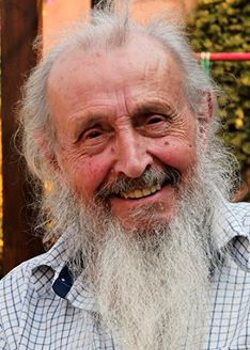 Composer and conductor Antoine Duhamel died in Paris on September 10, 2014, at the age of 89.
One of the musicians most closely associated with the French New Wave, Duhamel wrote more than 60 film scores and worked with directors including Jean-Luc Godard, François Truffaut, Bertrand Tavernier, Patrice Leconte and Fernando Trueba. His music combined rigorous classical technique with a willingness to experiment, resulting in scores that could be romantic, ironic, austere or deliberately disruptive.
Duhamel was born in Valmondois, near Paris, on July 30, 1925, the son of novelist Georges Duhamel and actress Blanche Albane. He studied with two of the most important figures in post-war European music, Olivier Messiaen and René Leibowitz, the latter introducing him to twelve-tone and serial techniques. Alongside cinema, Duhamel maintained a substantial career as a concert composer, writing orchestral and chamber works, songs, oratorios and operas.
His first important film collaboration was Jean-Daniel Pollet’s experimental Méditerranée (1963), but it was Jean-Luc Godard’s Pierrot le Fou (1965) that established his reputation. Duhamel’s music—by turns lyrical, fractured and dramatically emphatic—was used by Godard with characteristic freedom, sometimes interrupting scenes rather than conventionally supporting them. He subsequently scored Godard’s Made in U.S.A. (1966) and Weekend (1967), cementing his association with the New Wave.
Duhamel then became an important collaborator of François Truffaut, scoring four films in quick succession: Stolen Kisses (1968), Mississippi Mermaid (1969), The Wild Child (1970) and Bed and Board (1970). His music for Truffaut was generally more melodic and classically elegant than his work for Godard, although Duhamel later admitted that he found Truffaut comparatively cautious in his use of music.
A more personally satisfying partnership developed with Bertrand Tavernier, beginning with Let Joy Reign Supreme (1975). For the eighteenth-century drama Duhamel reconstructed and orchestrated music associated with Philippe d’Orléans, conducting an ensemble of period instruments. He later scored Tavernier’s Death Watch (1980), Daddy Nostalgia (1990) and Safe Conduct (2002). Death Watch produced one of his most restrained scores, dominated by strings, while the complex musical conception of Safe Conduct earned Duhamel the Silver Bear for Best Film Music at the Berlin International Film Festival.
Elsewhere, his filmography included The Sailor from Gibraltar (1967), The Acrobats (1976), Fernando Trueba’s Oscar-winning Belle Époque (1992), and Patrice Leconte’s Ridicule (1996). The latter brought Duhamel particular acclaim for its elegant recreation of eighteenth-century musical manners and demonstrated his natural gift for historical pastiche without sacrificing an individual voice.
Away from the screen, Duhamel composed operas including Lundi, Monsieur, vous serez riche and Ubu à l’Opéra, as well as symphonic, chamber and vocal music. In 1980 he founded a music school in Villeurbanne designed to embrace a broad range of musical traditions rather than conventional conservatory boundaries.

Shop at the Movie Music UK Store

Member of the


