THE MUMMY – Jerry Goldsmith
 Original Review by Jonathan Broxton
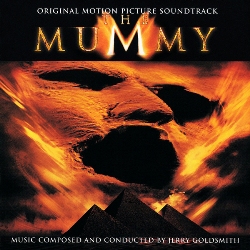
Jerry Goldsmith’s first effort of 1999 is a barnstorming action score of epic proportions. The density of the orchestrations and the complexity of the melodic lines put you in mind of vibrant works such as First Knight, Deep Rising, and especially The Wind and the Lion with its intoxicating ethnic percussion and pervading sense of Arabic mystique. A loose remake of Boris Karloff’s 1932 horror classic, The Mummy is an old-fashioned, tongue-in-cheek Saturday matinee flick with more than a few passing resemblances to Raiders of the Lost Ark, and Universal Pictures and director Stephen Sommers hope it will be the first big action movie to smash the box office in a summer market already dominated by the imminent release of The Phantom Menace. It stars Brendan Fraser as a treasure-seeker who travels to 1930s Egypt searching for lost artefacts. What he finds, though, is far worse – the mummified body of the ancient Egyptian priest Imhotep, who was buried alive in disgrace by the then Pharaoh, and who unleashes a terrible vengeful power on those who disturbed him from his slumber. Read more…
NOAH’S ARK – Paul Grabowsky
 Original Review by Jonathan Broxton
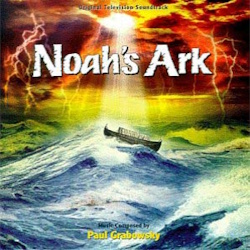
The Hallmark Entertainment series on American TV is slowly developing into a rich musical well, out of which has sprung several splendid scores, including last year’s critically acclaimed Merlin (by Trevor Jones) and Moby Dick (by Christopher Gordon). It is to Varèse Sarabande’s credit that they are continuing to support the series by releasing extended CDs of music, for not only does it give the eager listener a chance to experience music which would not normally be heard outside the medium, but it also gives many lesser-known composers some much needed publicity. Read more…
ENTRAPMENT – Christopher Young
 Original Review by Jonathan Broxton
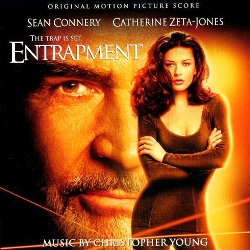
Entrapment is Chris Young’s second big-budget action score in as many years and is an ideal comparison to the work he undertook for Hard Rain because, if nothing else, it effectively demonstrates Young’s ability to tackle similarly-themed movies in vastly different ways. Whereas Hard Rain was firmly rooted firmly in the musical traditions of the American midwest, Entrapment is a fluid, hi-tec action score which combines efficient, modern orchestral grooves with the some unexpected textures and styles. The film itself is a flawed, but audience-friendly thriller about a beautiful insurance investigator who teams up with an aging breaking-and-entering expert with the express intent of fingering him for the high-profile robbery she thinks he has committed. Things become a little more complicated, though, when he persuades her to join him in undertaking a final, ambitious break-in, and then get even worse when she inexplicably finds herself falling for him in a big way. Disregarding the unlikely love interest between sixty-something Sean Connery and twenty-something Catherine Zeta-Jones, Entrapment works well as an “event picture”, providing the right combination of thrills, spills and technobabble to keep increasingly touchy viewers happy. Most of all, though, it is highly satisfying to finally see Young getting a much-deserved and long overdue shot at the Hollywood big time. Read more…
DURANGO – Mark McKenzie
 Original Review by Jonathan Broxton
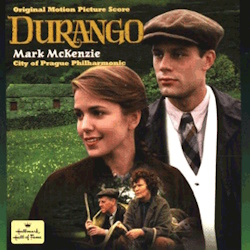
Some composers need to get more work, and to be given better projects. Mark McKenzie is one of a small band of excellent writers who, through no fault of their own, are overlooked by Hollywood and spend most of their time toiling away on small-scale features that do not deserve to have their considerable talents wasted on them. After a career that has seen him rise from orchestrating scores for Danny Elfman, Bruce Broughton and others, to writing great music for terrible films such as Warlock: The Armageddon and Dr. Jekyll and Ms. Hyde, McKenzie seems finally to be heading down the right path with Durango, the latest TV movie in the Hallmark Hall of Fame series that, over the last year or so, has included Merlin, Moby Dick, Alice in Wonderland and Cleopatra. Read more…
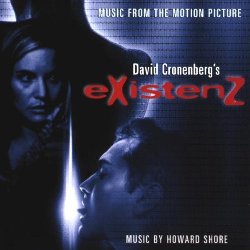
EXISTENZ – Howard Shore
 Original Review by Jonathan Broxton
David Cronenberg inspires Howard Shore to compose some of his best and most memorable movie music. Through such notable works as The Brood, Scanners, Videodrome, The Fly, Dead Ringers, Naked Lunch, M. Butterfly and Crash, Cronenberg had always allowed Shore plenty of room to manoeuvre and stretch his musical muscles. eXistenZ is probably the most approachable and, from a soundtrack fan’s perspective, enjoyable work that has resulted from their collaboration to date. An original science fiction tale, eXistenZ is a film which again merges humanity and technology and blurs the lines between reality and fantasy. It stars Jennifer Jason Leigh as the designer of a virtual reality video game played through a genetically modified organism known as a “Game Pod”, which inserts an umbilical cord into a special socket inserted into the base of the player’s spinal column and taps into the player’s mind. When the game’s first demonstration goes wrong, Leigh and her bodyguard Jude Law are forced to run for their from various violent factions, all of whom want to stop eXistenZ from becoming a reality. Read more…
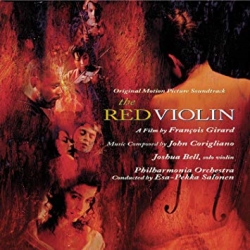
THE RED VIOLIN – John Corigliano
 Original Review by Jonathan Broxton
It is very rare for a soundtrack to be embraced wholeheartedly and celebrated loudly by aficionados of both classical music and film music, but this is what has happened to John Corigliano’s The Red Violin. Despite being arguably one of the most brilliant and talented American composers of his generation, this is only John Corigliano’s third film score – his others being the wildly impressionistic, abstract, Oscar-nominated Altered States (1980) and the largely unknown Revolution (1985). Instead, Corigliano became an established member of the New York musical circle, writing original pieces, ballets, operas and suchlike, and it has taken fourteen years to tempt Corigliano back to the podium. It has been worth the wait for, as well as his own musical genius, he has brought with him some of the best and brightest talents of the classical world, including the brilliant Finnish conductor Esa-Pekka Salonen and the incredibly talented virtuoso violinist Joshua Bell. Read more…
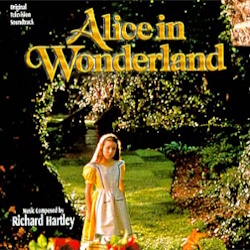
ALICE IN WONDERLAND – Richard Hartley
 Original Review by Jonathan Broxton
Lewis Carroll’s classic story of Alice in Wonderland has been told and re-told so many times that one would think there were no new ways of putting the cautionary children’s tale of substance abuse-induced hallucinations across. There was the Disney animated film in 1951, which everyone looks back on fondly, and no less than three big-screen versions in 1933, 1950 and 1972, none of which were enthusiastically received by the public. So, in an attempt to breathe new life into the proceedings, the producers of this re-telling, which is part of the Hallmark Entertainment series on American TV, decided to up the star factor and put dozens of Hollywood star names in the famous roles. Read more…
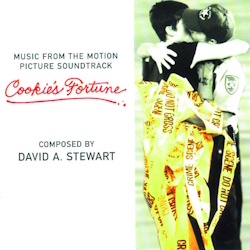
COOKIE’S FORTUNE – David A. Stewart
 Original Review by Jonathan Broxton
Director Robert Altman is equally known for his for his “eclectic” tastes in casting and subject matter as he is for brilliance as a visual dramatist and storyteller. Altman is the man who, in the past, has helmed such notable works as M*A*S*H, McCabe and Mrs. Miller, The Long Goodbye, Nashville and the ill-fated Popeye. Recently, Altman has brought us a scathing satire of the Hollywood studio system in The Player, an examination of life in suburban American in Short Cuts, a look inside the world of high fashion with Pret-A-Porter, and a relatively straightforward court room thriller with The Gingerbread Man. For his latest effort, Altman is returning to the location he visited in Short Cuts by taking a look behind the white picket fences of small town USA in the critically acclaimed Cookie’s Fortune. Read more…
Academy Award Winners 1998
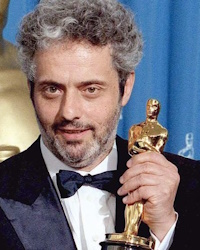 The Academy of Motion Picture Arts and Sciences (AMPAS) have announced the winners of the 71st Academy Awards, honoring the best in film in 1998.
In the Best Original Dramatic Score category, Italian composer Nicola Piovani won the award for his score for Roberto Benigni’s Life Is Beautiful. In his acceptance speech, Piovani said:
It’s impossible for me in this moment [to] speak about my emotion in English. I can tell just: Thank you to the jury. Thank you, the Academy. Thank you, Roberto.
The other nominees for Best Original Dramatic Score were David Hirschfelder for Elizabeth, Randy Newman for Pleasantville, John Williams for Saving Private Ryan, and Hans Zimmer for The Thin Red Line.
In the Best Original Comedy Score category composer Stephen Warbeck won for his score for the Elizabethan-era comedy Shakespeare in Love. In her acceptance speech, Warbeck said:
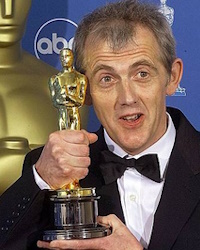 It’s a very, very exciting moment. Thank you very much. Especially exciting because John Madden is such a fantastically stimulating person to collaborate with. So thank you, John. Thank you to the Academy. Thank you to Sarah, Jessica, Herbert, Matilda. And thank you to my mother and father. Thank you to the lovely producers, without whom we wouldn’t be here or the people involved in this. Thank you to William Shakespeare, Bertolt Brecht, and The Kippers, for inspiring me to write music for the theater and other things. And thank you, thank you to all the friends who worked on the music, without whom it would just be squiggles on a piece of paper: John Parricelli, Eleanor Alberga, Chris Dibble, Nick Ingman, Martin Robinson, Paul, Gary and Frank. Thank you very much indeed. This is lovely. Thank you.
The other nominees were Randy Newman for A Bug’s Life; Matthew Wilder, David Zippel and Jerry Goldsmith for Mulan; Marc Shaiman for Patch Adams; and Stephen Schwartz and Hans Zimmer for The Prince of Egypt.
In the Best Original Song category, composer and lyricist Stephen Schwartz won for “When You Believe” from The Prince of Egypt performed by Whitney Houston and Mariah Carey. Schwartz, however, was not present to accept the award, as he was in New York rehearsing a show.
The other nominees were Diane Warren for “I Don’t Want to Miss a Thing” from Armageddon; Carole Bayer Sager, David Foster, Tony Renis and Alberto Testa for “The Prayer” from Quest for Camelot; Allison Moorer and Gwil Owen for “A Soft Place to Fall” from The Horse Whisperer; and Randy Newman for “That’ll Do” from Babe: Pig in the City.
Ernest Gold, 1921-1999
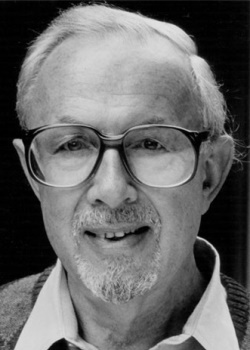 Composer and conductor Ernest Gold died in Santa Monica, California, on March 17, 1999, at the age of 77, following a stroke.
An Austrian-born composer who became one of Hollywood’s leading musical voices during the 1950s and 1960s, Gold wrote scores for more than 100 film and television productions. He received four Academy Award nominations, winning for Otto Preminger’s Exodus, and enjoyed an especially fruitful collaboration with director Stanley Kramer.
Gold was born Ernst Sigmund Goldner in Vienna on July 13, 1921, into a musical family and began composing while still a child. Following the Nazi annexation of Austria, his family emigrated to the United States in 1938, settling in New York. Gold initially wrote popular songs while continuing his musical studies, and eventually moved to Hollywood, where he began working on low-budget features while also orchestrating and conducting for other composers.
After a decade of smaller assignments, Gold’s career accelerated in the late 1950s. He worked with Stanley Kramer on The Defiant Ones (1958) and then composed On the Beach (1959), Kramer’s bleak drama about the aftermath of nuclear war. Gold ingeniously incorporated the Australian song “Waltzing Matilda” throughout the score, transforming the familiar melody from something nostalgic and comforting into an increasingly tragic reminder of a world facing extinction. The score earned him his first Academy Award nomination and won the Golden Globe for Best Original Score.
Gold’s greatest success came the following year with Otto Preminger’s epic Exodus (1960), starring Paul Newman. Its expansive main theme, combining sweeping romanticism with musical gestures intended to evoke the film’s Israeli setting, became one of the most popular film themes of its era. The soundtrack was an enormous commercial success, the theme was recorded by numerous artists, and Gold won the Academy Award for Best Dramatic or Comedy Score as well as two Grammy Awards. Exodus remains by far his best-known work and established him internationally as a major film composer. Read more…
NINETEEN EIGHTY-FOUR – Dominic Muldowney
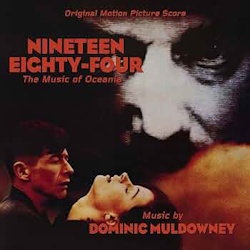 Original Review by Jonathan Broxton
The thought police. Big brother is watching you. Who, if anyone, can claim to be unaware of the legacy left by George Orwell’s novel Nineteen Eighty-Four, in which he outlined his terrifying vision of a totalitarian, oppressive future in the land of Oceania. Director Michael Radford, who would later go on to helm the recent Oscar winner Il Postino, adhered faithfully to the guidelines set out by Orwell during filming, using the precise locations and dates set out in the text, assembling a stellar cast including Richard Burton, John Hurt and Cyril Cusack to breathe life into the classic prose.
Upon its release, Nineteen Eighty-Four was a critical and commercial smash hit, but one of the most debated elements of the film surrounded the eventual removal of the original score in favour of pop songs by the British rock group, the Eurythmics. Since the release of Nineteen Eighty-Four, Dominic Muldowney has become one of the most influential composers in English theatre, but has limited his screen work to a few feature films and episodes of the TV series Sharpe. Nineteen Eighty-Four remains his most celebrated cinematic work to date, but until now has been unavailable on CD. This release from the Airstrip One company and producer Christopher Landry marks the first time the complete score has ever been heard on CD. Read more…
BAFTA Nominations 1998
 The British Academy of Film and Television Arts (BAFTA) has announced the nominations for the 52nd British Academy Film Awards, honoring the best in film in 1998.
In the Best Original Music category, which is named in memory of the film director Anthony Asquith, the nominees are:
- DAVID HIRSCHFELDER for Elizabeth
- BARRINGTON PHELOUNG for Hilary and Jackie
- STEPHEN WARBECK for Shakespeare In Love
- JOHN WILLIAMS for Saving Private Ryan
These are the first nominations for Pheloung and Warbeck. It is the third nomination for Hirschfelder, and the ninth nomination for Williams. Hirschfelder previously won for Strictly Ballroom in 1992. Williams previously won for Jaws and The Towering Inferno in 1975, Star Wars in 1978, The Empire Strikes Back in 1980, E.T. the Extra-Terrestrial in 1982, Empire of the Sun in 1988, and Schindler’s List in 1993.
The winners of the 52nd BAFTA Awards will be announced on April 11, 1999.
THE BEYONDNESS OF THINGS – John Barry
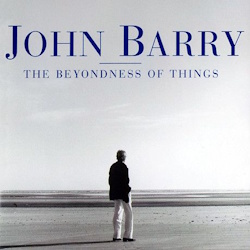 Original Review by Jonathan Broxton
If one was to take everything that is good about John Barry’s music and compress it into one, all-encompassing album, you would end up with The Beyondness of Things. Strictly, The Beyondness of Things is not a soundtrack: it is a unique, individual classical piece written by Barry for his own pleasure and released by London Records for us all to enjoy. But, more than that, it is a celebration of the work of a true film music legend – a testament to nearly forty years of dedicated service to the industry, in which time he has composed some of the most well loved and beautiful music the cinema has ever known. It is also a personal odyssey on Barry’s part, in which he has tried to musically sum up his life to date, capturing the innocence and wonder of his childhood in the Yorkshire countryside, the heady heights of fame in America, with all its trappings and temptations, and finally the satisfied, relaxed semi-retirement he enjoys today (I say semi-retirement – he has just released Mercury Rising and has two other scores currently on the back burner, so it is not as though he is not working!) Read more…
Academy Award Nominations 1998
 The Academy of Motion Picture Arts and Sciences (AMPAS) have announced the nominations for the 71st Academy Awards, honoring the best in film in 1998.
In the Best Original Dramatic Score category, the nominees are:
- DAVID HIRSCHFELDER for Elizabeth
- RANDY NEWMAN for Pleasantville
- NICOLA PIOVANI for Life is Beautiful
- JOHN WILLIAMS for Saving Private Ryan
- HANS ZIMMER for The Thin Red Line
In the Best Original Musical or Comedy Score category, the nominees are:
- JERRY GOLDSMITH, MATTHEW WILDER, and DAVID ZIPPEL for Mulan
- RANDY NEWMAN for A Bug’s Life
- MARC SHAIMAN for Patch Adams
- STEPHEN WARBECK for Shakespeare in Love
- HANS ZIMMER and STEPHEN SCHWARTZ for The Prince of Egypt
These are the first Oscar nominations for Piovani, Warbeck, Wilder, and Zippel, and is the second nomination for Hirschfelder. These are the 6th and 7th nominations for Newman, the 32nd nomination for Williams, the 5th nomination for Zimmer, the 17th nomination for Goldsmith, the 3rd nomination for Shaiman, and the 3rd nomination for Schwartz.
Goldsmith previously won for The Omen in 1976. Schwartz previously won for Pocahontas in 1996. Williams previously won for Fiddler on the Roof in 1971, Jaws in 1975, Star Wars in 1977, E.T. the Extra Terrestrial in 1982, and Schindler’s List in 1993. Zimmer previously won for The Lion King in 1994.
In the Best Original Song category, the nominees are:
- CAROLE BAYER SAGER, DAVID FOSTER, TONY RENIS, and ALBERTO TESTA for “The Prayer” from Quest for Camelot
- ALLISON MOORER and GWIL OWEN for “A Soft Place to Fall” from The Horse Whisperer
- RANDY NEWMAN for “That’ll Do” from Babe: Pig in the City
- STEPHEN SCHWARTZ for “When You Believe” from The Prince of Egypt
- DIANE WARREN for “”I Don’t Want to Miss a Thing” from Armageddon
The winners of the 71st Academy Awards will be announced on March 21, 1999.
Remembering Lionel Newman, 1916-1989
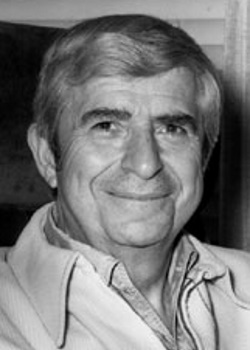 Composer, conductor, arranger and music executive Lionel Newman died in Los Angeles ten years ago today, on February 3, 1989, at the age of 73, following a heart attack.
A member of Hollywood’s extraordinary Newman musical dynasty, he spent more than four decades at 20th Century Fox, eventually becoming senior vice president of music. Newman received 11 Academy Award nominations and won for his adaptation of Hello, Dolly! in 1970.
Newman was born in New Haven, Connecticut, on January 4, 1916, the youngest of several musically gifted brothers, including composers Alfred and Emil Newman. He began working professionally while still a teenager, conducted for producer Earl Carroll and spent several years accompanying Mae West before following Alfred to Hollywood. In 1943 he joined 20th Century Fox as a rehearsal pianist and gradually progressed through the studio’s music department as conductor, composer, arranger and musical supervisor.
As an original composer, Newman worked on films including Cheaper by the Dozen (1950), Road House (1948), Love Me Tender (1956), The Proud Ones (1956), April Love (1957) and North to Alaska (1960). His song “Again,” written with Dorcas Cochran for Road House, became a popular standard, while Love Me Tender, Elvis Presley’s screen debut, demonstrated Newman’s ability to work comfortably within the changing musical world of 1950s Hollywood. Read more…

Shop at the Movie Music UK Store

Member of the


