Golden Globe Nominations 1998
 The Hollywood Foreign Press Association (HFPA) has announced the nominations for the 56th Golden Globe Awards, honoring the best in film and American television of 1998.
In the Best Original Score category, the nominees are:
- BURKHARD DALLWITZ and PHILIP GLASS for The Truman Show
- JERRY GOLDSMITH for Mulan
- RANDY NEWMAN for A Bug’s Life
- JOHN WILLIAMS for Saving Private Ryan
- HANS ZIMMER and STEPHEN SCHWARTZ for The Prince of Egypt
These are the first nominations for Dallwitz and Schwartz. This is the second nomination for Glass, the second nomination for Newman, the second nomination for Zimmer, the ninth nomination for Goldsmith, and the seventeenth nomination for Williams. Zimmer previously won for The Lion King in 1994. Williams previously won for Jaws in 1975, Star Wars in 1977, and E.T. The Extra-Terrestrial in 1982
In the Best Original Song category, the nominees are:
- CAROLE BAYER SAGER, DAVID FOSTER, TONY RENIS, and ALBERTO TESTA for “The Prayer” from Quest for Camelot
- CHRIS DIFFORD, MARTI FREDERIKSEN, and MICK JONES for “The Flame Still Burns” from Still Crazy
- ALANIS MORISSETTE for “Uninvited” from City of Angels
- STEPHEN SCHWARTZ and KENNETH EDMONDS (BABYFACE) for “When You Believe” from The Prince of Egypt
- GORDON SUMNER (STING) for “The Mighty” from The Mighty
- MATTHEW WILDER and DAVID ZIPPEL for “Reflection” from Mulan
The winners of the 56th Golden Globe Awards will be announced on January 24, 1999.
John Addison, 1920-1998
 Composer John Addison died on December 7, 1998, at his home in Bennington, Vermont, after a short illness. He was 78.
John Mervyn Addison was born in Chobham, Surrey, England, in March 1920, and studied composition at the Royal College of Music. His education was interrupted by service in World War II, where he served with distinction in the British Army, seeing action in Normandy and the Netherlands, and participating in Operation Market Garden. The experience would later inform one of his best-known works: the rousing score to A Bridge Too Far (1977), a film about the Allied operation that Addison survived.
Addison’s breakthrough in film came in 1950 with the British thriller Seven Days to Noon, and over the course of the subsequent decade he wrote scores for popular British films such as The Man Between (1953), The Cockleshell Heroes (1955), Reach for the Sky (1956), Three Men in a Boat (1956), Lucky Jim (1957), A Taste of Honey (1961), and The Loneliness of the Long Distance Runner (1962).
It was Addison’s sparkling, Oscar-winning score for Tony Richardson’s Tom Jones in 1963 that brought him international recognition. The music’s vivacious period stylings, full of energy and wit, became a defining element of the film’s success. Following his Oscar win Addison split his time between the UK and Hollywood, and in the years thereafter he composed scores for films such as Smashing Time (1967), The Honey Pot (1967), The Charge of the Light Brigade (1968), Sleuth (1972, his second Oscar nomination), Swashbuckler (1976), and The Seven-Per-Cent Solution (1976), earning both critical acclaim and popular success. Notably, Addison also composed the replacement score for Alfred Hitchcock’s film Torn Curtain in 1966, which is now remembered as the film which ended Hitchcock’s relationship with Bernard Herrmann. Read more…
AMERICAN HISTORY X – Anne Dudley
 Original Review by Jonathan Broxton
Tony Kaye, the director of American History X, was so incensed when New Line Pictures re-edited his film against his wishes, he threatened to remove his name from the final cut and replace it with Humpty Dumpty. He believed that the core of the film, its very essence, had been stripped away by the barbarous production company, and that the finished product was now only half the movie it used to be. Having seen New Line’s end result, I can only wonder just what Kaye’s original cut was like, because as it stands American History X is still one of the most emotionally shattering, intellectually stimulating, totally amazing movies I have seen in years. Read more…
Paul Misraki, 1908-1998
 Composer and songwriter Paul Misraki died in Paris on October 29, 1998, at the age of 90.
One of the most prolific figures in French popular music and cinema, Misraki enjoyed a career spanning more than six decades, writing hundreds of songs and scores for well over 100 films. Although best remembered in France for a succession of enormously popular songs, film-music enthusiasts know him for works including And God Created Woman, Les Cousins, Le Doulos and Jean-Luc Godard’s science-fiction classic Alphaville.
Paul Misrachi was born in Constantinople, then part of the Ottoman Empire, on January 28, 1908, into a Jewish family of Italian ancestry. He spent part of his childhood in Bucharest before the family settled in Paris, where he received a classical musical education and developed an enthusiasm for jazz and popular song. His professional breakthrough came when he joined Ray Ventura’s celebrated orchestra, Les Collégiens, initially as a pianist and arranger and soon as one of its principal songwriters.
During the 1930s Misraki became one of France’s most successful popular composers. His songs included “Tout va très bien, Madame la Marquise,” “Qu’est-ce qu’on attend pour être heureux?” and “Ça vaut mieux que d’attraper la scarlatine,” witty and immediately memorable pieces that became closely associated with Ventura and the carefree musical culture of pre-war France. He also began composing for films, an activity which eventually became a major part of his career. Read more…
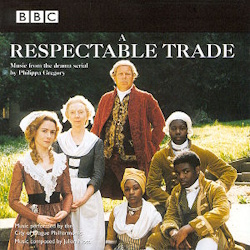
A RESPECTABLE TRADE – Julian Nott
 Original Review by Jonathan Broxton
The BBC are renowned the world over for their high quality TV features and drama series, and many high profile composers cut their musical teeth on these comparatively small-scale projects. One of Rachel Portman’s first assignments was for the mini-series Oranges Are Not The Only Fruit. Debbie Wiseman wrote for sitcoms before getting her big break with Tom & Viv, and people like Harry Gregson-Williams, Barrington Pheloung and Richard Hartley were working on British TV movies as recently as 1996. The latest addition to the list of composers making names for themselves on this side of the pond is Julian Nott. Nott is probably most famous for the bouncy brass band march he wrote for the main titles of the cult Wallace and Gromit animated shorts, so the beautiful, emotional music in A Respectable Trade may come as something of a surprise to those unfamiliar with his other works. Read more…
Remembering Ronald Stein, 1930-1988
 Composer Ronald Stein died in Los Angeles ten years ago today, on August 15, 1988, at the age of 58, from pancreatic cancer.
One of the defining musical voices of American low-budget genre cinema, Stein wrote music for more than 140 films during a career stretching from the mid-1950s into the 1970s. He was especially associated with American International Pictures and producer-director Roger Corman, bringing invention and musical seriousness to films including It Conquered the World, Attack of the Crab Monsters, Attack of the 50 Foot Woman, The Premature Burial and The Haunted Palace.
Louis Ronald Stein was born in St. Louis, Missouri, on April 12, 1930. His mother, Cecilia, had played piano for silent films and gave him his earliest musical training, encouraging both his musicianship and his fascination with cinema. He studied at Washington University in St. Louis, where he wrote for theatrical productions and worked with the Municipal Opera, before continuing his studies at Yale. His education was interrupted by military service, during which he composed and conducted shows for the U.S. Army Special Services.
After leaving the Army, Stein moved to Hollywood determined to become a film composer, despite receiving discouraging advice from established studio musicians. His opportunity came through Roger Corman, who hired him to score the western Apache Woman in 1955. Stein’s ability to compose and conduct quickly on tiny budgets led to a five-year contract with American International Pictures and an extraordinary period of productivity. Read more…
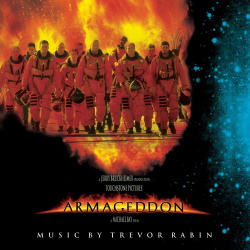
ARMAGEDDON – Trevor Rabin
 Original Review by Jonathan Broxton
In the all-spectacle, no-brains world of the Hollywood summer blockbuster, Armageddon became the antithesis of everything that people find wrong with commercial film making. Even the title – “commercial” film making – smacks of financial return being held in higher esteem than artistic merit. Everyone hated it, from the critics at Cannes who laughed during the premiere, to the newspaper hacks who decried the banal dialogue, Bruce Willis’ wooden lead performance, and the glaring implausibilities in the plotline. Despite this, audiences loved it. For all its shortcomings, Armageddon was an out-and-out crowdpleaser, with genuinely spectacular special effects, plenty of action and romance and, in the shape of Ben Affleck and Liv Tyler, two cover-story attractive protagonists. Read more…
Edwin Astley, 1922-1998
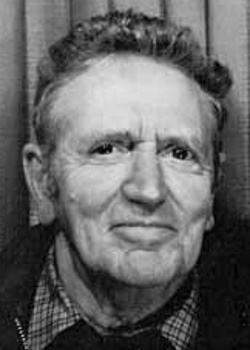 Composer, arranger and conductor Edwin “Ted” Astley died in Goring, Oxfordshire, England, on May 19, 1998, at the age of 76, following several years of declining health.
One of the defining musical voices of British adventure television during the 1950s and 1960s, Astley created memorable themes and incidental scores for Danger Man, The Saint, The Baron, Department S and Randall and Hopkirk (Deceased), while also writing for cinema and documentary television.
Edwin Thomas Astley was born in Warrington, Cheshire, on April 12, 1922. He left school at 14 and initially worked for a gas-oven manufacturer, but music quickly became his profession. During World War II he joined the Royal Army Service Corps band, playing clarinet and saxophone and arranging military and dance-band music. After the war he led the Ted Astley Orchestra before moving to London, where he became an arranger for singers including Vera Lynn and Anne Shelton.
Astley began composing for film and television in the mid-1950s. His early television work included The Adventures of Robin Hood, for which he supplied incidental music and a memorable brass fanfare, followed by The Buccaneers and International Detective. His film assignments included the science-fiction monster film The Giant Behemoth (1959), Peter Sellers’s comedy The Mouse That Roared (1959), The Day They Robbed the Bank of England (1960) and Hammer’s The Phantom of the Opera (1962), for which he composed both the dramatic score and original operatic material. Read more…
Albert Glasser, 1916-1998
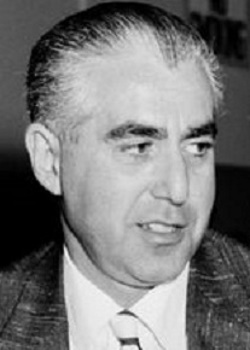 Composer, conductor and arranger Albert Glasser died in Los Angeles on May 4, 1998, at the age of 82, following a heart attack.
One of the most prolific composers in American low-budget cinema, Glasser wrote music for well over 100 films and became particularly associated with the science-fiction and horror pictures of the 1950s. His scores for The Amazing Colossal Man, The Cyclops, Beginning of the End, Earth vs. the Spider and Attack of the Puppet People helped define the sound of an entire era of B-movie filmmaking.
Albert Glasser was born in Chicago on January 25, 1916, the son of Latvian immigrants. He took up the flute as a youngster and developed an enthusiasm for orchestral music, especially Wagner and Richard Strauss. At 18 he received a scholarship to study composition and orchestration at the University of Southern California, and in 1935 joined Warner Bros. as a music copyist. There he encountered the work of Max Steiner, Erich Wolfgang Korngold and Hugo Friedhofer at close range, an invaluable practical education in the techniques of Hollywood scoring.
After further work as an orchestrator and arranger, Glasser received his first credited feature assignment with the Poverty Row horror film The Monster Maker in 1944. He subsequently wrote for westerns, crime pictures and adventure films, including several Cisco Kid features. His music for those films was later adapted for the popular television series, while he also composed extensively for radio programs including Hopalong Cassidy, Tarzan and Clyde Beatty. Read more…
Academy Award Winners 1997
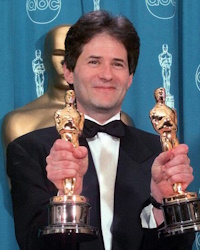 The Academy of Motion Picture Arts and Sciences (AMPAS) have announced the winners of the 70th Academy Awards, honoring the best in film in 1997.
In the Best Original Dramatic Score category James Horner won the award for his score for director James Cameron’s epic drama Titanic. In his acceptance speech, Horner said:
“Oh my dear God. I’m sort of speechless. One wants this to happen, of course, but I’ve been so close quite a few times but never actually won. I’ve got to get my wits about me. I don’t write speeches because I’m always so superstitious. I want to thank my wife, my family for all of their support and nourishment. Jim, thank you so much for the chance to do it. And the musicians who I know so well, and so many other people but I have so little time. I want to thank Michael Gorfaine, Jim Henrikson, but Michael Gorfaine especially. You’ve been around so long and I cannot thank you enough. Thanks, everybody.”
The other nominees for Best Original Dramatic Score were John Williams for Amistad, Danny Elfman for Good Will Hunting, Philip Glass for Kundun, and Jerry Goldsmith for L.A. Confidential.
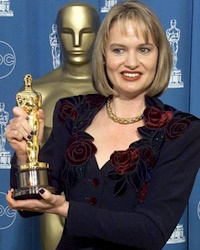 In the Best Original Comedy Score category Anne Dudley won the award for her score for The Full Monty, about a group of former steelworkers from Sheffield who become male strippers. In her acceptance speech, Dudley said:
“Thank you very much. This is a great honor. It’s great to be here; it’s wonderful. It’s been amazing being part of the success of “The Full Monty” over the past year. Nobody, of course, works alone on a film, and I’d really like to thank Peter Cattaneo and Uberto Pasolini for their brilliance and inspiration and encouragement. And the musicians who played the music and brought it to life. Thank you very much.”
The other nominees were Stephen Flaherty, Lynn Ahrens and David Newman for Anastasia; Hans Zimmer for As Good as It Gets; Danny Elfman for Men in Black; and James Newton Howard for My Best Friend’s Wedding.
In the Best Original Song category, James Horner won his second Oscar of the evening alongside lyricist Will Jennings for “My Heart Will Go On” from Titanic performed by Céline Dion.
The other nominees for Best Original Song were Alan Menken and David Zippel for “Go the Distance” from Hercules; Diane Warren for “How Do I Live” from Con Air; Stephen Flaherty and Lynn Ahrens for “Journey to the Past” from Anastasia; and Elliott Smith for “Miss Misery” from Good Will Hunting.
BAFTA Nominations 1997
 The British Academy of Film and Television Arts (BAFTA) has announced the nominations for the 51st British Academy Film Awards, honoring the best in film in 1997.
In the Best Original Music category, which is named in memory of the film director Anthony Asquith, the nominees are:
- ANNE DUDLEY for The Full Monty
- JERRY GOLDSMITH for L. A. Confidential
- NELLEE HOOPER, CRAIG ARMSTRONG, and MARIUS DE VRIES for William Shakespeare’s Romeo + Juliet
- JAMES HORNER for Titanic
These are the first nominations for Armstrong, De Vreis, Dudley, and Hooper. It is the third nomination for Horner, and the fourth nomination for Goldsmith.
The winners of the 51st BAFTA Awards will be announced on April 19, 1998.
Academy Award Nominations 1997
 The Academy of Motion Picture Arts and Sciences (AMPAS) have announced the nominations for the 70th Academy Awards, honoring the best in film in 1997.
In the Best Original Dramatic Score category, the nominees are:
- DANNY ELFMAN for Good Will Hunting
- PHILIP GLASS for Kundun
- JERRY GOLDSMITH for L.A. Confidential
- JAMES HORNER for Titanic
- JOHN WILLIAMS for Amistad
In the Best Original Musical or Comedy Score category, the nominees are:
- ANNE DUDLEY for The Full Monty
- DANNY ELFMAN for Men in Black
- JAMES NEWTON HOWARD for My Best Friend’s Wedding
- DAVID NEWMAN, STEPHEN FLAHERTY, and LYNN AHRENS for Anastasia
- HANS ZIMMER for As Good As It Gets
These are the first and second Oscar nominations for Elfman, the first Oscar nomination for Glass, the first Oscar nomination for Dudley, and the first nominations for Newman, Flaherty, and Ahrens. This is the 5th nomination for Horner, the 16th nomination for Goldsmith, the 31st nomination for Williams, the 3rd nomination for Howard, and the 4th nomination for Zimmer
Goldsmith previously won for The Omen in 1976. Williams previously won for Fiddler on the Roof in 1971, Jaws in 1975, Star Wars in 1977, E.T. the Extra Terrestrial in 1982, and Schindler’s List in 1993. Zimmer previously won for The Lion King in 1994.
In the Best Original Song category, the nominees are:
- STEPHEN FLAHERTY and LYNN AHRENS for “Journey to the Past” from Anastasia
- JAMES HORNER and WILL JENNINGS for “My Heart Will Go On” from Titanic
- ALAN MENKEN and DAVID ZIPPEL for “Go the Distance” from Hercules
- ELLIOTT SMITH for “Miss Misery” from Good Will Hunting
- DIANE WARREN for “How Do I Live” from Con Air
The winners of the 70th Academy Awards will be announced on March 23, 1998.
Golden Globe Nominations 1997
The Hollywood Foreign Press Association (HFPA) has announced the nominations for the 55th Golden Globe Awards, honoring the best in film and American television of 1997.
In the Best Original Score category, the nominees are:
- PHILIP GLASS for Kundun
- JERRY GOLDSMITH for L.A. Confidential
- JAMES HORNER for Titanic
- MICHAEL NYMAN for Gattaca
- JOHN WILLIAMS for Seven Years in Tibet
This is the first nomination for Glass, the second nomination for Nyman, the fourth nomination for Horner, the eighth nomination for Goldsmith, and the sixteenth nomination for Williams. Williams previously won for Jaws in 1975, Star Wars in 1977, and E.T. The Extra-Terrestrial in 1982.
In the Best Original Song category, the nominees are:
- SHERYL CROW and MITCHELL FROOM for “Tomorrow Never Dies” from Tomorrow Never Dies
- STEPHEN FLAHERTY and LYNN AHRENS for “Journey to the Past” from Anastasia
- STEPHEN FLAHERTY and LYNN AHRENS for “Once Upon a December” from Anastasia
- JAMES HORNER and WILL JENNINGS for “My Heart Will Go On” from Titanic
- ALAN MENKEN and DAVID ZIPPEL for “Go the Distance” from Hercules
The winners of the 55th Golden Globe Awards will be announced on January 18, 1998.
Wilfred Josephs, 1927-1997
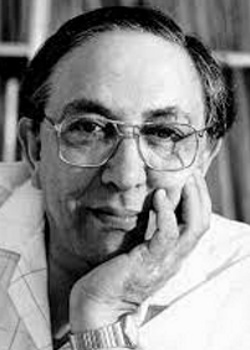 Composer Wilfred Josephs died at his home in London on November 17, 1997, at the age of 70.
One of the most prolific and versatile British composers of his generation, Josephs moved effortlessly between concert music, film and television, writing 12 symphonies and more than 20 concertos alongside scores for The Great War, Cider with Rosie, Swallows and Amazons, I, Claudius and All Creatures Great and Small.
Wilfred Josephs was born in Gosforth, Newcastle upon Tyne, England, on July 24, 1927, the youngest of four sons in a Jewish family. He showed considerable musical ability from childhood, studying locally with Arthur Milner, but his parents encouraged him towards a more secure profession. Josephs therefore trained as a dentist, qualifying from the University of Durham in 1951 and subsequently serving as an orthodontist during his National Service.
Music nevertheless remained his real ambition. Josephs studied at London’s Guildhall School of Music with Alfred Nieman and later received a Leverhulme Scholarship that allowed him to study in Paris with Max Deutsch, one of Arnold Schoenberg’s distinguished pupils. For several years he continued practising dentistry while composing whenever possible.
His breakthrough came with the Requiem, Op. 39, inspired by newsreel images of Auschwitz shown during the trial of Adolf Eichmann. Based on the Hebrew Kaddish and written in memory of the victims of the Holocaust, the work won first prize in the 1963 International Composition Competition organized by the City of Milan and La Scala. Its success finally allowed Josephs to abandon dentistry and become a full-time composer. Read more…
Saul Chaplin, 1912-1997
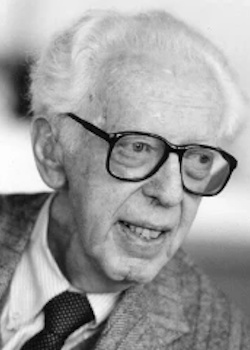 Composer, arranger, musical director and producer Saul Chaplin died in Los Angeles on November 15, 1997, at the age of 85, from injuries sustained in a fall.
One of the great behind-the-scenes craftsmen of Hollywood’s golden-age musical, Chaplin worked on some 60 films and won three Academy Awards, for An American in Paris, Seven Brides for Seven Brothers and West Side Story.
Chaplin was born Saul Kaplan in Brooklyn, New York, on February 19, 1912. He studied accounting at New York University but spent his spare time playing piano and writing songs. After graduation he teamed with lyricist Sammy Cahn, beginning a highly successful Tin Pan Alley partnership whose songs included “Please Be Kind,” “Until the Real Thing Comes Along” and the English-language version of “Bei Mir Bist Du Schoen,” which became an enormous hit for the Andrews Sisters.
Chaplin entered Hollywood during the 1940s, working at Columbia before moving to MGM in 1949. His expertise lay less in conventional dramatic scoring than in adapting, arranging and reshaping existing songs for the screen. He provided vocal arrangements for Al Jolson in The Jolson Story (1946), worked on Gene Kelly and Frank Sinatra’s On the Town (1949), and arranged Judy Garland’s celebrated performance of “Get Happy” in Summer Stock (1950).
His first Academy Award came for Vincente Minnelli’s An American in Paris (1951), for which he and Johnny Green adapted and supervised George Gershwin’s music, culminating in the film’s famous extended ballet. The picture won six Oscars, including Best Picture and Best Scoring of a Musical Picture. Read more…

Shop at the Movie Music UK Store

Member of the


