Wilfred Josephs, 1927-1997
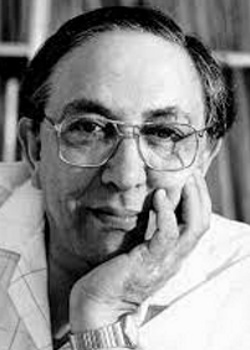 Composer Wilfred Josephs died at his home in London on November 17, 1997, at the age of 70.
One of the most prolific and versatile British composers of his generation, Josephs moved effortlessly between concert music, film and television, writing 12 symphonies and more than 20 concertos alongside scores for The Great War, Cider with Rosie, Swallows and Amazons, I, Claudius and All Creatures Great and Small.
Wilfred Josephs was born in Gosforth, Newcastle upon Tyne, England, on July 24, 1927, the youngest of four sons in a Jewish family. He showed considerable musical ability from childhood, studying locally with Arthur Milner, but his parents encouraged him towards a more secure profession. Josephs therefore trained as a dentist, qualifying from the University of Durham in 1951 and subsequently serving as an orthodontist during his National Service.
Music nevertheless remained his real ambition. Josephs studied at London’s Guildhall School of Music with Alfred Nieman and later received a Leverhulme Scholarship that allowed him to study in Paris with Max Deutsch, one of Arnold Schoenberg’s distinguished pupils. For several years he continued practising dentistry while composing whenever possible.
His breakthrough came with the Requiem, Op. 39, inspired by newsreel images of Auschwitz shown during the trial of Adolf Eichmann. Based on the Hebrew Kaddish and written in memory of the victims of the Holocaust, the work won first prize in the 1963 International Composition Competition organized by the City of Milan and La Scala. Its success finally allowed Josephs to abandon dentistry and become a full-time composer.
By then he had already entered television. His collaboration with director Claude Whatham began with The Boer War in 1960 and eventually encompassed more than two dozen productions. Josephs’s music for the BBC documentary series The Great War (1964) brought his work to a huge audience, while further television assignments included Talking to a Stranger, Weavers Green, The Guardians and The Ghosts of Motley Hall. He also contributed incidental music to episodes of The Prisoner.
His feature-film career included the taut Hammer thriller Cash on Demand (1961), Die! Die! My Darling! (1965), The Deadly Bees (1966) and the wilderness adventure My Side of the Mountain (1969). Two of his most attractive films came through Whatham: Arthur Ransome’s much-loved children’s adventure Swallows and Amazons (1974), and All Creatures Great and Small (1975), starring Simon Ward and Anthony Hopkins.
Josephs’s most famous television work was the BBC’s I, Claudius (1976). His extraordinary title music, with its pounding percussion, brass and ominous vocal effects, immediately established the atmosphere of corruption and violence surrounding imperial Rome. The theme became one of the most distinctive pieces of British television music of the decade and introduced Josephs to an international audience.
Further prominent television scores included Disraeli (1978), Enemy at the Door (1978), The Voyage of Charles Darwin (1978), Pride and Prejudice (1980) and The Return of the Antelope (1986). His screen music could be lyrical, dramatic or deliberately abrasive, reflecting the same stylistic freedom found throughout his concert output.
Josephs never regarded commercial composition as a substitute for concert music. His enormous catalogue included 12 symphonies, 22 concertos, numerous chamber and choral works, ballets and operas. Among his later major compositions were the opera Rebecca, based on Daphne du Maurier’s novel, and the ballet Cyrano de Bergerac for the Royal Ballet. Newcastle University awarded him an honorary doctorate in 1978.
Josephs is survived by his wife Valerie and their daughters Claudia and Philippa.

Shop at the Movie Music UK Store

Member of the


