CAPTAIN CORELLI’S MANDOLIN – Stephen Warbeck
 Original Review by Jonathan Broxton
Stephen Warbeck just gets better and better. I have to admit that, when he won the Oscar for Shakespeare in Love back in 1998, I dismissed his victory as nothing but sheer luck – a middling composer being fortuitously attached to the right movie at the right time. As time has passed, however, my opinion has changed. Fanny and Elvis and Mystery Men were OK. Billy Elliott was good. Quills was excellent. And now, with Captain Corelli’s Mandolin, Warbeck has finally emerged as a bonafide competitor to John Barry, George Fenton and Rachel Portman as the British composer of choice for romantic dramas. Read more…
Remembering Bruno Nicolai, 1926-1991
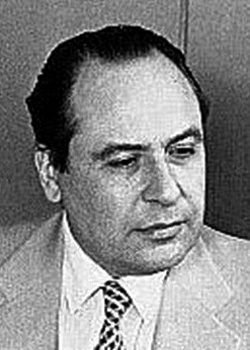 Composer, conductor, and pianist Bruno Nicolai died ten years ago today in Rome on August 16, 1991, at the age of 65.
One of the most accomplished figures in Italian film music during the 1960s and 1970s, Nicolai wrote scores for more than 100 films and television productions while also enjoying an important career as a conductor, publisher and advocate for contemporary classical music. His own work was particularly associated with spaghetti westerns, gialli and European horror cinema.
Nicolai was born in Rome on May 26, 1926. He studied piano with Aldo Mantia and composition with Goffredo Petrassi and Antonio Ferdinandi at the Santa Cecilia Conservatory, as well as organ at the Pontifical Institute of Sacred Music. From 1950 to 1964 he performed as pianist, organist and harpsichordist with the Santa Cecilia and RAI orchestras, while also writing extensively for theatre and television.
At Santa Cecilia Nicolai became friends with fellow student Ennio Morricone, beginning one of the most important—and sometimes misunderstood—professional relationships in Italian film music. Nicolai became Morricone’s preferred conductor and conducted many of his most famous scores, including For a Few Dollars More and The Good, the Bad and the Ugly. He also collaborated with Morricone as composer and conductor on several projects before their partnership ended during the 1970s. Nicolai’s extensive contribution to Morricone’s recordings sometimes led to confusion over authorship, but both men maintained substantial composing careers of their own. Read more…
AN AMERICAN RHAPSODY – Cliff Eidelman
 Original Review by Jonathan Broxton
I’ve waited three long years to type this sentence. Cliff Eidelman is back. The TV movie Witness Protection notwithstanding, it’s been a lean three years away from the scoring circuit for this extremely talented 34-year-old composer, whose career seemed to have completely stopped in its tracks. After bursting onto the scene in 1991 with his score for Star Trek VI, and enjoying six or seven years of comparative success, Eidelman suddenly stopped getting hired, despite him applying to score dozens for movies and narrowly failing to make the cut at the final hurdle. His last album of music was from the family drama One True Thing, in 1998 – until now. Read more…
FINAL FANTASY: THE SPIRITS WITHIN – Elliot Goldenthal
 Original Review by Jonathan Broxton
It’s been a long wait since Titus for Elliot Goldenthal to spring a new score on the world, but it has been more than worth it. His work on Final Fantasy: The Spirits Within is, from a pure enjoyment perspective, possibly the best of his career to date. I say that it is his best from an enjoyment perspective not because this score is his most challenging or complex – those accolades are reserved for works such as Alien 3 and Titus – but because, in terms of themes and developments, and for old-fashioned beauty, Final Fantasy has them all licked. It’s a dark, dark, score, make no mistake, but it contains more than its fair share of moments in the light. Read more…
James Bernard, 1925-2001
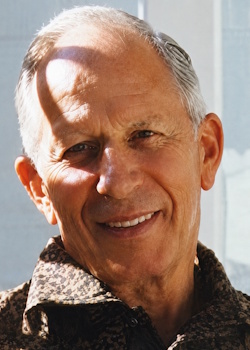 Composer James Bernard died in at his home in Jamaica on July 12, 2001, at the age of 75.
Although his career included radio, theatre and occasional non-horror films, Bernard is remembered above all as the musical voice of Hammer Films. Over an association lasting almost two decades, his pounding rhythms, abrasive harmonies and muscular brass writing helped define the sound of British Gothic horror, accompanying Dracula, Frankenstein and many of Hammer’s other celebrated monsters.
Bernard was born on September 20, 1925, in Kochel am See, Bavaria, Germany into a British Army family, He later re-located to British India with his family, before moving back to England in the 1940s. He was educated at Wellington College, where he met Benjamin Britten while still a teenager, and Britten encouraged his interest in composition. After wartime service in the RAF, Bernard studied with Herbert Howells at the Royal College of Music and later worked as a copyist and assistant on Britten’s opera Billy Budd.
Before becoming a film composer, Bernard had already won Hollywood’s highest honor, although not for music. With his partner, writer Paul Dehn, he devised the story for the nuclear thriller Seven Days to Noon (1950), for which the pair shared the Academy Award for Best Motion Picture Story. Bernard subsequently concentrated on music for radio and theatre, and his score for a BBC production of The Duchess of Malfi attracted the attention of Hammer musical director John Hollingsworth.
Hollingsworth recommended Bernard for The Quatermass Xperiment (1955), beginning the relationship that would dominate his career. Working initially with just strings and percussion, Bernard produced a tense, dissonant score whose unusual sonorities perfectly suited Hammer’s stark science-fiction horror. He followed it with X the Unknown (1956), Quatermass 2 (1957), and then the film that transformed Hammer’s fortunes, The Curse of Frankenstein (1957). Read more…
THE LAST SEPTEMBER – Zbigniew Preisner
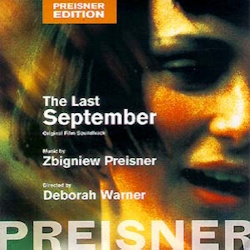 Original Review by Jonathan Broxton
Zbigniew Preisner is not the happiest of composers. Despite receiving critical acclaim for his work on The Double Life of Veronique and the Three Colours trilogy, and a modicum of commercial success on films such as The Secret Garden and Fairytale: A True Story, a broader recognition amongst the mainstream soundtrack world has so far eluded the Pole. His music is always well composed, but on the whole rather slow and dour, alienating many of those who might seek something a little more cheerful. Unfortunately, his score for The Last September is not going to buck the trend in any way. Read more…
LARA CROFT – TOMB RAIDER – Graeme Revell
 Original Review by Jonathan Broxton
Few films have had as troubled a post-production than Tomb Raider, the first big-screen outing for the pneumatically-breasted super heroine from the world of computer games, Lara Croft. Musically, the entire set-up was a shambles, eclipsing even such scoring debacles as The Avengers and What Dreams May Come. The first name attached to the project was John Powell; then, game composer Nathan McCree was announced as being the film’s composer. To the utter dismay of score fans, it was then announced that dance DJ Norman Cook (aka Fat Boy Slim) would co-ordinate the soundtrack. Then, in an amazing about-face, Cook was bumped off and Michael Kamen came in. Sigh of relief. But then, with just weeks to go before the film’s high profile premiere, Kamen downed tools and bolted the project, leaving poor old Graeme Revell with less than 10 days to write and record a 50-minute score for a full orchestra augmented by electronics. The Hollywood composing merry-go-round seemingly knows no depths of stupidity. Read more…
EVOLUTION – John Powell
 Original Review by Jonathan Broxton
Having never been particularly enamored with either of their individual works, I have often wondered just what kind of chemistry develops when Harry Gregson-Williams and John Powell work together to enable them to write such charming and ebullient scores as Antz, Chicken Run and Shrek. I have also often wondered whose musical personality is the more dominant when it comes to these magnificent animation works – and now I think I know. Evolution, John Powell’s first major solo score since Face/Off and Forces of Nature, is a definite kissing cousin to the Dreamworks hits in terms of tone and style, and has more than changed my attitude of the Englishman as a composer in his own right. Read more…
PEARL HARBOR – Hans Zimmer
 Original Review by Jonathan Broxton
Director Michael Bay so much wanted for Pearl Harbor to be his Titanic – an epic love story that takes place within one of the most tragic, violent, and talked-about events of the 20th Century. But, with Michael Bay being the director he is, it had to not just equal, but eclipse James Cameron’s Oscar-winning watery thriller. Instead of sinking one boat, Bay sinks a couple of dozen. Not content with presenting a simple boy-meets-girl story, Bay turns Pearl Harbor’s romance into a love triangle. And, in an effort to outdo James Horner’s work on the earlier film, Bay hired Hans Zimmer to wring every last emotional drop from his audience and his listeners. And he succeeds – almost. Read more…
Remembering Carmine Coppola, 1910-1991
 Composer, conductor and flautist Carmine Coppola died ten years ago today in Los Angeles on April 26, 1991, at the age of 80, after suffering a stroke.
Although much of his film career was closely connected with his son, director Francis Ford Coppola, he created memorable music for some of the defining American films of the 1970s and 1980s, including The Godfather Part II, Apocalypse Now, The Black Stallion and The Godfather Part III. His work brought him an Academy Award and a Golden Globe.
Carmine Valentino Coppola was born in New York City on June 11, 1910, into an Italian-American family. He studied flute and composition at the Juilliard School and Manhattan School of Music and became an accomplished professional flautist. He performed under Arturo Toscanini with the NBC Symphony Orchestra before increasingly turning to composition, arranging and conducting.
Coppola’s connection with cinema became significant when Francis asked him to contribute music to The Godfather (1972). Nino Rota wrote the principal score, but Carmine supplied additional music, including material heard during the Corleone wedding festivities. The collaboration continued more substantially on The Godfather Part II (1974), where Coppola contributed original material alongside Rota’s themes, including music associated with the film’s early twentieth-century American sequences. Rota and Coppola shared the Academy Award for Best Original Dramatic Score, giving Carmine his greatest professional honor. Read more…
THE LUZHIN DEFENCE – Alexandre Desplat
 Original Review by Jonathan Broxton
What’s the sound of a French composer falling off a tall building? Desplat. I’m opening this review with a joke because I’ll wager that most of you have never heard of Alexandre Desplat, the French-born composer of The Luzhin Defence. Before I saw this film and heard this album, I knew his name, and could I list a few of his previous films (Innocent Lies, A Self Made Hero, Love Etc.), but nothing beyond that. Even now, biographical details about Desplat’s life are sketchy – I don’t even know how old he is – but I do know this: he is a composer of considerable talent. Read more…
CROCODILE DUNDEE IN LOS ANGELES – Basil Poledouris
 Original Review by Jonathan Broxton
Paul Hogan must have had an especially large electric bill last year – otherwise why on Earth would he resurrect his now rather dated character Crocodile Dundee for a third outing, 13 years after the first sequel. Hogan said, in defense of his movie, that he thought people might be interested in where “Mick had been for the last decade; what had happened to him and his life”. Well, flogging a dead horse is one thing, if it makes a buck or two for the people involved, I have nothing against shameless capitalism. But Crocodile Dundee has no redeeming features – its not funny, its not very interesting and, worst of all, its not even particularly well made. Read more…
SPY KIDS – Robert Rodriguez
 Original Review by Jonathan Broxton
There’s a saying in Britain – I don’t know how widespread it is in the rest of the English-speaking world – which states that “too many cooks spoil the broth”. What this means, basically, is that if too many people try to take part in one thing at once, the end result can be diminished by the contributions of its many creators. This old adage can be applied to Spy Kids, an enjoyable children’s action score which is rendered just a little overly-schizophrenic through the use of eight – count ’em – eight different composers. Basically, Spy Kids is a James Bond adventure story with a difference – the protagonists are pre-teens. What some people may find surprising is the fact that it was written and directed by Robert Rodriguez, the man who previously brought the world such dark, violent movies as El Mariachi, Desperado, From Dusk Till Dawn and The Faculty. The plot is simple: Gregorio and Ingrid Cortez (Antonio Banderas and Carla Gugino) are semi-retired spies with two precocious children, Carmen (Alexa Vega) and Juni (Daryl Sabara). Gregorio and Ingrid still occasionally blast off on an adventure when duty calls but unfortunately, their sabbatical has made them a little rusty – so much so that they end up being captured by the diabolical Fegan Floop (Alan Cumming), a children’s TV show host who is planning to use an army of robot children to take over the world. The only solution? The kids to rescue, armed with a load of cool gadgets and the espionage know-how inherited from mom and dad. Read more…
Academy Award Winners 2000
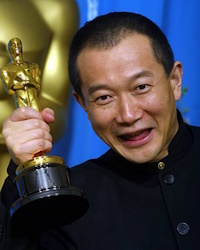 The Academy of Motion Picture Arts and Sciences (AMPAS) have announced the winners of the 73rd Academy Awards, honoring the best in film in 2000.
In the Best Original Score category, Chinese composer Tan Dun won the Academy Award for his score for Ang Lee’s Crouching Tiger, Hidden Dragon. In his acceptance speech Tan said:
I prepared something exactly forty-five seconds. My music is to dream without boundaries. Tonight, with you, I see boundaries being crossed. As a classical music composer I’m thrilled to be honored here. “Crouching Tiger” bridged East and West, romance and action, high and low cultures. Thank you, Ang Lee, Yo-Yo Ma, Peter Gelb, Michael Gorfaine, James Schamus, Bill Kong. Thank you, Sony Classical, CAMI and G. Schirmer for their long support. Last, this is for two tigers in my family: my wife Jane, Ian, [my] son, both born in the year of tigers. Thank you, Academy.
The other nominees for Best Original Score were Rachel Portman for Chocolat, Hans Zimmer for Gladiator, Ennio Morricone for Malèna, and John Williams for The Patriot.
In the Best Original Song category, legendary singer-songwriter Bob Dylan won the Academy Award for “Things Have Changed” from Curtis Hanson’s Wonder Boys. Dylan was touring Australia at the time of the ceremony and appeared from Sydney by satellite.
The other nominees for Best Original Song were Randy Newman for “A Fool in Love” from Meet the Parents; Björk, Lars von Trier and Sjón Sigurðsson for “I’ve Seen It All” from Dancer in the Dark; Jorge Calandrelli, Tan Dun and James Schamus for “A Love Before Time” from Crouching Tiger, Hidden Dragon; and Sting and David Hartley for “My Funny Friend and Me” from The Emperor’s New Groove.
THE DISH – Edmund Choi
 Original Review by Jonathan Broxton
Composer Edmund Choi has had an unusual career to date. After graduating, he wrote music for Praying With Anger and Wide Awake, Sixth Sense director M. Night Shyamalan’s first two films, and the romantic comedy Down To You in early 2000. However, it was his re-scoring of the Australian comedy The Castle in 1999 (Miramax asked him to replace Craig Harnath’s original music for the American market) that landed him this assignment writing the score for Rob Sitch’s follow-up. Unfortunately, despite his undoubted talent, Choi has fallen into the trap many fledgling composers find themselves facing, and succumbed to a bad case of temp-track fever. Set in 1969, The Dish is a warm and appealing comedy starring Sam Neill as Cliff Buxton, an amateur astronomer from rural Parkes, NSW, Australia, who is the man in charge of the large satellite transmitter which sits proudly in the community’s main sheep paddock. Then, suddenly, Parkes is put on the map when NASA contacts Buxton to ask him to provide backup technology for Neil Armstrong’s historic walk on the face of the moon. With the help of his good natured but slightly inept assistants (Kevin Harrington, Patrick Warburton), Buxton is only too pleased to be of service to the Americans – but gets more than he bargained for when a technical glitch back home in Houston leaves the Parkes Dish solely responsible for sending out the lunar TV pictures to a world holding its collective breath. Sitch’s endearing film was one of 2001’s sleeper successes, at least critically – it did very little at any box-office, despite receiving glowing reviews – and boasts a charming lead performance from Neill, a world away from the histrionics of Jurassic Park and its sequels. Read more…

Shop at the Movie Music UK Store

Member of the


