THE LAST SEPTEMBER – Zbigniew Preisner
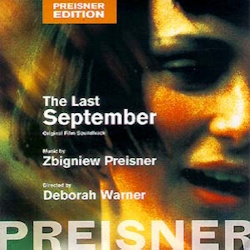 Original Review by Jonathan Broxton
Zbigniew Preisner is not the happiest of composers. Despite receiving critical acclaim for his work on The Double Life of Veronique and the Three Colours trilogy, and a modicum of commercial success on films such as The Secret Garden and Fairytale: A True Story, a broader recognition amongst the mainstream soundtrack world has so far eluded the Pole. His music is always well composed, but on the whole rather slow and dour, alienating many of those who might seek something a little more cheerful. Unfortunately, his score for The Last September is not going to buck the trend in any way.
The Last September, directed by Deborah Warner, is a social and political drama set at the end of the last century, starring Maggie Smith, Michael Gambon, Fiona Shaw and Keeley Hawes. It tells the story of the Naylors, a family of British-born aristocrats in Ireland whose closeted existence of wealth and privilege is being inexorably swallowed up by the escalating tensions between the Irish Republicans, who want to break away from home rule, and the British Army, who want to maintain sovereignty. As the tensions between British and Irish, Protestant and Catholic, draws towards an increasingly bloody conclusion, the Naylors doggedly maintain their genteel lifestyle of summer parties and balls, all of which is witnessed by young Lois Farquhar (Hawes), who comes of age during the troubles.
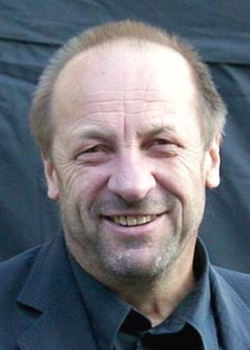 Preisner’s score is small, intimate, almost chamber-like, with a simple sextet of violins forming the core of the music. The eight-minute opening ‘Suite’ provides a comprehensive overview of the score as a whole, featuring each of the recurring elements and all its most important instrumental textures. There is no theme to speak of; instead, solo performances by guitar, trumpet, and clarinet feature prominently, and there are two sombrely attractive solo piano and cello duets at two and seven minutes respectively, which are definite highlights. Weaving in and out of the music are the eerie, fractured sounds of a glass harmonica, the relevance of which I cannot determine, but which certainly invokes a gravely disturbing mood.
The score itself can best be described as being parts of the suite broken down into longer, more distinct segments, each containing one of the instrumental and textural passages. ‘Lois’s Theme’ and ‘Lois and Gerald’ both feature further performances of the glass harmonica, which is obviously an instrumental leitmotif for the Keeley Hawes character. The end of ‘The Telescope’ once again works the downcast trumpet solo into the mix, and ‘The Ambushed Soldier’ features a gentle harp, while ‘The Tennis Party’ recapitulates the superb piano and cello rhapsody, the latter performed by the ever-dependable Anthony Pleeth, and is easily the highlight cue of the album. Only the final score cue, ‘Death on the Mill’, offers the faintest glimmer of hope, presenting a hesitant, slightly brighter melody for guitar and strings… but the false dawn soon becomes bogged down once more in the endless despair of Preisner’s music.
The first thing that is immediately noticeable about The Last September is that it isn’t particularly Irish in any way – but by that I don’t mean to say that Preisner should have gone down the bagpipe and pennywhistle route as many composers do. It’s just that there is no indication whatsoever of the film’s timeframe or its locale in any part of its score. Maybe it was a conscious choice on the part of Preisner and Warner not to saddle the film with a stereotypical “Irish” score, but anyone coming in to the score blind (as I was) would have no idea. Secondly, there are very few of Preisner’s trademark “pauses” in the music, described by the composer himself as “musical whitewash”. This is perhaps a good thing in many ways, as it means that the score, despite its unrelenting sense of misery, is at least constant in tone and tempo.
I don’t want to come down too hard on The Last September, because Zbigniew Preisner is a man who is dedicated to writing good quality film music, and whose personal and professional integrity is second to none. However, the problem with this score, like many of his others, is that it simply leaves you cold. There is no life, no sparkle, no energy… just half an hour of repeating gloom-laden textures and languorous orchestral lines.
Track Listing:
- The Last September Suite (8:49)
- Lois’s Theme (1:47)
- The House (3:05)
- Lois and Gerald (2:04)
- The Tennis Party (1:36)
- The Telescope (3:48)
- The Ambushed Soldier (1:23)
- The Mill (1:51)
- Lois and Connolly (2:44)
- Death at the Mill (3:54)
- The Last September End Titles 1 (1:39)
- The Last September End Titles 2 (1:55)
Running Time: 34 minutes 47 seconds
Silva Screen SILKD-6027 (2000)
Music composed by Zbigniew Preisner. Conducted by Robert Ziegler. Featured musical soloists Alasdair Molloy, Simon Chamberlain, John Parricelli, Robert Hill, Nicholas Bucknall, Anthony Pleeth and Stephen Sidwell. Recorded and mixed by Geoff Foster. Mastered by Jacek Koltuniak. Album produced by Zbigniew Preisner.

Shop at the Movie Music UK Store

Member of the


