THE WORLD’S FASTEST INDIAN – J. Peter Robinson
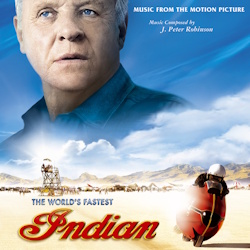 Original Review by Tom Kiefner
What sort of images does one conjure up when the title to a film is called The World’s Fastest Indian. Does one think about the famous indian athlete James Thorpe? Perhaps some sort of long marathon race run by a member of the Navajo tribe? Perhaps some sort of speed record for a short sprint run by an unknown named indian. Until a review was read in the local newspaper I had no idea that it was about a motorcycle and it was based on a true story and a speed record was set at the Bonneville Salt Flats which stands to this day. And in addition there is a story of the main character played by the talented Anthony Hopkins and a young boy and the wonderful relationship that was formed. J. Peter Robinson was a composer who was known more for his horror music than a pretty serious drama. Films such as Nightmare Cafe, Return of the Living Dead Part 2, and New Nightmare were some of his standard fare. How could he possibly fit into this kind of film? As it turns out it is the third film Robinson has done with director Roger Donaldson, the two previous films being Cocktail and Cadillac Man. Their relationship had been formed and as it turns out an excellent one indeed! Robinson has produced a fine score for a fine movie. Read more…
AEON FLUX – Graeme Revell
 Original Review by Jonathan Broxton
I sometimes feel quite sorry for film music composers, and what they have to put up with. Un-cooperative uninformed directors, clueless meddling producers, insane deadlines, technical glitches – it’s a wonder certain scores ever turn out as good as they do, considering the difficult circumstances in which they were written. Aeon Flux is one such project: a troubled film from the day it was given the go-ahead, it suffered everything from last minute script re-writes to multiple composer changes. Originally Theodore Shapiro was on board, but before he could record his score he was replaced by Australian/German electronica duo Reinhold Heil and Johnny Klimek. However, AFTER they had recorded their score, the producers from MTV decided they were still dissatisfied with the finished product, and brought in Graeme Revell to save the day, with just a couple of weeks until the film’s premiere. Revell has been in this situation before, of course, being the last stop on the Tomb Raider merry-go-round back in 2001. That Aeon Flux is this good is testament to his professionalism and time-management skills. That Aeon Flux is this disappointing is testament to more film studio indecisiveness with respect to the part of the process they continually seem to understand the least – the music. Read more…
HARRY POTTER AND THE GOBLET OF FIRE – Patrick Doyle
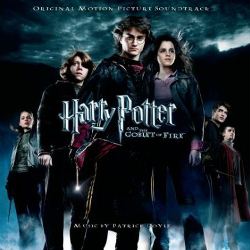 Original Review by Jonathan Broxton
Harry Potter and the Goblet of Fire, the film adaptation of the best-selling novel by J.K. Rowling, sees young the wizard Harry (Daniel Radcliffe) entering his fourth year at Hogwarts School of Witchcraft and Wizardry, along with his best friends Ron Weasley (Rupert Grint) and Hermione Granger (Emma Watson). After getting caught up in a worrying incident at the Quidditch World Cup, Harry finds himself unexpectedly involved in the legendary Tri-Wizard tournament, in which the champions of three international witchcraft schools take part in a number of challenging and highly dangerous tasks to find an overall winner. However, against the backdrop of this prestigious event, something much more sinister is afoot: rumours begin to circulate about the return of the Death Eaters, evil wizards who wrought havoc upon the magical world years before – and worse yet, the return of Voldemort, their leader, and the one who murdered Potter’s parents… Read more…
PRIDE & PREJUDICE – Dario Marianelli
 Original Review by Jonathan Broxton
Jane Austen wrote her timeless classic of love and longing Pride & Prejudice in 1813, and in doing so introduced to the world what would in time become a classic of English literature. Austen’s story has been adapted for both the big and small screen on several occasions, arguably the most popular and acclaimed being the 1995 BBC mini-series starring Colin Firth and Jennifer Ehle, with music by Carl Davis. This new version directed by Joe Wright stars Keira Knightly as the ‘quick minded, sharp witted’ Elizabeth Bennet, who in order to keep her family home secure and provide a future for her mother and sisters, is betrothed to the wealthy but passionless Mr. Bingley (Simon Woods). However, just as her family’s fortunes look as they are finally going to take a turn for the better, Elizabeth unexpected finds herself falling for the dour, taciturn Mr. Darcy (Matthew MacFadyen), with whom she clashes both on a number of occasions… The film features an exceptional supporting cast, boasting the likes of Judi Dench, Donald Sutherland and Brenda Blethyn, makes wonderful use of English locations (such as Chatsworth House in Derbyshire), and looks set to become one of the year’s most critically acclaimed motion pictures. Read more…
ZATHURA – John Debney
 Original Review by Jonathan Broxton
Celebrated children’s author Chris Van Allsburg must have a thing about board games. Having already unleashed Jumanji on the world back in 1995, and after the festive diversions of The Polar Express last year, he now returns to his genre of choice with Zathura, another juvenile adventure about a deadly game which proves all too real for its players. Directed by Jon Favreau and starring Jonah Bobo, Josh Hutchinson and Tim Robbins, Zathura tells the story of two brothers who discover a space-adventure board game in the basement of their house. However, once they start playing the game, the boys suddenly find themselves in mortal peril: their house has hurtled through space and is now in orbit around Saturn; they find themselves bombarded with meteors; and, worst of all, they are being threatened by a race of nasty lizard-like aliens called Zorgons. Their only way home is to finish the game – providing they stay alive long enough to do so… Read more…
Remembering Alessandro Cicognini, 1906-1995
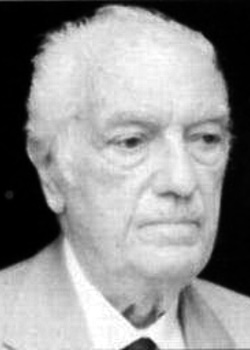 Composer Alessandro Cicognini died ten years ago today in Rome on November 9, 1995, at the age of 89.
One of the most important figures in the development of Italian film music, Cicognini was particularly associated with the great post-war neorealist films of Vittorio De Sica, including Shoeshine, Bicycle Thieves, Miracle in Milan and Umberto D. He also enjoyed significant collaborations with Alessandro Blasetti and other leading Italian directors, writing music for more than 100 feature films during a career spanning three decades.
Cicognini was born in Pescara on January 25, 1906, and spent much of his youth in nearby Francavilla al Mare. As a teenager he accompanied silent films on the piano at local cinemas, an experience that provided an unusually direct introduction to the relationship between music and moving images. Although his father encouraged him to pursue a conventional profession and he obtained a degree in law, Cicognini continued studying music, attending the Milan Conservatory under Giulio Cesare Paribeni and Renzo Bossi.
His early ambitions were in concert and operatic music. The cantata Saul appeared in 1932, followed by the three-act opera Donna Lombarda, which won recognition in a competition organized by Italian radio. Cinema soon became his principal occupation, however. His first film assignment was I Due Sergenti in 1936, followed by The Black Corsair the following year, and during the 1940s he developed an important relationship with Alessandro Blasetti on films including The Iron Crown, Four Steps in the Clouds and Prima Comunione. Read more…
Francesco De Masi, 1930-2005
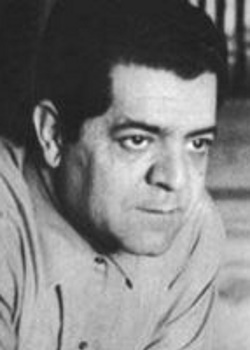 Composer and conductor Francesco De Masi died in Rome, Italy, on November 6, 2005, at the age of 75, following a battle with cancer.
One of the most prolific figures in Italian film music, De Masi wrote scores for more than 200 films and numerous television productions and documentaries, but remains best known for the distinctive music he composed for spaghetti westerns during the genre’s golden age.
De Masi was born in Rome on January 11, 1930, and studied composition at the San Pietro a Majella Conservatory in Naples with his uncle, Achille Longo. He also studied conducting with Franco Ferrara and Paul van Kempen and trained as a horn player, performing with orchestras including the RAI Symphony Orchestra in Rome. His interest in cinema began while assisting Longo on a film score, and in 1951 he composed the music for the documentary Fiat Panis. Several years of documentary work followed before he moved increasingly into feature films.
During the early 1960s De Masi worked extensively on the historical adventures and sword-and-sandal epics then dominating Italian popular cinema, including Hercules the Invincible. However, it was the explosion of the Italian western that provided him with his most characteristic body of work. Unlike many composers who entered the genre after the enormous success of Ennio Morricone’s scores for Sergio Leone, De Masi was already developing his own western sound and consequently retained a style that was distinctly his own.
Among his most notable westerns were A Coffin for the Sheriff (1965), Arizona Colt (1966), Seven Winchesters for a Massacre (1967), Any Gun Can Play (1967), and Kill Them All and Come Back Alone (1968). His music combined traditional symphonic scoring with electric guitars, percussion, whistles, choral writing and memorable title songs, while retaining a stronger orchestral foundation than many of his contemporaries. Arizona Colt was especially successful, with De Masi collaborating with guitarist and vocalist Alessandro Alessandroni on the score and its song “The Man from Nowhere.” Read more…
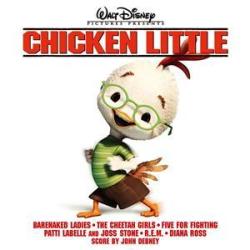
CHICKEN LITTLE – John Debney
 Original Review by Jonathan Broxton
It pains me to write this, but the quality of Disney’s annual animated features seem to be decreasing in quality with each passing year. It’s a truly depressing thought to realise that having gone from such legendary fare as Pinocchio, Snow White and Bambi, to modern classics such as Beauty and the Beast and The Lion King, we are now reduced to watching twaddle like last year’s Home on the Range, and this year’s lacklustre effort, Chicken Little.
The story is a simplistic fable variation on “the boy who cried wolf”, aimed firmly at kids, with little in the way of the subtle subversiveness which makes this kind of fare palatable for adults. Young Chicken Little (Zach Braff) causes a mass panic in his small hometown of Oakey Oaks when he claims that “the sky is falling” (it turns out to be an acorn), and is scorned as a dumb kid, and treated as a social pariah. Read more…
Remembering Brian Easdale, 1909-1995
 Composer Brian Easdale died ten years ago today, on October 30, 1995, at his home in London, England. He was 86.
A distinguished composer of concert, operatic and film music, Easdale is best remembered for his long association with directors Michael Powell and Emeric Pressburger, and especially for The Red Shoes, which made him the first British composer to win an Academy Award for a film score.
Easdale was born in Manchester on August 10, 1909, and was educated at Westminster Abbey Choir School before studying at the Royal College of Music with Gordon Jacob and Armstrong Gibbs. A precocious talent, he wrote his first opera, Rapunzel, at 17. During World War II he served with the Royal Artillery and later with the Public Relations Film Unit in India, where his experience writing music for government films helped prepare him for his subsequent career in cinema.
His breakthrough came when Powell and Pressburger hired him to score Black Narcissus in 1947. Easdale’s dramatic, sensuous music was an ideal complement to Jack Cardiff’s extraordinary Technicolor photography and the film’s atmosphere of suppressed desire and psychological tension. The success of the film led to Easdale becoming musical director for Powell and Pressburger’s Archers company, beginning one of the most important composer-director relationships in post-war British cinema.
THE LEGEND OF ZORRO – James Horner
 Original Review by Jonathan Broxton
Considering its $94 million success at the box office in 1998, it’s rather surprising that it’s taken Hollywood seven years to make a sequel to The Mask of Zorro, the film which turned Antonio Banderas into a swashbuckling heartthrob and introduced to the world a little-known Welsh actress called Catherine Zeta-Jones. With director Martin Campbell once again at the helm, the film takes place ten years after the events in Mask of Zorro. Don Alejandro de la Vega (the real identity of Zorro) and his wife Elena are now the parents of a ten year old son, Joaquin (Adrian Alonso). With California on the verge of joining the United States of America, Alejandro keeps the promise he made to his wife and agrees to hang up his cape and end his swashbuckling lifestyle forever to spend more time with his family. However, his retirement is prematurely ended by the nefarious Armand (Rufus Sewell), whose labyrinthine plot involves sabotaging California’s plans for statehood and could lead to civil war… Read more…
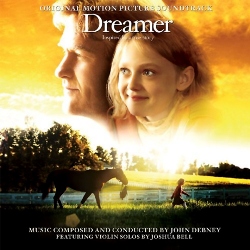
DREAMER – John Debney
 Original Review by Jonathan Broxton
Pitched as “Seabiscuit for kids”, Dreamer is one of those ambiguous films which has the subtitle ‘inspired by a true story’, meaning that in all likelihood 90% of what happened on-screen never took place in real life. Irrespective of all this, the film is a kind-hearted story about the Crane family: race horse trainer Ben (Kurt Russell), his wife Lily (Elisabeth Shue), and their precocious daughter, Cale (Dakota Fanning from War of the Worlds, who is now so well-respected she gets second billing at age 11). Despite a few tensions between Ben and his estranged father (Kris Kristofferson), life down on the stud farm in Kentucky is generally happy and sunny – until, unexpectedly, Ben’s prize thoroughbred filly Soñador, breaks a leg during a big race. The horse’s greedy and manipulative owner, Mr Palmer (David Morse), callously fires Ben and orders the horse destroyed. Determined not to see a loved animal put down, and with an idea of using the horse as stud material, Ben gets Palmer’s reluctant agreement to take the stricken animal into his care. As Ben nurses Soñador back to health, Cale becomes deeply attached to the horse, and begins to wonder whether her days on the track are finished after all… Read more…
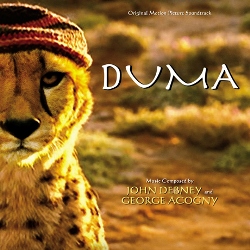
DUMA – John Debney, George Acogny
 Original Review by Peter Simons
A return to director Carroll Ballard’s favorite subject, Duma is based on the semi-autobiographical book by Carol and Xan Hopcraft, and tells the story of young South African boy Xan (Alexander Michaletos), who adopts an orphaned cheetah and becomes its best friend. This simple, uncomplicated plot is virtually a retelling of Ballard’s previous directorial effort Fly Away Home – albeit with big cats rather than geese – as Xan sets out on a quest to release the big cat back in to the wild, struggles with the sudden loss of his father, and adapts to other difficulties with adolescence and growing up. Read more…
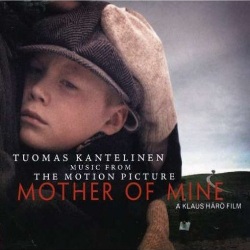
ÄIDEISTÄ PARHAIN/MOTHER OF MINE – Tuomas Kantelinen
 Original Review by Jonathan Broxton
Finland, a country of 5.3 millions people in the extreme north of Europe, doesn’t have the greatest pedigree when it comes to internationally successful cinema. Their most revered artist, Aki Kaurismäki, is virtually unknown outside of art houses, and their most popular success, Renny Harlin, was famously described by Michael Kamen as “a Finnish motorbike rider – not a director. Nice guy, but not in command of that kind of thing” when talking about their collaboration on Die Hard II. Musically, Finland gave the world composers Jean Sibelius and Einojuhani Rautavaara, and conductor Esa-Pekka Salonen, but have never managed to combine the two arts and provide a world-renowned film music composer. This could all change for Tuomas Kantelinen, however, if Mother of Mine is successful. Read more…
SERENITY – David Newman
 Original Review by Jonathan Broxton
A big screen re-working of the short-lived TV series Firefly, Serenity marks the return to the cinema of writer-producer-director Joss Whedon, whose first abortive attempts to crack the big screen market resulted in the laughable Buffy the Vampire Slayer movie in 1992. Of course, Whedon’s revamping (pardon the pun) of his own idea became a smash hit through the subsequent Buffy TV series, and as such his stock has risen to the stage where he can now develop his own projects without fear of studio meddling. To this end, and to many people’s surprise, Whedon hired David Newman to score Serenity – an assignment many people had been hoping would come Newman’s way, having been subjected to little more than pointless comedy and sequel scores from him for most of the new millennium. Read more…
DEAR WENDY – Benjamin Wallfisch
 Original Review by Jonathan Broxton
A new name in the film scoring community, until now Benjamin Wallfisch has been best known for his work orchestrating and conducting Dario Marianelli’s acclaimed scores Pride & Prejudice, The Brothers Grimm and V for Vendetta. What may not be immediately apparent from those projects is that the 27-year-old Englishman is a talented hugely talented composer in his own right – as his debut score for Dear Wendy attests. A Danish/British co-production directed by Thomas Vinterberg and produced by Lars Von Trier, Dear Wendy stars Jamie Bell as Dick, a young boy in a nameless, timeless American town, who establishes a gang of misfits who are in love with guns as a way of livening up their lives. It’s an unusual, typically Scandinavian film about youthful angst, socio-political issues, and alienation, which opened in the UK in August 2005, but has not received wide distribution in North America beyond the festival circuit, despite actors such as Bill Pullman appearing in supporting roles. Read more…

Shop at the Movie Music UK Store

Member of the


