Francesco De Masi, 1930-2005
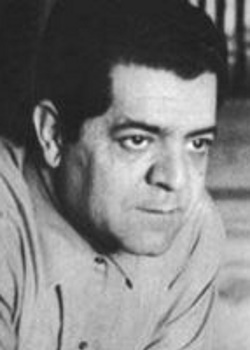 Composer and conductor Francesco De Masi died in Rome, Italy, on November 6, 2005, at the age of 75, following a battle with cancer.
One of the most prolific figures in Italian film music, De Masi wrote scores for more than 200 films and numerous television productions and documentaries, but remains best known for the distinctive music he composed for spaghetti westerns during the genre’s golden age.
De Masi was born in Rome on January 11, 1930, and studied composition at the San Pietro a Majella Conservatory in Naples with his uncle, Achille Longo. He also studied conducting with Franco Ferrara and Paul van Kempen and trained as a horn player, performing with orchestras including the RAI Symphony Orchestra in Rome. His interest in cinema began while assisting Longo on a film score, and in 1951 he composed the music for the documentary Fiat Panis. Several years of documentary work followed before he moved increasingly into feature films.
During the early 1960s De Masi worked extensively on the historical adventures and sword-and-sandal epics then dominating Italian popular cinema, including Hercules the Invincible. However, it was the explosion of the Italian western that provided him with his most characteristic body of work. Unlike many composers who entered the genre after the enormous success of Ennio Morricone’s scores for Sergio Leone, De Masi was already developing his own western sound and consequently retained a style that was distinctly his own.
Among his most notable westerns were A Coffin for the Sheriff (1965), Arizona Colt (1966), Seven Winchesters for a Massacre (1967), Any Gun Can Play (1967), and Kill Them All and Come Back Alone (1968). His music combined traditional symphonic scoring with electric guitars, percussion, whistles, choral writing and memorable title songs, while retaining a stronger orchestral foundation than many of his contemporaries. Arizona Colt was especially successful, with De Masi collaborating with guitarist and vocalist Alessandro Alessandroni on the score and its song “The Man from Nowhere.”
De Masi’s command of the orchestra gave even modest genre films a sense of scale and excitement. His western themes could be heroic and expansive, but he was equally comfortable with melancholy, suspense and jazz. He usually orchestrated his own music and regarded the principal theme as the foundation from which the rest of a film score should develop, an approach that helps explain the strong melodic identity of much of his work.
As the spaghetti western declined during the 1970s, De Masi moved easily into crime films, horror, war pictures and action cinema. His score for Enzo G. Castellari’s The Inglorious Bastards (1978) brought a robust symphonic swagger to the director’s World War II adventure, while Lucio Fulci’s notorious The New York Ripper (1982) allowed him to explore a darker mixture of jazz, funk and suspense.
One of his most prominent international assignments came with Lone Wolf McQuade (1983), starring Chuck Norris and David Carradine. De Masi approached the contemporary Texas action film almost as a traditional western, writing a muscular, strongly melodic orchestral score that stood apart from the synthesizer-heavy sound increasingly common in 1980s action cinema. He also scored Castellari’s Escape from the Bronx the same year and continued working in Italian film and television throughout the following decades.
Away from cinema, De Masi maintained a substantial career as a conductor and teacher. He worked at the conservatories of Naples and Rome, eventually teaching at Santa Cecilia, and conducted symphonic and operatic repertoire in Italy and abroad. His musical influences ranged from Palestrina and Ravel to Shostakovich, Hindemith and jazz bandleader Stan Kenton.
De Masi never achieved the worldwide fame of Morricone, but his enormous catalogue contains some of the most enjoyable and accomplished music produced by the Italian genre-film industry. Whether accompanying gunfighters, Roman heroes, soldiers, killers or modern-day Texas Rangers, his music was consistently energetic, melodic and superbly orchestrated. His western scores in particular remain the heart of his legacy, and establish Francesco De Masi as one of the essential voices of Italian film music.

Shop at the Movie Music UK Store

Member of the


