Remembering Alessandro Cicognini, 1906-1995
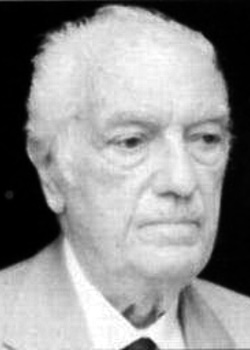 Composer Alessandro Cicognini died ten years ago today in Rome on November 9, 1995, at the age of 89.
One of the most important figures in the development of Italian film music, Cicognini was particularly associated with the great post-war neorealist films of Vittorio De Sica, including Shoeshine, Bicycle Thieves, Miracle in Milan and Umberto D. He also enjoyed significant collaborations with Alessandro Blasetti and other leading Italian directors, writing music for more than 100 feature films during a career spanning three decades.
Cicognini was born in Pescara on January 25, 1906, and spent much of his youth in nearby Francavilla al Mare. As a teenager he accompanied silent films on the piano at local cinemas, an experience that provided an unusually direct introduction to the relationship between music and moving images. Although his father encouraged him to pursue a conventional profession and he obtained a degree in law, Cicognini continued studying music, attending the Milan Conservatory under Giulio Cesare Paribeni and Renzo Bossi.
His early ambitions were in concert and operatic music. The cantata Saul appeared in 1932, followed by the three-act opera Donna Lombarda, which won recognition in a competition organized by Italian radio. Cinema soon became his principal occupation, however. His first film assignment was I Due Sergenti in 1936, followed by The Black Corsair the following year, and during the 1940s he developed an important relationship with Alessandro Blasetti on films including The Iron Crown, Four Steps in the Clouds and Prima Comunione.
Cicognini’s place in film history was secured by his collaboration with Vittorio De Sica. Beginning with Shoeshine (1946), he provided the musical voice for several defining works of Italian neorealism. His score for Bicycle Thieves (1948) combined melancholy lyricism with a simplicity appropriate to De Sica’s depiction of poverty and desperation in post-war Rome. The music won the Nastro d’Argento for Best Score and remains Cicognini’s best-known work.
The collaboration continued with Miracle in Milan (1951), Umberto D. (1952), Terminal Station (1953), The Gold of Naples (1954), The Roof (1956) and The Last Judgment (1961). Cicognini’s naturally melodic, sometimes almost operatic style might initially have seemed at odds with neorealism’s deliberately unvarnished imagery, but his restrained orchestration and compassionate themes gave De Sica’s characters an emotional dignity without overwhelming them.
Cicognini was equally adept at lighter material. He wrote the memorable music for Julien Duvivier’s The Little World of Don Camillo (1952) and several of its sequels, and scored Luigi Comencini’s enormously popular Bread, Love and Dreams (1953) and Bread, Love and Jealousy (1954). Other major films included Mario Monicelli and Steno’s Cops and Robbers (1951), Mario Camerini’s epic Ulysses (1954), starring Kirk Douglas, and numerous comedies featuring Totò.
International productions increasingly followed. Cicognini scored David Lean’s Summertime (1955), starring Katharine Hepburn, Martin Ritt’s The Black Orchid (1958), with Sophia Loren and Anthony Quinn, and Melville Shavelson’s It Started in Naples (1960), starring Clark Gable and Loren. His music was characterized by strong melody, economical orchestration and an ability to move effortlessly between romantic drama, comedy and tragedy.
By the mid-1960s Cicognini had become disillusioned with the film industry and effectively abandoned cinema. In a dramatic gesture he reportedly threw a large quantity of his original scores into the River Aniene, resulting in the loss of much of his manuscript archive. He subsequently concentrated on teaching and administration, becoming director of the Francesco Cilea Conservatory in Reggio Calabria and later the Luca Marenzio Conservatory in Brescia.

Shop at the Movie Music UK Store

Member of the


