Archive
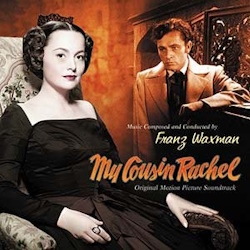
MY COUSIN RACHEL – Franz Waxman
 GREATEST SCORES OF THE TWENTIETH CENTURY
Original Review by Craig Lysy
Author Daphne du Maurier’s efforts to sell film rights for her 1951 novel My Cousin Rachel for $100,000 and 5% of the international box office was rejected by all of the major Hollywood studios except 20th Century Fox, whose counter offer of $80,000 was accepted. Nunnally Johnson was assigned production with a budget of $1.2 million, wrote the screenplay, and George Cukor was tasked with directing. Controversy arose when both Cukor and du Maurier both objected to the script, with bot departing the project when their revisions were rejected. Casting was also problematic with Cukor’s choice of either Greta Garbo or Vivien Leigh playing Rachel Sangalletti Ashley, fell through with his departure. Olivia de Havilland was instead brought in and joined by Richard Burton in his Hollywood debut as Philip Ashley, along with Audrey Dalton as Louise Kendall. Read more…
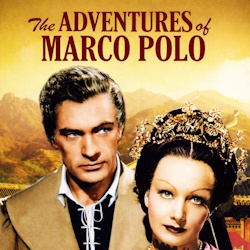
THE ADVENTURES OF MARCO POLO – Hugo Friedhofer
 GREATEST SCORES OF THE TWENTIETH CENTURY
Original Review by Craig Lysy
The genesis of The Adventures of Marco Polo lay with actor Douglas Fairbanks, who conceived the story in 1936 and wrote a script based on Marco Polo’s adventures. He had intended to produce the film with his son playing the titular role. However, he needed to secure financial backing and so pitched his vision to Samuel Goldwyn, who decided to move the film into production. Goldwyn envisioned Gary Cooper to star in the production, the project was derailed when Paramount Pictures initiated a $5 million lawsuit against Goldwyn for allegedly trying to lure its star away. This effectively killed the project; never the less, Goldwyn was undaunted and in 1937 purchased an original story on Marco Polo from N.A. Pogson. Goldwyn and George Haight would manage production with a massive $2 million budget, with Archie Mayo tasked with directing. Goldwyn was insistent on Gary Cooper playing the titular role, which in hindsight was an error as Cooper felt he was miscast, and critics greed saying Cooper’s persona was a poor fit for the swashbuckling adventure. Joining Cooper would be Sigrid Gurie as Princess Kukachin, Basil Rathbone as Ahmed, and George Barbier as Kublai Khan. Read more…
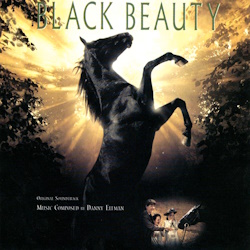
BLACK BEAUTY – Danny Elfman
 THROWBACK THIRTY
Original Review by Jonathan Broxton
Black Beauty is one of the most beloved works of children’s literature in the English language. Written by Anna Sewell and published in 1877, it tells the life story of the eponymous horse, beginning with his early days in the loving home of Farmer Grey, and then on through a series of subsequent owners, including the kind and gentle Squire Gordon of Birtwick Hall, and the cruel and neglectful Mr. York of Earlshall Park. After suffering a severe injury while working as a cab horse in London, he is rescued by Joe Green, a former employee of Squire Gordon, who eventually provides him with a peaceful and comfortable retirement. The novel is narrated in the first person by Black Beauty himself, providing a unique perspective on the life and experiences of a horse in Victorian England, and who juxtaposes his own life with those of others around him, some of whom suffer much worse fates. Most importantly Sewell addresses the then-unfashionable topic of animal welfare, and its success and popularity played a crucial role in shaping public attitudes towards animals and contributed to the development of modern animal rights movements. Read more…
KENSUKE’S KINGDOM – Stuart Hancock
 Original Review by Jonathan Broxton
Kensuke’s Kingdom is a British animated film adapted from the acclaimed 1999 novel by Sir Michael Morpurgo. The story follows a young boy named Michael; after his father loses his job, Michael’s parents decide to sell up and sail around the world on their yacht, the Peggy Sue, bringing Michael and his dog Stella Artois along on the adventure. However, during a storm, Michael and Stella Artois are washed overboard and end up on a small, seemingly deserted island. Michael soon discovers the island is inhabited by Kensuke, an elderly Japanese man who has been living there since World War II. Initially, Kensuke is hostile and forbids Michael from signaling for help. Over time, however, they form a close bond, and Kensuke teaches Michael survival skills and shares his story of being separated from his family during the war, while they await a rescue. Aaron MacGregor, Sally Hawkins, Cillian Murphy, Ken Watanabe, and Raffey Cassidy lead the voice cast, and the film is directed by Neil Boyle and Kirk Hendry from a screenplay by Frank Cottrell-Boyce. Read more…
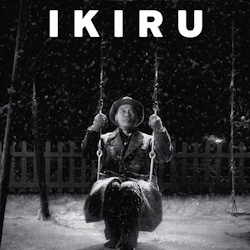
IKIRU – Fumio Hayasaka
 GREATEST SCORES OF THE TWENTIETH CENTURY
Original Review by Craig Lysy
Screenwriter Hideo Oguni was approached by director Akira Kurosawa for his next project, which was to be inspired by Leo Tolstoy’s acclaimed novella “The Death of Ivan Ilyich,” about a man diagnosed with terminal disease who seeks solace for the short time he has left to live. This resulting film, Ikiru, inaugurated a renowned collaboration between screenwriter Oguni and Kurosawa, which would go on to encompass many of the finest films in Japanese cinema, including Seven Samurai (1954), Throne of Blood (1957), The Hidden Fortress (1958), Sanjuro (1962), High and Low (1963), Dodes’ka-den (1970), and Ran (1985). Toho Company agreed to finance the project and assigned production to Sōjirō Motoki. Kurosawa would direct, and the final screenplay was credited to Oguni, Kurosawa, and Shinobu Hashimoto. A fine cast was assembled, which included Takashi Shimura as Kanji Watanabe, Shinichi Himori as Kimura, and Haruo Tanaka as Sakai. Read more…
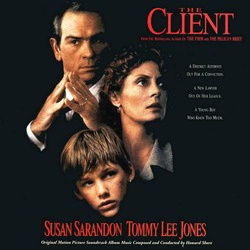
THE CLIENT – Howard Shore
 THROWBACK THIRTY
Original Review by Jonathan Broxton
The 1990s were full of John Grisham legal thriller adaptations. Following hot on the heels of The Firm and The Pelican Brief, both of which were released in 1994, comes The Client, directed by Joel Schumacher. The story follows an eleven-year-old boy named Mark Sway (Brad Renfro) who, along with his younger brother Ricky, witnesses the suicide of a lawyer named Jerome Clifford. Before dying, Clifford reveals to Mark that he knows the whereabouts of the body of a recently murdered U.S. Senator, which could implicate a powerful mob figure, Barry “The Blade” Muldano (Anthony LaPaglia). As Mark becomes the target of both the mafia, who want to silence him, and the authorities, who want his testimony, he seeks the help of a feisty lawyer named Reggie Love (Susan Sarandon). Despite being initially reluctant to get involved, Reggie decides to take Mark’s case and protect him from all threats – one of whom is the ruthless U.S. Attorney Roy “Reverend Roy” Foltrigg (Tommy Lee Jones), who wants to exploit the case to further his own political ambitions. Read more…
SEIZE THEM! – Rael Jones
 Original Review by Jonathan Broxton
Seize Them! is a British comedy directed by Curtis Vowell, written by Andy Riley, starring Bridgerton’s Nicola Coughlan and Sex Education’s Aimee Lou Wood, with a supporting cast of popular British TV comedy actors including Jessica Hynes and Nick Frost from Spaced, Lolly Adefope from Ghosts, and standup star James Acaster. The film is set in the Middle Ages and sees Wood playing the spoiled and entitled Queen Dagan, whose rule is overthrown in a popular revolution led by Humble Joan (Coughlan). Suddenly finding herself a fugitive in the land she once ruled, Dagan joins forces with her newly-unemployed but still loyal lady-in-waiting Shulmay (Adefope), and a peasant named Bobik (Frost) whose personal hygiene standards are somewhat lacking, and together the unlikely trio embarks on a voyage to win back her throne. The humor is silly and goofy and sometimes quite bawdy, and comes across as a sort of cross between Monty Python and the Holy Grail and Horrible Histories, but some of the reviews I have read have praised it for having its heart in the right place, and for being a rare female-centric take on the ‘medieval comedy’ trope. Read more…
WITH A SONG IN MY HEART – Alfred Newman
 GREATEST SCORES OF THE TWENTIETH CENTURY
Original Review by Craig Lysy
In 1950 a bidding war among Hollywood studios unfolded for the film rights to the Jane Froman story, the famous actress-singer who was crippled by an airplane crash on February 22, 1943. Producer Lamar Trotti wooed and convinced Froman to sign with 20th Century Fox, even though MGM offered her $25,000 more. Trotti was assigned production with behind-the-scenes assistance from studio executive Daryl F. Zanuck, Walter Lang was tasked with directing, and Trotti would also write the screenplay. For the cast, studio star Susan Hayward would play Jane Froman, joined by Rory Calhoun as John Burn, David Wayne as Don Ross, Thelma Ritter as Clancy, Helen Wescott as Jennifer March, Una Merkel as Sister Marie, and Robert Wagner as a GI paratrooper. Read more…
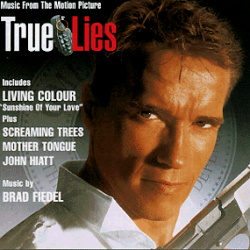
TRUE LIES – Brad Fiedel
 THROWBACK THIRTY
Original Review by Jonathan Broxton
One of the best and most enjoyable action-comedies of the 1990s was True Lies. A remake of the 1991 French film ‘La Totale’ by Claude Zidi, it was written and directed by James Cameron in what was his first theatrical movie since Terminator 2: Judgment Day in 1991. The movie stars Arnold Schwarzenegger as Harry Tasker, a seemingly ordinary computer salesman who is actually a secret agent working for a covert U.S. government organization called Omega Sector. His wife Helen (Jamie Lee Curtis) is unaware of his true occupation, but feels bored and unfulfilled in their marriage, longing for some excitement in her life. Harry’s double life starts to unravel when he begins to suspect that Helen might be having an affair with a used car salesman named Simon (Bill Paxton), who pretends to be a secret agent to seduce women. Harry’s jealousy leads him to use Omega Sector resources to investigate Helen, eventually pulling her into his world of espionage and action. The situation becomes even more complicated when a group of terrorists called the Crimson Jihad, led by the ruthless Salim Abu Aziz (Art Malik), threatens national security with a stolen nuclear warhead. Read more…
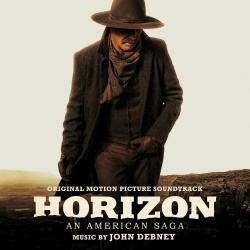
HORIZON: AN AMERICAN SAGA, CHAPTER ONE – John Debney
 Original Review by Jonathan Broxton
It feels like Kevin Costner has been single-handedly trying to save the western genre from cinematic oblivion for going on forty years now, ever since he enjoyed his breakout role in Lawrence Kasdan’s Silverado in 1985. Since then Costner has been involved with numerous western or western-adjacent movies, either starring in them, directing them, or both, ranging from his Oscar-winning masterpiece Dances With Wolves in 1990 to more recent efforts like Wyatt Earp, The Postman, Open Range, the TV mini-series Hatfields & McCoys, and the now long-running contemporary western TV drama Yellowstone. His latest effort, Horizon: An American Saga, may be his most ambitious effort yet. It’s a sprawling tale that follows the stories of multiple fictional characters in pre- and post-Civil War America, detailing multiple aspects of the exploration of the American West. Costner began writing Horizon as early as 1988 – before he even started on Dances With Wolves – and it is planned to be a four-film 12-hour epic that covers almost the entire history of the United States in that period. Read more…
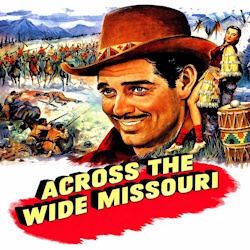
ACROSS THE WIDE MISSOURI – David Raksin
 GREATEST SCORES OF THE TWENTIETH CENTURY
Original Review by Craig Lysy
MGM Studios decided that Bernard DeVoto’s 1947 novel “Across the Wide Missouri,” which dealt with the lives of Rocky Mountain fur traders in the Upper Missouri River basin during the 1830s, could be successfully adapted for a big screen presentation. The film rights were purchased and Robert Sisk was assigned production with a $2.22 million budget. Talbot Jennings was hired to write the screenplay, and William Wellman was tasked with directing. A fine cast was assembled, which included Clark Gable as Flint Mitchell, Ricardo Montalbán as Ironshirt, John Hodiack as Brecan, James Whitmore as Old Bill, Adolphe Menjou as Pierre, and Maria Elena Marqués as Kamiah. Read more…
BEVERLY HILLS COP: AXEL F – Lorne Balfe
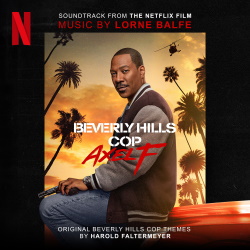 Original Review by Jonathan Broxton
The 1984 action comedy Beverly Hills Cop was one of the cinematic cultural touchstones of the 1980s, a fish-out-of-water story about a motor-mouthed Detroit-based detective who comes to Los Angeles to investigate the death of a friend, and causes havoc amid the more straight-laced members of the Beverly Hills police department. It helped launch its star Eddie Murphy to global superstardom, grossed $234 million at the domestic box office – the highest-grossing film released that year – and spawned several sequels (although the less said about the risible Beverly Hills Cop III in 1994 the better). Now, thirty years later, director Mark Molloy and screenwriters Will Beall, Tom Gormican, and Kevin Etten bring us a third sequel, Beverly Hills Cop: Axel F. Read more…
FORREST GUMP – Alan Silvestri
 THROWBACK THIRTY
GREATEST SCORES OF THE TWENTIETH CENTURY
Original Review by Jonathan Broxton
Life is like a box of chocolates. You never know what you’re gonna get.
It’s not a cool thing to admit any more, but at this point in my life I’ve stopped caring what people think about my taste, and I simply accept it for what it is. So here’s my statement: Forrest Gump is one of my favorite films of all time. I first saw it in the fall of 1994, when it came out in cinemas in England, and it affected me deeply right from that first viewing. Not only did I love the film for what it was, but the part of the story involving the relationship between Forrest and his Mama somehow became inextricably linked to the real life relationship I have with my own mother Christine, so it means a great deal to me on an intensely personal level. It’s one of the films I have seen the most in my lifetime; I know the screenplay beat-for-beat, and I never get tired of quoting many of its iconic lines. I still laugh in all the right places, and the ending always moves me to tears. Read more…
Under-the-Radar Round Up 2024, Part 2
 Original Reviews by Jonathan Broxton
I’m pleased to present the latest instalment in my on-going series of articles looking at the best under-the-radar scores from around the world.
This article, the second of 2024, covers six more scores from a wide array of genres and countries: a Spanish animated short film, an Italian teenage fantasy romantic drama, two Italian romantic comedy dramas, an Indian drama based on a best-selling novel, and a French romantic drama, all of which feature superb and memorable thematic writing!
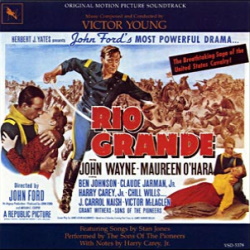
RIO GRANDE – Victor Young
 GREATEST SCORES OF THE TWENTIETH CENTURY
Original Review by Craig Lysy
Director John Ford’s plan for his next project was “The Quiet Man”, a story set in Ireland. However, to secure the services of John Wayne and Maureen O’Hara from Republic Pictures he had to agree to CEO Herbert Yates insistence that he shoot the final installment of his now famous Cavalry Trilogy – “Fort Apache” (1948), “She Wore A Yellow Ribbon” (1949), and “Rio Grande” (1950). Ford grudgingly agreed and his Argosy Pictures and Republic Pictures would manage production with a $1.2 million budget, he would direct, and James Kevin McGuiness would adapt a Saturday Evening Post story “Mission With No Record” (1947) by James Warner Bellah to write the screenplay. His cast would consist of John Wayne as Lieutenant Colonel Kirby York, Maureen O’Hara as Kathleen Yorke, Claude Jarman Jr. as Trooper Jefferson Yorke, Ben Johnson as Trooper Tyree, and Harry Carey Jr. as Trooper Sandy Boone. Read more…

Shop at the Movie Music UK Store

Member of the


